
At month fourteen, the mirror tells a mostly good story. The hairline is in, the frame of the face is back, and friends who have not seen you for a year say you look rested. And yet, under the bathroom light, there is a patch just behind the front where the scalp still shows a little more than you would like. Or a corner of the hairline that looks slightly too straight. It is not a failure. It is a detail, and details are what keep people looking.
That is the territory of the touch-up. Not a second full transplant, not a rescue, but a small, targeted session that finishes what the first one started. Done at the right time and for the right reason, it can make a good result look complete. Done too early or for the wrong reason, it spends donor hair you may want later.
The quick version: a hair transplant touch-up is a small second session, often a few hundred to around 1,500 grafts, used to refine a hairline or add density to a thinner patch once the first result has matured. Wait at least 12 months before deciding. At Hairpol it is priced like any procedure, with no revision surcharge; packages are typically $2,500–5,000, with the exact figure after a free analysis.
What counts as a touch-up, and what does not
A touch-up is defined by its purpose more than its size. It refines a result that already works: adding grafts where density fell slightly short, breaking up a line that looks too regular, filling the transition between a dense front and a thinner mid-scalp, or rebuilding a temple point that was left conservative the first time. It usually takes part of a day rather than a full one, and the plan is narrow and specific.
A full second transplant is different. It covers a new area, such as a crown that was not part of the first plan, or adds substantial density across a large zone. It can involve thousands of grafts and is planned like a first procedure. Our article on what a second hair transplant can add for density covers that larger decision.
A useful way to tell the two apart is to ask what someone would notice from across the room. If the honest answer is “nothing different, but up close it looks more finished”, you are describing a touch-up.
The distinction matters because it changes expectations. A touch-up should make a good result look finished. It will not transform the overall picture, and it should not be sold as if it will.
When does a hair transplant touch-up make sense?
The most common reasons are small and visible. A hairline that grew in well but looks a little too uniform, where a few single-hair grafts would soften it. A patch behind the hairline where density came in lower than the zones around it. A transition from transplanted to native hair that looks abrupt in certain light. Temple points that were kept conservative and now look underbuilt next to a mature hairline.
There are also timing reasons. Some patients choose a conservative first session on purpose, especially if they are young or their hair loss is still active, and plan to add a small refinement once the picture is stable. In that case the touch-up is part of the original plan rather than a reaction to a problem.
What these situations have in common is that the first result is already good, and the request is specific. “Add a little density here” or “soften this corner” is a touch-up. “I want it all thicker” is a different conversation, and usually a bigger one.
How long should you wait before a touch-up?
Longer than most people want to. New hairs keep thickening and darkening between months six and twelve, the crown can take 12 to 18 months, and native hair shed around the grafts needs time to return. Judging density earlier usually means judging hairs that have not finished growing.
Our article on why your second-year result can look better than your first explains this maturing phase in detail. The practical rule is simple: decide on a touch-up from photos taken at 12 months or later, in good, even light, compared with your pre-operative set.
When a touch-up will not help
Not every disappointment is a grafting problem. If the thinning you see is in your native hair, behind or around the transplanted zone, adding grafts now may simply chase an area that keeps receding. In that case, stabilising the loss comes first. Medication such as finasteride or minoxidil, or treatments from our hair treatments department, may be the better next step, always started with a doctor’s approval.
A touch-up also cannot create density the donor area cannot supply. If your donor hair is limited, the team may advise keeping it for a more important area later rather than spending it on a small cosmetic gain now. And if overall growth from the first session was unexpectedly low, the first step is to understand why before adding more grafts into the same conditions.
Finally, there is expectation. Hair transplants create coverage that looks convincing at normal distance. If the goal is the density of an untouched eighteen-year-old under harsh overhead light, no touch-up will meet it, and an honest clinic will tell you so.
Hairline touch-ups: the most common request
The hairline is where small changes have the biggest visual effect. A hairline touch-up usually means adding fine single-hair grafts in front of or within the existing line to make it look less regular, filling a few gaps where growth was patchy, or slightly refining the shape of the corners. The changes are measured in millimetres, not centimetres.
It helps to bring photos of hairlines you like on men of a similar age and face shape. They make it much easier to agree on direction, irregularity and how soft the front edge should be, and they turn a vague wish into something the team can draw.
Because the work is so precise, technique matters. DHI hair transplantation is often used for this kind of refinement, since it allows grafts to be placed closely between existing hairs with careful control of angle and direction. The choice still depends on your hair and on what the doctor sees on the day.
One caution: lowering a hairline significantly in a touch-up is rarely wise. A line that suits you at thirty needs to look natural at fifty, when the hair behind it may be thinner. Small refinements age well; big moves forward usually do not.
Adding density behind the hairline or in the crown
The second common reason for a touch-up is a zone where density came in lower than the rest. This is often the area just behind the hairline, where the first session spread grafts to cover a larger space, or the crown, where growth is slower and coverage harder to achieve.
For a mid-scalp patch, a few hundred well-placed grafts can make the difference between a result that looks good from the front and one that looks good from every angle. For the crown, the decision deserves more care, because the swirl pattern and the risk of ongoing loss make it a more demanding area. Our guide to a second hair transplant on the crown explains when that is worthwhile and when it is better to wait.
Either way, the touch-up should be planned around how the area looks in real life, not just in a top-down photo under a ring light. Ask to see the plan drawn on your own photos.
How many grafts does a touch-up need?
Most touch-ups fall somewhere between a few hundred and about 1,500 grafts, depending on the size of the area and the aim. Softening a hairline may need only a few hundred single-hair grafts. Filling a patch behind the front or adding density to part of the crown usually needs more.
Every graft used now is one fewer in reserve. Donor hair is finite, and a good plan thinks about the next twenty years, not only the next twelve months. Our article on donor area capacity over a lifetime explains how that reserve is estimated and why careful clinics do not spend it all at once.
The exact number for you comes from an assessment of your current result and your remaining donor area. It is worth asking how many grafts the team estimates you would still have available after the touch-up, so you know what remains for the future.
As a rough guide, the more precise the request, the smaller the session tends to be. A clearly defined corner or patch usually needs far fewer grafts than a general wish for “more density”.
What does a hair transplant touch-up cost?
At Hairpol, a touch-up is not a separate product with its own price list. It is priced the same way as any hair transplant: by the plan and the number of grafts it needs, with no separate revision surcharge for it being your second procedure. Our second hair transplant page explains this approach, and our hair transplant cost guide shows the general range: packages typically fall within $2,500 to $5,000.
The exact figure for a touch-up follows a free analysis of your photos, because the size of the plan is what sets the price.
If you are at the twelve-month mark and wondering whether a touch-up makes sense, the simplest way to find out is to send your twelve-month photos for a free assessment. Include pictures from before your first procedure if you have them; the comparison helps the team see what has matured and what may still change.
Will a touch-up damage the first transplant?
It is the worry almost everyone raises. Placing grafts between existing hairs carries a small risk of disturbing them, and some patients see temporary shedding of nearby hair that usually recovers. Waiting for the first result to mature and placing at angles that follow the existing hairs keep that risk low; ask the team how they would protect the grafts you already have.
Our article on whether a second hair transplant can damage the first goes through the specific risks and how they are managed.
What happens on the day of a touch-up
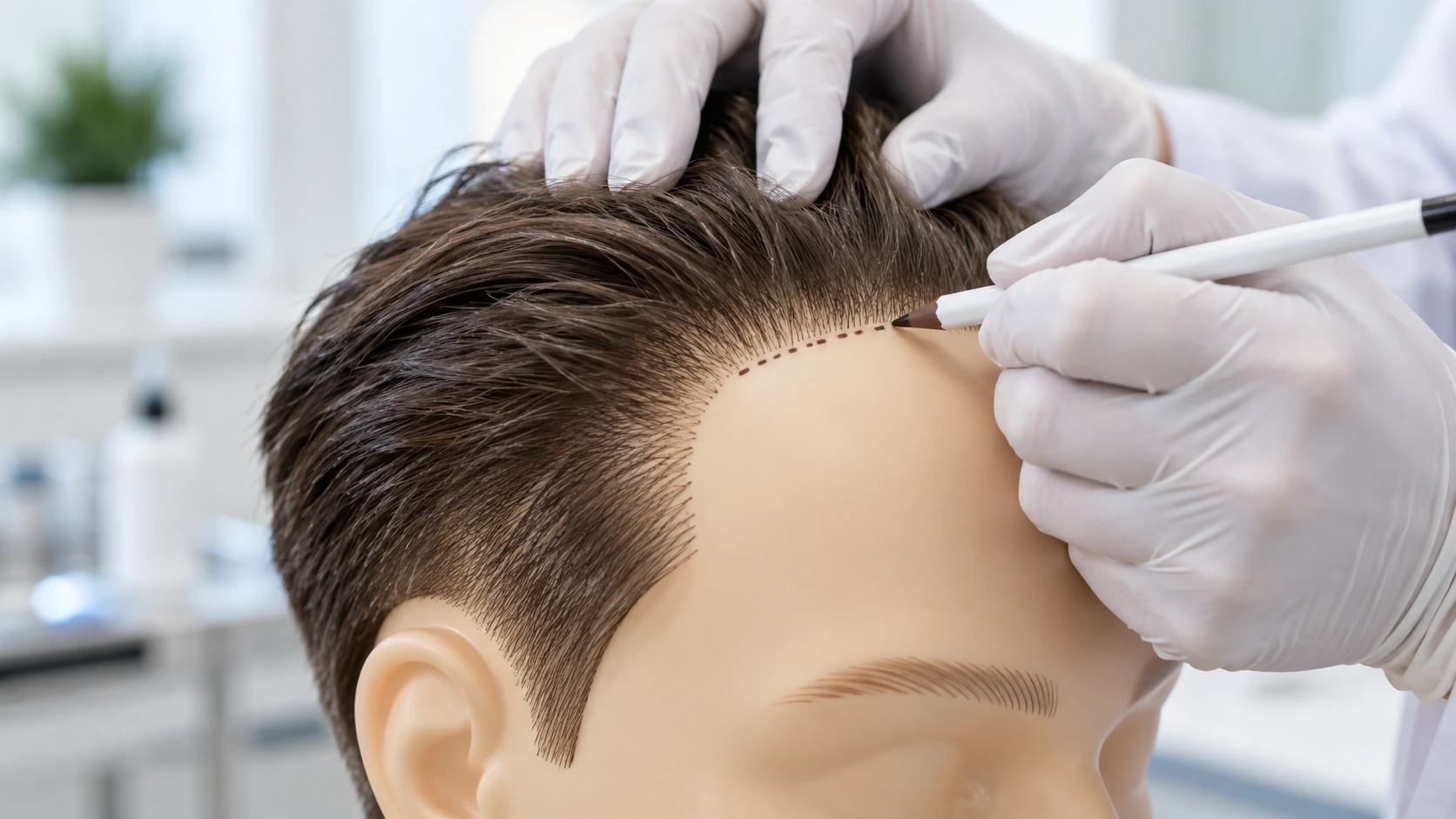
The day starts the same way as your first procedure: an in-person consultation, photos, and the plan drawn on your scalp so you can see exactly where grafts will go. This is the moment to look in the mirror and confirm the changes are the ones you asked for, no more and no less.
Because the plan is smaller, the procedure itself usually takes a few hours rather than most of the day. Grafts are taken from the donor area under local anaesthesia, usually from a limited zone that heals quickly, and placed one by one into the planned area. Many patients are back at the hotel by the afternoon.
Before you leave, you should have the same paperwork as the first time: written aftercare instructions, any medication with a clear schedule, a short summary of how many grafts were placed and where, and the dates for your follow-up photos.
If you are travelling, the shorter day gives you a little more flexibility with flights, although most patients still keep a three to four day plan so that the first wash and check happen at the clinic.
Recovery after a touch-up
Recovery follows the same pattern as the first procedure, usually on a smaller scale. There will be small scabs in the recipient area for about ten days, some redness, and a donor area that heals over a similar period. Because the session is shorter, many patients find the first days easier than the first time.
The same rules apply: careful washing as instructed, no pressure on the grafts, no heavy exercise for the first weeks. The new grafts usually shed in the first two months and start growing again from around month three or four. The final effect of the touch-up is judged, once again, at about twelve months.
For patients travelling to Istanbul, the trip is usually the same three to four days as before. The difference is that you already know the clinic, the routine and what to expect, which takes much of the uncertainty out of it.
Most patients return to desk work within a few days to a week, depending on how visible the recipient area is. A small hairline touch-up is often easy to style around once the scabs have gone, especially if you keep your hair a little longer on top.
Preparing your photos for a touch-up assessment
A touch-up decision rests on good photos more than any other kind of assessment, because the changes being discussed are small. Take pictures in the same place and light you used before your first procedure if possible, with dry hair, from the front, top, both sides, crown and back. Add a close-up of the area that bothers you.
Take them at least twelve months after the first session. If you have photos from months six and nine, include them too; the sequence shows whether the area is still improving. Avoid wet hair and strong overhead light, which make almost any result look thinner than it is.
Our before and after gallery shows the kind of angles and lighting that make results easy to judge. Matching them makes your own assessment more accurate.
If you are unsure whether your photos are good enough, send them anyway and ask. The team will tell you if they need another angle or different light before giving an opinion, which is better than a guess based on a poor picture.
Questions to ask before you book a touch-up
A touch-up is a small procedure, but it deserves the same clear answers as a large one. These are the questions that matter most.
- What exactly will the touch-up change, and how will I see the difference at normal distance?
- How many grafts are planned, and how many will remain in my donor reserve afterwards?
- Is my native hair stable enough, or should I treat it first?
- Which technique will be used, and why for this area?
- What is the risk to existing grafts, and how is it managed?
- How is the price calculated for a session this size?
The last question is worth asking directly. At Hairpol a touch-up is priced like any other procedure, by the plan and the graft count, and the exact figure follows the analysis of your twelve-month photos.
Ask for the answers in writing, or keep notes during the call, so you can compare them calmly afterwards rather than relying on memory.
A small session needs a clear reason
The best touch-ups have one thing in common: a specific reason that you can point to in a photo. “This corner”, “this patch”, “this transition”. When the reason is that clear, a small session can turn a good result into one you stop thinking about.
When the reason is vaguer, it is often worth waiting another few months, treating native hair, or simply living with the result a little longer. Many patients find that what bothered them at month twelve looks different at month eighteen.
And if the honest answer is that no touch-up is needed, that is a good outcome too. Leaving donor hair in reserve is never a wasted decision.
For an honest view on your own case, a WhatsApp message with two or three recent photos is enough to start the conversation. How the team plans every stage of a procedure, touch-ups included, is set out under hair transplantation.
Frequently Asked Questions (FAQ)
What is a hair transplant touch-up?
A touch-up is a small second session that refines a result which already works, for example softening a hairline, adding density to a thinner patch or rebuilding a temple point. It usually involves a few hundred to around 1,500 grafts.
How long after a hair transplant can you get a touch-up?
Wait at least 12 months for the front and 12 to 18 months for the crown. Transplanted hair keeps thickening and maturing during this time, so judging earlier risks adding grafts where they are not needed.
How much does a hair transplant touch-up cost?
At Hairpol, a touch-up is priced the same way as any procedure, by plan and graft count, with no revision surcharge. Packages typically fall within $2,500 to $5,000, and the exact figure follows a free analysis.
How many grafts are needed for a hairline touch-up?
Often a few hundred single-hair grafts to soften or refine a hairline, more if a patch behind the front needs density. The exact number depends on your current result and your remaining donor area.
Can a touch-up damage my existing transplanted hair?
There is a small risk of disturbing existing hairs and some temporary shedding, but in careful hands it is low and shedding usually recovers. Waiting for the first result to mature and precise placement keep the risk down.
Is a touch-up the same as a second hair transplant?
Not quite. A touch-up refines a result in a small area; a second hair transplant usually covers a new zone or adds substantial density and can involve thousands of grafts. Both are priced the same way at Hairpol.
When is a touch-up not a good idea?
When the thinning is in native hair that is still being lost, when donor reserve is limited, or when the first result has not yet matured. In those cases, treating native hair or waiting is often the better choice.
What is recovery like after a hair transplant touch-up?
Similar to the first procedure but usually lighter: small scabs for about ten days, some redness and a healing donor area. New grafts shed in the first two months and the final effect is judged at around twelve months.
Find this helpful? Add Hairpol as a preferred source on Google.
Get a Free Consultation
Answer a few questions and the medical team will review your situation.
