
Beard Transplantation
What Is a Beard Transplant and Who Is It For?
A beard transplant is a surgical procedure in which hair follicles are taken from a donor area — usually the back or sides of the scalp — and implanted into the beard region to create new, lasting facial hair growth. The transplanted follicles are genetically resistant to hormone-related hair loss, which is why, once they take root, they typically continue producing hair for the long term. The same core techniques used in scalp hair restoration, FUE and DHI, are applied to the face with finer instruments and a more detailed design process.
Candidates for beard transplantation generally fall into a few groups:
- Men with genetically patchy or thin beard growth who have never been able to grow a full beard
- Men with scars in the beard area — from acne, burns, surgery or injury — where hair no longer grows
- Men with beard loss from conditions such as alopecia barbae, once stable and confirmed suitable by a physician
- Transgender men seeking facial hair as part of gender-affirming care
- Men who want to reshape or densify specific zones, such as the goatee, mustache, sideburns or cheek lines
Not everyone is an immediate candidate. Active skin conditions on the face, unstable autoimmune hair loss, insufficient donor hair or unrealistic expectations are all reasons a responsible clinic may postpone or decline the procedure. Suitability is always a medical decision, which is why the process at a hair transplant clinic in Istanbul such as Hairpol begins with a physician's assessment rather than a booking.
How a Beard Transplant Is Performed — Step by Step
Before the procedure: consultation and design
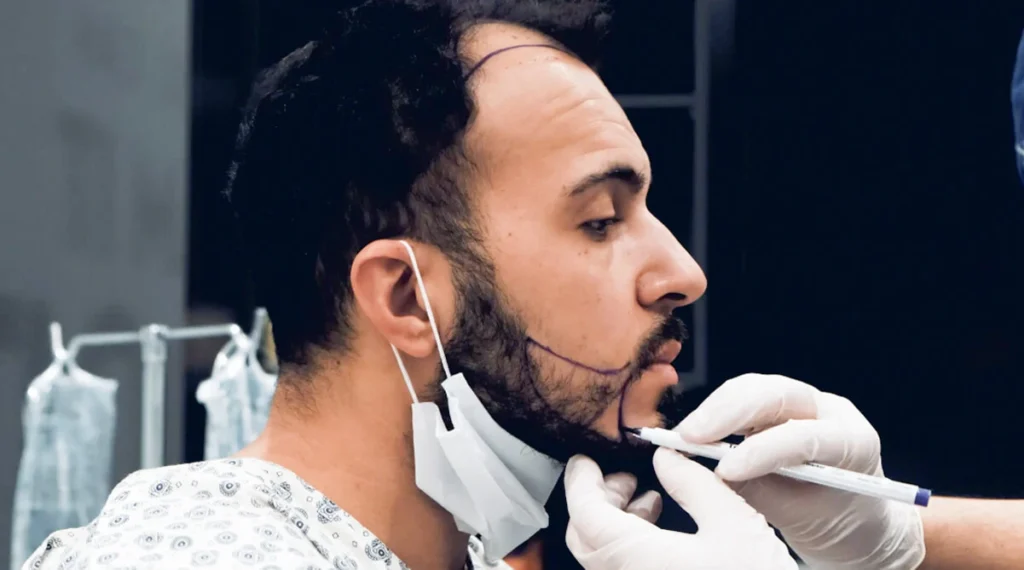
The process starts with a consultation, which international patients usually complete online with photos before travelling. The medical team evaluates your donor area, estimates how many grafts are realistic, and discusses the beard style you want. Design matters more than almost anything else here: the cheek border lines, the connection between mustache and chin, and the angle of each implanted hair determine whether the result looks natural. On the day of the procedure, the design is drawn directly on your face and refined together with you before anything else happens.
You will also go through a standard pre-operative review covering medications, chronic conditions and blood tests where required. Patients are typically asked to avoid blood-thinning medication, alcohol and smoking for a period before surgery, following the physician's instructions.
The day of the procedure
A beard transplant is performed under local anesthesia and usually takes between four and eight hours depending on the number of grafts. The main steps are:
- Donor extraction: Follicles are removed one by one with fine micro-punches using the FUE (Follicular Unit Extraction) method. For facial work, single-hair and fine two-hair grafts are preferred because they mimic natural beard hair most closely.
- Graft preparation: Extracted grafts are sorted and kept in a holding solution while the recipient area is prepared.
- Implantation: Grafts are placed either through tiny channels opened with a sapphire blade (Sapphire FUE) or directly with an implanter pen (DHI — Direct Hair Implantation). DHI implants each follicle in one motion, giving the surgeon close control over angle and depth — a real advantage on the face, where beard hairs grow at much flatter angles than scalp hair.
Because the procedure is done under local anesthesia, most patients describe discomfort mainly during the initial numbing injections; the implantation itself is generally well tolerated, though sensitivity varies from person to person.
After the procedure
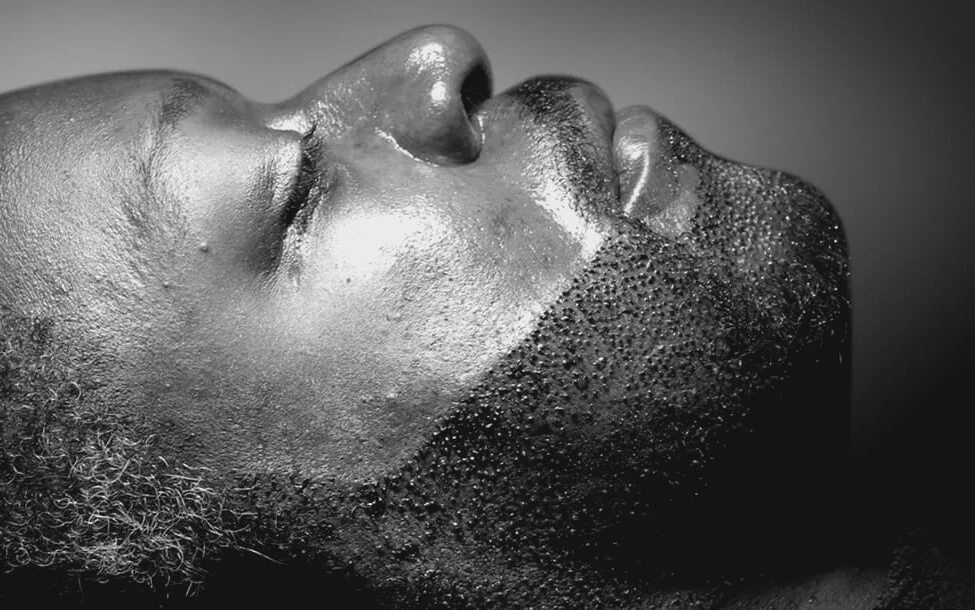
You leave the clinic the same day with care instructions and any prescribed medication. The first wash is usually performed at the clinic a few days after surgery. Small crusts form around each graft and typically shed within seven to ten days. Most patients return to desk work within a couple of days, while shaving, intense exercise, swimming and direct sun exposure are restricted for longer, per the physician's plan.
Advantages and Honest Limitations
What a beard transplant can do well
- Long-lasting growth: Because donor follicles come from an area resistant to hormonal hair loss, transplanted beard hair generally continues to grow for the long term in most patients.
- Natural texture: Hair from the lower back of the scalp often resembles beard hair in thickness, and with careful angle control it blends with existing facial hair.
- Design flexibility: Density, borders and style can be planned around your face — from filling small gaps to building a full beard.
- Normal grooming afterwards: Once healed, transplanted beard hair can be shaved, trimmed and styled like the rest of your beard.
What you should know before deciding
- It is surgery. Though minimally invasive, a beard transplant carries surgical risks: temporary redness, swelling, small white marks at extraction points, folliculitis, and — rarely — infection or uneven growth. An experienced medical team reduces, but never eliminates, these risks.
- Shock loss is normal. Most transplanted hairs shed in the first weeks before regrowing. This "falling out" around week two to four is an expected phase, not a failure.
- Results take time. Meaningful growth usually starts around the third or fourth month, and the final look is generally judged at around one year. This is not a quick fix before an event next month.
- Density has limits. Graft numbers are limited by your donor area, and extremely high density in one session can compromise graft survival. A second, smaller session is sometimes planned for extra density — an honest clinic tells you this in advance.
- Results vary. Skin type, hair characteristics, healing biology and aftercare compliance all influence the outcome, which differs from person to person.
Beard Transplant in Istanbul, Turkey: Why Patients Travel for It
Turkey has become one of the most established destinations worldwide for hair restoration, and Istanbul is at the center of it. Patients researching a hair transplant abroad usually weigh three factors: the concentration of clinics performing these procedures at high volume, the significant cost difference compared with Western Europe, the UK and North America, and the practicality of an all-inclusive patient journey. The same applies to facial hair — the skill set behind a beard transplant is the one refined through FUE and DHI hair transplant work in Istanbul over many years.
Cost is often the starting point of the research. A beard transplant in Turkey typically costs considerably less than the equivalent procedure in Germany, the UK or the US — not because of lower standards at reputable clinics, but largely because of exchange rates, lower operating costs and the scale of the sector. As with hair transplant Turkey cost comparisons in general, compare what is included, who performs the procedure and how aftercare is handled — not only the headline figure.
How the process works for international patients
- Remote assessment: You send photos of your beard area and donor zone with a short medical questionnaire, and the medical team gives an initial opinion on suitability, technique and estimated graft range, plus a personalized quote.
- Planning the trip: Most beard transplant patients stay in Istanbul for about three days: arrival and consultation, the procedure day, and a follow-up with the first wash before flying home. Hairpol can arrange hotel accommodation and airport-clinic transfers as part of the package.
- Language support: Hairpol serves patients in English, Turkish and German, so consultations, consent forms and aftercare instructions are handled in a language you fully understand.
- Aftercare from home: Follow-up continues remotely with photo check-ins at agreed intervals, so recovery is monitored even after you leave Türkiye.
Hairpol operates in Ataşehir, on the Asian side of Istanbul — easy to reach from both Istanbul Airport and Sabiha Gökçen Airport with the transfers arranged by the clinic.
How Much Does a Beard Transplant Cost in Turkey?
A beard transplant at Hairpol is a $2,500 package. The exact figure still depends on your case — graft count, technique and case complexity all play a role — but $2,500 is the confirmed package price rather than a vague "it depends" answer.
What shapes the final number:
- Graft count. Filling a few patchy zones along the cheek line costs less than rebuilding a full beard from sparse growth; graft count is the single biggest variable.
- Technique. DHI implantation is more labor-intensive than channel-based Sapphire FUE and can be priced differently — the right technique for you is a medical decision, not a menu choice.
- Case complexity. Scar coverage, tightly curled hair, or combining a beard transplant with a scalp or eyebrow procedure in the same trip affects planning and time.
- What the package includes. Ask in writing whether accommodation, transfers, medication and aftercare products are bundled or billed separately — this is what makes headline prices hard to compare between clinics.
Turkey vs. Western Europe, the UK and North America. Facial hair transplants performed in Turkey are typically priced well below the equivalent procedure in these markets, largely due to exchange rates, lower operating costs and the scale of Istanbul's hair restoration sector — not because reputable clinics there use lower standards. As with any hair transplant Turkey cost comparison, compare what is included, who performs the procedure and how aftercare is handled, not only the headline figure.
Your exact price is confirmed after a free, photo-based assessment — send a few pictures of your beard area and donor zone and Hairpol's medical team will give you a personalized quote with no obligation. See the full beard transplant recovery timeline for what to expect after your procedure.
Recovery and Results: A Realistic Timeline
Healing speed differs from person to person, but most patients follow a broadly similar sequence:
| Period | What typically happens |
|---|---|
| Days 1–3 | Redness, mild swelling and pinpoint crusting in the beard area; donor area feels tender. Sleeping on the back with the head elevated is advised. |
| Days 4–10 | Crusts soften and shed with gentle washing. Most visible signs of the procedure fade; many patients feel comfortable in public toward the end of this period. |
| Weeks 2–4 | Shock loss phase: most transplanted hairs shed. This is expected and does not mean the grafts were lost — the roots remain in place. |
| Months 1–3 | Resting phase with little visible change. First careful shave or trim is usually permitted in this window, following the physician's guidance. |
| Months 3–6 | New growth emerges and gradually thickens. The beard starts to look noticeably fuller, though texture may initially be uneven. |
| Months 6–12 | Hair matures in thickness and texture; density continues to improve. The result is generally assessed at around the twelve-month mark. |
Individual timelines vary — some patients see earlier growth, others need the full year for the result to settle. Your follow-up plan exists to track this progression and answer questions along the way.
How to Choose a Clinic for a Beard Transplant
Searching for the best hair transplant clinic in Turkey returns thousands of results, and facial procedures demand even more care in selection than scalp work, because mistakes in angle and design are hard to hide. Useful criteria:
- Medical evaluation before commitment: A trustworthy clinic assesses your photos and medical background before confirming you as a candidate — and is willing to say no or suggest waiting.
- Who actually does the work: Ask who plans the design, who performs extraction and implantation, and how the physician supervises the procedure.
- Beard-specific experience: Ask to see healed beard transplant results, not only scalp cases. Facial hairlines, flat implantation angles and single-graft use are specific skills.
- Realistic communication: Be cautious with anyone promising guaranteed density, exact graft counts before an examination, or "no risk". Honest clinics talk about ranges, probabilities and limitations.
- Transparent pricing: A written quote listing what is included — procedure, accommodation, transfers, medication, aftercare — protects you from surprises.
- Structured aftercare: Recovery lasts a year; make sure the clinic has a defined follow-up process for patients who have returned home.
- Language and accessibility: You should be able to ask questions and receive answers in your own language, before and after the procedure.
The same criteria apply whether you are comparing a beard procedure, an FUE hair transplant in Istanbul or a DHI hair transplant elsewhere — the fundamentals of safe surgery do not change with the body area.
Frequently Asked Questions About Beard Transplants
Is a beard transplant permanent?
In most patients, yes — transplanted follicles come from donor zones genetically resistant to hormone-related loss, so they generally keep producing hair long term. Individual biology still plays a role, and a small proportion of grafts may not survive in any procedure.
Does a beard transplant hurt?
The procedure is performed under local anesthesia, so most discomfort is limited to the initial numbing injections. Mild soreness, tightness or itching in the first days is common and usually manageable with the prescribed care routine. Pain tolerance varies from person to person.
How many grafts does a beard transplant need?
It depends entirely on the goal. Filling small patches may need a few hundred grafts, while building a full beard can require substantially more. The exact range can only be estimated after the medical team reviews photos of your face and donor area — be skeptical of fixed numbers quoted without any assessment.
Will the transplanted beard look natural?
Naturalness depends mainly on design and implantation angle. Techniques such as DHI allow precise control over direction and depth, and when single grafts are used along visible border lines and the design suits your facial structure, the result typically blends with existing facial hair.
Can I shave after a beard transplant?
Not immediately. Most physicians allow a first careful trim or shave a few weeks to about a month after the procedure, once the grafts are securely anchored. After full healing, transplanted beard hair can be shaved and styled normally. Follow your own clinic's timeline rather than a general rule.
Will there be scars in the donor area or on my face?
FUE extraction leaves tiny dot-like marks in the donor area that are generally not noticeable at normal hair lengths, though very short shaves may reveal them in some patients. On the face, implantation sites typically heal without visible scarring; healing quality varies with skin type and aftercare.
Why did my transplanted beard hair fall out after a few weeks?
This is shock loss, a normal phase in which hair shafts shed while the follicles remain in place beneath the skin. It usually happens between the second and fourth week, with new growth typically emerging from the third or fourth month onward. It does not mean the procedure failed.
How long do I need to stay in Istanbul for a beard transplant?
Most international patients plan around three days: consultation and preparation, the procedure itself, and a follow-up visit with the first wash before departure. Hairpol can arrange transfers and accommodation for patients travelling from abroad, and follow-up afterwards continues remotely with photo check-ins.
How much does a beard transplant cost in Turkey?
Beard transplants at Hairpol are a $2,500 package. The final price depends on graft count, technique and case complexity, and is confirmed after a free photo-based evaluation.
Can a beard transplant cover scars from acne or injury?
Often, yes. Implanting grafts into scar tissue is a common reason for beard transplantation, though scarred skin may have reduced blood supply, which can affect graft survival and sometimes calls for a staged approach. A physician needs to review the scar, at least through detailed photos, before confirming what is achievable.
What is included in the $2,500 package price?
The procedure itself is the baseline. Whether accommodation, transfers, medication and aftercare products are bundled depends on the package — ask for a written breakdown before you commit.
Is a beard transplant in Turkey cheaper than in Europe or the US?
Generally, yes — facial hair transplants in Turkey are typically priced well below Western Europe, the UK and North America, mainly due to exchange rates and lower operating costs. Compare scope, not only the number.
Does combining a beard transplant with a scalp or eyebrow procedure cost more?
Combined procedures require more planning and session time, which is reflected in the quote. This is assessed case by case during your consultation.
Get a Free Personal Assessment
If you are considering a beard transplant — to fill patchy areas, cover a scar or build a full beard — the most useful next step is a no-obligation evaluation. Send a few photos of your beard area and donor zone to the Hairpol team, and you will receive an honest opinion on your suitability, the recommended technique and a personalized quote. You can reach us by phone or WhatsApp at +90 549 102 07 47, by e-mail at info@hairpol.com, or through the contact form on this site. Consultations are available in English, Turkish and German, and asking questions commits you to nothing.
