
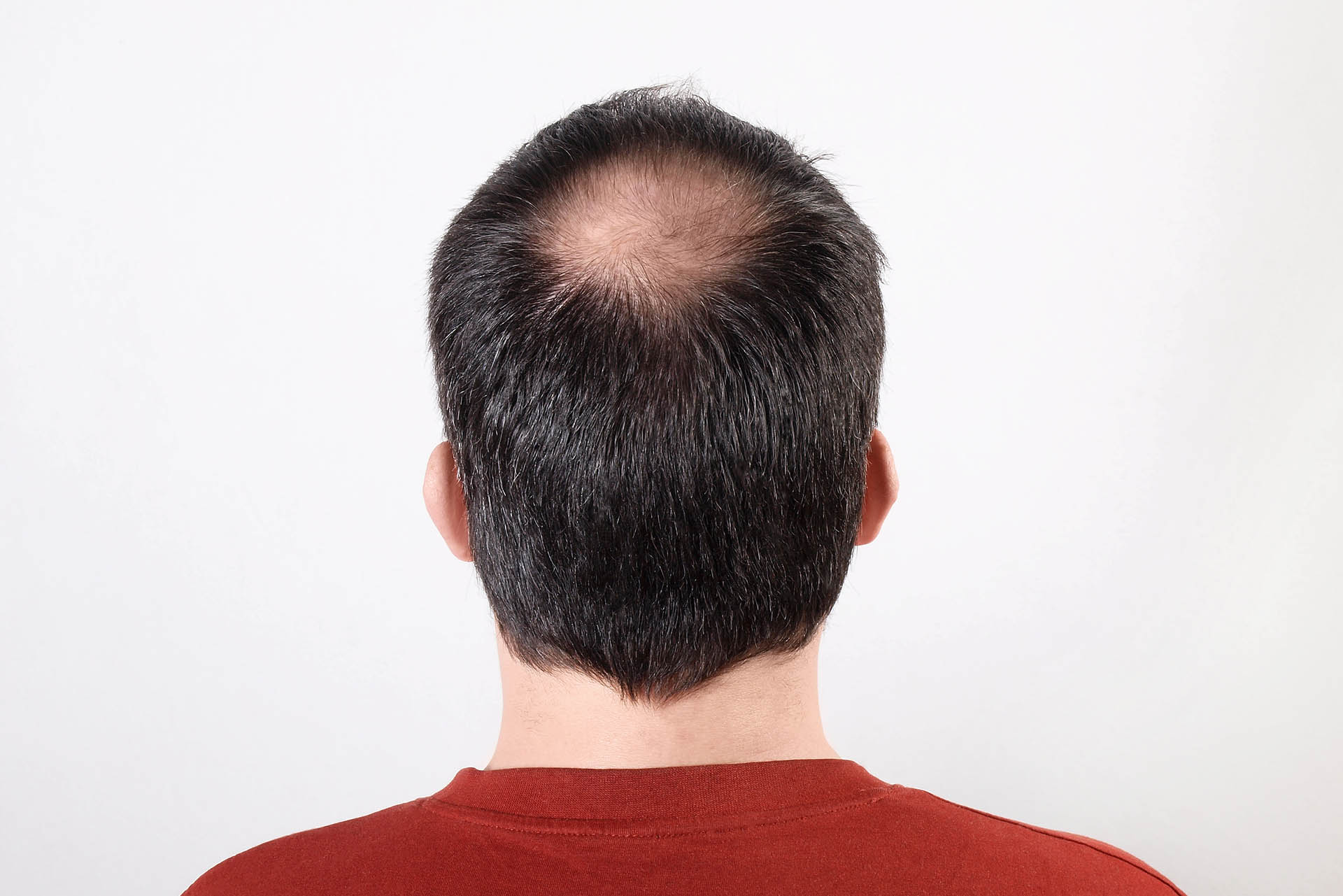
Most people researching a hair transplant ask the wrong question first. They ask how much hair they can get. The more important question, the one that quietly governs everything else, is how much hair they can ever get — because the supply you’re drawing from is fixed, non-renewing, and far more limited than the glossy before-and-after photos suggest. There’s no refilling it. Whatever you take, you take once.
This is the part of hair restoration that rarely makes it into the marketing. Your donor area — the band of hair at the back and sides of your head — is a finite reserve, a lifetime budget of follicles that can be moved but never replaced. Understanding how big that budget really is, what determines its size, and how easily it can be wasted is one of the most useful things you can do before any procedure, because almost every disappointing long-term outcome traces back to a donor that was misjudged or overspent.
At Hairpol, donor management is treated as the foundation of a good plan rather than an afterthought, precisely because it sets the ceiling on what’s realistically possible — not just today, but for the rest of your life. This guide explains what donor capacity actually means, how many grafts can be safely harvested over a lifetime, and how to protect the reserve you have.
What the Donor Area Actually Is
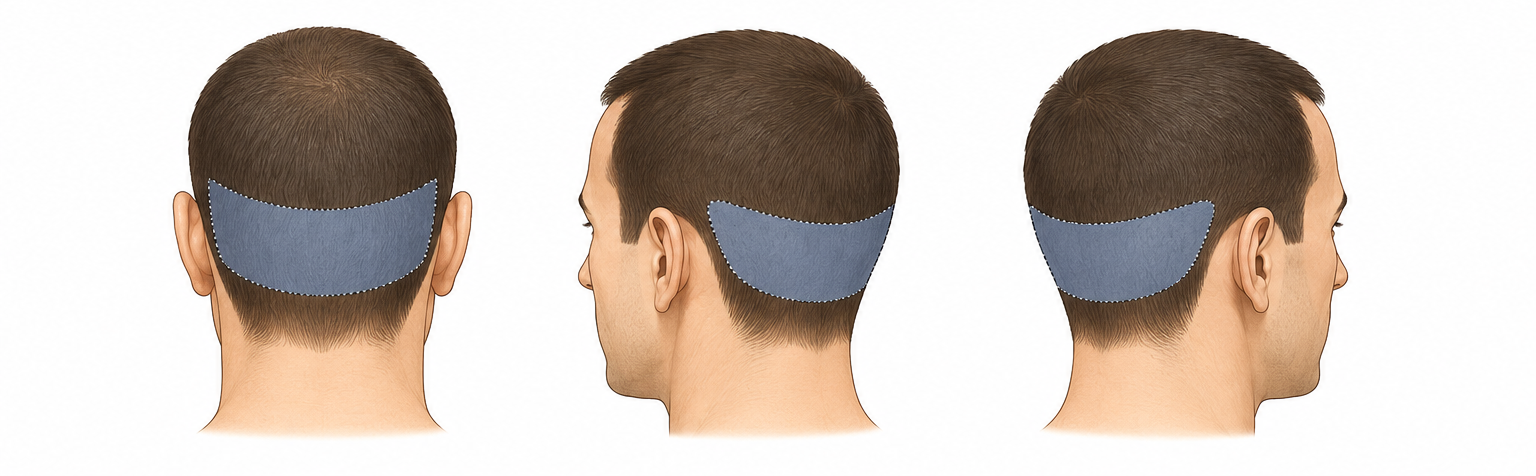
The reason a hair transplant works at all comes down to a quirk of biology. The hair at the back and sides of your head is genetically different from the hair on top. It’s resistant to DHT, the hormone responsible for androgenetic alopecia, which is why this hair tends to stay put even as the crown and hairline thin. Crucially, that resistance travels with the follicle. When hair from this zone is moved to a balding area, it keeps its original programming and continues to grow.
This stable region is what surgeons call the safe donor area. It isn’t the entire back of your head — it’s a defined band where the hair is reliably permanent, bordered above and below by zones that are less stable and may thin over time. Harvesting outside that safe band is risky, because hair taken from an unstable area can itself be lost later, leaving you worse off.
So the donor isn’t simply “all the hair you’re not losing.” It’s a specific, limited reserve of genuinely permanent follicles. Everything a transplant can ever achieve has to come from within it, and that constraint is the single most important fact in the whole field.
So How Many Grafts Is a Lifetime Supply?
This is the question everyone wants a number for, and the honest answer is that it varies enormously from person to person. As a rough guide, an average donor area might safely yield somewhere in the region of 5,000 to 8,000 grafts across an entire lifetime, combining every session a person might have. Some donors are richer and can give more; many are more limited and give considerably less.
It’s important to understand what that figure represents. It’s not how much can be taken in one go — a single session typically harvests a few thousand grafts at most, because taking too much at once damages the donor. The lifetime figure is the total that can ever be removed, across all procedures combined, before the donor becomes visibly depleted. Once you’ve reached it, there’s no more to give, regardless of how much balding area remains.
This is why the arithmetic of a transplant matters so much. A large bald area can easily demand more grafts than a modest donor can ever supply. When the area needing coverage exceeds what the donor can provide, no surgeon can square that circle, and trying to do so only damages the donor without achieving full coverage. Recognising this limit early is what separates a realistic plan from an impossible one.
Why You Can’t Just Keep Taking
It’s tempting to assume that if there’s hair at the back, it can keep being harvested. It can’t, and the reason is visibility. The donor area has to retain enough density to look natural itself. Every graft removed slightly reduces the density of the donor, and if too much is taken, the back and sides start to look thin, patchy, or — in the worst cases — moth-eaten and obviously harvested.
Overharvesting is one of the most damaging mistakes in hair restoration, and it’s frequently the result of clinics extracting aggressively to hit a high graft count or treat too large an area in one go. The damage is often permanent. A donor that’s been stripped too hard can’t be restored, the scarring from excessive extraction doesn’t fill back in, and the appearance of a thinned donor can be as distressing as the original hair loss it was meant to solve.
There’s also the question of yield. A donor pushed beyond its safe limit doesn’t just look worse; the grafts taken from an over-tapped area can be of lower quality and survive less well. So overharvesting is a double loss: it harms the donor’s appearance and undermines the very result it was supposed to produce. A good surgeon harvests conservatively for exactly this reason, leaving more than enough behind to keep the donor looking untouched.
What Determines Your Personal Capacity
Lifetime capacity isn’t a single universal number because it depends on several individual factors, and they vary widely. The most important is donor density — how many follicular units you have per square centimetre in the safe zone. A naturally dense donor has more to give than a sparse one, and two people with the same size head can have very different reserves.
Hair characteristics matter just as much as raw numbers. Thick, coarse hair covers more scalp per graft than fine hair, so it produces a fuller-looking result from fewer follicles, effectively stretching your budget. Curl helps too — curly or wavy hair gives better coverage than straight hair of the same density. Even the contrast between your hair colour and your skin tone plays a role: low contrast, such as grey hair on pale skin or dark hair on dark skin, looks denser and more forgiving than high contrast, where every gap is more visible.
Scalp laxity — how loose or tight the skin is — also influences how much can be safely harvested. These variables combine differently in every person, which is why a proper assessment of your specific donor is the only way to estimate your real capacity. Anyone quoting you a graft number before examining your donor is guessing.
How Your Capacity Is Measured Before Surgery
Here is something worth knowing before any consultation: your donor capacity should be measured, not guessed. A surgeon who glances at the back of your head for a few seconds and quotes you a graft number is estimating. A good assessment uses tools. Under a dermoscope or a densitometer, your surgeon can count how many follicular units sit in a square centimetre of donor skin, and that number tells them far more than a casual look ever could.
Donor density varies a lot between people. Some scalps carry 80 or more follicular units per square centimetre; others sit closer to 50 or 60. Two men with identically thinning crowns can have very different amounts of hair available to move, simply because one was born with a denser donor. Hair calibre matters too. Thick, coarse strands give more visual coverage per graft than fine ones, so a person with lower donor density but thicker hair can sometimes achieve a result that looks just as full.
Scalp laxity, meaning how loosely the skin moves, also gets checked, because it influences how comfortably grafts can be taken without tension. At Hairpol, this measuring step is treated as the foundation of the whole plan. Knowing your real numbers is what separates a realistic surgical plan from an optimistic sales pitch, and it is the difference between promising you coverage you can actually have and promising you coverage that does not exist.
Secondary Donors: Beard and Body Hair
When the scalp donor alone can’t meet the demand, there’s a partial solution: hair from elsewhere on the body. Beard hair, in particular, is a valuable secondary donor for many men. It’s often plentiful, tends to be thick, and can add significant numbers to supplement a limited scalp reserve, especially for adding density to areas like the crown or for second procedures.
Body hair — from the chest, for example — can also be used in some cases, though it generally comes with more variability. Hair from these areas has different characteristics from scalp hair: the texture, length, and growth pattern aren’t identical, so it’s used thoughtfully, often blended with scalp grafts or placed where the differences matter least rather than at the hairline.
Secondary donors genuinely extend what’s possible for patients with extensive loss and a stretched scalp reserve, and they can be the difference between a workable plan and an unworkable one. But they’re a supplement, not a substitute. They don’t make the scalp donor unlimited; they simply add to a finite total, and they have their own limits too.
How the Extraction Itself Affects the Donor
It is not only how many grafts come out that matters, it is how they come out. In modern FUE (follicular unit extraction), grafts are removed one by one with a tiny punch, usually well under a millimetre across. Done well, this leaves the donor looking essentially untouched, with thousands of dot-sized marks that fade into the surrounding hair. Done carelessly, it does the opposite.
Punch size and extraction pattern make a real difference to your long-term donor. If a surgeon takes too many grafts from one concentrated patch, that area thins visibly and stays thin, the so-called “moth-eaten” look that no amount of future surgery fully repairs. Spreading extraction evenly across the safe zone, and respecting the limit on how much can come from any one region, keeps the donor looking natural even after a large session. Whether the clinic uses classic FUE or a DHI approach with an implanter pen changes how grafts are placed, but the harvesting discipline is what protects your reserve. If you want to understand how the techniques compare, our guide on FUE vs DHI walks through the differences. The point here is simpler: a skilled extraction is not just about today’s result, it is about leaving you with a donor you can still draw on years from now.
The Cost of Spending It Early
Because the donor is a lifetime budget, when you spend it matters as much as how much you spend. This is where younger patients run into trouble. A man in his twenties who insists on a dense, low, aggressive hairline can burn through a large share of his donor restoring an area that looks great now — only to find, a decade later, that his loss has progressed and there’s little reserve left to address the crown or a receding mid-scalp.
This is one of the strongest arguments for caution early on. Hair loss is progressive, and the donor has to last for the whole of it. Spending heavily on an aggressive result in your twenties can leave you stranded in your forties, with a youthful hairline sitting above areas that have since gone bald and no donor left to fix them. It’s a trap that’s easy to fall into precisely because the early result looks so good.
The same logic applies to anyone considering how much to do in a first procedure. The question is never only “what can I achieve now,” but “what will I still need this donor for later.” Planning that ignores future loss tends to produce results that look worse, not better, with time — a problem that affects patients of every profile.
When Demand Exceeds Your Supply
Sometimes the math simply does not work in your favour. You arrive wanting full coverage everywhere, a low hairline, a dense crown, the temples rebuilt, and your donor cannot fund all of it. This is one of the more honest conversations a clinic can have with you, and avoiding it does no one any good.
When demand outstrips supply, the answer is prioritisation. The hairline and the frontal third frame your face and do the most for how you look in the mirror and in photographs, so they usually come first. The crown, which can swallow enormous numbers of grafts for a given visual return, often gets staged, partially covered, or left for a later session once the picture is clearer. It is not about giving you less than you deserve; it is about spending a finite resource where it buys the most.
There is also a role for non-surgical help here. Medical treatments that slow ongoing loss can reduce how much donor you ultimately need to spend. At Hairpol, when someone’s goals genuinely exceed what their donor area can deliver, we would rather show them a plan that looks excellent within their real budget than one that looks impressive on paper and disappointing on a head.
How a Good Clinic Plans Around the Budget
Treating the donor as a finite resource changes how a procedure is planned. Instead of extracting as much as possible to maximise a single result, a thoughtful surgeon harvests conservatively, prioritises the areas with the greatest impact, and keeps a meaningful reserve in hand for the future. The aim is the best lifetime outcome, not the most impressive six-month photo.
This often means staging the work across more than one session rather than emptying the donor at once, and it means designing around the loss pattern as it’s likely to develop, not just as it appears today. Some of the hardest areas to satisfy, like the crown, are notoriously donor-hungry, and a good plan accounts for that demand rather than exhausting the supply on the hairline and leaving nothing for the rest.
At Hairpol, donor management is approached as a long-term plan rather than a single transaction. The honest conversation about how much your donor can realistically give — and how best to allocate it over time — is one of the most valuable parts of a consultation, even when the answer isn’t the one a patient was hoping for. Respecting the limit is what protects you from regret later.
Protecting Your Donor for the Future
Beyond conservative surgery, there are ways to protect the reserve you have. The most important is looking after your native hair, including the donor itself. Because the donor is permanent doesn’t mean it’s entirely immune to age-related thinning over the decades, and medical and in-clinic hair treatments that support existing follicles can help preserve overall density, including in the areas you may want to draw on later.
Choosing the right clinic and technique matters too. A clinic that harvests carelessly can waste your donor in a single procedure, while an experienced team that extracts conservatively protects it. The technique itself — and more importantly, the skill with which it’s performed — affects how efficiently your grafts are used and how well your donor is preserved.
At Hairpol, the starting point is always an honest assessment of your donor: how much is there, how much can be taken safely, and how it should be spent to serve you not just now but for the long term. Your donor is the one part of this process you can’t get more of, and treating it as the limited, valuable resource it is — rather than something to be spent freely on the biggest possible result today — is the single best way to protect the way you’ll look for the rest of your life.
How many grafts can be extracted in one session vs a lifetime?
Most quotes blur two different numbers together, and keeping them apart is the quickest way to judge any plan. Grafts per session is what can be extracted from the donor area in one procedure without rushing the work or thinning the back of your head. Lifetime donor capacity is the total your donor area can ever give, across every session you will have. For an average donor, that total sits somewhere around 5,000 to 8,000 grafts. A single session uses only part of it.
| In one session | Over a lifetime | What limits it | |
|---|---|---|---|
| Typical range | 2,000 to 4,000 grafts for most first procedures | 5,000 to 8,000 grafts in total, all sessions combined | Donor density: roughly 50 to 60 follicular units per cm² in some scalps, 80 or more in others |
| Upper end | Around 5,000 with a strong donor and a fully staffed team; many surgeons cap lower | The top of the range only with dense, coarse hair; fine or sparse donors give considerably less | Time grafts spend outside the body, and the donor itself still has to look natural |
| Large plans (7,000 grafts) | Not one procedure | Staged across at least two sessions over 10 to 12 months | Most of the lifetime budget is used, and future loss still has to be covered |
| Beard and body hair | Can be added when the scalp alone falls short | Adds to the total, does not make it unlimited | Different texture, so these grafts are usually kept away from the hairline |
The gap between those two columns is where the trouble starts. When a single day takes more than the donor can spare, the back of the head thins in patches, and that damage rarely reverses. If you are not sure whether an earlier procedure went too far, our guide to an overharvested donor area shows what to look for. For what these totals cover zone by zone, see how many grafts you need, from 2,000 to 7,000. At Hairpol, a photo assessment of your donor area gives you both numbers before any plan is priced.
Find this helpful? Add Hairpol as a preferred source on Google.
Get a Free Consultation
Answer a few questions and the medical team will review your situation.
