
Afro Hair Transplant
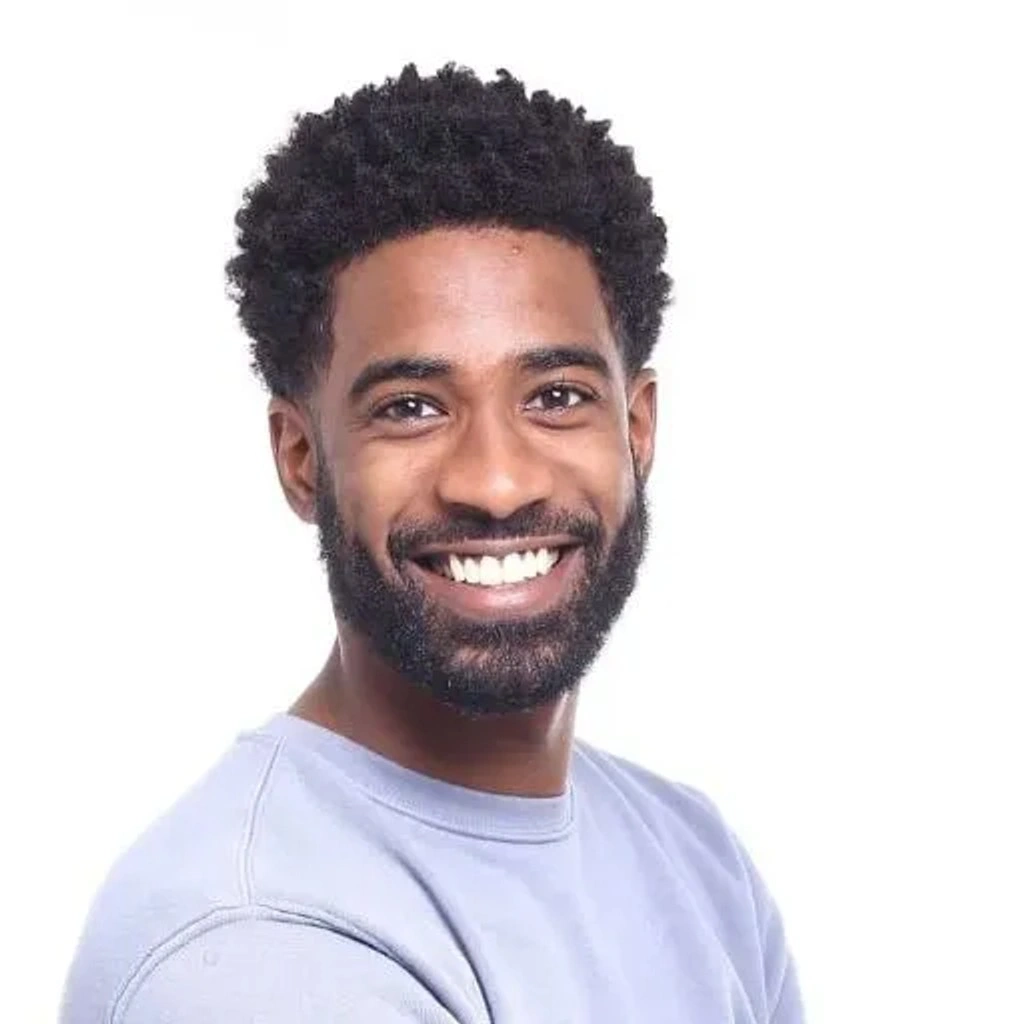
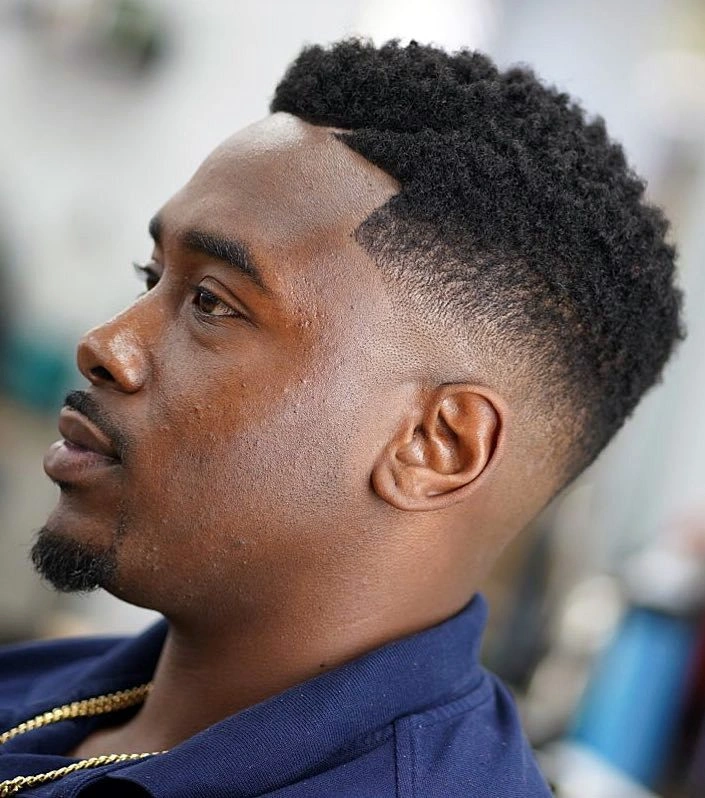
What Is an Afro Hair Transplant and Who Is It For?
An afro hair transplant is a hair restoration procedure adapted to the specific characteristics of afro-textured, tightly curled hair. The principle is the same as any modern hair transplant: healthy follicles are taken from the donor area — usually the back and sides of the scalp — and implanted into thinning or bald areas. What makes afro hair different is that the curl you see above the skin continues below it: the follicle sits in the scalp at a curved angle, so techniques designed for straight hair must be modified. In inexperienced hands, curved follicles are easily cut during extraction, which is why the surgeon's familiarity with this hair type matters more here than in almost any other type of hair transplant.
Candidates typically include men with male pattern hair loss affecting the hairline, temples or crown, and women with thinning along the hairline or traction alopecia — hair loss common in people who have worn tight braids, weaves or extensions over many years. Some patients also seek restoration after scarring from previous procedures or chemical damage from relaxers.
Suitability always depends on a medical assessment. In general, a good candidate has a stable donor area with sufficient density, realistic expectations, and hair loss that has stabilised or can be managed. Certain conditions need careful evaluation first: active scalp inflammation, some scarring alopecias (such as CCCA, central centrifugal cicatricial alopecia) and a strong tendency to form keloid scars can affect whether surgery is advisable at all. A proper consultation should therefore always come before any booking decision, especially if you are considering a hair transplant abroad.
How an Afro Hair Transplant Is Performed: Step by Step
Before the operation
The process starts with an assessment of your hair loss pattern, donor area and scalp health. For international patients, this usually begins remotely with photographs and a video consultation, followed by an in-person examination on arrival. The surgical team plans the new hairline according to your facial features, age and the natural direction of your curl, and calculates how many grafts are realistically available and needed. You will also be asked about medications, previous keloid or hypertrophic scarring, and general health; in the days before surgery you are typically advised to avoid alcohol, smoking and blood-thinning medication.
On the day of surgery
An afro hair transplant is performed under local anaesthesia and usually takes a full day, often longer than a comparable procedure on straight hair because each graft demands more care. Depending on the plan, the clinic may use one of the following approaches:
- FUE (Follicular Unit Extraction): individual follicular units are removed from the donor area with a fine punch. For afro hair, the punch size and angle are adapted to follow the curvature of the follicle beneath the skin, reducing the risk of transection (cutting the follicle).
- Sapphire FUE: the recipient channels are opened with sapphire-tipped blades, which allow very fine, precise incisions. This can help the surgeon control the depth, angle and density of implantation.
- DHI (Direct Hair Implantation): grafts are loaded into an implanter pen and placed directly into the recipient area without pre-made channels. A DHI hair transplant gives close control over the angle and direction of each graft — useful when recreating the characteristically straighter, more defined hairline that suits many afro-textured patients.
The choice between FUE, Sapphire FUE and DHI is not about one being universally "better"; it depends on the area being treated, graft numbers, skin characteristics and the surgeon's judgement. During extraction, the team checks graft quality continuously, because curved follicles carry the curl below the surface and a standard straight punch trajectory would damage many of them.
After the operation
The treated area is bandaged and you receive detailed aftercare instructions: how to sleep, when and how to wash your hair, and what to avoid. The first wash is usually done at the clinic or demonstrated by the team. Most international patients stay in Istanbul for a few days so the clinic can perform a follow-up check before they fly home, with further follow-up continuing remotely through photographs.
Advantages and Honest Limitations of Afro Hair Transplants
Advantages
- Visual density with fewer grafts: because tightly curled hair covers more scalp surface per hair, afro-textured patients often achieve good visual coverage with fewer grafts than would be needed for straight hair.
- Natural-looking results: when the curl direction and hairline design are respected, transplanted afro hair blends in well, since the texture itself helps disguise individual graft placement.
- Effective for traction alopecia: hairline and temple loss caused by years of tight hairstyles often responds well to transplantation, provided the traction has stopped and the donor area is healthy.
- Minimally invasive techniques: FUE and DHI leave no linear scar, only small dot-like marks in the donor area that are generally well hidden even with short haircuts.
Limitations you should know about
- Higher technical difficulty: the curved follicle makes extraction more demanding. Transection rates can be higher than with straight hair if the team lacks specific experience with afro-textured hair. Ask any clinic directly about their experience with this hair type.
- Scarring tendencies: people of African descent have a statistically higher tendency toward keloid and hypertrophic scarring. This does not automatically rule out surgery, but it must be assessed beforehand, and in some cases a small test session may be recommended.
- Longer operation times and sometimes staged sessions: because each graft takes more care, large areas may be divided across sessions.
- Not every diagnosis is treatable with surgery: active scarring alopecias need to be controlled medically before a transplant can be considered, and in some cases transplantation is not appropriate. An honest clinic will tell you this rather than operate regardless.
- Results take time and vary between individuals: no surgeon can promise a specific outcome. Growth speed, final density and curl behaviour differ from person to person.
Afro Hair Transplant in Turkey: Why Patients Choose Istanbul
Turkey has become one of the world's leading destinations for hair restoration, and Istanbul in particular hosts a dense concentration of specialised surgical teams. For patients researching a hair transplant in Turkey, the appeal usually comes down to three things: extensive surgical experience due to the sheer volume of procedures performed, significantly lower overall cost compared with clinics in Western Europe or North America, and well-organised packages designed for international patients.
For afro-textured patients, this matters because experience is the single most important factor in the outcome. A hair transplant clinic in Istanbul that regularly treats patients from Africa, Europe, the UK and the US is more likely to have hands-on familiarity with curved follicles. When comparing options for a hair transplant abroad, ask to see healed results on afro-textured hair — not just straight-haired before-and-after photos.
How the process works for international patients
- Remote assessment: you send scalp photographs and answer questions about your health and hair loss history; the medical team gives an initial opinion on suitability, technique and graft estimate.
- Planning your trip: most afro hair transplant patients spend around three to four days in Istanbul. Clinics accustomed to international patients typically help coordinate accommodation and transfers between the airport, hotel and clinic.
- Consultation and surgery: the in-person examination confirms the plan, and the procedure is carried out under local anaesthesia.
- Aftercare and follow-up: before you leave, the team checks the transplanted area and explains the aftercare routine; follow-up then continues remotely with progress photos during the first year.
At Hairpol, a multilingual team (English, Turkish and German) manages this process from the first message through long-term remote follow-up, which removes much of the friction of being treated in another country.
What Determines the Cost of an Afro Hair Transplant?
Hair transplant cost is one of the most searched topics, and it is also where patients should be most cautious about numbers found online. Serious clinics do not quote a final price without assessing your case, because the cost depends on factors that differ for every patient:
- Number of grafts required: the size of the thinning area and the density you are aiming for are the largest cost drivers.
- Technique used: FUE, Sapphire FUE and DHI involve different instruments and time requirements, which is reflected in pricing.
- Complexity of the case: afro-textured hair requires more time per graft, and cases involving scarring or repair work take longer than straightforward first procedures.
- Whether sessions are staged: very large areas sometimes need more than one session.
- What the package includes: accommodation, transfers, aftercare products, PRP support sessions and follow-up may or may not be part of the quoted price — always compare like with like.
As a general orientation, the cost of a hair transplant in Turkey is substantially lower than equivalent treatment in the UK, Germany or the US — a difference that largely reflects local operating costs, not lower surgical standards. The reliable way to learn what your own treatment would cost is a personal assessment: with photos of your scalp, a clinic can give you a case-specific quotation rather than a generic figure.
Recovery and Results: A Realistic Timeline
Healing follows a broadly predictable pattern, though the pace varies between individuals; with afro-textured hair, the curl can make early regrowth harder to see. The table below shows what most patients can expect:
| Period | What typically happens |
|---|---|
| Days 1–3 | Mild swelling, redness and scabbing in the treated areas. Rest, sleep with the head elevated, and follow the washing instructions exactly. |
| Days 4–14 | Scabs soften and shed with gentle washing. Redness fades gradually. Most patients return to office work within a few days; heavy exercise is still avoided. |
| Weeks 2–8 | "Shock loss": most transplanted hairs shed. This is a normal, expected phase — the follicles remain in place beneath the skin. |
| Months 3–4 | New growth begins as fine, soft hairs. The curl pattern may look looser at first and tightens as the hair matures. |
| Months 6–9 | Noticeable improvement in coverage and texture. Density continues to build; results still evolve. |
| Months 12–18 | Final result becomes apparent. Afro-textured hair can take toward the later end of this range to show its full, mature density. |
During recovery, patients with afro-textured hair should be especially careful with styling: no tight braids, weaves, extensions or chemical relaxers on or near the transplanted area until the clinic confirms it is safe, since traction and chemicals can compromise grafts. Your care team will give you timelines for reintroducing your usual routines.
How to Choose a Clinic for an Afro Hair Transplant
Searching for the best hair transplant clinic in Turkey produces an overwhelming number of options, and quality varies widely. For afro-textured hair, apply stricter filters:
- Specific afro hair experience: ask directly how often the team treats afro-textured hair and request healed before-and-after results on this hair type, including donor-area photos.
- A real medical assessment before any price talk: be wary of anyone quoting a fixed price or graft number before seeing your scalp, or promising results that sound guaranteed. Ethical practice means honest suitability screening — including telling some people they are not good candidates.
- Who actually performs the procedure: clarify the roles of the physician and technicians, who designs the hairline, and who performs extraction and implantation.
- Technique flexibility: a clinic offering FUE, Sapphire FUE and DHI can choose the method that suits your case. If you are comparing options for an FUE hair transplant in Istanbul, ask why a particular technique is being recommended for you specifically.
- Structured aftercare: a defined follow-up schedule with photo reviews during the first year is a sign the clinic takes long-term results seriously.
- Clear communication in your language: you should be able to ask detailed medical questions before committing, and get answers from the medical team — not only from a sales representative.
- Transparent, itemised quotations: understand exactly what is included in the package so you can compare clinics fairly.
Frequently Asked Questions About Afro Hair Transplants
Is a hair transplant harder to perform on afro-textured hair?
Yes, technically it is more demanding. The follicle is curved beneath the skin, so extraction requires adapted instruments and an experienced hand to avoid cutting the graft. This is why the surgical team's specific experience with afro-textured hair is the most important factor when choosing a clinic.
Which technique is better for afro hair: FUE or DHI?
Neither is universally better. FUE — including Sapphire FUE — and DHI can both work well on afro-textured hair; the choice depends on the size of the area, graft numbers, your skin and scalp characteristics, and the surgeon's assessment. A good clinic recommends the technique after examining you, not before.
Do afro-textured patients need fewer grafts?
Often, yes. Because each curled hair covers more visual surface, satisfying coverage can frequently be achieved with fewer grafts than straight hair would require. The exact number still depends on the size of the thinning area and the density goal, and is confirmed during your assessment.
Can women with traction alopecia have an afro hair transplant?
In many cases, yes. If the hair loss along the hairline or temples has stabilised and the tension-causing styling has stopped, transplantation can restore these areas. An examination is needed first to confirm the follicles are truly lost rather than dormant, and that no scarring condition is active.
What about keloid scarring risk?
A personal or family history of keloids must be discussed openly before surgery. It does not automatically exclude you, but the medical team may examine existing scars, adjust the plan, or suggest a small test area first. Concealing a keloid history from your clinic is never in your interest.
How long do I need to stay in Istanbul?
Most international patients stay around three to four days: arrival and consultation, the procedure day, and a follow-up check with the first wash before flying home. Your clinic will confirm the exact schedule for your case, and aftercare continues remotely once you are back home.
When can I braid my hair or use relaxers again?
Not until your clinic confirms the grafts are secure and the scalp has healed — typically this means waiting several months, and your care team will give you specific timing. Returning to tight braids or chemical relaxers too early can damage the transplanted follicles and undermine the result.
Will the transplanted hair keep my natural curl pattern?
Yes — the transplanted hair comes from your own scalp, so it retains your natural texture. In the first months of regrowth the new hairs may temporarily look finer or slightly straighter, and the familiar curl pattern typically establishes itself as the hair matures.
How much does an afro hair transplant cost in Turkey?
There is no single answer, because the cost depends on the number of grafts, the technique, the complexity of your case and what the package includes. Treatment in Istanbul is generally considerably more affordable than comparable procedures in Western Europe or North America. The only reliable figure is a personal quotation based on photos of your scalp.
Get a Personal Assessment
Every head of afro-textured hair is different, and so is every hair loss pattern — which is why generic answers only go so far. If you are considering an afro hair transplant, the practical next step is a preliminary assessment: send a few photos of your scalp and a short description of your hair loss history, and Hairpol's medical team in Ataşehir, Istanbul will review your case honestly and outline a treatment plan tailored to you. You can reach us at +90 549 102 07 47 or info@hairpol.com — in English, Turkish or German — with no obligation attached.
