
DHI Hair Transplantation
What Is DHI Hair Transplantation and Who Is It For?
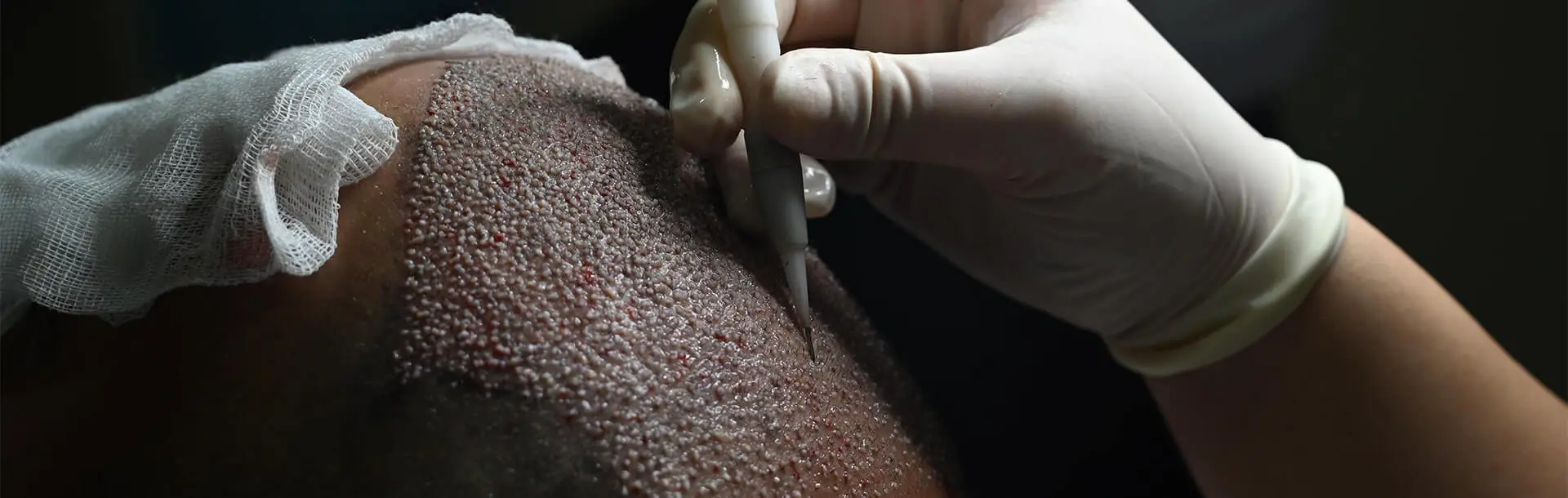
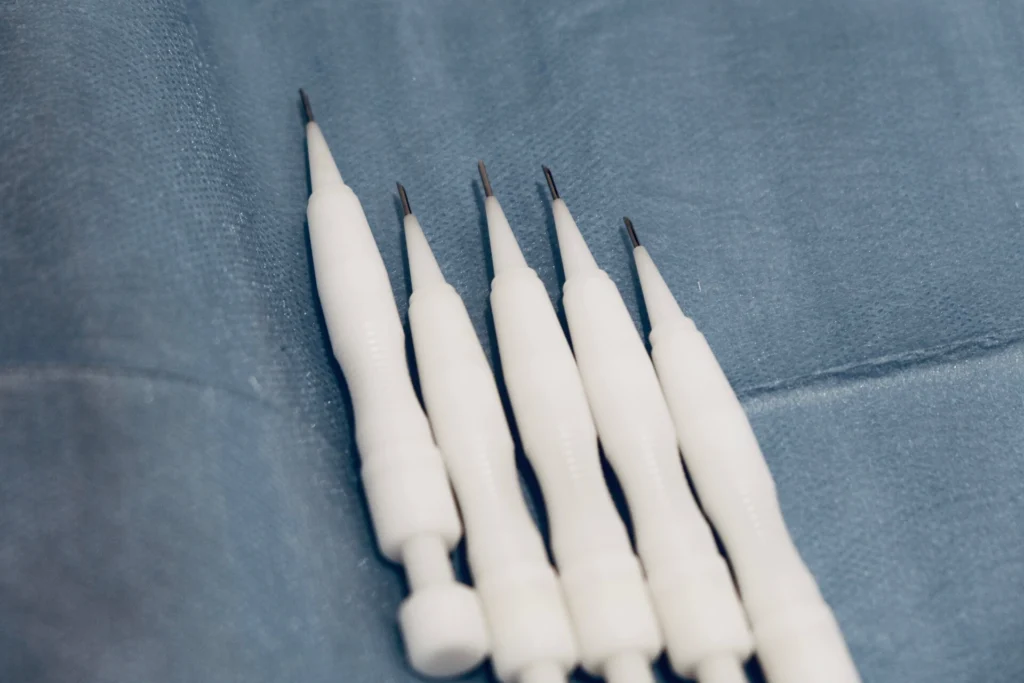
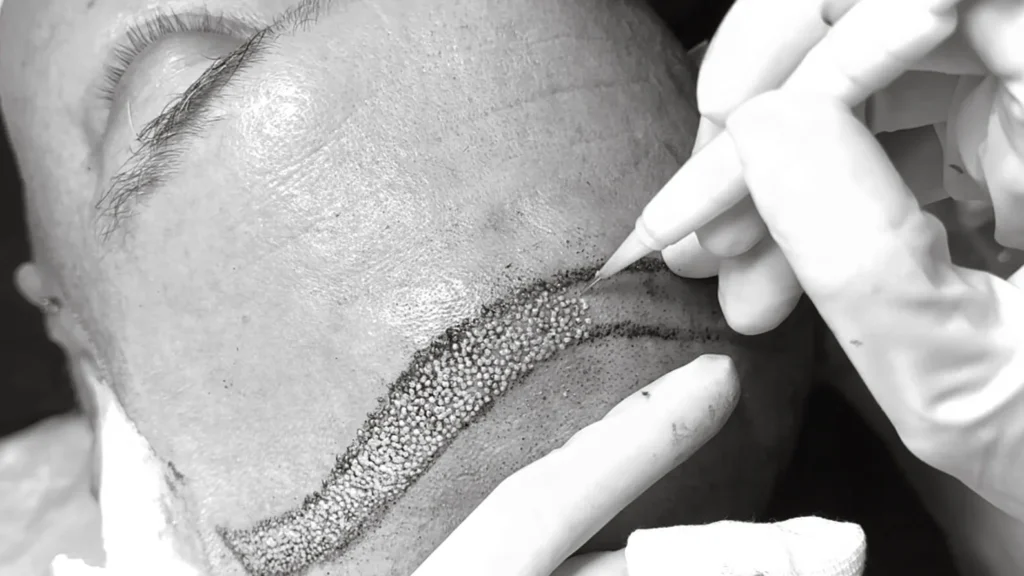
DHI (Direct Hair Implantation) is a hair restoration technique in which extracted hair follicles are placed into the recipient area with a fine, pen-shaped instrument known as the Choi implanter pen. Unlike classic methods, DHI does not require pre-made channel incisions: the hollow needle of the Choi pen opens the channel and places the graft in a single movement. This gives the surgeon very precise control over the depth, angle and direction of every implanted hair, which is why DHI is often preferred for hairline design and for patients who want a particularly natural-looking result.
A DHI hair transplant is generally considered for adults with androgenetic alopecia (male- or female-pattern hair loss) whose hair loss has stabilised and who have a sufficient donor area, usually at the back and sides of the scalp. It is frequently a good match for patients who:
- need moderate coverage rather than very large areas in a single session;
- want to densify thinning zones without shaving all of the existing hair (in suitable cases, unshaven or partially shaven DHI is possible);
- place high importance on the design of the frontal hairline and temples;
- are candidates for female hair transplantation, where preserving existing hair matters greatly.
DHI is not automatically the right choice for everyone. Very extensive baldness, poor donor density, uncontrolled scalp conditions, certain chronic illnesses or unrealistic expectations may make another approach — or postponing surgery — more appropriate. Suitability can only be confirmed after a medical evaluation of your scalp, donor reserves and health history, which is why a proper consultation should always come before any booking decision.
How a DHI Hair Transplant Is Performed: Step by Step
Before the operation
The process starts with an assessment of your hair loss pattern, donor capacity and general health. At Hairpol in Istanbul, international patients usually begin with a remote pre-assessment based on photographs and a medical questionnaire, followed by an in-person examination on arrival. Blood tests are performed before surgery, and you will be asked about medications, allergies and habits such as smoking, which can affect healing. Your surgeon then plans the hairline, estimates the number of grafts needed and explains what the technique can and cannot achieve in your specific case.
On the day of surgery
A DHI procedure typically follows these stages:
- Preparation and anaesthesia: the donor area is trimmed and the scalp is numbed with local anaesthetic. You remain awake but should not feel pain during the procedure, although some pressure or mild discomfort is possible.
- Graft extraction: follicular units are harvested one by one from the donor area with a micromotor punch, the same extraction principle used in FUE hair transplant procedures.
- Loading the Choi pens: the medical team sorts the grafts and loads them individually into Choi implanter pens while they are kept in a preserving solution.
- Direct implantation: the surgeon implants each graft directly into the recipient area, controlling the angle, direction and depth with every insertion. No separate channel-opening phase is needed.
Depending on the number of grafts, the session usually takes around six to eight hours, with breaks. Larger plans are sometimes divided into two sessions on consecutive days or spaced months apart, based on the surgeon's judgement.
After the operation
The donor and recipient areas are checked and a light dressing may be applied to the donor zone. You receive written aftercare instructions covering sleeping position, medication, and how to protect the grafts. The first professional wash is generally done at the clinic a day or two after surgery, and the team shows you how to continue washing gently at home. Follow-up continues remotely after you return to your country, with photo check-ins at agreed intervals.
Advantages and Honest Limitations of DHI
Advantages
- Precise, natural placement: because implantation is done directly with the Choi pen, the surgeon can fine-tune the angle and direction of each hair, which is especially valuable at the hairline and temples.
- Shorter time outside the body: grafts move from extraction to implantation quickly, which is thought to support graft viability.
- Denser packing in suitable areas: DHI allows closely spaced implantation in limited zones, useful when densifying thinning regions between existing hairs.
- Unshaven options: in appropriate cases the recipient area does not need to be fully shaved, making the recovery period more discreet.
- No linear scar: as with FUE, extraction leaves tiny dot marks in the donor area rather than a strip scar; these are usually hard to notice once hair grows back.
Limitations to be aware of
- It is still surgery. DHI is a minimally invasive but real surgical procedure performed under local anaesthesia. Swelling, redness, crusting, temporary numbness, itching and — less commonly — infection or folliculitis can occur. Choosing an experienced medical team reduces, but never eliminates, risk.
- Session size is more limited. Because each graft is loaded and implanted individually, DHI sessions are slower and typically cover fewer grafts per day than classic or Sapphire FUE. Very large areas may be better served by FUE or by staged sessions.
- Shock loss and shedding are normal. Most transplanted hairs shed within the first weeks; visible regrowth takes months. Some existing native hair around the implanted zone can also shed temporarily.
- Results vary from person to person. Hair calibre, curl, donor quality, scalp characteristics and aftercare all influence the final outcome. No responsible clinic can promise a specific density or a guaranteed result.
- It does not stop ongoing hair loss. Transplanted follicles are taken from zones genetically resistant to balding, but native hair may keep thinning. Your doctor may recommend supportive treatments such as PRP or medical therapy to help maintain existing hair.
Being honest about these limits matters: a good DHI candidate who understands the realistic timeline is far more likely to be satisfied than someone expecting instant, uniform density.
DHI Hair Transplant in Turkey and Istanbul: Why Patients Travel for It
Turkey has become one of the busiest destinations in the world for hair restoration, and Istanbul is its centre. Patients researching a hair transplant in Turkey are usually drawn by a combination of factors: surgical teams that perform these procedures at high volume, modern clinical infrastructure, significantly lower overall pricing than in Western Europe or North America, and travel logistics that are easy to organise. For many people comparing options for a hair transplant abroad, Istanbul offers the practical advantage of direct flights from most major cities and a well-established routine for medical travellers.
For international patients, the typical process at a hair transplant clinic in Istanbul looks like this:
- Remote evaluation: you share photos of your scalp and answer questions about your health and hair loss history. The clinic gives a preliminary opinion on technique (DHI, FUE or Sapphire FUE) and an estimated graft range.
- Planning the trip: most DHI patients stay in Istanbul for about three nights. Clinics commonly help coordinate hotel and transfer arrangements so that airport, hotel and clinic logistics are handled for you.
- Day 1 — consultation and surgery: in-person examination, blood tests, final planning and the procedure itself.
- Day 2 or 3 — check-up and first wash: the team examines the donor and recipient areas, performs the first wash and goes through aftercare in detail.
- Return home: follow-up continues online, with scheduled photo reviews during the months of regrowth.
Hairpol operates in Ataşehir on the Asian side of Istanbul and works with English-, Turkish- and German-speaking patients, so communication before, during and after treatment does not depend on a translator you have never met. If you are comparing candidates for the best hair transplant clinic in Turkey for your case, we encourage you to ask every clinic the same detailed questions — about the surgical team, the technique, graft handling and follow-up — and judge the quality of the answers.
What Determines the Cost of a DHI Hair Transplant?
Search interest in "hair transplant cost" and "hair transplant Turkey cost" is understandably high, but a serious price can only be quoted after your case has been assessed. Rather than publishing a misleading flat figure, it is more useful to understand what actually drives the price of a DHI procedure:
- Number of grafts and size of the area: larger areas and higher graft counts require more time and a larger team.
- Technique chosen: DHI is more labour-intensive per graft than standard FUE, which is reflected in pricing at most clinics.
- Complexity of the case: repair procedures, afro-textured hair, unshaven approaches or combined beard-to-scalp harvesting demand extra planning and skill.
- Who performs and supervises the procedure: the experience and involvement of the medical team is a legitimate cost factor — and one worth paying attention to.
- What the package includes: in Istanbul, quotes often cover accommodation, transfers, medication and aftercare products; always check exactly what is and is not included.
- Additional supportive treatments: options such as PRP sessions may be offered alongside the transplant and affect the total.
When comparing hair transplant Istanbul offers, be cautious with quotes that are dramatically below the general market or that promise unlimited grafts: donor capacity is finite, and over-harvesting can permanently damage the donor area. The most reliable way to learn what your treatment would cost is a personalised assessment — Hairpol provides this free of charge based on your photos, with no obligation.
Recovery and Results: A Realistic Timeline
Hair transplantation rewards patience. Most patients follow a broadly similar course, though individual healing speed varies:
| Period | What typically happens |
|---|---|
| Days 1–3 | Mild swelling, redness and pinpoint crusts in the recipient area; donor area may feel tender. First professional wash at the clinic. |
| Days 4–14 | Crusts soften and shed with gentle washing; redness gradually fades. Most people return to desk work within a few days. |
| Weeks 2–8 | "Shock shedding": most transplanted hairs fall out. This is an expected phase, not a sign of failure. |
| Months 3–4 | New hairs begin to emerge, often fine and uneven at first. |
| Months 6–9 | Noticeable improvement in coverage; hairs thicken and mature. Texture may still change. |
| Months 12–18 | Final result is generally assessed around one year, with crown areas sometimes maturing more slowly, up to eighteen months. |
During the first weeks you will be asked to avoid heavy exercise, swimming, sauna, direct sun exposure on the scalp and anything that risks rubbing the grafts. Smoking and alcohol are discouraged around the time of surgery because they can affect healing. Your clinic should give you clear written instructions and remain reachable for questions throughout this period.
How to Choose a Clinic for DHI: What to Check
Whether you are considering an FUE hair transplant in Istanbul or a DHI procedure, the technique matters less than the team applying it. Points worth verifying before you commit:
- Medical evaluation before price: a trustworthy clinic asks about your health and examines your photos before quoting, not the other way round.
- Who does what: ask who performs the extraction, who implants the grafts, and who supervises the procedure medically.
- Realistic language: be sceptical of guarantees, promises of exact densities, or "risk-free" claims. Ethical clinics explain risks openly.
- Technique selection, not technique marketing: a good clinic offers DHI, FUE and Sapphire FUE and recommends the one that fits your case — not simply the most expensive option.
- Before-and-after cases similar to yours: look for patients with a comparable hair loss pattern, hair type and age.
- Aftercare structure: confirm how follow-up works once you are back home, and through which channels you can reach the team.
- Transparent packages: a written treatment plan listing the technique, estimated graft range and everything included in the price.
Taking a week to compare two or three clinics carefully is a small investment next to a result you will wear every day.
Frequently Asked Questions About DHI Hair Transplantation
What is the difference between DHI and FUE?
Extraction is essentially the same in both: follicles are harvested individually from the donor area. The difference lies in implantation. In classic FUE, channels are opened first and grafts are placed afterwards; in DHI, the Choi pen opens the channel and implants the graft in one motion. DHI offers finer control of angle and density in delicate zones, while FUE is often more efficient for large areas.
Is a DHI hair transplant painful?
The procedure is performed under local anaesthesia, so you should not feel pain during surgery, though the anaesthetic injections themselves can sting briefly and some patients notice pressure. Mild soreness, tightness or itching in the days afterwards is common and usually manageable with the medication your doctor prescribes.
How long do I need to stay in Istanbul?
Most international patients plan around three nights. This allows time for the in-person consultation and surgery, a follow-up check, and the first professional hair wash before flying home. Your clinic will confirm the exact schedule for your case.
When will I see the final result?
New growth usually starts around the third or fourth month, improves markedly between months six and nine, and is generally assessed as final at about twelve months. Crown regions can take up to eighteen months to mature. Timelines vary from person to person.
Do I have to shave my head for DHI?
Not always. In suitable cases, DHI can be performed with only the donor area trimmed, or with a partial shave, leaving the surrounding hair long enough to camouflage the treated zone. Whether this is possible depends on the size of the area and the surgeon's assessment.
Are DHI results permanent?
Transplanted follicles come from donor zones that are genetically resistant to pattern hair loss, so they are expected to keep growing long term in most patients. However, native, non-transplanted hair can continue to thin over the years, which is why doctors sometimes recommend supportive medical treatment to protect it.
Is DHI suitable for women?
Often, yes. Because DHI can densify thinning areas without shaving all existing hair, it is frequently considered for female patients with stable, localised thinning. Women's hair loss can have different underlying causes than men's, so a careful medical work-up before surgery is particularly important.
How many grafts will I need?
That depends on the size of the thinning area, your desired density, your hair characteristics and your donor capacity. A meaningful estimate requires reviewing photos or examining your scalp; be wary of any figure quoted without an assessment.
What are the risks of a DHI hair transplant?
As with any surgical procedure, risks include swelling, temporary numbness, itching, folliculitis, infection and, rarely, poor graft survival in some areas. Most side effects are mild and temporary. Careful patient selection, sterile technique and good aftercare reduce risk, but no clinic can honestly call the procedure risk-free.
Why do so many people choose a hair transplant in Turkey?
Experienced high-volume surgical teams, modern facilities and considerably lower overall costs than in most Western countries are the main reasons, alongside straightforward travel to Istanbul. As anywhere, quality varies between providers, so researching the specific clinic and team remains essential.
Get a Free, No-Obligation Assessment
If you are considering DHI hair transplantation, the most useful next step is a personal evaluation rather than more general reading. You can send photos of your hair to Hairpol's medical team for a free preliminary assessment: we will tell you honestly whether DHI, FUE or Sapphire FUE fits your situation, roughly how many grafts your plan would involve, and what a treatment stay in Istanbul would look like for you. Contact us at +90 549 102 07 47 or info@hairpol.com — in English, Turkish or German — and take your time deciding; a considered choice is always the right one with elective surgery.
