
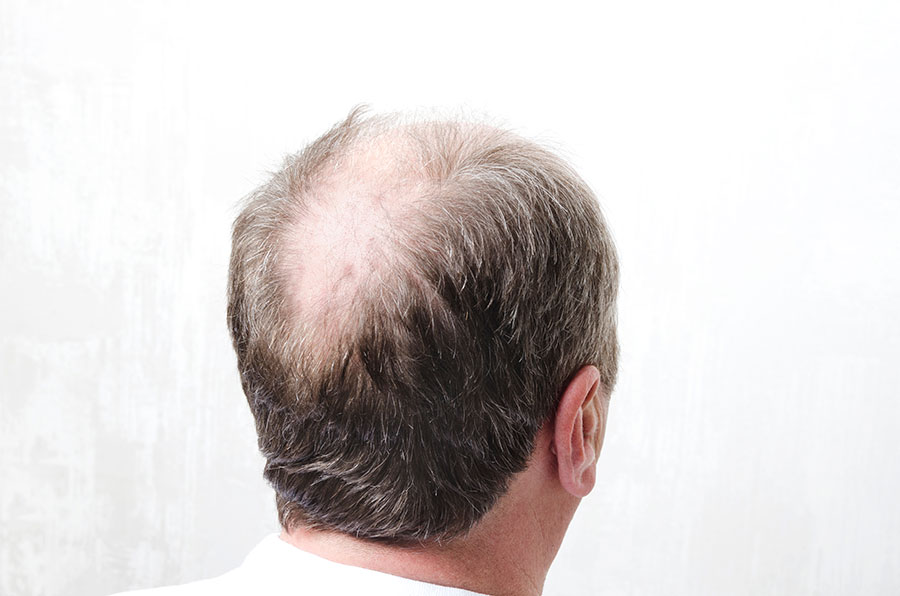
The question of whether a second hair transplant can damage the results of the first one is among the most practically important questions that patients in staged treatment plans — or those considering a supplemental procedure — need to understand. It’s also a question that is frequently answered with either dismissive reassurance (“don’t worry, it won’t affect the first results”) or vague caution (“well, there’s always some risk”), neither of which gives patients the specific, mechanistic understanding they need to evaluate the question intelligently.
The honest answer is more nuanced than either response. A second hair transplant, performed correctly and at an appropriate time, does not damage the permanent hair that was established by the first procedure. But “performed correctly” and “at an appropriate time” involve specific clinical conditions that matter — and when those conditions aren’t met, real damage to the existing result is possible.
This guide covers the complete picture: the biology of why established transplanted hair is resilient to a second procedure, the specific mechanisms through which a second procedure can interfere with existing results, the timing and technique considerations that determine whether those mechanisms are relevant, and what patients should expect from a well-planned second procedure in terms of its relationship to the first.
The Foundation: Why Established Transplanted Hair Is Resilient
To understand why a second hair transplant typically doesn’t damage the first, it helps to understand what “established” transplanted hair actually means biologically.
When a follicular unit is implanted during a hair transplant procedure, it undergoes a process of integration into the surrounding recipient tissue over the following weeks and months. By the end of the first year — when the result is considered substantially mature — the transplanted follicle has:
Established a new blood supply through revascularization, with new capillaries growing from the surrounding tissue toward the follicle. This new blood supply is now the follicle’s permanent circulatory infrastructure in its new location. Formed structural tissue connections with the dermis and surrounding tissue that anchor it in place far more robustly than the initial fibrin seal of the first weeks. Re-entered anagen and completed at least one full growth cycle in its new location, producing hair that demonstrates the follicle is functionally established. Achieved a stable relationship with the surrounding tissue that is not vulnerable to the same acute disruption risks that characterized the first weeks after implantation.
A follicle that has completed this integration process is fundamentally more resilient than a fresh graft. It has an established blood supply, structural tissue connections, and proven functional integration. These characteristics make it significantly less vulnerable to the tissue disruption of a subsequent procedure in the vicinity than a fresh graft would be.
This is the biological basis for the general safety of second procedures on previously transplanted areas: the established transplanted hair has characteristics that make it relatively robust to the creation of new implantation channels in the same zone, in ways that the first grafts weren’t robust in their own early recovery period.
The Specific Risk: Shock Loss of Existing Transplanted Hair
The primary mechanism through which a second procedure can affect the results of the first is shock loss — the same process that affects both transplanted and native hair in the immediate aftermath of any hair transplant procedure.
When new implantation channels are created in the recipient area for a second procedure, the tissue disruption involved triggers a stress response in neighboring follicles. Follicles in close proximity to the new channels experience the tissue trauma, inflammatory response, and altered circulation that characterize the early healing period — and they can respond to this stress by entering telogen and shedding their hair shafts, just as transplanted and native follicles do after any procedure.
For previously transplanted follicles, this stress-induced telogen entry from a second procedure is typically temporary. The follicles that have been through the complete integration process are not lost — they shed their hair shafts during the shock loss phase, enter telogen, and then return to anagen as they recover from the procedural stress. This is the same biological cycle that occurred after the first procedure, and it resolves on the same general timeline: new growth typically emerging three to five months after the second procedure from follicles that shed during shock loss.
The important distinction is between temporary shock loss — which is expected, manageable, and fully reversible — and permanent damage to the established follicles. For well-integrated follicles from the first procedure, the former is a realistic expectation in a second procedure to the same area; the latter requires specific conditions that careful technique is designed to prevent.
When Does Shock Loss from a Second Procedure Become a Concern?
Shock loss from a second procedure becomes a meaningful concern in two specific scenarios that are worth understanding clearly.
Scenario one: the second procedure is performed before the first result is fully mature. If new channels are created in the recipient area before the follicles from the first procedure have completed their integration — typically before the six-month mark at minimum, and ideally not before twelve months — those first-procedure follicles are not yet in the robust, fully established state that makes them resilient to procedural stress. They are still in the process of revascularizing, integrating, or completing their first anagen cycles. Creating tissue disruption in their vicinity at this stage carries higher risk of more pronounced shock loss and, in cases of very early second procedures, potential permanent disruption of integration that is not yet complete.
This is the primary reason why a minimum interval between first and second procedures is clinically important. The standard recommendation — waiting at least twelve months, and ideally assessing the first result at twelve to eighteen months before planning a second — is not arbitrary conservatism. It reflects the timeline over which first-procedure follicles complete the integration process that makes them resilient to subsequent procedural stress.
Scenario two: the second procedure involves high-density implantation directly into or immediately adjacent to first-procedure grafts. The intensity of tissue disruption from channel creation is cumulative with proximity. Creating a small number of channels with moderate spacing in an area of first-procedure grafts produces less tissue disruption than creating high-density channels packed tightly in the same zone. Very high-density second procedures in areas already containing well-established grafts from a first procedure can produce significant shock loss in those existing grafts — still typically temporary, but more pronounced and prolonged than a moderate-density second procedure would generate.
Experienced surgeons performing second procedures in areas of established grafts account for this by planning channel creation to interdigitate between existing graft locations rather than directly over them, and by managing the density of the second procedure to avoid the cumulative tissue trauma that produces excessive shock loss. This spatial planning is part of what makes second procedures technically more complex than first procedures — the surgeon is working in tissue that already contains established follicles rather than in scalp without this constraint.
Can the Implantation Needle Physically Damage Established Grafts?
Beyond shock loss, a specific concern that some patients raise is whether the physical act of creating implantation channels can directly damage or transect established follicles from the first procedure. This is a legitimate technical question, and the answer depends on surgical precision.
Established follicles occupy specific locations in the scalp dermis — locations that are determinable from the surface by the direction and position of the hair shafts growing from them. An experienced surgeon creating implantation channels for a second procedure can identify and avoid the locations of existing established follicles, placing new channels in the spaces between them rather than directly over or through them.
When this spatial awareness and planning is applied — and when the surgeon and team have sufficient experience to execute it with the precision that established-graft-area work requires — the risk of physically damaging established grafts through channel creation is low. The implantation needle needs to miss existing follicles by a few millimeters, and experienced hands with appropriate magnification and good spatial planning can achieve this consistently.
When it is not applied — when a second procedure is performed without explicit accounting for the locations of existing grafts, or by a team with insufficient experience for this specific type of work — physical damage to established follicles is possible and becomes part of the risk profile of the second procedure.
This is one of the reasons why the technical demands of second procedures in areas of established grafts are higher than first procedures, and why experience specifically with second-procedure work matters for this category of patient beyond what a team’s general hair transplant volume reflects.
The Donor Area: A Different Risk in Second Procedures
The discussion of second procedures damaging the first result typically focuses on the recipient area — the scalp where grafts have been placed. But the donor area carries its own second-procedure considerations that are worth addressing specifically.
Each FUE extraction removes a follicle from the donor zone permanently. A second procedure draws from the same donor zone that the first procedure drew from, further reducing the density of follicles available in that area. When harvesting is distributed appropriately across the donor zone and stays within safe density limits, successive FUE procedures can be performed without producing visible donor area thinning.
The risk to the donor area from a second procedure is not that the second extraction damages the follicles that were established from the first procedure — those first-procedure donor follicles were extracted and no longer exist in the donor area. The risk is that if cumulative extraction density across first and second procedures exceeds the safe harvesting threshold in any zone, visible thinning or patchiness develops in the donor area that represents a permanent cosmetic problem.
Responsible second-procedure planning includes explicit assessment of how much of the donor supply was used in the first procedure and how that constrains the options for the second. A patient whose first procedure used 3,000 grafts from a donor supply estimated at 5,000 to 6,000 grafts has 2,000 to 3,000 grafts remaining for the second procedure — which may or may not be sufficient for their goals, and which needs to be distributed appropriately across the remaining donor density to avoid over-harvesting in any specific zone.
Timing: The Most Important Variable
Of all the factors that determine whether a second hair transplant affects the results of the first, timing is the most important and the one most clearly under the patient’s control.
The first-procedure result should be fully mature before a second procedure is planned. “Fully mature” means the growth from the first procedure has completed its development — all follicles have exited telogen and entered anagen, hair caliber has reached its mature level, and the overall density of the first result is visible and assessable. For most patients, this occurs between twelve and eighteen months after the first procedure, with the crown often taking longer than the frontal zone.
Planning a second procedure before this maturity point creates two problems. First, the first-procedure follicles are still in various stages of integration and early growth — stages at which they are more vulnerable to procedural stress from a second procedure than fully mature follicles would be. Second, the result of the first procedure is not yet fully assessable — proceeding to a second procedure before understanding what the first actually produced means making planning decisions without the information that the first procedure’s mature result would provide.
Waiting for full maturity also clarifies the goals of the second procedure more precisely. A patient who assessed their result at six months and concluded it needed significant supplementation may find that by twelve months the result has continued to develop in ways that change what the second procedure needs to accomplish. Planning the second procedure based on the twelve-month assessment produces better-targeted and better-allocated second procedures than planning based on earlier assessments.
What a Well-Planned Second Procedure Looks Like
A second hair transplant that is well-planned and well-executed in terms of its relationship to the first result has several specific characteristics.
It is performed after the first result is fully mature — typically at twelve to eighteen months or later. It includes explicit assessment of the donor supply remaining after the first procedure and plans extraction to stay within safe density limits across the available donor zone. It accounts for the locations of existing first-procedure grafts in the recipient area, planning channel creation to interdigitate rather than overwrite, and managing implantation density to avoid excessive tissue disruption of the established graft area. It is performed by a team with experience in second-procedure work in established-graft areas, not simply transferred experience from first procedures.
The result of such a procedure is additional density or coverage in the target area, with first-procedure grafts that may experience temporary shock loss but are not permanently damaged and that return to their pre-second-procedure function as the shock loss phase resolves over the following months.
For patients whose first procedure was well-planned with this second procedure already anticipated — where donor supply management in the first session explicitly preserved supply for the second — the second procedure is the execution of a plan that was designed from the outset rather than an improvised response to insufficient first-procedure results. This is the optimal scenario: staged procedures where each stage was part of the overall plan from the consultation for the first procedure.
Revision Procedures: A Different Context
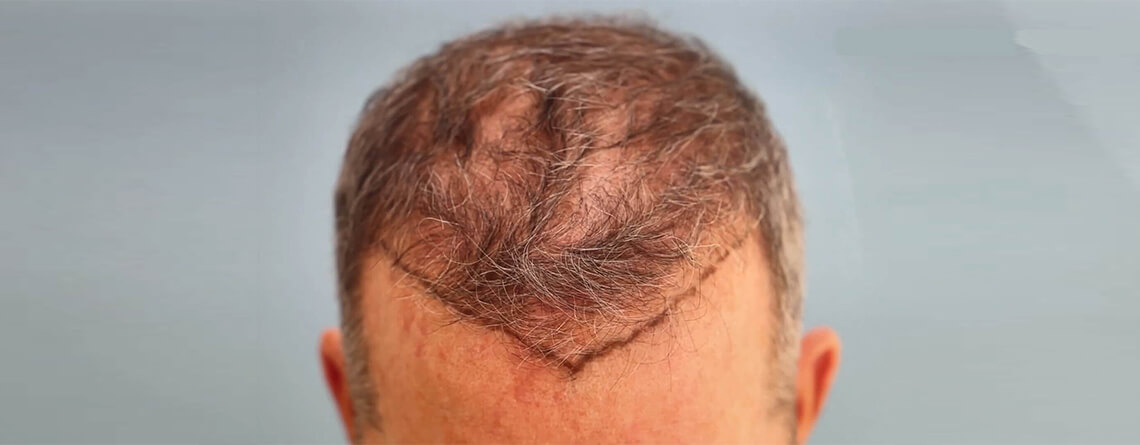
A specific category of second procedure that deserves its own discussion is revision — a second procedure performed not to address new or expanding hair loss, but to correct or improve the result of a first procedure that produced inadequate density, unnatural design, or other quality deficiencies.
Revision work differs from staged second procedures in its goals and often in its technical demands. Rather than supplementing a good result with additional coverage in new areas, revision work typically involves adding density to zones where the first procedure underperformed, correcting hairline characteristics that don’t look natural, or camouflaging aspects of the first result that are cosmetically problematic.
In terms of the question of whether revision damages the first result: the same principles apply, but with the added complexity that revision work often involves creating channels in precisely the areas where the first procedure’s grafts are located — because the goal is to improve density in those areas specifically. This requires the highest level of technical precision in channel placement relative to existing grafts, and is among the most technically demanding work in hair restoration surgery.
Revision work also frequently operates under donor supply constraints created by the first procedure. If the first procedure was performed by a clinic that over-harvested the donor area, or that used an inappropriate graft count for a large coverage area without preserving supply for future needs, the revision options are constrained by what donor supply remains — which may be significantly less than what adequate revision would ideally require.
Evaluating Whether a Second Procedure Is Right for You
Patients considering a second hair transplant should approach the evaluation with a set of specific questions that determine whether the timing, the plan, and the expected relationship between first and second results are appropriate.
Has the first result fully matured — assessed at twelve months or later, with the crown given additional time if it was treated? Is the donor supply adequately characterized — how much was used in the first procedure and how much remains for the second? How does the proposed plan account for the locations of existing first-procedure grafts in the recipient area, and what density management approach will be used to avoid excessive disruption of the established graft area? Is the clinic and team specifically experienced with second procedures in established-graft areas, not just with first procedures generally? And is the goal of the second procedure clearly defined relative to what the first procedure produced — supplementing a good result with additional coverage, versus attempting to rescue a poor result with inadequate remaining donor supply?
A consultation that can answer these questions specifically is demonstrating the planning quality that second procedures in established-graft areas require. A consultation that addresses the second procedure as though it were simply a first procedure in a different area — without explicit acknowledgment of the existing grafts, the donor supply constraints, and the timing considerations — is not providing the individualized assessment that this category of work actually demands.
At Hairpol, second procedures are approached with explicit assessment of the existing result, remaining donor supply, and the technical requirements of working in an area that already contains established grafts — because the standards for second-procedure planning are genuinely higher than for first procedures, and the patients who need them deserve planning that accounts for this complexity rather than treating it as routine.
The Honest Summary
A second hair transplant does not permanently damage the first result when it is performed at the appropriate time — after full maturity of the first result — with appropriate technique that accounts for the locations of existing grafts and manages implantation density to avoid excessive tissue disruption. The established transplanted hair from the first procedure may experience temporary shock loss from the second procedure’s tissue disruption, but this shock loss resolves and the follicles return to their established function.
The risk of meaningful interference with first-procedure results is real but preventable — prevented by timing (waiting for full maturity), by technique (appropriate channel placement and density management), and by experience (surgical teams specifically practiced in this technically demanding category of work).
For patients whose hair loss is progressive and who will need staged management over time, understanding this picture allows them to approach second procedures with accurate expectations: the first result is not at significant risk from a well-planned second procedure, temporary shock loss is expected and manageable, and the goal of preserving and building on the first result is achievable with appropriate planning and execution.
Find this helpful? Add Hairpol as a preferred source on Google.
Get a Free Consultation
Answer a few questions and the medical team will review your situation.
