
Sapphire FUE Hair Transplant
What Is Sapphire FUE Hair Transplant and Who Is It For?
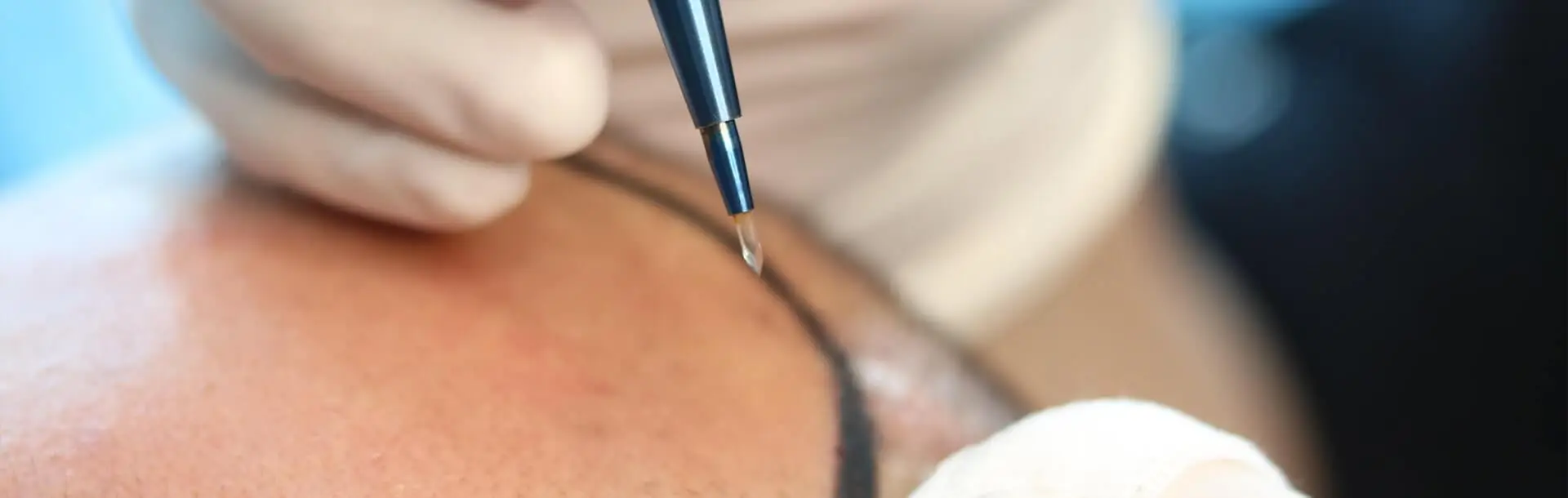
Sapphire FUE is a refined version of the Follicular Unit Extraction (FUE) technique in which the tiny incisions that receive the grafts are opened with blades made of single-crystal sapphire instead of steel. Extraction is the same as in classic FUE: follicular units are harvested one by one from the donor area, usually the back and sides of the head, where hair is genetically resistant to thinning. What changes is the channel-opening phase: sapphire blades are exceptionally smooth and fine-tipped, allowing smaller, more precise recipient channels at controlled depths and angles.
Why does that matter? The size, direction and density of the recipient channels largely determine how natural the result looks. Finer channels generally mean less tissue trauma, denser graft placement where the skin allows it, and a hairline that follows the natural growth angle of your existing hair. For many patients researching a hair transplant in Turkey, Sapphire FUE has become the default choice for exactly this balance of density and naturalness.
Sapphire FUE is typically considered for:
- Men with androgenetic (pattern) hair loss that has stabilised or can be managed medically
- Women with suitable donor hair and localised thinning, after a dermatological work-up
- Patients restoring or lowering a receded hairline with a soft, natural transition
- People filling in scars from previous surgery or older transplants
- Beard and eyebrow cases needing very fine, angle-sensitive incisions
It is not automatically suitable for everyone. Patients with very limited donor reserves, uncontrolled medical conditions, active scalp disease or unrealistic density expectations may be advised to wait, treat the underlying issue first, or consider a different plan. Suitability is always a medical decision made after a physician's evaluation of your scalp, donor capacity, health history and goals — at Hairpol this assessment comes before any date is booked.
How Sapphire FUE Is Performed: Step by Step
Before the operation
The process starts with a consultation. If you are travelling from abroad, this usually begins online: you share photos of your scalp from several angles plus basic health information, and the medical team gives a preliminary opinion on graft numbers, the technique that fits your case (Sapphire FUE, DHI or a combination) and what can realistically be achieved. The final assessment is made in person at the clinic in Istanbul, where the hairline is designed with you, the donor area is examined and routine blood tests are done. You will be asked to avoid alcohol, blood-thinning medication and smoking for a period before surgery, per the doctor's instructions.
The day of surgery
A Sapphire FUE session is performed under local anaesthesia and typically takes six to eight hours depending on the number of grafts. The day unfolds in four stages:
- Preparation and anaesthesia. The donor area is trimmed and the scalp is numbed with local anaesthetic. You remain awake and can take breaks during the day.
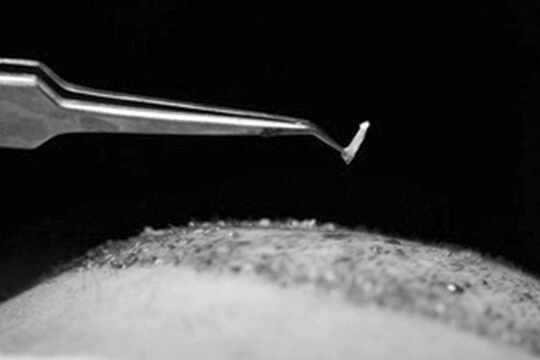
- Graft extraction. Follicular units are harvested one by one with a micromotor punch, sorted by the number of hairs they contain and kept in a holding solution until implantation.
- Channel opening with sapphire blades. The defining phase: fine sapphire tips open micro-channels in the recipient zone, with depth, direction and angle controlled so the transplanted hair grows in the same pattern as your natural hair.
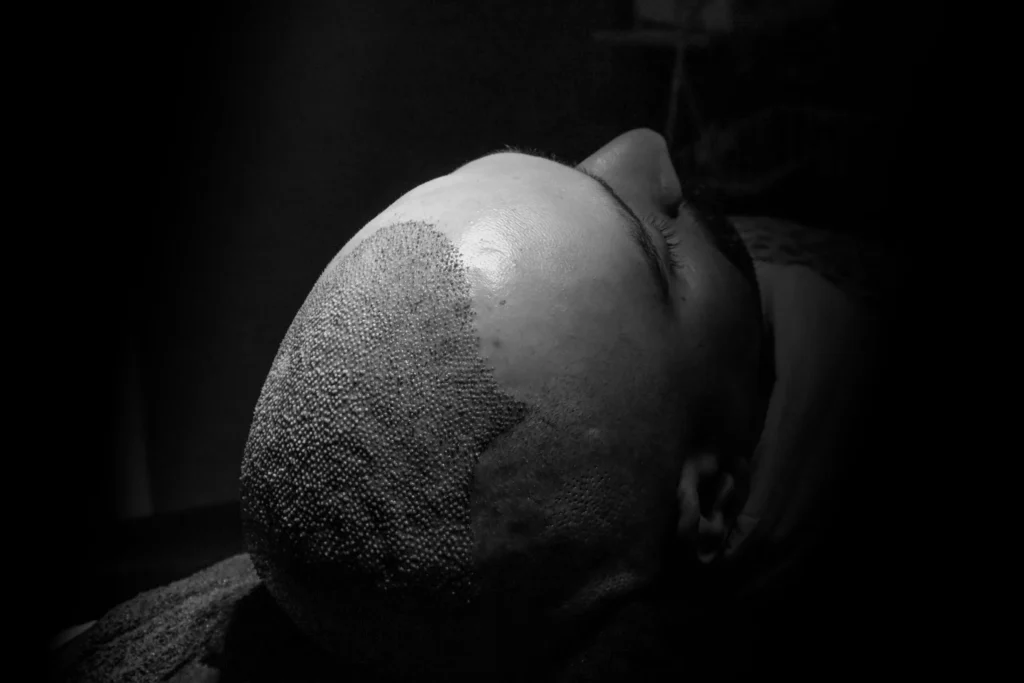
- Graft placement. The grafts are placed into the prepared channels, with single-hair grafts reserved for the front hairline and multi-hair grafts used behind it for density.
After the operation
You leave the clinic the same day with a light bandage on the donor area and written aftercare instructions. The first professional wash is usually done at the clinic a day or two later, and the team shows you how to wash the area at home. Mild forehead swelling, redness and small crusts are normal in the first days. Most international patients stay two to three nights and fly home shortly after the first wash, continuing follow-up remotely with photo updates.
Advantages of Sapphire FUE — and Its Honest Limitations
Advantages
- Finer, more precise channels. The sharpness and smoothness of sapphire allow smaller incisions, which generally means less tissue trauma and less crusting in the recipient area.
- Higher achievable density. Because the channels are narrower, they can often be placed closer together where the skin and blood supply allow, which helps in hairline and crown work.
- Natural growth direction. Channel angle is set individually, so transplanted hair tends to blend with the existing hair rather than standing out.
- Usually faster surface healing. Redness and scabbing often settle somewhat quicker than with steel-slit FUE, although healing speed varies from person to person.
- No linear scar. As with all FUE-based methods, the donor area heals as tiny dots that are hard to see once the hair grows out.
Limitations you should know about
- It is still surgery. Sapphire FUE is minimally invasive, but any surgery carries risks such as infection, temporary numbness, folliculitis or, rarely, poor graft survival. A responsible clinic discusses these openly.
- The blade does not replace the surgeon. Sapphire is a tool: the outcome depends far more on hairline planning, extraction quality and the team's experience than on the blade material.
- Donor supply is finite. No technique creates new hair; it redistributes what you have. If your donor area is weak, expectations must be adjusted honestly.
- Hair loss can progress. Transplanted follicles are generally resistant to pattern loss, but non-transplanted hair may continue to thin; medical management or a later session is sometimes part of a realistic long-term plan.
- Results take time. Final density is usually judged around twelve months after surgery. Anyone promising instant or guaranteed results is not being straight with you.
It is also worth knowing how Sapphire FUE compares with DHI hair transplant, the other technique frequently offered in Istanbul. In DHI, grafts are placed with an implanter pen without pre-opened channels, which helps in unshaven procedures and when adding density between existing hairs, while Sapphire FUE is often preferred for larger sessions and full hairline reconstructions. Many patients suit both; the choice is best made with the doctor based on your hair characteristics and goals, not marketing labels.
Having a Hair Transplant in Istanbul, Turkey: Why Patients Travel — and How the Process Works
Turkey has become one of the most established destinations worldwide for hair restoration, and Istanbul is its centre. Patients choose a hair transplant in Turkey for several reasons: clinics work at high volume, so experienced teams see a wide range of hair types and loss patterns; treatment typically costs less than in Western Europe, the UK or North America, largely because of lower operating costs rather than lower standards; and the infrastructure for international patients — transfers, accommodation, interpreters — is mature and well organised. For someone considering a hair transplant abroad, the practical side is far simpler than it may first appear.
At Hairpol, a hair transplant clinic in Ataşehir on the Asian side of Istanbul, the process for international patients typically looks like this:
- Online pre-assessment. You send photos and health information through hairpol.com or WhatsApp (+90 549 102 07 47) and receive a preliminary evaluation and personalised plan, in English, Turkish or German.
- Planning your trip. Most Sapphire FUE patients need two to three nights in Istanbul; the clinic coordinates consultation, surgery and first wash into one short stay.
- Arrival and in-person consultation. The doctor examines your scalp, confirms or adjusts the plan and designs the hairline with you before anything begins.
- Surgery day and aftercare. The procedure is carried out as described above, and you receive your aftercare kit and written instructions.
- First wash and departure. After the first professional wash and a final check, you fly home; follow-up continues remotely with photo reviews.
One honest note about travelling for surgery: distance makes in-person follow-up harder, so choose a clinic with a structured remote aftercare system that is genuinely reachable when questions arise weeks or months later.
What Determines the Cost of a Sapphire FUE Hair Transplant?
Hair transplant cost is one of the most searched topics, and one of the most misleading when reduced to a single number. Serious clinics do not quote a final price without assessing your case, because the cost of a hair transplant in Turkey depends on several individual factors:
- The number of grafts required. Restoring a hairline edge and rebuilding a fully bald crown are very different projects.
- The technique used. Sapphire FUE, DHI or a combined approach involve different instruments and session structures.
- Whether one or more sessions are needed to reach the coverage you want within safe donor limits.
- The scope of the package. Some offers include accommodation, transfers, interpreter support, medication and aftercare products; others do not, which makes headline prices hard to compare.
- The team and the clinic's standards — who plans and supervises the surgery, and in what kind of facility.
When weighing the cost of a hair transplant in Turkey against prices at home, compare complete written offers that state exactly what is included. The most reliable way to know what your own case would involve is a free, no-obligation assessment: Hairpol reviews your photos and provides a personalised quotation.
Recovery and Results: A Realistic Timeline
Healing follows a broadly predictable pattern, though the pace varies from person to person. Most Sapphire FUE patients can expect the following:
| Period | What typically happens |
|---|---|
| Days 1–3 | Mild swelling, redness and pinpoint crusts; donor area feels tender. First professional wash at the clinic. |
| Days 4–14 | Crusts soften and shed with gentle washing; redness fades. Most patients return to desk work within a few days. |
| Weeks 2–8 | "Shock loss": most transplanted hairs shed. A normal part of the cycle, not a sign of failure — the follicles remain in place. |
| Months 3–4 | New hairs begin to emerge, often fine and uneven at first. |
| Months 6–9 | Visible improvement in coverage; hairs thicken and mature. Progress photos are reviewed remotely. |
| Months 12–18 | Final result is generally assessed around one year; crown areas can take up to eighteen months to mature fully. |
During the early weeks you will be asked to avoid heavy exercise, swimming, saunas and direct sun for the periods your doctor specifies, to sleep with your head slightly elevated, and not to rub or knock the grafted area. Following these instructions closely has a real influence on graft survival.
How to Choose a Clinic for Sapphire FUE
Searching for the best hair transplant clinic in Turkey returns thousands of results, and the honest answer is that "best" depends on the fit between your case and the team treating it. Use concrete criteria rather than rankings:
- Medical evaluation before commitment. A trustworthy clinic assesses your photos and health history before quoting, and is willing to say no or propose a smaller plan.
- Clarity about who does what. Ask who designs the hairline, who supervises the surgery and how the team is structured; vague answers are a warning sign.
- Realistic language. Be sceptical of promises of guaranteed density, "100% success" or painless surgery. Ethical clinics talk about probabilities, risks and individual variation.
- Consistent, unedited results. Look for before-and-after photos of cases similar to yours, taken at comparable angles and lighting, ideally at twelve months.
- Transparent written offers. Everything included in the package should be listed in writing before you travel.
- Structured aftercare. Especially for an FUE hair transplant in Istanbul as an international patient, confirm how follow-up works after you fly home.
- Full range of techniques. A clinic offering FUE, Sapphire FUE and DHI can recommend what suits you, rather than selling the only method it performs.
Frequently Asked Questions About Sapphire FUE
Is Sapphire FUE painful?
The procedure is performed under local anaesthesia, so you should feel pressure rather than pain during surgery; the anaesthetic injections cause brief stinging. Afterwards, most patients describe tightness and mild soreness for a few days, usually manageable with simple painkillers. Pain tolerance varies from person to person, so calling the operation completely painless would not be honest.
How is Sapphire FUE different from classic FUE?
Extraction is identical; the difference lies in the channel-opening phase. Sapphire blades create finer, smoother incisions than steel slits, generally allowing denser placement, more precise growth angles and calmer surface healing. The fundamentals — donor limits, healing biology, the importance of the team — remain the same.
Should I choose Sapphire FUE or DHI?
Neither is universally better. Sapphire FUE is often preferred for larger sessions and complete hairline reconstruction, while a DHI hair transplant can be advantageous for unshaven procedures and adding density between existing hairs. The right choice depends on your hair characteristics, the area to be covered and donor quality, and is best made together with the doctor after examination.
How many grafts will I need?
This depends on the size of the thinning area, the density you want, your hair thickness and your donor capacity — so it can only be estimated from photos and confirmed in person. Be cautious of clinics promising a fixed high graft number before seeing your donor area; safe harvesting has biological limits.
Is the result permanent?
Transplanted follicles come from areas genetically resistant to pattern hair loss, so in most patients they continue growing long term. However, no clinic can honestly guarantee lifelong density: native, non-transplanted hair may keep thinning, and appearance can change over the years. Medical treatment is sometimes recommended to protect existing hair.
When can I go back to work after a Sapphire FUE in Istanbul?
Many patients return to desk-based work within three to five days, once swelling settles and the first washes are done. Physically demanding jobs, heavy training and swimming must wait longer, per your doctor's timeline. Redness may stay visible for a couple of weeks, especially on lighter skin.
Will people be able to tell I had a transplant?
In the first one to two weeks, crusting and redness are noticeable if the area is uncovered. Once healing completes and the new hair matures, a well-planned Sapphire FUE with a natural hairline design and correct growth angles is generally very difficult to detect. Naturalness depends mainly on planning, not on the technique's name alone.
How long do I need to stay in Istanbul?
For most international patients, two to three nights are sufficient: consultation and surgery, then the first professional wash and a final check before departure. Follow-up then continues remotely, with photo reviews at agreed milestones during the first year.
Why is a hair transplant in Turkey more affordable than in Western Europe?
The difference is driven mainly by lower operating costs and the high volume of procedures performed, not by lower-quality materials. Prices in Turkey still vary widely between providers, so evaluate each clinic on its medical merits and compare complete written offers rather than assuming all packages are equal.
What are the risks of Sapphire FUE?
As with any surgical procedure, possible complications include infection, prolonged swelling, temporary scalp numbness, folliculitis, rare visible scarring and lower-than-expected graft survival. Most issues are uncommon and manageable when the procedure is performed in proper medical conditions and aftercare instructions are followed. Your doctor should discuss these openly before surgery.
Get a Free, Personalised Assessment
If you are weighing up a Sapphire FUE, the most useful next step is an individual evaluation rather than more general reading. Hairpol Hair Transplant Clinic in Ataşehir, Istanbul offers a free, no-obligation pre-assessment: send a few photos of your scalp through hairpol.com, by e-mail at info@hairpol.com or via WhatsApp at +90 549 102 07 47. The medical team will review your case, answer your questions in English, Turkish or German, and prepare a personalised plan and quotation — so you can decide, in your own time, whether treatment in Istanbul is right for you.
