Hair Treatments
Non-Surgical Hair Treatments: What They Are and Who They Help
Not every case of hair thinning calls for surgery. Non-surgical hair treatments — such as PRP (platelet-rich plasma), hair mesotherapy and stem cell–based therapies — aim to slow hair loss, improve the quality of existing hair and support the scalp environment in which hair grows. At Hairpol Hair Transplant Clinic in Ataşehir, Istanbul, these treatments are offered both as stand-alone programmes and as a complement to FUE, DHI and Sapphire FUE hair transplant procedures.
These treatments are generally considered for people who:
- Are in the early stages of thinning, where follicles are weakened but still active;
- Experience diffuse shedding (for example after stress, illness, pregnancy or seasonal changes);
- Want to strengthen native hair before or after a hair transplant;
- Are not yet suitable for surgery — because hair loss is still progressing or a physician has advised waiting;
- Prefer to try a non-surgical route before committing to an operation.
One honest point first: non-surgical treatments work on hair follicles that are still alive. Where an area is completely bald and the follicles have been lost, injections cannot create new ones — there, a hair transplant is usually the realistic option. This is why a proper medical assessment matters: a physician examines your scalp, reviews your history and, where needed, recommends blood tests to rule out underlying causes such as iron deficiency or thyroid issues before proposing a treatment plan, a transplant, or a combination of both.
The Main Treatment Options at a Glance
PRP (Platelet-Rich Plasma)
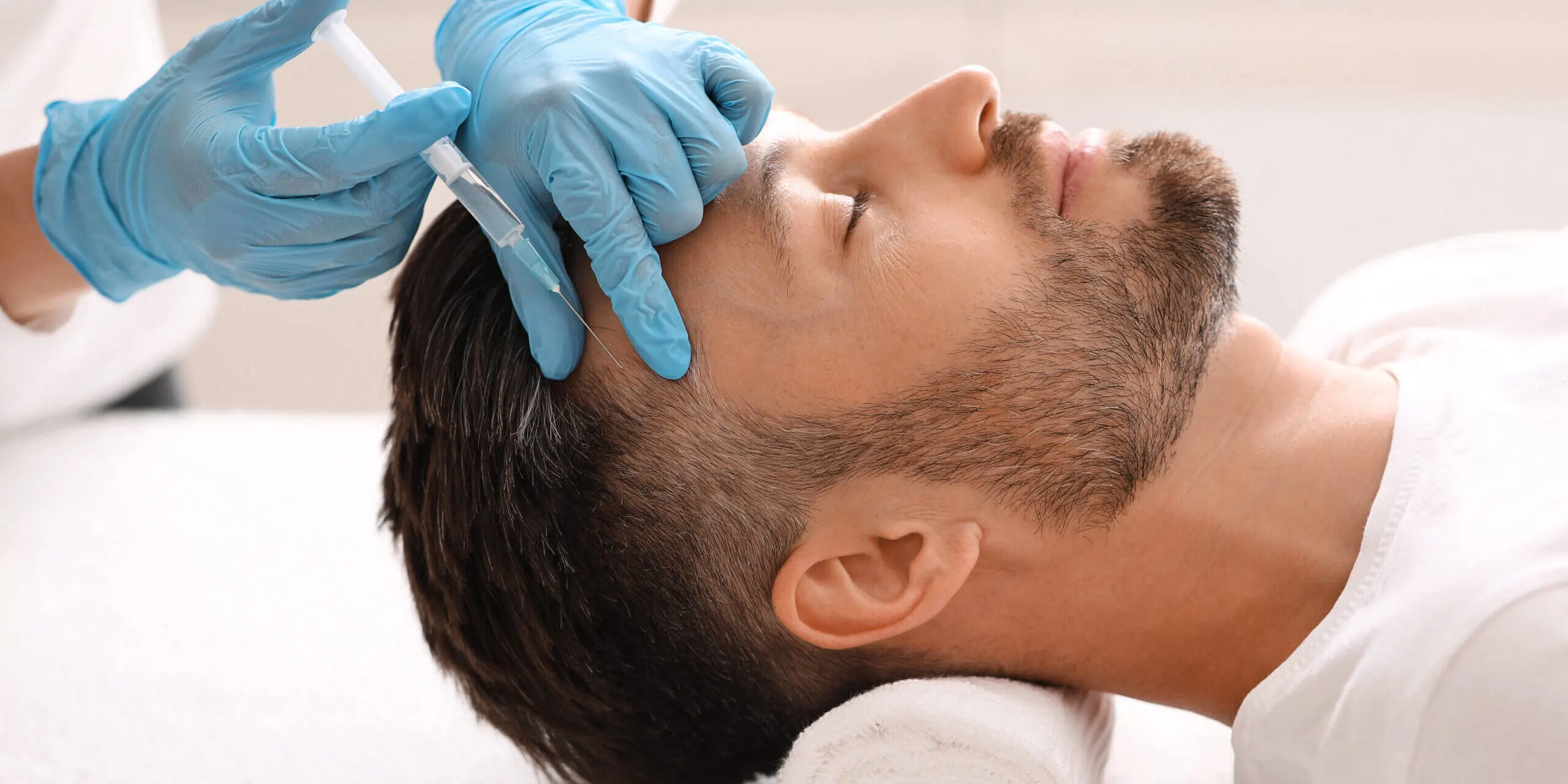
PRP uses your own blood. A small sample is drawn and spun in a centrifuge to separate a plasma layer rich in platelets, which carry growth factors. Injected into the scalp in small amounts, this concentrated plasma aims to stimulate weakened follicles, improve local blood supply and support the hair growth cycle. Because the material comes from your own body, allergic reactions to the plasma itself are not expected, although — as with any injection — temporary redness, tenderness or mild swelling can occur.
Hair Mesotherapy
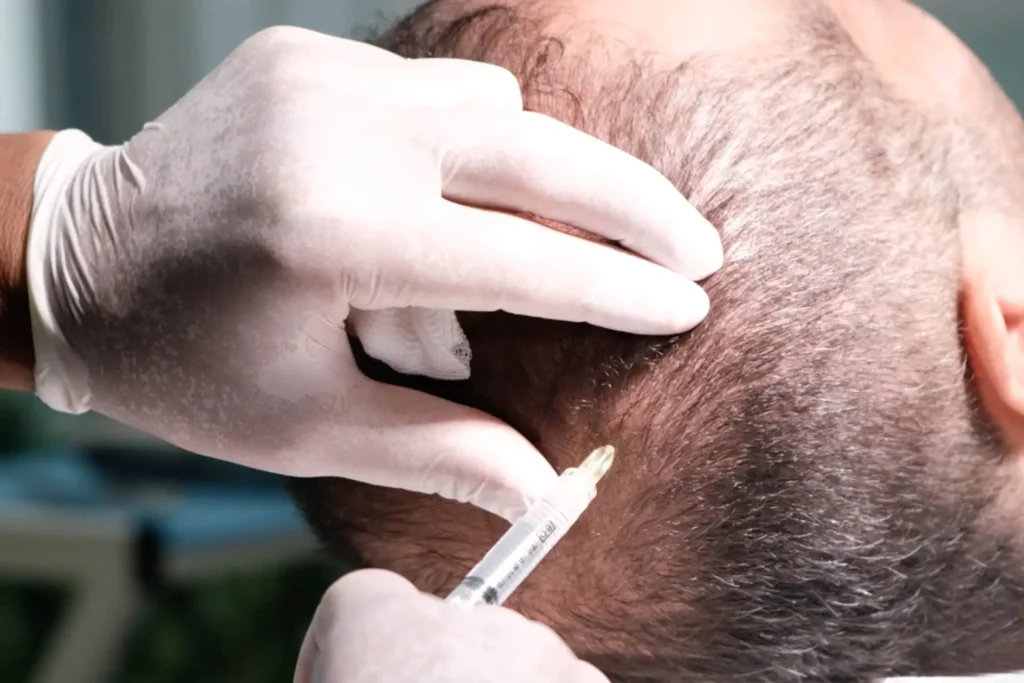
Mesotherapy involves micro-injections of a physician-selected mixture — typically vitamins, minerals and amino acids — into the middle layer of the scalp skin, delivering these substances directly where the follicles sit rather than relying on oral supplements alone. It is often used for diffuse thinning, dull or fragile hair, and as supportive care alongside other treatments.
Stem Cell–Based Therapies (G-Cell and Placental Stem Cell Treatments)
Hairpol also offers regenerative options such as G-Cell therapy and placental stem cell treatments, which use cellular material and growth-factor-rich preparations to support follicle regeneration and scalp condition. Regenerative medicine in hair restoration is a developing field: results vary from person to person, and a responsible clinic presents these treatments as supportive tools with realistic expectations — not as a cure for baldness. Whether they make sense for you depends on the physician's evaluation of your hair loss type and stage.
Step by Step: Before, During and After a Session
Before Your Treatment
The process starts with an assessment — in person at the clinic in Istanbul, or online with photos for international patients. The physician evaluates the pattern and likely cause of your hair loss and designs a plan: which treatment, how many sessions, at what intervals. Before injection-based sessions you may be asked to pause blood-thinning supplements for a short period (following your own doctor's guidance for prescribed medication) and to arrive with clean, product-free hair.
On the Day
A typical session is short — usually between 30 and 60 minutes depending on the treatment and the size of the area. For PRP, blood is drawn first and prepared while you wait. The scalp is cleaned and injections are performed with fine needles. Most patients describe the sensation as brief pinpricks; a numbing cream can be used for comfort where appropriate. There is no incision, no stitches and no anaesthesia in the surgical sense.
Afterwards
You can normally return to daily activities the same day. Typical aftercare: delay washing the scalp until the next day, skip heavy exercise, saunas and pools for a day or two, protect the scalp from strong sun, and avoid harsh styling products immediately afterwards. Mild redness or sensitivity at the injection points usually settles within a day or two.
Importantly, these treatments are courses, not one-off fixes: several sessions a few weeks apart, then maintenance at longer intervals. Skipping the maintenance phase is one of the most common reasons patients feel results fade.
Advantages — and Honest Limitations
Being clear about what non-surgical treatments can and cannot do is the fairest way to help you decide.
Advantages
- No surgery, no downtime. Sessions are short, and most people go straight back to work or travel.
- Works with your own biology. PRP in particular uses your own blood, keeping the risk profile of the injected material low.
- Supports existing hair. For early-stage thinning, strengthening what you have can visibly improve density and hair quality in many patients.
- Complements a hair transplant. PRP or mesotherapy is often used around a transplant to support healing and the native hair surrounding the grafts.
- Reversible commitment. If you later decide surgery is the better path, nothing about these treatments prevents it.
Limitations
- They cannot revive dead follicles. Fully bald areas will not regrow hair from injections alone.
- Results vary. Response depends on the cause and stage of hair loss, age, genetics and overall health; some patients see clear improvement, others only modest change.
- Maintenance is usually needed. Genetic hair loss is progressive, so ongoing sessions are often required to hold results.
- Improvement takes time. Follicles work in cycles measured in months, so change is typically assessed over three to six months, not weeks.
- Not a substitute for diagnosis. If shedding is driven by an untreated medical issue, the underlying cause needs attention first.
A trustworthy clinic will tell you when a treatment is unlikely to help — and, equally, when a hair transplant would be the more effective answer for your pattern of loss.
Having Hair Treatments in Istanbul, Turkey
Turkey has become one of the world's best-known destinations for hair restoration, and Istanbul is its centre. Most people searching for a hair transplant in Turkey are comparing surgical options such as FUE hair transplant in Istanbul or DHI hair transplant — but the same concentration of experience benefits non-surgical care too, because clinics that perform hair restoration daily tend to assess hair loss more precisely.
Patients choose treatment in Istanbul for a few practical reasons:
- Experience through volume. Physicians in a dedicated hair transplant clinic in Istanbul see a wide range of hair loss cases, including complex ones such as female-pattern loss and afro-textured hair.
- Cost efficiency. Care in Turkey is generally more affordable than in Western Europe, the UK or the US — a reflection of local operating costs rather than quality. This is one reason a hair transplant abroad, or a treatment course combined with a stay in Istanbul, appeals to many international patients.
- Combined planning. If you are considering surgery now or in the future, having your treatments at a clinic that also performs FUE, DHI and Sapphire FUE means your non-surgical care and any eventual transplant follow one coherent plan.
How the Process Works for International Patients
For patients travelling from abroad, the typical Hairpol process looks like this: you send photos of your scalp and complete a short questionnaire; the medical team reviews your case and proposes a plan; you receive a personalised quote; and appointments are scheduled around your travel dates. Hairpol serves patients in English, Turkish and German. Because sessions are short, many international patients combine them with a consultation for a possible future transplant or with a trip they were planning anyway. If a multi-session course is recommended, the team can discuss how to space sessions realistically around your travel.
What Determines the Cost of Hair Treatments
Just as with hair transplant cost, there is no single meaningful price for PRP or mesotherapy that applies to everyone — and any clinic quoting one price for all patients before seeing your scalp should raise questions. The main factors that shape the cost of a treatment programme are:
- The type of treatment. PRP, mesotherapy and stem cell–based therapies involve different materials, preparation steps and session times.
- The number of sessions. Early diffuse thinning may need fewer sessions than a longer programme, and maintenance frequency differs from person to person.
- The size and condition of the treatment area. Treating a small crown area is not the same as treating the full scalp.
- Combination with other procedures. Treatments planned around a hair transplant are usually priced as part of an overall package.
- Diagnostics. Blood tests or additional evaluation, where needed, affect the overall plan.
Comparing clinics on price alone is therefore misleading — a "cheap" single session has little value if the plan behind it is wrong for your type of hair loss. The practical way forward is a free assessment: send your photos, get a physician-reviewed plan, and receive a personalised quote for the whole programme so you can compare like with like.
Recovery and Results: A Realistic Timeline
Hair responds slowly because follicles grow in cycles. The table below shows a typical timeline for injection-based scalp treatments such as PRP and mesotherapy; individual experiences vary.
| Timeframe | What Typically Happens |
|---|---|
| Day of treatment | Session of roughly 30–60 minutes; possible mild redness or small bumps at injection points. Normal activities usually resume the same day. |
| Days 1–3 | Redness and sensitivity settle. Hair washing resumes per the clinic's instructions; heavy exercise, sauna and strong sun are avoided briefly. |
| Weeks 2–8 | Sessions continue at the planned intervals. Some patients notice reduced shedding first, before any visible change in density. |
| Months 2–4 | Early improvements in hair quality — thickness, shine, reduced breakage — may become noticeable in responsive patients. |
| Months 3–6 | The usual window for assessing visible results with your physician and deciding on the maintenance schedule. |
| Month 6 onwards | Maintenance sessions at longer intervals to protect results, since genetic hair loss remains progressive without ongoing support. |
If, at the review stage, the response is weaker than hoped, that is valuable information too: it may point towards adjusting the protocol, investigating underlying causes further, or discussing whether a hair transplant would serve you better.
How to Choose a Clinic for Hair Treatments
Whether you are comparing options at home or researching the best hair transplant clinic in Turkey, the same principles apply to non-surgical care:
- A physician-led assessment before any offer. A credible clinic examines your scalp — in person or via detailed photos — before recommending a treatment or naming a price.
- Honesty about limits. Be cautious of anyone promising guaranteed regrowth or presenting injections as a cure for advanced baldness. Realistic language is a sign of medical seriousness, not weakness.
- A clear, written plan. You should know which treatment you are getting, how many sessions, at what intervals, and what the maintenance phase looks like.
- Hygiene and medical standards. Injections are medical procedures; they belong in a clinical setting with proper sterilisation, not a purely cosmetic environment.
- The full range of options. A clinic offering both treatments and surgery — like a hair transplant clinic in Istanbul performing FUE, DHI and Sapphire FUE daily — can recommend what actually fits your case rather than the only service it sells.
- Reliable communication. For international patients, being able to ask questions in your own language, before and after treatment, matters more than glossy marketing.
Frequently Asked Questions
Do PRP and mesotherapy really work for hair loss?
They can help many patients with early or moderate thinning, mainly by strengthening existing hair and supporting the growth cycle. Results vary with the cause and stage of hair loss, and no injection can regrow hair where follicles have completely died. A physician assessment is the only reliable way to estimate whether you are likely to benefit.
How many sessions will I need?
Most programmes involve several initial sessions a few weeks apart, followed by maintenance sessions at longer intervals. The exact number depends on your hair loss type, the treatment chosen and how you respond; your plan is defined at the consultation and adjusted at reviews.
Are these treatments painful?
Most patients describe the injections as brief pinpricks — uncomfortable rather than truly painful — and a numbing cream can be applied where appropriate. Sensitivity differs from person to person, so tell the team if you are worried about discomfort.
Is PRP safe? What are the risks?
PRP uses your own blood, so allergic reactions to the plasma itself are not expected. As with any injection, temporary redness, swelling, tenderness, small bruises or — rarely — infection at the injection site can occur. A clinic working to proper medical hygiene standards keeps these risks low.
Can hair treatments replace a hair transplant?
No — they answer different problems. Treatments support follicles that are still alive; a transplant relocates healthy follicles into bald areas. Many patients use both: treatments to protect native hair, and FUE or DHI surgery to restore areas that treatments cannot reach.
When will I see results?
Because hair grows in cycles, visible change is gradual. Some patients notice reduced shedding within weeks, while improvements in density and hair quality are usually assessed over three to six months. Completing the full course genuinely matters here.
Are non-surgical hair treatments suitable for women?
Yes. Diffuse, female-pattern thinning often responds well to supportive treatments because the follicles are usually miniaturised rather than lost. Hairpol treats both women and men, and women's hair loss is always evaluated carefully first, since it can have hormonal or medical causes that deserve attention in their own right.
Can I combine PRP with a hair transplant in Turkey?
Yes, and this is common. PRP or mesotherapy can be planned before surgery to strengthen native hair, and after surgery to support healing and the transplanted area. If you are travelling to Istanbul for a hair transplant, the team can build treatment sessions into the same overall plan.
How long does a session take, and can I fly afterwards?
A typical session takes roughly 30 to 60 minutes, and there is no surgical downtime — flying afterwards is generally not a problem. You will simply be asked to follow short-term aftercare, such as delaying hair washing briefly and avoiding intense sun, sauna and heavy exercise for a day or two.
What does treatment in Turkey cost compared with other countries?
As with hair transplant costs in Turkey, non-surgical programmes are generally more affordable than comparable care in Western Europe or North America, largely due to local operating costs. Exact pricing depends on your treatment type, session count and treatment area — which is why quotes are personalised after a medical review rather than listed as flat rates.
Get a Free Hair Assessment
The right starting point is not choosing a treatment — it is understanding your hair loss. If you would like an honest, physician-reviewed opinion on whether PRP, mesotherapy, a stem cell–based therapy or a hair transplant fits your situation, Hairpol offers a free preliminary assessment. Send a few photos of your scalp and a short description of your hair loss history, and the medical team in Istanbul will come back with a personalised evaluation and plan — with no obligation attached.
You can reach Hairpol Hair Transplant Clinic in Ataşehir, Istanbul by phone or WhatsApp at +90 549 102 07 47, by e-mail at info@hairpol.com, or through the contact form on hairpol.com. Consultations are available in English, Turkish and German.
