
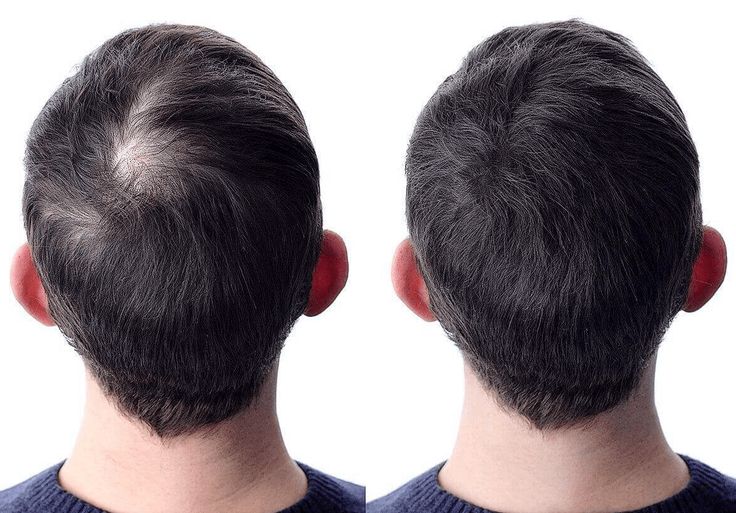
You walk into a consultation with one number in your head. Grafts. How many you need, how many they will give you, how many the clinic down the road quoted. Nobody walks in asking about square centimetres, and that is the quiet reason so many results land somewhere between fine and disappointing.
Because the number of grafts is only half of the equation. The other half is where those grafts get spread, and that decision is the one that determines whether you look like someone with thick hair in a small area or someone with acceptable hair everywhere. At Hairpol, this is the conversation we insist on having before anyone talks about price, technique or dates. It is not a comfortable conversation. It is the one that makes the difference.
Two Numbers That Cannot Both Be Maximum
Density is a rate. It is how many follicular units sit in one square centimetre of scalp, and it is what people mean when they say hair looks thick. Coverage is an area. It is how much of your bald or thinning scalp receives grafts at all, measured in square centimetres of territory.
A native, non-balding scalp carries somewhere around 80 to 100 follicular units per square centimetre, which works out to roughly 150 to 250 individual hairs depending on how many hairs each unit contains. A transplanted zone typically receives 30 to 50 units per square centimetre in a single pass. Some surgeons go higher in small, safe areas. Almost nobody goes near native density across a large one, and the ones who claim to are usually counting differently.
So you have two dials. Turn density up and the treated patch looks dense but stays small. Turn coverage up and more of your scalp is touched, but each square centimetre gets thinner. There is no setting where both dials are at maximum, because they are both drawing from the same finite tank.
The Arithmetic of a Fixed Donor Budget
The tank is your donor area, and it does not refill. The safe donor zone is the band of hair at the back and sides that is genetically resistant to the hormone that causes pattern loss. It is a fixed piece of real estate with a fixed number of follicles in it, and you can only remove a fraction of them before the area itself starts to look sparse.
Do the multiplication once and the whole industry starts to look different. If you have a 4,500-graft lifetime donor supply and you want 45 grafts per square centimetre, you can treat 100 square centimetres. That is roughly the frontal third of a scalp plus a small margin. If your bald area is 180 square centimetres, you can either treat all of it at 25 grafts per square centimetre, which will read as thin, or treat 100 of it properly and leave the rest untouched.
That is the entire trade-off, expressed in one sentence. Everything else is judgment about which compromise you can live with. We have written separately about how much your donor area can actually give you across a lifetime, and it is worth reading alongside this, because the ceiling it describes is what makes this article necessary in the first place.
Why “Maximum Density Everywhere” Is Mathematically Impossible
Some clinics respond to this constraint by simply raising the graft number. If 4,500 will not cover the scalp at good density, quote 7,000. It sounds generous. It ignores that the donor supply was never 7,000 in the first place.
What happens in practice is that the extraction spreads outward from the safe zone into hair that is not genetically protected. Those grafts grow for a while and then thin out on the same schedule as the rest of your hair, because they carry the same instructions. Meanwhile the donor region is left punched too heavily, and a thin, moth-eaten back of the head is a far harder problem to fix than an untreated crown.
The honest version is less impressive on paper. Your surgeon should be telling you what your donor can safely give in one session, what it can give across a lifetime, and what area that realistically buys. If the graft number you are quoted keeps rising in response to your ambitions rather than being anchored to your donor, the number is a sales figure, not a surgical plan.
The Fifty Percent Rule Nobody Mentions
Here is the piece of information that changes how people feel about the whole trade-off. The human eye does not perceive hair loss until roughly half of it is gone. That is why you can lose a third of your density and only notice it in bathroom lighting or a badly angled photograph.
Run that in reverse and it becomes the most useful fact in transplant planning. If you rebuild a bald area to around 50 percent of native density, most observers, in most light, at most distances, will read that area as having hair. Not as thick as it was at twenty. But not bald, and not obviously operated on.
Which means the goal is almost never native density. It is the perception threshold, and clearing that threshold across a well-chosen area produces a better overall impression than exceeding it in one small strip. At Hairpol we plan around that threshold deliberately, because it is the setting that lets a limited donor supply do the most visible work.
Why Spreading Can Beat Stacking
There is a caveat, and it matters. Coverage only wins when the resulting density still clears the perception threshold. Below that, spreading grafts thinly across a large area produces something worse than either option: a scalp that is uniformly see-through, with no zone dense enough to frame a face and no untouched zone to build on later.
This is the most common way a large, cheap mega-session goes wrong. Six thousand grafts sound like a lot until they are distributed across 250 square centimetres, at which point they arrive at 24 per square centimetre, and 24 is not enough to look like hair on a scalp with any colour contrast at all. The patient has spent their entire donor supply and still combs their hair looking for a way to hide.
So the rule is not “coverage beats density.” It is that within any area you decide to treat, you should treat it properly or not at all. Half-treating a zone spends the one resource you cannot replace and buys you very little.
Why the Front Comes First, Almost Always
If you can only afford to do one region properly, it should be the frontal zone, and the reasoning is more practical than aesthetic.
The front is what frames your face. It is what appears in every photograph, every mirror, every video call, and it is the region that determines whether someone reads you as having hair. A restored hairline with a solid frontal third changes how you look from the front and in profile, which is where nearly all human interaction happens.
The front also delivers more visible return per graft. It sits on a flat plane rather than a whorl, so hairs lie in one direction and lend each other cover. It is bordered by existing hair on both sides, which helps blend the transition. And it is where colour contrast between scalp and hair is most exposed to direct light.
A crown, by contrast, is behind you. You do not see it. It photographs badly for you and rarely for anyone else. It is not that the crown does not matter, but if a plan can only fund one region at a density that clears the threshold, the front produces the larger change in how you experience your own appearance. We go deeper into the sequencing question in crown versus hairline: which should you do first.
The Crown Is a Density Sinkhole
The crown is not simply second in line. It is structurally more expensive, and understanding why makes the priority order feel less like a downgrade.
Hair in the crown grows out of a spiral. Follicles radiate outward from a central point in every direction, which means transplanted hairs cannot lie in one shared direction and shield the scalp beneath them. Each hair stands more independently, so the same graft count reads as thinner there than it would at the front. Surgeons commonly estimate that a crown needs 20 to 30 percent more grafts to produce a comparable visual impression.
The crown is also a moving target. It is often the region where loss is still actively expanding at the time you are being consulted, particularly in men under 35. Filling a spreading crown means the transplanted island can end up ringed by newly bald scalp two years later, which then requires more grafts to repair than the original work consumed.
Hairpol will still treat crowns, and we treat them often. But we do it with a clear statement of what the graft cost is, and usually only once the front is secure and the pattern has shown some sign of settling.
High Norwood and the Honest Correction
If you are a Norwood 5, 6 or 7, there is a version of this conversation that some clinics avoid entirely, and it is the one you most need.
At the advanced end of the scale, the bald area can exceed 200 square centimetres while the safe donor supply sits somewhere between 4,000 and 7,000 grafts for most people, sometimes less. Do the arithmetic and full-scalp restoration at convincing density is not available. Not with better technology, not with a longer session, not with a more skilled surgeon.
What is available is genuinely worth having. A framed face, a defined and slightly conservative hairline, a solid frontal zone, and a mid-scalp that transitions into a crown left thin or untouched. Kept short, that result reads as a man with a mature hairline rather than a man who is bald. Many patients describe it as the single change that made them stop thinking about their hair.
What is not available is the photograph on the clinic’s homepage of a Norwood 6 with a full head of dense hair. If someone is promising you that, ask them for the donor arithmetic, in writing, in grafts and square centimetres. At Hairpol we would rather lose that booking than deliver the disappointment that follows it.
What Actually Makes Density Look Higher
Two people can receive the identical number of grafts across the identical area and get visibly different results, because perceived density is not only about follicle count.
Hair calibre is the largest factor. A thick, coarse hair shaft covers substantially more scalp surface than a fine one, and the difference is not marginal. Someone with coarse hair can achieve with 35 grafts per square centimetre what a fine-haired patient needs 50 to approach.
Colour contrast is the second. Dark hair on pale skin creates a stark visual boundary that exposes every gap. Light hair on light skin, or grey hair on any skin, blurs that boundary and forgives lower density considerably. This is why some patients are quietly told that going lighter, or letting grey come in, will do more for the appearance of density than another thousand grafts would.
Curl and wave add the third layer. Curved shafts occupy more space and cast shadow across the scalp, which is why textured and Afro hair types often achieve strong visual coverage at graft counts that would look sparse on straight hair. Length and styling do the rest. A slightly longer cut, styled with lift rather than combed flat, can add the appearance of considerable density at no surgical cost.
The Incentive Problem Behind the Mega-Session
It is worth naming plainly why this trade-off is so rarely explained. A clinic paid per graft has a commercial reason to quote a large number, and no commercial reason to explain that a smaller number, well placed, would serve you better.
The all-inclusive package priced by graft count creates a strange dynamic in which the patient negotiates upward. You ask for more grafts, the clinic agrees, and both parties feel they have won something. Nobody in that conversation is asking whether your donor can supply the number without extending into unsafe territory, or whether the area being covered will clear the perception threshold once it is spread out.
A second and related pressure is that the trade-off makes for a worse sales pitch. “We can restore your front to a natural density and leave your crown for later, possibly forever” is a harder sentence to sell than “we will cover everything.” It is also the sentence more likely to be true. If you have already read our guide on how many grafts you actually need for a natural result, this is the missing half of that discussion: not how many, but across how much.
What a Good Consultation Sounds Like
You can test any clinic in ten minutes with four questions, and the answers tell you almost everything.
- What is my estimated safe lifetime donor supply, and what is the maximum for this single session?
- How many square centimetres are we treating, and at what grafts per square centimetre?
- Which zones are we deliberately leaving out of this plan, and why those?
- If my loss progresses over the next ten years, what is left in reserve to handle it?
A clinic that answers in areas and rates is planning. A clinic that answers only in total graft numbers is quoting. The second kind may still perform good surgery, but you will be the one absorbing the consequences of a plan nobody wrote down.
At Hairpol, that mapping happens with the patient looking at their own scalp, marked out, with the untreated zones named out loud. People occasionally leave that conversation disappointed. Almost nobody leaves it surprised two years later, and that is the trade we make deliberately.
The Second Session Is Part of the Plan, Not a Failure
One of the most useful reframes in this whole subject is that a staged approach is not a sign something went wrong. It is often the most efficient way to use a limited donor supply.
A first session establishes the frontal zone at a density that clears the threshold. Twelve to eighteen months later, once the result has fully matured and your pattern has revealed whether it is still progressing, a second session can add refinement to the front, extend the mid-scalp, or address the crown with information the first session did not have.
Grafting into an already-transplanted zone is also perfectly possible, and adding 20 to 25 units per square centimetre onto an existing 40 lifts an area from acceptable to genuinely dense. Doing that in one sitting is more difficult and riskier for graft survival, because packing density too aggressively in one pass compromises blood supply to the whole field.
Staging also protects you from your own timeline. Deciding at 27 how the crown should look assumes you know what your scalp will be doing at 40. You do not. Neither does your surgeon. Holding grafts in reserve is how that uncertainty gets managed rather than gambled on.
Protecting the Hair You Still Have
Every native hair you keep is a graft you do not have to spend. That single sentence justifies the entire medical side of the plan.
Finasteride and minoxidil, where they are appropriate and tolerated, work primarily on miniaturising hair in the mid-scalp and crown. Holding that hair in place directly shrinks the area you would otherwise need to cover surgically, which means the same donor supply buys a higher density across a smaller field. Supportive treatments such as PRP and mesotherapy sit alongside that as maintenance rather than replacement, and Hairpol discusses them as part of a long plan rather than a substitute for one.
The patients who get the most out of a fixed donor supply are almost always the ones who started medical management early and stayed on it. The ones who spend the most grafts, and end up with the least, are usually those who treated surgery as the whole solution while the hair around the transplanted zone kept receding.
Living With the Version You Chose
There is a moment around month eight when the trade-off becomes real. The transplanted zone has grown in, it looks good, and your eye immediately travels to whatever was left untreated. This is normal, it is nearly universal, and it says less about the result than about how attention works.
It also helps to know that what you see at month four or five is not what you will see at month twelve. Density arrives slowly, and thin-looking early growth is part of the timeline rather than a verdict on the plan, which we cover in detail in why transplanted density looks thin in the first months.
The patients who settle happily are almost always the ones who understood the arithmetic before surgery. They knew the crown was being deferred. They knew the density target was around half of native. Nothing about the outcome contradicted what they were told, so the outcome felt like a plan rather than a shortfall. That is not a psychological trick. It is what informed consent is supposed to produce.
Planning It With Us
If you are weighing up quotes and the numbers are not adding up, the missing variable is almost always area. Ask for the square centimetres. Ask for the grafts per square centimetre. Ask what is deliberately being left out and what remains in reserve for the decade ahead.
At Hairpol, in Ataşehir, that mapping is where every consultation begins, and we would rather tell you what your donor supply genuinely supports than sell you a number that sounds better in the room and worse in the mirror. If you want that assessment on your own scalp, our hair transplantation department is the place to start, and you are welcome to bring every quote you have received with you.
Frequently Asked Questions (FAQ)
What is the difference between density and coverage in a hair transplant?
Density is a rate: how many follicular units are placed into each square centimetre of scalp. Coverage is an area: how many square centimetres receive grafts at all. Because your donor supply is fixed, raising one lowers the other.
Why can't a surgeon give me maximum density across my whole scalp?
Because the safe donor area contains a fixed number of follicles that never regenerates. Covering a large bald area at near-native density would require several times more grafts than most people own. A clinic that promises it is either counting differently or planning to harvest outside the safe zone.
How many grafts per square centimetre is a good result?
Most single-pass transplants place 30 to 50 follicular units per square centimetre. Around 40 to 50 in the frontal zone usually reads as convincingly dense, while anything below roughly 25 to 30 tends to look see-through, especially with dark hair on pale skin.
Is it true that you only need half of your original density to look normal?
Broadly yes. The eye does not register hair loss until roughly 50 percent of density is gone, so rebuilding an area to about half of native density is usually enough for it to read as having hair in normal light and at normal distances.
Should I do the hairline or the crown first?
In most plans the frontal zone comes first. It frames the face, appears in every photo and mirror, and returns more visible benefit per graft because hairs lie in one direction. The crown grows in a whorl and typically needs 20 to 30 percent more grafts for a comparable impression.
Can a Norwood 6 get full coverage from a hair transplant?
Not at convincing density. At that stage the bald area often exceeds 200 square centimetres while the safe donor supply is roughly 4,000 to 7,000 grafts. A realistic plan restores the front and mid-scalp well and leaves the crown thin or untreated.
Does a second session mean the first one failed?
No. Staging is often the most efficient use of a limited donor supply. A first session secures the frontal zone, and 12 to 18 months later a second can add density to it, extend the mid-scalp, or address the crown with better information about how your loss is progressing.
What makes transplanted hair look denser without more grafts?
Hair calibre, colour contrast, curl and styling. Coarse, wavy hair that is close in colour to your skin covers far more scalp than fine, dark, straight hair on pale skin. Keeping the hair slightly longer and styling with lift also adds visible density at no surgical cost.
Find this helpful? Add Hairpol as a preferred source on Google.
Get a Free Consultation
Answer a few questions and the medical team will review your situation.
