

You usually find out from a photograph somebody else took, in bad overhead light, at a wedding or an office party. Nothing has receded. There is no bald patch, no shiny circle at the back, and you can still grab a full handful of hair. But the scalp is showing through in a way it simply did not two years ago, and once you have seen it you cannot unsee it.
Then you start reading, and the answers contradict each other. One clinic says diffuse thinning is completely reversible once you find the cause. The next says thinning is permanent and quotes you for grafts. Both of them are describing something real. They are just describing different patients, and nobody has told you which one you are.
The short answer: Diffuse thinning is reversible when a trigger is driving it — telogen effluvium after illness, low ferritin, an untreated thyroid problem, rapid weight loss, childbirth or a hard stretch of stress. Resolve the trigger and density usually recovers over 3 to 6 months, with the last of it filling in by 9 to 12 months. Diffuse androgenetic thinning does not reverse on its own. Under a doctor’s supervision it can be slowed and partly thickened, but follicles that have fully miniaturized do not come back.
Diffuse Thinning Is a Description, Not a Diagnosis
This is where most of the confusion starts. “Diffuse thinning” tells you where the loss is — spread fairly evenly across the top and sides rather than carving out a receding hairline or a crown circle. It tells you nothing at all about why, and the why is the entire answer to whether it comes back.
Two completely different mechanisms produce the same photograph. In the first, a large share of your follicles have been pushed out of their growing phase into their resting phase at the same time, so they shed together and the scalp thins everywhere at once. The follicles are healthy. They are simply out of sync. In the second, follicles that are genetically sensitive to DHT are shrinking a little more with each growth cycle, so each hair comes back finer and shorter than the last until the coverage quietly fails. Nothing dramatic sheds. The hair just gets thinner in calibre, year after year.
The first is largely reversible. The second is not, in the sense that the shrinking is not undone by wishing or by shampoo. We laid out how to tell the two apart, and why the distinction rewrites your treatment options, in our guide to diffuse thinning versus pattern baldness. This article picks up where that one ends: assuming you know which one you have, what actually comes back?
Can Diffuse Thinning Grow Back?
Yes, if the follicle is still alive and cycling normally. That is the whole test, and it is a more useful question than any of the ones people usually ask.
A follicle that has been pushed into rest by a trigger is not damaged. It has stalled. Remove the pressure and it re-enters its growing phase on its own schedule, which is why recovery from that kind of thinning is measured in months rather than weeks. A follicle that has miniaturized under hormonal pressure is a different situation: it has physically shrunk, produces a thinner shaft, and holds that hair for a shorter time before releasing it. Partial recovery of calibre is realistic with treatment. Full restoration of what it used to produce, generally is not.
There is a practical way to feel the difference before any test confirms it. Shedding-driven thinning announces itself — hair on the pillow, in the drain, on your shoulders, and you can date roughly when it started. Miniaturization is silent. There is no dramatic shed, no memorable month. You just realise, at some point, that your ponytail is thinner or your parting has widened. If you cannot name the month it began, that leans toward the second mechanism.
Telogen Effluvium: The Version That Usually Reverses
Telogen effluvium is the medical name for the synchronised shed, and it is the single most reversible form of diffuse thinning we see at Hairpol.
Its most confusing feature is the delay. The trigger — a fever, an operation, a crash diet, a bereavement — knocks the follicles out of phase, but they do not release the hairs for roughly two to three months afterward. By the time you are frightened enough to look it up, the event that caused it is a season behind you and no longer feels connected. Patients regularly tell us nothing happened, then mention a hospital stay in passing, twenty minutes into the consultation.
A normal scalp sheds somewhere in the region of 50 to 100 hairs a day. In an acute effluvium that can rise to 200 to 300, occasionally more, and it is not subtle. The good news is written into the biology: the shedding phase is self-limiting. In most acute cases the heavy shedding settles within 6 to 12 weeks of starting, regrowth becomes visible as a fringe of short, upright hairs along the parting and hairline at around 3 to 4 months, and density looks like itself again somewhere between 6 and 12 months. Curly or textured hair often looks recovered sooner, because volume disguises a density deficit better than fine straight hair does.
When shedding keeps going past six months, it stops being a simple reaction and needs a proper look. Chronic effluvium is usually a trigger that has never been switched off — an iron level that was never corrected, a thyroid that was tested once and never rechecked, a diet that never went back to normal.
The Triggers Worth Hunting Before You Buy Anything
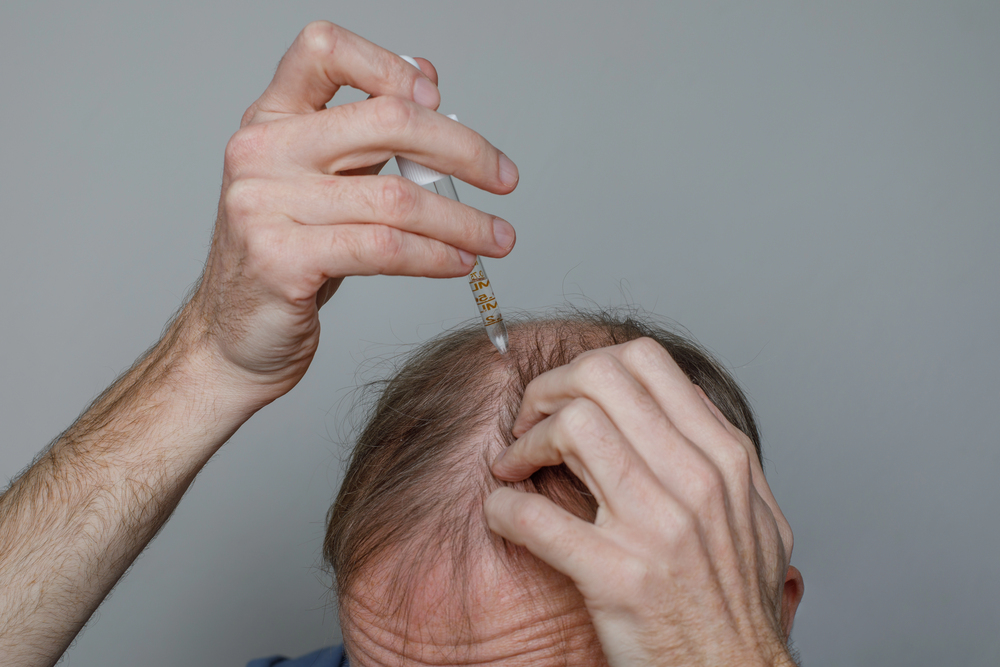
Before spending money on treatment, spend it on an answer. The list of things that reliably tip follicles into a synchronised shed is not long, and most items on it are correctable.
Low iron stores are the one we find most often, especially in women with heavy periods, in vegetarians, and in endurance athletes. Thyroid disease in either direction — underactive or overactive — thins hair diffusely and often does it before the more famous symptoms are obvious. Rapid weight loss is a big one right now: dropping weight quickly, whether through severe calorie restriction or with the newer weight-loss medications, is a reliable route into an effluvium about three months later, and the hair usually recovers once intake and protein stabilise. Add to that severe febrile illness, major surgery and general anaesthesia, postpartum hormonal shifts, and sustained psychological stress of the sleepless, appetite-destroying kind rather than the ordinary busy kind.
Medication deserves its own sentence. A number of common prescriptions — some antidepressants, some blood pressure drugs, retinoids, certain anticonvulsants — can drive diffuse shedding. Never stop or change a prescription because of your hair. Take the question back to the doctor who prescribed it, because the alternative to a hair side effect is sometimes considerably worse than the side effect.
Which Blood Tests Actually Matter?
You do not need a two-hundred-item wellness panel. You need a short list, read by someone who knows what the numbers mean for hair specifically.
- Ferritin — your iron stores. The single most useful hair test in women. A result inside the “normal” laboratory range can still be too low for optimal hair growth, which is why the number matters more than the word “normal” printed next to it.
- Full thyroid panel — TSH alongside free T4, not TSH in isolation.
- Vitamin D — commonly low, easily corrected, and worth knowing.
- Full blood count — catches anaemia and other quiet problems.
- Zinc and B12 — relevant after restrictive dieting, bariatric surgery or years of vegetarian eating.
- Hormonal profile in women — where cycles are irregular, or where acne and unusual facial hair growth accompany the thinning.
Two warnings about what you do with the results. Do not supplement iron because a website told you to; iron accumulates and excess is genuinely harmful, so it is dosed against a measured level by a clinician. And a normal panel is not a dead end. It is real information — it usually means you are looking at androgenetic thinning rather than a deficiency, which changes the plan rather than ending it.
Diffuse Androgenetic Thinning: What You Hold and What You Lose
The version nobody wants to hear about behaves in the opposite direction to effluvium: no dramatic shed, no clear starting point, no self-correction.
The mechanism is well described. Follicles carrying a genetic sensitivity to DHT, a derivative of testosterone, respond to it by shortening their growing phase with each cycle. Every replacement hair emerges slightly finer, slightly shorter, and holds on for slightly less time. Because the shaft diameter is dropping rather than the hair count, this can run for years while your comb tells you nothing is wrong. It is only when calibre has fallen far enough that light starts reaching scalp, and by then a meaningful amount of ground has already been given up. The hormonal detail sits in our explainer on what DHT is and why it causes hair loss.
This form does not reverse spontaneously, and no clinic that tells you otherwise is being straight with you. What it does do is respond, imperfectly and to a degree that varies from patient to patient, to medical treatment supervised by a doctor. The realistic aim is to stop the decline and recover some of the calibre you lost recently — not to reset the clock.
The Miniaturization Threshold: When a Follicle Stops Coming Back
There is a point past which a follicle no longer responds to anything, and understanding roughly where it sits will save you both money and disappointment.
Miniaturization is a slope rather than a switch. Early on, a follicle producing a thinner-than-normal hair still has most of its machinery and can regain a useful amount of calibre when the hormonal pressure is reduced. Further down, the hair becomes a barely pigmented, wispy thing with the shape of body hair — and some of those still respond, a little. At the far end, the follicle has essentially closed up and been replaced by fibrous tissue. That endpoint is not reversible by any treatment currently available, at any price, in any country.
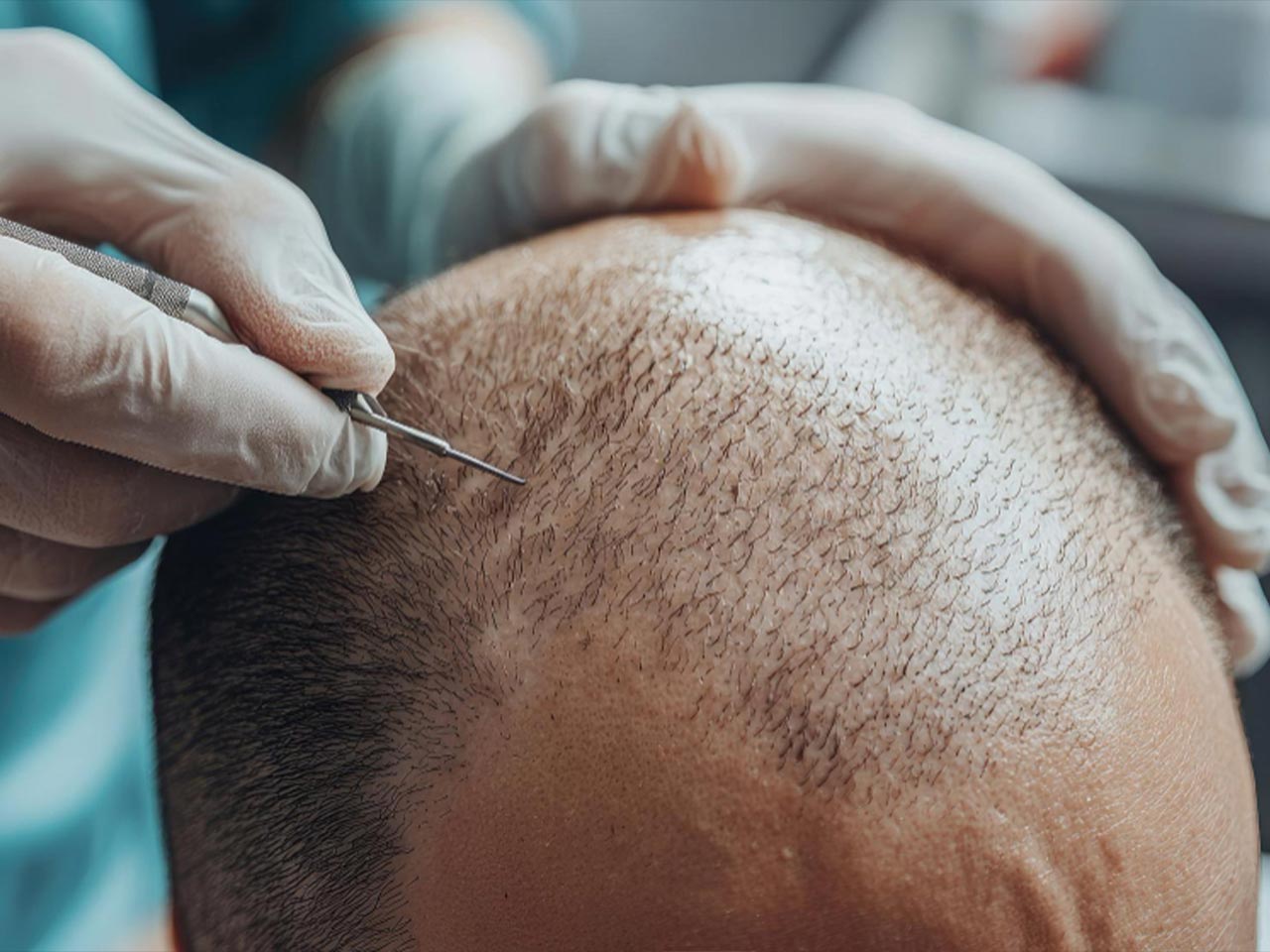
You cannot judge which stage you are at in a bathroom mirror, and this is the honest argument for a proper assessment. Under magnified scalp examination, the giveaway is variation in shaft thickness within a small area: a healthy scalp shows fairly uniform calibre, while an androgenetic one shows thick and thin hairs mixed together in the same square centimetre. That mixture is the finding that predicts what treatment can realistically achieve.
Which produces the single most useful piece of advice in this entire article: the earlier you act on androgenetic thinning, the more there is to hold. Treatment protects what is still cycling. It does not resurrect what has already closed.
Diffuse Thinning Recovery: What a Realistic Timeline Looks Like
Whichever mechanism you are dealing with, recovery runs slower than patience does. Hair grows around a centimetre a month, and no protocol accelerates that.
For a trigger-driven shed, the arc is reasonably predictable. Weeks 0 to 6 go on identifying and correcting the cause. By month 3 the shedding rate is usually falling. Months 3 to 5 bring visible regrowth as short new hairs standing up along the parting — a stage patients often mistake for breakage and panic about. Months 6 to 9 those hairs gain length and thickness. Months 9 to 12 give you a fair comparison against your original photographs.
For androgenetic thinning under medical treatment the shape is different. The first six to eight weeks can involve a temporary increase in shedding as follicles are pushed to reset their cycle, which is expected but reliably terrifying and causes people to abandon treatment right before it starts working. Real change is not readable before month 4. Month 6 is the earliest honest checkpoint, month 12 the meaningful one, and results are then held only for as long as treatment continues. Stop, and the ground you gained is typically lost within about a year.
What Medical Treatment Can Realistically Do
The medications that genuinely affect diffuse thinning are prescription and prescription-adjacent, and every one of them belongs in the hands of a doctor who has examined you, reviewed your history and, where relevant, your bloodwork.
Topical minoxidil is the most widely used option and works by extending the growing phase; it typically improves calibre and density modestly, needs several months before anything is readable, and must be continued to keep the benefit. Oral forms exist and are used in some clinical settings, but they carry cardiovascular considerations and are strictly a physician-supervised decision. For men, DHT-blocking treatment such as finasteride addresses the driver itself rather than the symptom, with a side-effect profile that has to be discussed openly with a doctor before starting rather than looked up afterward. Some women are managed with anti-androgen therapy, but the choice is bound up with contraception, pregnancy planning and individual medical history, so it is not a decision that translates between patients.
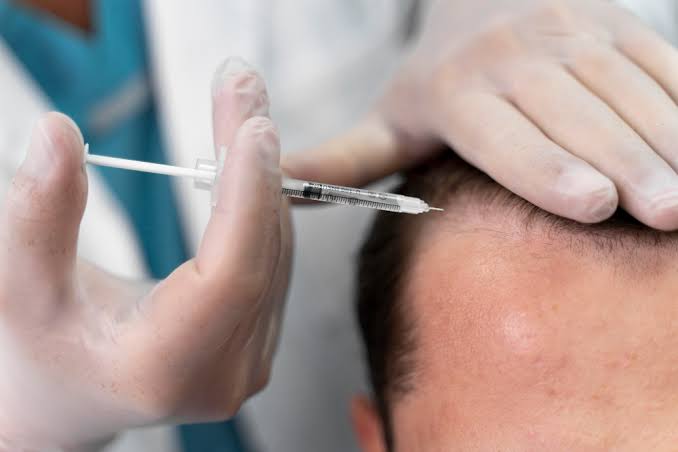
Alongside these, in-clinic support treatments — PRP, mesotherapy and related protocols delivered as a course rather than a one-off — are used to support the scalp environment while the medication does the heavy work. You can see how we structure those in our hair treatments programme. Two things stay true across all of it: response varies considerably between patients, and nobody honest will promise you a specific outcome in advance.
If you genuinely cannot tell whether you are shedding or miniaturizing, that question is answerable in a day rather than a year. Send standard photographs of the parting, crown and hairline through our assessment form and our medical team will tell you which mechanism they are looking at and what a realistic plan looks like — including, quite often, that you need bloodwork before you need us.
What Doesn’t Reverse Diffuse Thinning, However It Is Marketed
The thinning-hair aisle is built on a fair assumption: that frightened people buy quickly and rarely ask for evidence.
Biotin does nothing for hair unless you are genuinely deficient, which is rare outside specific medical conditions, and it can distort thyroid and cardiac blood tests badly enough that laboratories ask you to stop taking it before testing — which means a supplement bought for your hair can obscure the very result that would explain your hair. Thickening shampoos coat the shaft and make hair feel fuller in the shower; nothing that rinses out after ninety seconds changes a follicle. Shampoos advertised as blocking DHT do not achieve meaningful follicular effect through that contact time. Scalp massage is pleasant and harmless and will not reverse miniaturization. Low-level laser devices have some supporting data but sit firmly in the “modest adjunct” category rather than the “solution” one, at a price that usually buys several months of treatment that actually works. The same caution applies to the newer options we weighed up in stem cell and exosome therapies for hair.
Cosmetic fibres are the honest exception, as long as you are honest about them. They are makeup for the scalp — genuinely effective in photographs and social situations, entirely superficial, and completely reversible in the shower.
Is Diffuse Thinning Reversible in Women?
More often than in men, and for a specific reason: women arrive with correctable triggers far more frequently.
Female pattern loss is frequently diffuse from the outset — a widening central parting with the frontal hairline preserved — so the appearance alone does not separate genetic thinning from an effluvium the way it often does in men. On top of that, low ferritin, thyroid disease, postpartum shifts, contraceptive changes and restrictive dieting are all more common in this group. That combination is exactly why a workup matters more here, and why a woman who is told at a first appointment that she needs surgery, without any bloodwork having been ordered, should get a second opinion. How we assess surgical options in this group sits in our hair transplantation for women department.
Postpartum shedding has its own reassuring rhythm: onset around 2 to 4 months after delivery, heaviest at 4 to 6 months, and substantial recovery by 9 to 12 months, with the short regrowth around the hairline that new mothers describe as baby hair. Menopausal thinning behaves differently, tends to be progressive rather than self-correcting, and is worth assessing early rather than waiting to see.
When Does a Hair Transplant Enter the Picture, and When Is It a Mistake?
Surgery answers a different question than reversibility does. It does not treat thinning; it redistributes hair you already own.
Which is why timing matters so much in diffuse cases. Operating in the middle of an active effluvium is a genuine error — the shedding pattern makes assessment unreliable, and hair that would have returned on its own gets counted as loss. Operating on diffuse androgenetic thinning while it is progressing and untreated produces the outcome nobody wants: transplanted hairs sitting in a field that continues to thin around them, so the result looks worse at year three than at year one.
There is also a hard limitation specific to this pattern. Transplantation depends on the donor area at the back and sides being genetically resistant to DHT. In diffuse unpatterned loss, the donor itself is thinning, which means grafts taken from it will thin too. That is one of the few situations where the right answer is that surgery is not on the table at all, however much a patient wants it, and it can only be established by examining the donor properly rather than by looking at the top. We set out the constraints around donor supply in our piece on donor area capacity across a lifetime, and the surgical decision itself in hair transplant for thinning hair.
Where surgery does work well in diffuse cases is the narrow, well-selected one: thinning that has been medically stabilised for a year or more, a donor confirmed as healthy, a patient who intends to continue medical treatment afterward, and a plan aimed at rebuilding the frame of the face rather than chasing uniform density everywhere.
How to Tell If You Are Actually Improving, Because the Mirror Lies
Checking your hair every morning in different bathrooms under different bulbs generates anxiety, not data. Every patient who tracks improvement successfully does the same four things.
Photograph on a schedule, not on a mood: parting, crown and hairline, every 90 days, in the same room with the same lighting, hair dry and styled the same way. Include one wet-hair set, because wet hair is unforgiving and therefore comparable — the same discipline behind the dated images in our before and after gallery. Count shed hairs across an ordinary week rather than reacting to one alarming wash day — the day after skipping a wash always looks catastrophic and means nothing. And look at the short hairs, not the long ones: a fringe of new upright growth along the parting is the earliest real evidence that something is working, and it shows up long before overall density visibly changes.
Then leave it alone between checkpoints. Nothing you can observe at day 30 predicts what you will see at month 6.
What to Do in the Next Ninety Days
If your thinning started at a datable moment and you can point to the illness, the diet, the birth or the collapse in sleep that preceded it by a season, your most productive next step is bloodwork and time, not treatment. Get ferritin and thyroid checked, correct what needs correcting under medical guidance, photograph yourself properly, and reassess at three months. A large share of people in this position recover without ever needing a clinic, and the questions they ask along the way are answered in our frequently asked questions.
If it has crept up on you with no starting point, if your parting is widening and your hair is finer than it used to be rather than simply less abundant, the clock is the relevant factor. Every month of untreated androgenetic thinning is calibre you will not be getting back, and the treatments that work protect what is still cycling.
At Hairpol we assess both groups the same way — examination, history, magnified scalp assessment and bloodwork where it is indicated — before anyone discusses a procedure, because roughly a third of the people who contact us about surgery turn out to need a diagnosis rather than an operation. If you want a straight read on which category you fall into and what is realistically available to you, our team can look at your case through the hair transplantation department and tell you plainly whether your thinning is something to treat, something to wait out, or something to operate on.
Find this helpful? Add Hairpol as a preferred source on Google.
Get a Free Consultation
Answer a few questions and the medical team will review your situation.
