
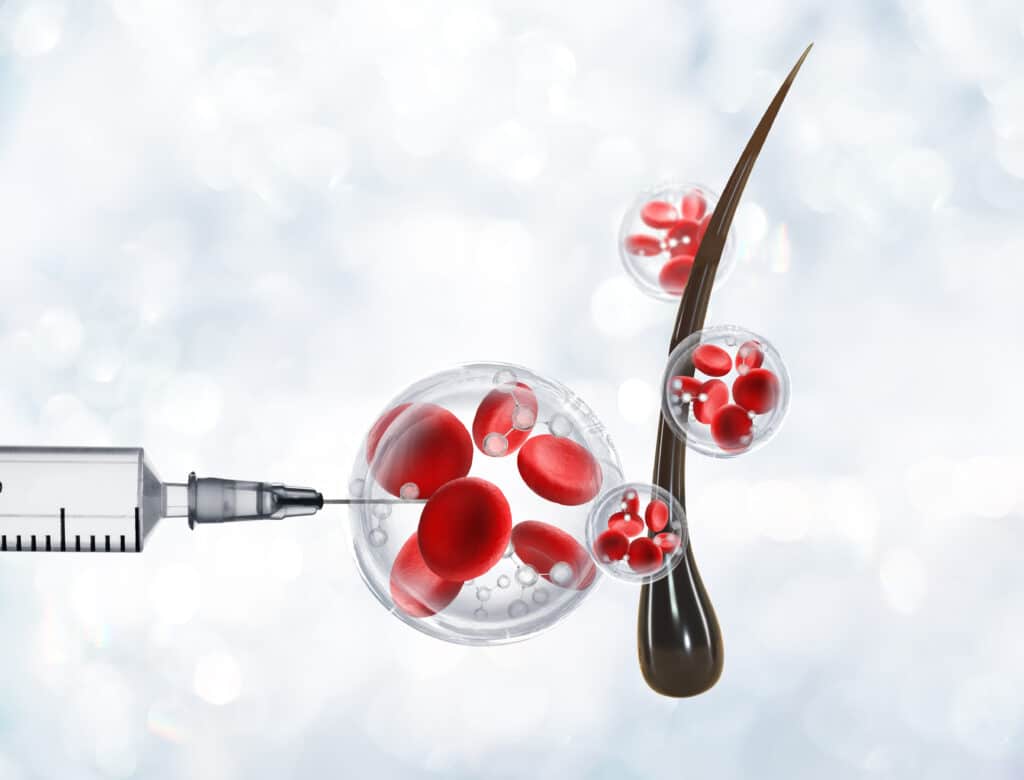
You probably did not go looking for the word DHT. It found you. Maybe you noticed more strands than usual circling the shower drain, or the temples in a photo sitting further back than you remembered, and a late-night search sent you down a rabbit hole of forum threads and half-explained science. Somewhere in there, three letters kept coming up as the villain of the story. So let us slow down and actually explain them, because understanding the connection between DHT and hair loss is the difference between panicking and making calm, informed decisions about what to do next.
This is not a lecture, and it is not a sales pitch. It is the honest version of the biology, the part most clinics gloss over because it complicates the tidy promise that surgery fixes everything. At Hairpol, we would rather you understood why your hair is thinning than simply be told there is a procedure for it. Once you grasp what DHT is and what it does to a follicle, almost every question about treatment, timing, and what a transplant can and cannot achieve starts to answer itself.
The hormone hiding behind the pattern
DHT, short for dihydrotestosterone, is an androgen: a hormone from the same family as testosterone, only considerably more potent when it comes to its effect on certain tissues. It is not a foreign invader or a sign that something has gone wrong with your body. DHT is a normal, necessary hormone that plays real roles, particularly during puberty and in the development of male characteristics. Almost every man has it, and most women carry small amounts too.
That is the first thing worth sitting with. DHT is not a disease. The problem is not that you have DHT, because everyone does; the problem is what DHT does to a specific set of hair follicles that happen to be genetically sensitive to it. In other words, the hormone is the trigger, but the target and the outcome are written into your genes. This is why two men with similar DHT levels can have completely different heads of hair, a point we will come back to, because it is central to understanding why this happens to some people and not others.
How testosterone quietly becomes DHT
Your body does not produce most DHT directly. Instead, it converts testosterone into DHT using an enzyme called 5-alpha-reductase. Think of the enzyme as a small chemical switch: wherever it is present in the body, a portion of the testosterone passing through gets converted into the more potent DHT. This enzyme is especially active in the skin of the scalp, the prostate, and other tissues, which is exactly why the scalp becomes a stage for this whole drama.
This conversion step matters enormously, because it is the pressure point where treatment eventually acts. If you can slow down 5-alpha-reductase, you produce less DHT, and the follicles under attack get some relief. That single mechanism is the entire logic behind the most established anti-loss medications, which we will get to. For now, hold on to the sequence: testosterone circulates, 5-alpha-reductase converts a share of it into DHT in the scalp, and that local DHT is what your sensitive follicles have to contend with day after day, cycle after cycle.
What DHT actually does to a follicle
Here is where the connection between DHT and hair loss becomes concrete. On a genetically susceptible follicle, DHT binds to receptors and, over time, disrupts the normal hair growth cycle. Each hair on your head grows for years, rests, sheds, and is replaced by a new hair from the same follicle. DHT interferes with this cycle by shortening the growth phase and lengthening the dormant phase, so each new hair the follicle produces gets a little less time to grow.
The visible result of that interference is miniaturization. With every cycle, the affected follicle produces a hair that is slightly thinner, shorter, and lighter than the one before it. A thick, pigmented terminal hair gradually gives way to a fine, wispy, barely-there strand, and eventually to nothing visible at all. This is the crucial point that people miss: pattern hair loss is rarely a sudden fall-out event. It is a slow shrinking, a downsizing of follicles over years, which is why you often notice thinning and loss of density long before you notice bald skin.
Why it happens in a pattern, not all over
If DHT circulated evenly and every follicle responded the same way, you would thin uniformly across your whole scalp. Instead, most men lose hair in a recognizable pattern, typically starting at the temples and the crown and advancing in fairly predictable stages. That pattern exists because sensitivity to DHT is not uniform across your scalp. The follicles at the front, the hairline, and the crown tend to be the most genetically susceptible, while the hair around the back and sides is largely resistant.
This is precisely what the well-known staging system captures. If you have ever tried to place yourself on the chart of receding stages, you were reading the footprint that DHT leaves behind. Our guide to the Norwood scale and how to read your hair loss pattern walks through those stages in detail. The takeaway here is that the pattern is not random. It is a map of which follicles are sensitive to DHT and which are not, and that map is remarkably consistent from one person to the next.
Why some men keep their hair: receptors and genetics
This is the question that quietly bothers everyone losing their hair. Your friend drinks more, sleeps less, and stresses harder than you, yet has a full head at forty, while you started receding at twenty-five. The unsatisfying but honest answer is genetics, and specifically the sensitivity of your follicle receptors to DHT. It is not really about how much DHT you produce; men with high DHT can keep their hair, and men with modest DHT can lose it.
What matters more is how strongly your follicles respond to whatever DHT is present. Some people inherit follicles studded with androgen receptors that react vigorously to DHT, and those follicles miniaturize readily. Others inherit follicles that barely register it. The genes involved are inherited from both sides of your family, not just your mother’s father, which is an old myth worth discarding. So if you are wondering whether you did something to cause this, the reassuring truth is that you almost certainly did not. You inherited a particular receptor sensitivity, and DHT simply acted on what your genes set up.
The back and sides: why the donor zone resists DHT
Now we arrive at the single most important fact for anyone considering surgery. The hair at the back and sides of your head, the region we call the donor zone, is largely genetically resistant to DHT. Those follicles carry a different sensitivity profile, which is why so many balding men keep a stubborn horseshoe of hair long after the top has gone. That horseshoe is not luck; it is DHT resistance, expressed exactly where genetics decided it would be.
This resistance is the biological foundation of hair transplantation, and it is why a good transplant is genuinely permanent. When we move follicles from the resistant donor zone into a thinning area, they keep their original character. A DHT-resistant follicle stays DHT-resistant even after it is relocated to the top of your head, a principle known as donor dominance. It does not suddenly become vulnerable just because of its new address. That is the whole reason transplanted hair, done properly, keeps growing for life while the untreated native hair around it may continue to thin.
Female pattern loss: the same hormone, a different picture
DHT is not only a male story, though the pattern it produces in women usually looks different. Many women experience a diffuse thinning across the top of the scalp, often with a widening part, rather than the sharp temple recession and crown balding typical of men. Androgens including DHT are frequently part of the picture, but the interplay with female hormones, and with conditions and life stages that shift hormone balance, makes the female version more varied and often harder to read at a glance.
This is one reason a proper assessment matters so much for women. Diffuse thinning can have several drivers layered on top of, or instead of, androgen sensitivity, and treating it well depends on identifying what is actually going on. Our comparison of diffuse thinning versus pattern baldness unpacks why that distinction changes your options. The short version: DHT explains a great deal of hair loss, but it does not explain all of it, and assuming it does can send you toward the wrong treatment.
How this biology connects to treatment
Everything above leads naturally to the treatment question, because once you understand the mechanism, the logic of the medications becomes obvious. If DHT drives the miniaturization, then lowering DHT should slow or halt it, and that is exactly what the two most established drugs do. Finasteride inhibits 5-alpha-reductase, reducing the amount of testosterone converted into DHT and thereby easing the hormonal pressure on your susceptible follicles.
Dutasteride works on the same principle but blocks the enzyme more broadly, lowering DHT further, which is why it is sometimes used when finasteride alone is not enough. Neither is a cure, and neither regrows a bald scalp from scratch, but both can meaningfully stabilize loss and protect the hair you still have. If you want the practical detail on how this fits around surgery, our article on whether finasteride can improve hair transplant results covers the evidence and the trade-offs. The core idea is simple: attack the DHT, and you attack the cause rather than just the symptom.
Why medication protects better than it regrows
It is worth being honest about what lowering DHT can realistically achieve, because expectations are where a lot of disappointment starts. Reducing DHT is very effective at holding the line: slowing the thinning, halting active loss, and often thickening follicles that were miniaturized but not yet dead. What it does far less reliably is bring back hair from follicles that have already shut down completely. A follicle that has miniaturized to nothing over many cycles is hard to revive, however much you lower the hormone.
This is why timing matters and why we are candid about it. The earlier you address DHT-driven loss, the more hair there is to protect, and the more you stand to keep. Wait until a region is fully bald, and medication has little left to work with there, though it can still protect the areas that are only thinning. Framing the drugs as protection rather than resurrection keeps expectations realistic, and realistic expectations are what keep people satisfied with their results years down the line rather than chasing a regrowth that biology cannot deliver.
Why a transplant does not switch off DHT
A point that surprises many patients: a transplant does nothing to your DHT levels or to the sensitivity of your native follicles. Surgery relocates resistant hair into thinning zones; it does not treat the underlying process at all. The DHT is still there, the enzyme still converts testosterone, and your genetically susceptible native hairs are still miniaturizing on their own schedule, right alongside the newly transplanted grafts that are immune to all of it.
That mismatch is exactly why we talk about medication and surgery together rather than as rivals. If you transplant a hairline and ignore the DHT-driven thinning behind it, the native hair can keep receding, and over a few years you can end up with a restored front and a newly thinning zone behind it, which looks unnatural. Managing DHT is what protects the surrounding native hair so the whole result stays coherent. At Hairpol, we plan around both realities: the permanence of resistant grafts and the ongoing vulnerability of everything the hormone can still reach.
What DHT does not explain
For all its importance, DHT is not the answer to every hair problem, and treating it as such is a mistake. Sudden, patchy, or unusually rapid loss often points to something other than androgenetic miniaturization: thyroid issues, iron deficiency, certain medications, severe stress, or an autoimmune condition can all shed hair through completely different routes. These do not follow the slow, patterned shrinking that DHT produces, and they will not respond to a DHT-lowering drug because DHT is not the cause.
This is why a proper diagnosis comes before any treatment plan, and why we are wary of one-size answers. If your loss does not fit the classic pattern, blaming DHT and reaching straight for finasteride can waste months and mask the real driver. Supportive scalp and follicle therapies have their place too, and our range of hair treatments can complement a medical approach where appropriate. The honest position is that DHT explains most male pattern loss and a good deal of female thinning, but the first job is always to confirm that DHT is actually what you are dealing with.
Can lifestyle, diet, or stress change your DHT loss?
Because the internet is full of promises about beating hair loss naturally, it is worth being straight about what lifestyle can and cannot do. Certain foods, supplements, and habits are marketed as ways to lower DHT, and a few have modest, inconsistent evidence behind them. But none of them come close to the effect of the established medications, and none can override strong genetic receptor sensitivity. If your follicles are highly reactive to DHT, no smoothie or scalp serum is going to switch that off.
Stress is a slightly different case. Severe or prolonged stress can cause its own type of shedding, and it can make ongoing pattern loss feel worse and faster, but it does not create the underlying DHT sensitivity that drives pattern baldness. General good health, a decent diet, and managing stress are genuinely worthwhile, because they support the hair you have and rule out other contributors, but they are not a substitute for actually addressing DHT. The honest framing is that lifestyle sets the stage, while genetics and DHT write the script. At Hairpol, we would rather you spent your energy on what demonstrably works than chased a natural cure that the biology does not support.
How DHT loss unfolds over a lifetime
Pattern loss driven by DHT is not a single event but a trajectory that plays out over years and decades. For many men it begins subtly in the twenties, with the temples softening and the density at the crown quietly dropping, long before anything looks obviously bald. The pace varies enormously from person to person, again because of genetics, but the direction of travel is fairly consistent once the process has begun: gradual, patterned, and progressive unless something intervenes.
Understanding it as a trajectory rather than a snapshot changes how you plan. It explains why a transplant at twenty-five, done without a plan for the DHT still working on your native hair, can look great at first and awkward a few years later as the untreated hair keeps receding around it. It also explains why we are cautious about operating too early on an aggressive, unstable pattern. Knowing roughly where you sit on that trajectory, and where it is likely to head, is a big part of making a decision you will still be happy with in ten years, not just ten months.
Putting the whole picture together
Step back and the story is coherent and, in its own way, reassuring. Your body converts testosterone into DHT using 5-alpha-reductase. On follicles that inherited a strong sensitivity to it, DHT shortens each growth cycle and miniaturizes the hair a little more every time, producing the familiar pattern at the temples and crown while sparing the resistant hair at the back and sides. That is the entire mechanism of DHT and hair loss in a few sentences, and almost every treatment decision flows from it.
Understanding this puts you back in control. You know why lowering DHT protects your hair, why acting early preserves more of it, why the donor zone makes a transplant permanent, and why medication and surgery work best as partners rather than alternatives. You also know the limits: DHT does not explain everything, and no drug resurrects a fully bald scalp. That combination of knowledge and honesty is the foundation of every good plan, because the people who understand their own hair loss tend to make the calmest, smartest choices about it.
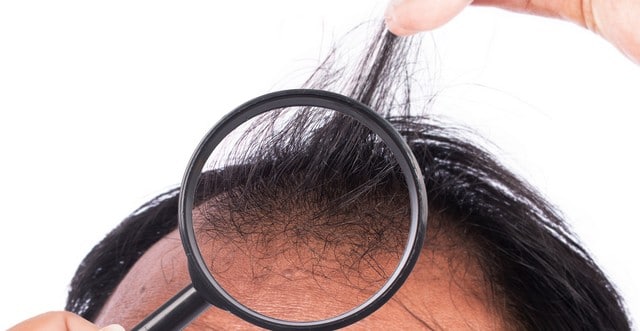
At Hairpol, we would rather walk you through this biology properly than hand you a procedure and hope you do not ask questions. If you are trying to make sense of your own thinning and what to do about it, whether that turns out to be medication, a transplant, or simply monitoring for now, our team can assess your pattern and explain your real options without the hype. Explore our approach to hair transplantation, where understanding the cause of your hair loss is treated as the first step, not an afterthought.
Find this helpful? Add Hairpol as a preferred source on Google.
Get a Free Consultation
Answer a few questions and the medical team will review your situation.
