
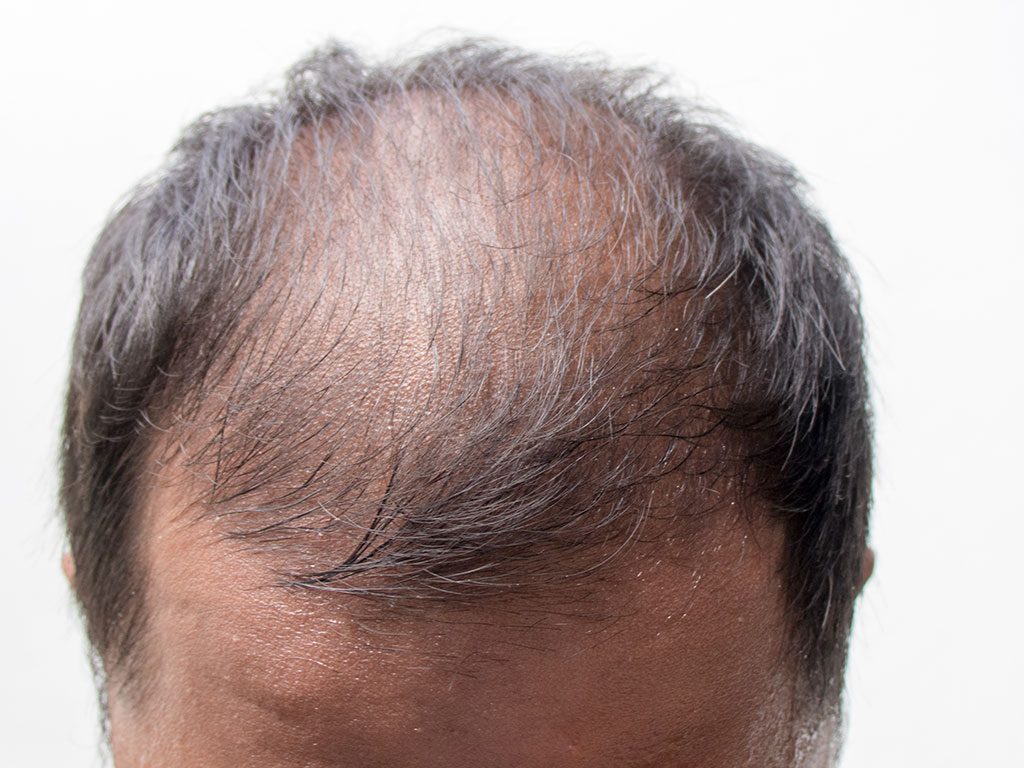
The consultation people dread is not the one about money. It is the one where a surgeon spends ninety seconds looking at the back of your head instead of the front, and then starts choosing his words very carefully.
Diffuse thinning is the presentation that separates clinics interested in your outcome from clinics interested in your deposit. A receding hairline is easy to quote: bald zone here, dense donor there, move grafts from one to the other. Thinning spread across the entire top of the scalp, with hair still present everywhere but visibly weaker, refuses to fit that arithmetic. There is no clean bald area to fill. There is existing hair to work around. And in a meaningful minority of cases, the donor area that is supposed to fund the whole operation is quietly thinning too.
The short answer: Some people with diffuse thinning are excellent candidates and some should never be operated on, and the deciding factor sits at the back of your head, not the top. If your donor zone shows under roughly 20 percent miniaturisation and your loss has held steady for 12 months on physician-supervised medical treatment, surgery can add real density. If you have DUPA, where the back and sides are thinning as well, a transplant is usually the wrong answer at any graft count.
What diffuse thinning means when a surgeon looks at it
The distinction between diffuse thinning and classic pattern baldness is a diagnostic conversation in its own right, and we have written it out in full in diffuse thinning vs pattern baldness. Here is the compressed version, because candidacy is what this page is about.
Pattern loss moves in zones. The hairline retreats, the temples deepen, the crown opens, and the areas between them stay comparatively untouched until late. Diffuse thinning does the opposite. Density drops across the whole top of the scalp at once, more or less evenly, so the outline of your hair barely changes while the substance of it disappears. You notice it in a widening part line, in scalp showing through under a bathroom light, in the ponytail that needs an extra twist of the elastic.
Under magnification the mechanism is miniaturisation: follicles producing progressively finer, shorter, less pigmented hairs with each cycle rather than shutting down all at once. The follicle count on your head may still be close to normal. The hair mass is not.
Can you get a hair transplant with diffuse thinning?
Yes, conditionally, and the conditions matter more than the answer. Three of them decide almost every case.
The donor area has to be genuinely reliable, not merely present. The loss has to be stable, which in practice means documented and unchanged over a period rather than described as stable in a consultation room. And the goal has to be density added to a thin field rather than a full head restored, because those are different requests and only one of them is deliverable.
What people hear as a yes or no question is nearly always a timing question. Plenty of patients told no at 27 are perfectly good candidates at 30, after medical treatment has been given a proper run and the picture has settled. At Hairpol, a significant share of the diffuse thinning consultations we see end with a treatment plan and a review date rather than a surgery date, and that is not a soft rejection. It is the sequence that produces a result worth having.
DUPA vs DPA: the distinction that decides your answer
Two acronyms carry the entire decision, and most patients have never heard either of them before their consultation.
DPA — diffuse patterned alopecia — is androgenetic loss that presents diffusely across the top of the scalp while sparing the horseshoe-shaped rim at the back and sides. The top thins broadly instead of balding in zones, but the donor rim behaves the way donor hair is supposed to behave: dense, coarse, resistant to the hormonal signal that is thinning everything above it. DPA patients can be very good surgical candidates.
DUPA — diffuse unpatterned alopecia — thins the top and the donor rim together. There is no safe zone. The hair at the back looks acceptable in a mirror, particularly at a normal length, which is exactly the trap: DUPA patients often photograph like reasonable candidates and only reveal themselves under a densitometer, where the donor shows widespread miniaturisation and wildly variable hair calibre in the same square centimetre.
Move grafts out of a DUPA donor and you achieve two things. The recipient area gains hairs that were already programmed to thin, so the gain fades. The donor area loses density it could not spare and starts to show harvest marks that a normal donor would have hidden. There is no graft number that fixes this, and no technique that gets around it.
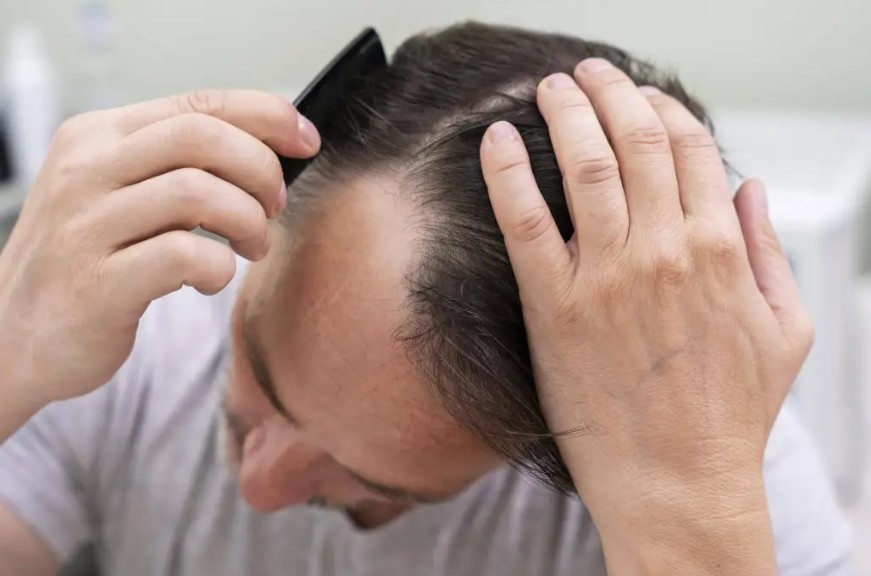
Why the donor area, not the thin area, decides everything
Every transplant is funded from a fixed account. You are born with a finite number of follicular units in the safe zone, a surgeon can responsibly harvest perhaps 5,000 to 7,000 of them across a lifetime in a strong donor, and there is no way to top the account up. We set out the full arithmetic in donor area capacity and how many grafts you get in a lifetime.
Diffuse thinning makes that account harder to spend well. In a bald area, every graft you place is a visible gain, because you are moving from zero. In a thinning area, you are adding hairs to a field that already contains hairs, so the same 2,000 grafts produce a much smaller change in what a mirror shows. The zone is also usually larger than a bald patch would be, because the thinning covers the whole top rather than one region.
Then the harder problem. If the underlying loss keeps progressing, the native hairs you placed grafts between will keep disappearing, and you will need to spend again to hold the same appearance. That is how patients reach their mid-thirties with an exhausted donor and a result that no longer looks like a result.
What does a proper diffuse thinning examination involve?
A consultation that consists of a glance and a graft quote is not an assessment. For diffuse thinning specifically, the examination should be doing four things.
It should measure. Densitometry or trichoscopy at magnification gives hairs per square centimetre, follicular unit groupings, and — the number that actually matters — the percentage of miniaturised hairs in the donor area. Under roughly 20 percent is generally reassuring. Above 25 to 30 percent, most surgeons will decline, and the ones who do not are usually not looking.
It should compare. The donor zone gets measured against the thinning zone and against the temporal and occipital margins, because DUPA reveals itself as a pattern of measurements, not a single reading.
It should exclude. Ferritin, thyroid function, vitamin D and, in women, androgen and hormonal panels rule out the causes of diffuse shedding that respond to a pill instead of a scalpel. A scalp exam looks for redness, scaling, loss of follicular openings or burning and itching, because scarring alopecias such as lichen planopilaris and frontal fibrosing alopecia can masquerade as diffuse thinning and are a firm contraindication to surgery until dermatology has them controlled.
And it should record. Standardised photographs, same lighting, same angles, same hair length, so that the next appointment compares evidence rather than impressions.
Why medical stabilisation comes before surgery
Surgery relocates hair. It does not treat the condition that is thinning it. That sentence is the whole reason for the sequence, and it is the part patients most often want to skip.
For most men with androgenetic diffuse thinning, that means a physician-supervised trial of established medical treatment — typically topical minoxidil and, where appropriate and prescribed, finasteride — held long enough to judge honestly, which is six to twelve months rather than six weeks. For women, the options differ and hormonal factors have to be assessed individually; oral treatments in particular are prescribed case by case. Adjuncts such as PRP and mesotherapy sit alongside these rather than replacing them, and we explain where they realistically fit under our hair treatments programmes. Dosing, suitability and side-effect risk are decisions for your doctor, and response varies by patient.
Two things come out of that year. Some patients gain enough that surgery becomes optional. Everyone else gains information — a documented, stabilised baseline that turns a guess about your future into something closer to a forecast.
If you cannot tell from a mirror whether your donor area is genuinely dense or just longer, that is precisely what a densitometry reading settles. A photo assessment or a short appointment gives you a number to plan around instead of an argument with your own reflection.
How long do you have to wait before operating?
Twelve months of documented stability is the usual threshold, and for men under 25 with aggressive diffuse loss most careful surgeons want longer.
Stability has a definition, and it is not a feeling. It means the part line has not widened between photographs taken three and six months apart. It means daily shedding has returned to a normal range and stayed there. It means a repeat densitometry reading shows the miniaturisation percentage holding rather than climbing. It means you have been on treatment consistently, because six months of stability while taking nothing tells you something quite different from six months of stability on treatment.
Patients hear the wait as a year lost. In practice it is the year that decides whether the operation is worth doing at all, and it costs nothing except patience. The alternative is spending grafts on a hypothesis.
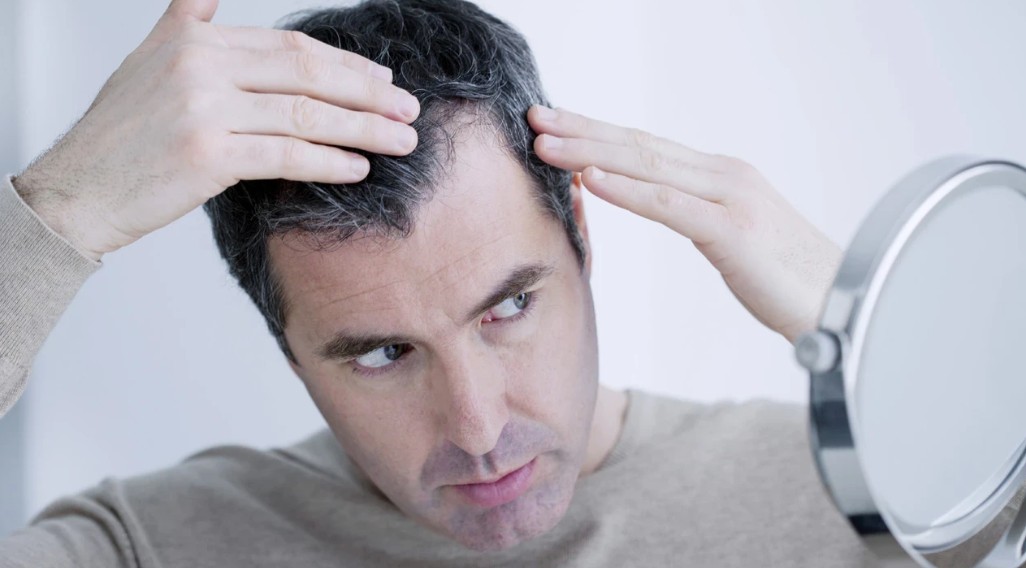
What goes wrong when you transplant into unstable loss
Three failure modes, all of them common enough that any experienced surgeon can describe them from memory.
The first is shock loss. Placing incisions between existing hairs can push weakened, miniaturised native hairs into a shedding phase. Healthy hairs normally return within three to six months. Hairs that were already miniaturised sometimes do not, so the area can end up thinner than it started before it starts to improve.
The second is transection. Working a blade or a DHI implanter pen between standing hairs risks damaging the follicles already there, and a scalp full of fine, closely spaced hairs is unforgiving work. This is a surgeon-skill variable more than a technique variable.
The third is the slow one, and the one people actually regret. Consider the patient at 28 who has 3,000 grafts placed into a diffusely thinning top without stabilising first. At month nine he looks better. By year three the native hairs around his grafts have continued to go, the transplanted hairs remain in place because they were never going to be affected, and the result is a strange, patchy density that reads as a transplant rather than as hair. He is now 31, has spent a large share of a finite donor, and needs a second operation to fix the appearance of the first.
Who should be told no
A clinic that has never turned anyone away is not a clinic with exceptional patients. Diffuse thinning produces more of these conversations than any other presentation, and the honest list is short.
- Donor miniaturisation above roughly 25 to 30 percent, which usually means DUPA and usually means no surgery at any stage.
- Active scarring alopecia, which needs dermatological control first and may rule out surgery permanently.
- An untreated systemic cause — iron deficiency, thyroid disease, a telogen effluvium after illness, crash dieting or childbirth — where the hair may substantially return once the cause is addressed.
- Rapid, undocumented loss in a patient under 25 who has not yet trialled medical treatment.
- Expectations that no surgical result can satisfy, where the distress is out of proportion to what is visible.
At Hairpol, we would rather have this conversation before you book a flight for a hair transplant in Turkey than after you have paid for one. It is also worth reading through what a hair transplant cannot fix before any consultation, because knowing the limits in advance makes it much easier to tell a careful clinic from a persuasive one.
What a realistic result looks like when the field is thin
The goal in diffuse thinning is not a full head of hair. It is the reduction of scalp show-through to the point where thinning stops being the first thing anyone notices, and that is a lower bar than patients expect and a more achievable one, and our before and after gallery shows what that change actually looks like on a thin field.
Numbers help here. Into a completely bald area, a surgeon might place 35 to 45 grafts per square centimetre. Into an area that still contains native hair, placement is typically 15 to 25 per square centimetre, both because the existing follicles occupy space and because the blood supply has to feed everything. The visual gain comes from raising total hair mass over a wide surface rather than building a dense patch.
The other half of the honest version: transplanted hairs are permanent, but the native hairs around them are not, so medical maintenance continues indefinitely after surgery. A diffuse thinning result that is not maintained will drift back toward its starting point over five to ten years, not because the grafts failed but because everything around them kept thinning.
Women with diffuse thinning are a different calculation
Female pattern loss is diffuse by default. The hairline usually holds, the central part widens, and density drops across the top — which means the presentation that raises red flags in men is simply the normal picture in women considering a hair transplant.
Two things follow. The proportion of women whose donor area is also involved is higher, so donor evaluation carries even more weight, and the workup is longer because there are more reversible causes to exclude: thyroid disease, iron deficiency, polycystic ovary syndrome, postpartum shedding, and the medication-related effluviums. Skipping that workup and going straight to surgery is how women end up with a transplant for a condition that a blood test and six months of treatment would have improved.
Women who clear that assessment can do very well, and unshaven or partial-shave techniques mean the recovery is usually far more discreet than they fear. But the assessment is the part that cannot be compressed.
If you have been told to wait, here is what that year is for
Being told you are not a candidate today is not the same as being told you never will be. For most people with diffuse thinning it means the picture is still moving, and no surgeon can plan around a moving target.
Use the time deliberately. Get on physician-supervised treatment and stay on it, because inconsistent use produces an uninterpretable result. Take standardised photographs every three months — same room, same light, same length, hair dry. Clear the blood work so nothing reversible is being missed. Then get re-measured rather than re-eyeballed, and let the second set of numbers make the decision. The questions patients ask most often before that review are answered in our frequently asked questions.
Some of you will find at that review that treatment has done enough. Some of you will find your donor holds up and a well-planned procedure will add the density you wanted. A smaller group will learn that surgery is not the right route, which is an unwelcome answer but a far better one to receive at 29 with an intact donor than at 34 with a spent one.
If you want your donor area properly measured rather than glanced at, our team assesses diffuse thinning cases individually and will tell you plainly which of those three groups you are in. You can start with our hair transplantation department for how we plan and stage these cases at Hairpol.
Find this helpful? Add Hairpol as a preferred source on Google.
Get a Free Consultation
Answer a few questions and the medical team will review your situation.
