
 Türkçe
 Deutsch
 Français
Medically reviewed by Dr. Barış Duman · Reviewed:
Short answer: 10 days after a hair transplant, most of the crusts in the transplant area have come off, the skin looks pink or slightly red and the grafts are well on their way: they are generally considered secure in their new place at around day 10–14, so keep protecting them until then. It is normal for some hairs to come away with the crusts at this stage; it is still too early to judge the result. A hat can be worn after day 10, with your doctor’s approval depending on the type of hat.
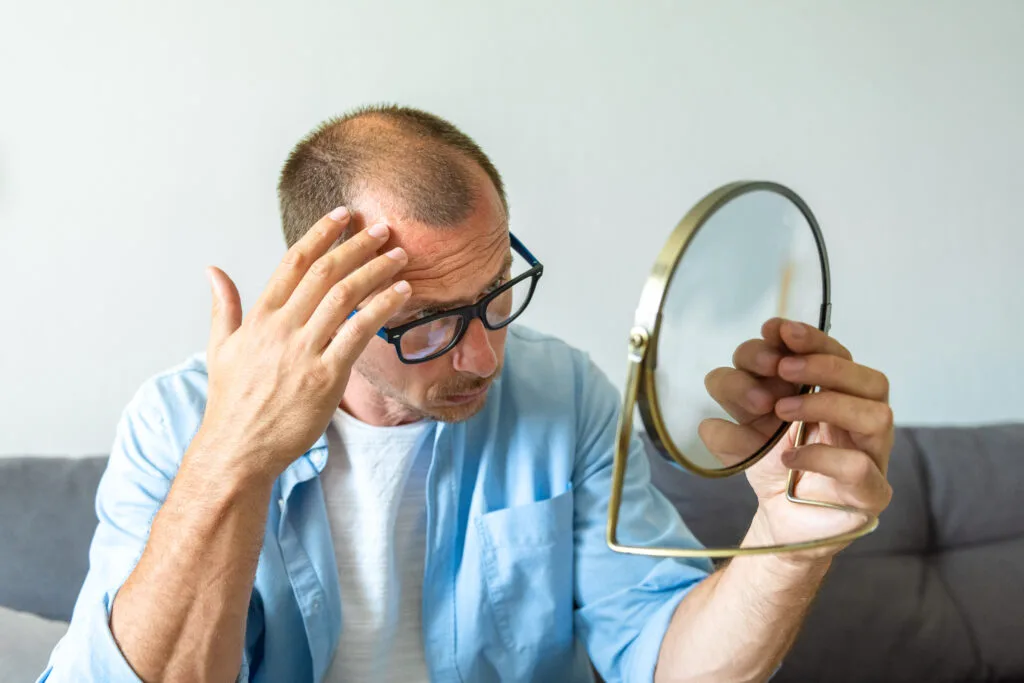
Day ten is the first big threshold of recovery. The most delicate period is behind you, the return to daily life speeds up and looking in the mirror raises new questions. Below we explain what is normal at this stage, what you can do and when you should contact your clinic.
What does the scalp look like 10 days after a hair transplant?
The transplant area
The crusts start to loosen around day 8 and most of them come away on their own with gentle washing by day 10. Underneath, pink skin and short hairs appear. Redness is more noticeable in people with fair skin and can last a few more weeks. This redness is a normal part of healing.
The donor area
At the back and sides of the head, where the grafts were taken, redness appears as small dots. This area usually recovers faster than the transplant area, and the dots start to fade as the short hair grows.
What you feel
Pain has largely gone at this stage. Mild itching, numbness or tingling are common. If these sensations decrease day by day, there is no cause for concern. We explain how to deal with itching in our article on itching after a hair transplant.
Have the grafts taken by day 10?
Grafts start to anchor from the first days and are generally considered secure in their new place at around day 10–14, so keep protecting them until then. Many doctors regard the first 10–14 days as the critical period. The exact time varies from person to person; your doctor assesses your situation. Details are in our article on when grafts settle after a hair transplant.
Short hairs that come away with the crusts are usually not graft loss. The hair root stays in place under the skin, only the hair shaft falls out, and the root produces new hair over the following months. Graft loss is only suspected if there is bleeding at that spot or if tissue is visible together with the root at the end of the hair.
What can you do after day 10?
If your recovery is going smoothly, day 10 is when many restrictions are relaxed. Even so, take each step according to the instructions your doctor gives you.
- Hat: After day 10, a loose, breathable hat can be worn; your doctor decides which hat is suitable based on its type. For a beanie you need to wait until day 40.
- Washing: Washing becomes easier, but scratching with your nails and rubbing hard are still not allowed. For the step-by-step method, see our guide on how to wash your hair after a hair transplant.
- Work: Most people return to desk jobs before this point. For physically demanding work, see our article on going back to work after a hair transplant.
- Sport: A gentle walk usually causes no problems. For heavy training, intense sweating and contact sports, wait for the period your doctor tells you. The stages are in our guide to returning to exercise.
- Sun: For the first 14 days, the transplant and donor areas are protected from direct sunlight. For the first 2 months, avoid sunbathing and long periods in the sun. Details are in our article on sun exposure after a hair transplant.
- Pool and sea: Chlorine, salt water and bacteria are a risk for newly healed skin; get your doctor’s approval before going into the water. We cover this in our article on swimming after a hair transplant.
- Medication: If your doctor considers it appropriate, finasteride 1 mg can be started 10 days after the operation.
What if there are still crusts on day 10?
How quickly the crusts come off varies from person to person. The crown, densely transplanted areas and dry skin can make crusts stay a little longer. In this case, continue your washing routine gently and do not pick the crusts off by hand. A crust pulled off while dry can dislodge a graft that has not yet fully settled. If there are still firmly attached crusts on day 14, send photos to your clinic.
When should you contact your clinic?
If you notice any of the following, contact your clinic without waiting:
- Bleeding from a graft site that keeps recurring or does not stop with light pressure,
- Redness that spreads and feels warm to the touch,
- Discharge, yellow crusts or a bad smell,
- Pain or swelling that increases instead of decreasing day by day,
- Fever or general malaise.
During this period, Hairpol patients can send their photos to their VIP consultants 24/7. After the operation, follow-up with monthly photos is carried out via the mobile app for 12 months.
What comes after day 10?
The most important threshold after day ten is shock loss. The transplanted hairs usually fall out between weeks 3 and 8, and for a while the area may look similar to how it looked before the operation. This is the roots entering a resting phase; new hairs emerge gradually over the following months and the final result settles in 12-18 months. We explain this process in detail in our articles on shock loss and recovery day by day in the first 30 days.
At Hairpol, the growth of the transplanted hair in the transplant area is backed by a guarantee certificate. You can read what the certificate covers in our article on the hair transplant guarantee certificate. To get to know our polyclinic’s physician, see the Dr. Barış Duman page.
For the topical side of aftercare, read minoxidil after a hair transplant: when to start and how long to use it.
Frequently asked questions
Can I wear a hat 10 days after a hair transplant?
After day 10, a loose, breathable hat can be worn. Your doctor decides based on the type of hat. For beanies and tight headwear you need to wait until day 40.
My hair is falling out on day 10. Have the grafts gone?
Most likely not. Short hairs that come away with the crusts are usually just the hair shaft; the root stays under the skin and produces new hair over the following months. If there is bleeding where the hair came out, send photos to your clinic.
Is redness normal 10 days after a hair transplant?
Yes. After the crusts come off, pink or red skin remains and can last a few weeks, especially in people with fair skin. If the redness spreads, feels warm or comes with discharge, contact your clinic.
Can I exercise 10 days after a hair transplant?
A gentle walk usually causes no problems. For weights, intense cardio, contact sports and the pool, wait for the period your doctor tells you.
Can you tell on day 10 whether the hair transplant was successful?
No, it is too early to judge the result on day 10. Skin that is healing without problems is a good sign; the real answer comes from the new hairs that grow over the following months, and the final result is seen in 12-18 months.
Free photo analysis
If you are planning a hair transplant and want to understand the recovery process from the start, send us your photos; we will share the plan and process that suit you free of charge.
Message us on WhatsApp or see which photos to send.
Find this helpful? Add Hairpol as a preferred source on Google.
Free hair analysis
Planning a hair transplant? Start with a free analysis
Tell us about your hair and our medical team prepares a plan specific to you.
- Transplant carried out by a specialist team under doctor supervision
- Guarantee certificate, valid for 18 months
- All-inclusive package: hotel, VIP transfer, aftercare kit
Free of charge, no obligation to book.
