
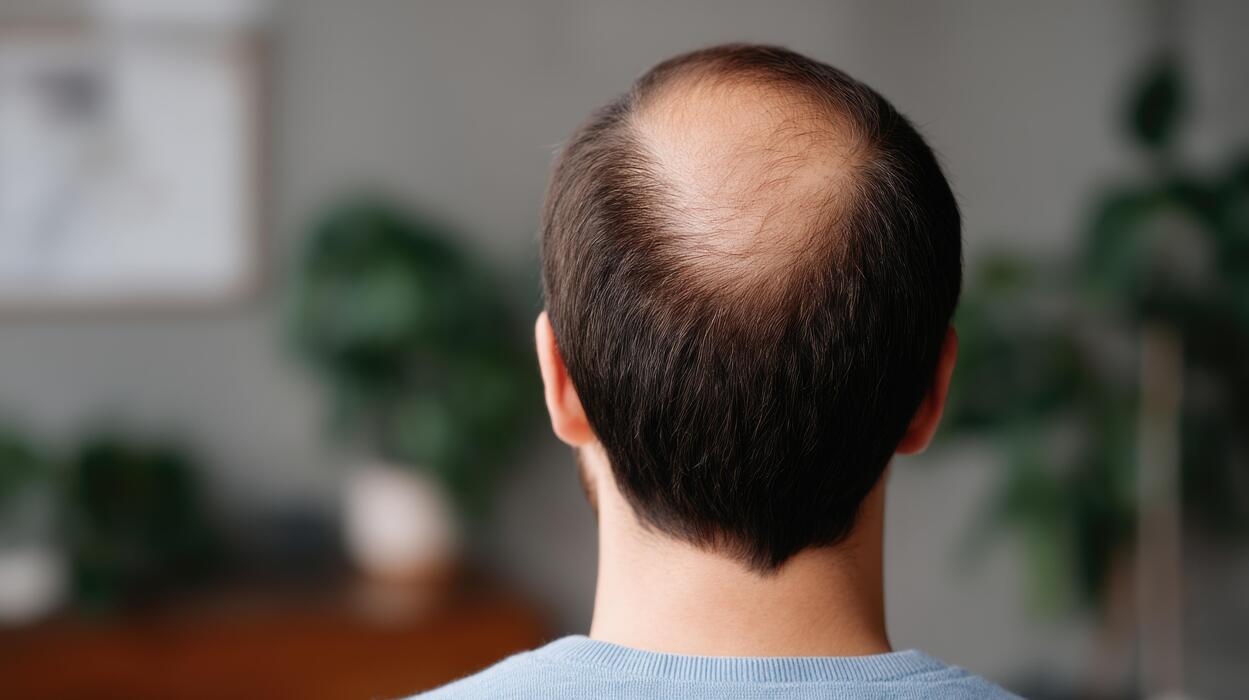
Ask a clinic what its crown success rate is and you will almost always hear a number in the nineties. It arrives fast, it sounds settled, and nobody ever explains what was counted to produce it.
That number is not necessarily dishonest. It is answering a different question from the one you are actually asking. The clinic is usually talking about how many transplanted follicles survived and grew. You are usually asking whether your crown will stop showing through in photographs at a family wedding. At the crown, more than anywhere else on the scalp, those two things come apart — and the space between them is where almost every disappointed patient ends up.
The short answer: A crown hair transplant has two separate success rates. Graft survival — how many transplanted follicles live and grow — is commonly reported in the region of 85 to 95 percent in experienced hands, though it varies by patient, technique and clinic, and no honest surgeon will promise you a figure in advance. Patient satisfaction runs lower and swings wider, because a crown needs far more hair per square centimetre to read as covered. A crown is only fairly judged at 12 to 18 months.
This article is about the number itself: how it is defined, what moves it, and how you would ever know whether your own transplant hit it. If your question is the earlier one — whether surgery on the crown is worth doing at all, and whether you are a suitable candidate for it — we answered that separately in do hair transplants work on the crown. Start there if you are still deciding. Everything below assumes the decision is made and you want to understand what success actually means once the grafts are in.
The Two Numbers Hiding Behind One Word
Success in crown surgery gets measured two ways, and they rarely agree.
The first is biological. Grafts were harvested, they were kept outside the body for a period, they were placed into incisions, and some percentage of them survived that whole sequence and produced hair. This is graft survival, and it is the number clinics quote. It belongs to the surgical team. It is largely settled within the first fortnight, long before you can see anything.
The second is visual, and it belongs to you. Your crown either looks acceptable under overhead light or it does not. This depends on graft survival, but it also depends on how large your bald patch was, how many grafts your donor area could spare, how coarse your hair is, how much contrast sits between your hair colour and your scalp, and whether your remaining native hair keeps thinning around the transplanted zone.
A patient can have excellent graft survival and a mediocre visual result. It happens when 3,000 grafts were spread across an area that needed 4,500 to close, or when the native hair surrounding the graft field carried on receding for the next three years. The follicles did their job. The plan asked too much of them.
What Graft Survival Actually Counts
Graft survival is the fraction of transplanted follicular units that establish a blood supply in their new position and go on to produce hair through the normal cycle. A graft that fails does not fall out visibly — it simply never returns after the shedding phase that follows every transplant.
Here is where the counting gets slippery. Almost nobody actually counts. Measuring true survival requires tattooed reference points, fixed-frame macro photography and a hair count inside a defined box at baseline and again a year later. Research groups do this. Commercial clinics, as a rule, do not — they estimate from experience and outcome photographs.
So when a clinic quotes you a survival rate, the honest translation is usually “this is what results like yours have tended to look like in our hands.” That can still be useful information. It is not a measurement. We wrote a fuller account of how survival is defined and what a clinic can genuinely do to protect it in graft survival rate: what it means and how good clinics maximise it.
Why No Clinic Can Honestly Quote You One Percentage
The published ranges you find are real, but they come from studies with different definitions, different follow-up windows, different techniques and small patient numbers. Some counted hairs; some counted grafts. Some measured at nine months, before the crown had finished, which systematically understates the result. Some excluded smokers and diabetics from the sample, which flatters it.
The band most often cited for competent modern work sits somewhere between 85 and 95 percent, and the honest thing to say about that band is that it describes a population, not you. Your own figure depends on your scalp laxity, your vascularity, your hair calibre, your medical background, how long your grafts sat outside the body, how densely they were packed, and what you did during the two weeks that followed.
At Hairpol we do not give patients a percentage before surgery, and you should be wary of anyone who does. What we can tell you is which of the factors below apply to your head, and which of them you personally control.
Is a Crown Hair Transplant Successful? The Honest Version
For most well-selected patients, yes — with a definition of success that fits the crown rather than the hairline.
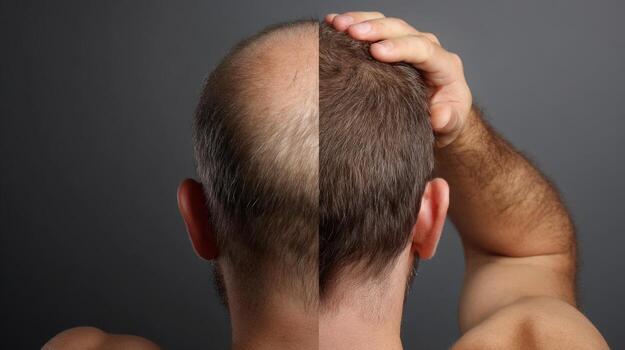
The crown is a spiral. Hair leaves it at angles that fan outward in every direction from a central whorl, so a transplanted crown never achieves the neat forward sweep that makes a rebuilt hairline look dense. It achieves something else: the scalp stops flashing white through the gap. Under normal room lighting and from conversational distance, the patch reads as hair rather than skin.
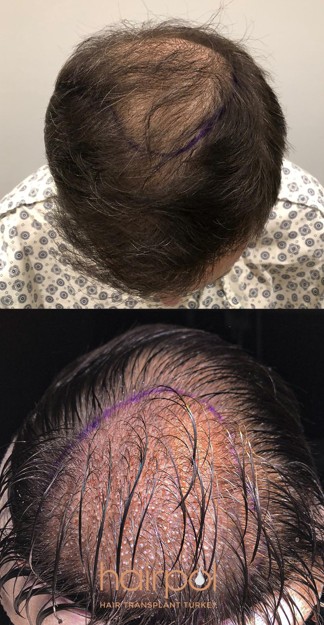
Patients who define success that way tend to be satisfied. Our before and after gallery shows what that standard looks like on real crowns. Patients who wanted the density they had at twenty-two, reproduced in one session, rarely are — not because the surgery failed but because the donor supply on a human head cannot fund that outcome at the crown and still leave anything for the front, which is usually the higher priority.
The Whorl: Why Crown Angles Put Survival at Risk
Every incision in a hairline runs roughly the same direction. In the crown, the correct direction changes every few millimetres as you travel around the spiral, and near the centre of the whorl the angles are shallow and the hairs almost lie flat against the scalp.
This matters for survival for a mechanical reason. To keep a graft’s exit angle natural at the crown, the surgeon must open the channel at an acute angle to the skin, which is one reason the fine tips used in sapphire FUE hair transplantation matter more here than at the hairline, which means the incision travels further through the tissue for the same depth. Placing a graft into a long, shallow channel takes more manipulation than dropping it into a steeper one. More manipulation means more handling, more time out of solution, and more opportunity for trauma.
None of this makes crown surgery unsafe. It makes it slower and more technically demanding, and it explains why crown survival is generally accepted to sit a little below hairline survival in the same patient, in the same session, done by the same team.
Blood Supply, Scar Tissue and the Crown’s Disadvantage
Grafts survive because tiny vessels in the recipient bed reconnect and feed them. The crown, particularly in men who have been bald there for a decade or more, tends to have thinner, less vascular, sometimes shinier skin than the frontal scalp. Long-standing baldness quietly reduces the local blood supply and stiffens the tissue.
That is why two men with identical graft counts can land in different places. The 34-year-old with a crown that thinned over the last three years, with soft skin and visible miniaturised hairs still present, usually grows better than the 52-year-old with fifteen years of smooth, tight, shiny scalp in the same spot.
Previous surgery adds another layer. A crown that has already been operated on carries scar tissue in the recipient bed, and scarred skin is less vascular than virgin skin. Second sessions into a previously grafted crown are entirely reasonable, but a surgeon who tells you the survival odds are identical to the first pass is not levelling with you.
Placement Density: When More Grafts Lower Survival
There is a real trade-off buried here that patients almost never hear about. Packing grafts closer together makes the crown look better — right up to the point where it makes the crown grow worse.
Every incision is a small injury to the blood supply of the area. Place them far apart and each graft has generous circulation. Place them very close together and the incisions begin to compete for the same limited flow, and in a poorly vascularised crown that competition can cost you survival across the whole field. Surgeons manage this by using moderate densities at the crown, sometimes concentrating a little more at the leading edge where the eye lands and easing off toward the centre of the whorl.
A clinic that promises you both maximum density and maximum survival at the crown is promising two things that pull against each other. The good version of this conversation sounds like a plan with a stated density and a reason for it.
If you are trying to work out whether your crown needs 2,000 grafts or 3,500 — and whether one session or two is realistic for your donor area — a set of standardised photographs is usually enough for a surgeon to give you a real answer. You can send them through the Hairpol assessment form and get a written response rather than a sales call.
Smoking, Nicotine and the Number Nobody Wants to Hear
Nicotine constricts blood vessels. Carbon monoxide from smoke displaces oxygen in the blood. Both of those act directly on the mechanism grafts depend on during the first days, which is exactly the window when the crown — the least vascular part of the scalp — has the least margin to spare.
We cannot give you a clean percentage for what smoking costs, because that study does not exist in a form anyone should quote. What surgeons observe consistently is slower healing, more prolonged redness and, in heavy smokers, patchier growth in the crown specifically. Vapes and nicotine pouches are not a workaround; the vasoconstrictor is the nicotine, not the smoke.
The usual advice is to stop at least two weeks before surgery and stay off it for at least two weeks afterwards, and if you are only willing to do one of those, the fortnight afterwards is the one that protects the grafts. Patients who cannot stop entirely should say so honestly at consultation rather than at the follow-up, because it changes what a surgeon plans and what they promise.
How Much Do the First Two Weeks Actually Decide?
More than any other stretch of the year, and this surprises people who assume the surgery is the whole story.
A newly placed graft has no blood supply of its own. For roughly the first 48 to 72 hours it survives on fluid diffusing from the surrounding tissue. New vessels then begin growing in, and by somewhere around day 10 to 14 the graft is anchored and fed well enough that ordinary life stops being a threat to it. Everything that can dislodge, dry out or starve a graft happens inside that window.
The practical list is short and unglamorous: do not let the grafts dry out, follow the washing protocol on schedule rather than avoiding the area out of fear, sleep elevated and off the crown, keep sweat and friction away, avoid anything that spikes blood pressure, and do not pick a crust off early no matter how much it bothers you. Crusts that are still sitting on a graft after day ten cause more trouble than washing ever will.
After the fortnight, your survival number is largely fixed. What remains is waiting, which most people find harder.
What Actually Lowers Crown Success Rates
Three situations account for most genuinely poor crown outcomes, and all three are visible before surgery to anyone who looks.
The first is unstabilised loss. If your crown is actively expanding and you are not on any medical treatment, transplanted hairs will grow while the native hairs around them keep disappearing. Two or three years later the graft field sits as an island inside a larger bald zone, and the result looks worse than it did at month fourteen even though not a single graft failed. This is the most common reason a technically successful crown transplant is judged a failure later.
The second is diffuse unpatterned alopecia — DUPA — where the donor region at the back and sides is itself miniaturising. Grafts taken from an unstable donor carry that instability with them and thin out over the following years. DUPA is a genuine contraindication rather than a complication, and it is found by examining the donor area under magnification, which is why a consultation that never looks at the back of your head is not a consultation.
The third is arithmetic. Some crowns are simply larger than the donor can fund. When a surgeon has 5,000 lifetime grafts to work with and a crown that would need 4,000 to look dense, spending them there leaves nothing for a hairline that will almost certainly recede further. Declining to operate, or covering only the leading edge of the crown, is often the more skilled decision.
How Do You Measure Whether Your Crown Transplant Worked?
Not with your bathroom mirror, and not with phone photographs taken whenever you happen to feel anxious. The crown is the hardest region on the head to assess informally, because you cannot see it directly, the lighting above it changes everything, and it is the last area to fill in.
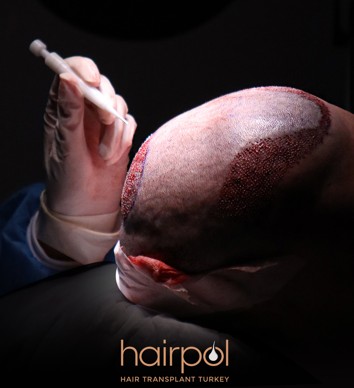
A usable photo protocol is simple and almost nobody follows it. Take a baseline set before surgery. Then repeat the same shots at months three, six, nine, twelve and eighteen: same room, same time of day, same light source above and behind you, same distance, hair the same length and dry, and a second person holding the camera at a fixed height directly over the crown. Wet hair, a flash, or a different ceiling light will manufacture a difference that is not there.
Judge coverage rather than counting hairs. Does scalp still flash through when you tilt your head under a downlight? Has the visible patch shrunk against the same reference point? Density at the crown is not perceived linearly — coverage tends to arrive suddenly, as though nothing changed for months and then everything did, because hairs are lengthening and only close the gap optically once they cross a certain length. Our month-by-month photographic account is in crown hair transplant before and after at 6, 8 and 12 months.
Why Twelve Months Is the Earliest Honest Verdict
Transplanted hairs shed within the first six weeks, sit dormant for two to four months, and then restart. In the hairline, meaningful growth is usually obvious by month six or seven. The crown runs three to four months behind that, consistently enough that surgeons treat it as normal rather than as a warning sign.
Two things cause the lag. Crown follicles emerging at shallow angles need more length before they lie down and cover anything, and the spiral geometry means hairs from different directions have to interlock before the eye reads them as a mass. A crown at month eight can look genuinely disappointing and then change substantially between months ten and fourteen.
So the calendar is this: month six tells you growth has started, month twelve is the first fair assessment, and months twelve to eighteen are where the crown does its final consolidation as hairs thicken. Any judgement about failure, revision or a second session before month twelve is premature, and any clinic willing to sell you a second procedure at month eight should be questioned. The full sequence is set out in our crown hair transplant recovery month by month timeline.
Questions That Force a Clinic to Give You a Real Answer
The point of these is not to catch anyone out. It is to move the conversation from marketing language to surgical planning, and a good clinic will welcome it. Several of these come up again in our frequently asked questions.
- What do you mean by success rate — graft survival, or patient satisfaction? How was it arrived at?
- What placement density are you planning at my crown, in grafts per square centimetre, and why that figure?
- Is my hair loss stable, and how did you determine that?
- What did you see when you examined my donor area under magnification?
- How many lifetime grafts do you estimate I have, and how much of that is this session spending?
- What will my crown look like in ten years if my native hair keeps receding?
- At what point after surgery would you be willing to say the result fell short, and what would you do then?
Vague answers to the last two are the most telling. A surgeon who has thought about your ten-year outcome will answer immediately and specifically, because that conversation is the one they have already had with themselves while planning your case.
If Your Crown Falls Short of the Number You Were Promised
First, check the date. If you are inside twelve months, you are looking at an unfinished result, and a large share of crowns that panic their owners at month eight are entirely normal at month fourteen.
If you are past twelve to eighteen months and the coverage is genuinely poor, the useful question is which of the two numbers failed. Poor survival across the whole field, with thin growth everywhere, points at a surgical or healing problem. Good growth in a field that is simply too small or too sparse for the area points at a planning problem — grafts spread too thin, or a crown that was always going to need more than the donor could fund in one pass. The two have different remedies. The first may justify a revision; the second usually needs a second session with a realistic graft count, or a decision to stop and manage the area medically instead. What that medical route involves is described on our hair treatments page.
Either way, bring the photographs. A crown assessed against a documented baseline can be discussed properly. A crown assessed against a memory cannot.
At Hairpol, crown cases are planned around what your donor area can actually fund over a lifetime, not around the largest number that fits in one session — and we will tell you when we think surgery is the wrong answer for your crown. If you want your own case looked at against real photographs, you can start with our hair transplantation department and send the images through for an assessment before you commit to anything.
Find this helpful? Add Hairpol as a preferred source on Google.
Graft Range Calculator
Answer three questions to see the typical graft range for your situation — based on our published clinical guides.
This is a preliminary estimate, not a medical assessment. The exact number can only be determined by a doctor after examining your donor area and hair characteristics.
Get a Free Consultation
Answer a few questions and the medical team will review your situation.
