
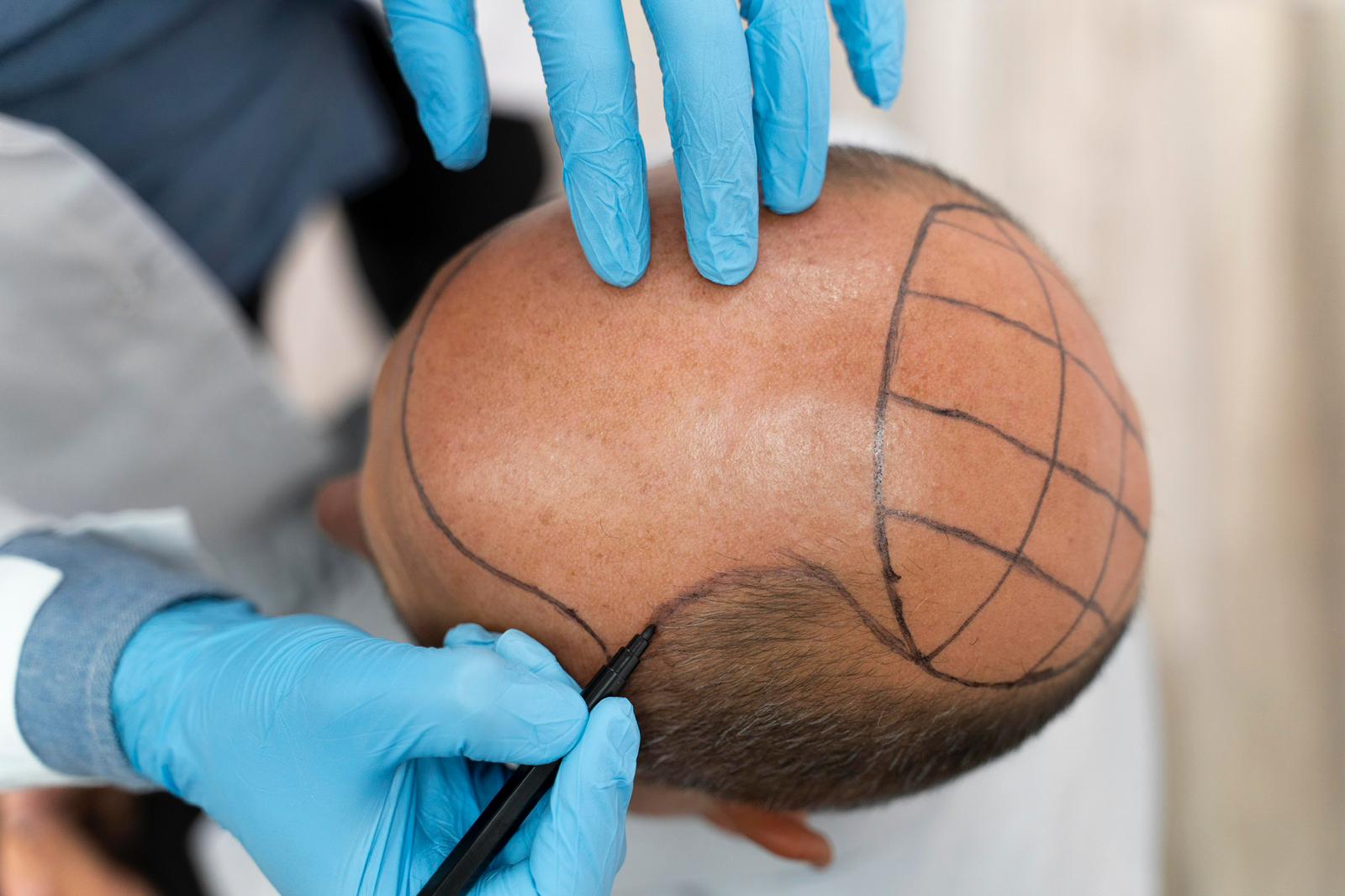
A crown hair transplant restores the swirl area at the back of the head, where hair grows in a spiral pattern that makes coverage harder to build than at the hairline. Most crown cases need 1,500-4,000 grafts, depending on how wide the thinning area is and how much donor hair is available.
Because crown follicles enter their growth phase more slowly, visible change usually starts around month 5-6, and final density is judged at 12-18 months. Crown loss can also continue around the transplanted zone, so medical treatment is often advised alongside surgery.
For package prices and what each package includes, see our hair transplant cost guide.
The crown is where a lot of men first notice something’s changed. It might be a comment from someone standing behind them, a photo taken from an angle they don’t usually see themselves from, or just the gradual realization that the back of their head looks different than it used to. Whatever the trigger, crown hair loss has a particular quality to it — it’s not always visible to the person experiencing it, but it’s often visible to everyone else, which creates its own specific kind of frustration.
A hair transplant to the crown area is one of the most common procedures performed, but it’s also one of the most technically demanding and one of the most misunderstood in terms of what patients should expect. The crown presents challenges that don’t exist in the same way for frontal work — the growth pattern is fundamentally different, the density requirements are higher than they appear, and the timeline for seeing a result is longer than most patients anticipate.
This guide covers everything you actually need to know about crown hair transplants: how the crown is different from the frontal zone, why it’s harder to treat, what results are realistic, how the procedure works, and what the recovery looks like. If you’re considering addressing your crown, understanding these things before your consultation will put you in a significantly better position to evaluate whether it’s right for you and what to expect if you go ahead.
Why the Crown Is Different From the Front
Most of the hair transplant content online talks about frontal hairline restoration. The crown gets less attention, which is partly why so many patients come into consultations with expectations calibrated on frontal results rather than on how the crown actually behaves.
The fundamental difference is the growth pattern. Frontal hair grows in a relatively consistent direction — forward and slightly downward — which means each hair shaft contributes overlapping coverage as it grows. The crown, by contrast, grows in a spiral pattern radiating outward from a central whorl point. Hairs grow in multiple directions simultaneously. This has two significant consequences for transplantation.
First, achieving adequate visual coverage requires more follicular units per square centimeter than the frontal zone, because hairs growing in different directions don’t overlap and reinforce each other the way frontal hairs do. You need more follicles to cover the same area adequately. Second, implantation in the crown is technically more demanding — every graft needs to be placed at the correct angle for its specific position relative to the whorl, which requires careful surgical attention to replicate the natural growth pattern rather than defaulting to a uniform implantation angle that would look wrong once the hair grows.
The crown is also the area where hair loss tends to be most actively progressive. Many men who address their frontal zone in their thirties find that their crown continues to thin over the following decade. This makes planning for the crown particularly important — because a procedure that looks excellent at twelve months can look less satisfactory at five years if ongoing loss wasn’t adequately accounted for in both the surgical plan and the post-procedure medical management.
Who Is a Good Candidate for Crown Hair Transplant?
Not everyone who wants to address their crown is in an equally good position to do so, and being honest about candidacy before proceeding is more useful than finding out afterward that the timing or approach wasn’t right.
The factors that most directly affect candidacy for crown work:
- Pattern stability. Crown loss that has been relatively stable for at least one to two years is in a better position for surgical treatment than crown loss that is still actively and rapidly progressing. Treating an actively progressing crown can produce a result that looks good initially but requires significant additional coverage sooner than expected as new loss develops around the transplanted area.
- Donor supply. The crown is a large area. Adequate coverage requires meaningful graft numbers — often 2,000 to 3,500 grafts for a significant crown deficit — which represents a substantial portion of most patients’ total lifetime donor supply. Patients who have already used donor supply for frontal work need an honest assessment of what remains and what that means for crown coverage goals.
- Age. Younger patients with crown loss face the same fundamental challenge as younger patients with frontal loss: the final extent of loss is unknown. A 27-year-old with Norwood 3 vertex loss could stabilize there, or could progress to Norwood 6 over the following decade. The uncertainty affects how aggressively the crown should be treated and how much donor supply should be allocated to it.
- Medical management. Patients who are already on finasteride have a more stable baseline to plan against than those who aren’t. Starting finasteride before a crown procedure — and committing to it afterward — significantly changes the planning calculus by slowing or halting the progression that would otherwise continue around the transplanted area.
If you’re not sure where you fall on these factors, that’s exactly what a thorough pre-procedure consultation should clarify. A clinic that answers “yes, you’re a candidate” without engaging with these variables specifically is not providing you with the assessment you need.
How Many Grafts Does a Crown Hair Transplant Require?
This is one of the questions patients ask most often, and the answer is more variable than most online resources suggest. Crown graft requirements depend on the size of the area being treated, the target density, the patient’s hair characteristics, and the degree of coverage already present. See how many grafts a crown transplant needs for typical ranges by area size.
As a general framework:
- A limited crown thinning — early Norwood 3 vertex or early Norwood 4 crown involvement — might be adequately addressed with 1,500 to 2,000 grafts.
- A moderate crown deficit with significant but not total loss typically requires 2,000 to 2,800 grafts.
- A large fully bald crown area can require 3,000 to 4,000 grafts to achieve meaningful coverage — sometimes more for very large areas.
These are reference ranges, not guarantees. A patient with naturally coarse, wavy hair achieves more visual coverage per graft than one with fine, straight hair. Higher contrast between hair color and scalp color means gaps are more visible and density requirements are effectively higher. A realistic graft count for your specific situation requires a consultation that measures your recipient area, assesses your hair characteristics, and accounts for your available donor supply — not a number derived from a general table.
One thing worth understanding about crown graft counts specifically: the crown tends to need more grafts than it looks like it should. The spiral growth pattern means that coverage of the visible circular area requires adequate density not just at the edge but all the way to the center, and the way hairs radiate outward from the whorl means that underfilling the center produces a result that looks sparse from above even when the edges look fine. Surgeons experienced in crown work understand this and plan accordingly; less experienced teams sometimes underestimate the graft requirement and produce results that look thin in the central zone.
The Procedure: What Actually Happens
A crown hair transplant follows the same basic procedural framework as any hair transplant — donor extraction from the back and sides of the scalp, followed by implantation in the recipient area — but the execution details specific to the crown are worth understanding.
Technique options. Both Sapphire FUE and DHI are appropriate for crown work, and the choice depends on the specific clinical situation as much as patient preference. Sapphire FUE’s precision channel creation allows very accurate control of implantation angle, which is particularly valuable in crown work where getting the angle right for each graft’s position relative to the whorl is essential. DHI offers the advantage of minimal time between extraction and implantation — potentially supporting graft viability for large-count crown procedures — and works well in cases where existing hair is being preserved around the treatment area.
Whorl design. One of the most technically specific aspects of crown transplantation is recreating or placing grafts around the whorl point. The whorl is the natural spiral center of crown hair growth, and its position, direction, and density significantly affect whether the overall result looks grown or transplanted. In patients who have lost the central whorl area to baldness, designing where the new whorl will sit and how grafts will radiate from it is a design decision as important as any made in frontal hairline work. In patients who still have some natural whorl remaining, working around and integrating with it requires careful technique to avoid disrupting existing follicles while adding density.
Procedure duration. Crown procedures involving larger graft counts run long — five to eight hours is typical for sessions in the 2,500 to 3,500 graft range. This is worth factoring into your preparation. The patient is lying face down for most of the extraction phase, which can be physically demanding over extended periods. Experienced clinics manage patient comfort through scheduled position breaks, but it’s worth asking about this specifically when planning your procedure day.
Combined frontal and crown procedures. Many patients have both frontal recession and crown thinning, and the question of whether to address both in one session or separately is a significant planning decision. Combining both zones in one session requires a higher total graft count, which may exceed what some donors can provide comfortably in a single extraction. It also requires careful allocation decisions about how many grafts go to each zone — because under-allocating the frontal zone in favor of the crown, or vice versa, produces a result that looks imbalanced. If your situation involves both zones, this allocation question should be a central part of your consultation rather than an afterthought.
The Crown Timeline: What to Expect and When
The crown has a longer and more frustrating result timeline than the frontal zone. This is not a complication or a sign that something went wrong — it’s the normal biology of crown hair transplant recovery, and knowing it in advance makes the experience significantly easier to navigate.
Weeks 1–2: The scalp is healing. Scabbing around implantation sites, some swelling (particularly if frontal work was also done), and the general appearance of a procedure in early healing. No activity that elevates blood pressure or risks graft dislodgement.
Weeks 2–8: Shock loss. The transplanted hair sheds, and any existing crown hair in the treatment area may also shed temporarily. The crown can look significantly worse than before the procedure during this phase — this is normal, expected, and fully reversible. The follicles themselves are intact; they’ve entered telogen in response to the procedural stress and will return to anagen.
Months 3–5: The waiting period. Nothing much visible is happening yet. This is often the most psychologically difficult phase. The crown may still look sparse because new growth hasn’t emerged. For patients who were anxiously checking progress against their expectations, this phase requires reminding themselves of what the timeline is supposed to look like.
Months 5–8: New growth begins. For the frontal zone, visible progress is often apparent by month four or five. For the crown, meaningful visible growth tends to come later — month five to seven is more typical, and some patients don’t see clearly visible crown growth until month seven or eight. The spiral growth pattern means the coverage effect of emerging hairs builds more slowly than in the frontal zone.
Months 9–12: The result becomes assessable. By nine months, most patients have a result that represents the majority of what they’ll see at full maturity. The crown result at nine months may still be slightly below the twelve-month result as caliber continues to mature and late-emerging grafts fill in.
Months 12–18: Full maturity. The crown typically takes longer to reach full result maturity than the frontal zone. Eighteen months is not an unusual endpoint for complete crown result assessment, particularly in larger procedures or in patients whose individual hair growth cycles run on the longer end of the normal range.
Why the Crown Is the Hardest Area to Keep Looking Good Long-Term
This is the honest part that doesn’t always get said clearly enough in consultations: the crown is the area of the scalp most prone to continued progression, and a crown hair transplant that looks excellent at twelve months faces the highest risk of looking less satisfactory at five or ten years if ongoing loss isn’t managed.
The transplanted grafts themselves are permanent — DHT-resistant follicles from the donor zone that will continue growing regardless of what happens around them. The problem is what happens around them. The native hair in and adjacent to the treated area continues its androgenetic trajectory. As that hair progresses, the relationship between the permanent transplanted grafts and the thinning surrounding native hair changes — and the overall crown picture can look increasingly patchy as islands of permanent transplanted density sit within expanding areas of progressive native loss.
This is the specific reason why finasteride and minoxidil aren’t optional additions to a crown hair transplant — they’re essential components of the plan if the goal is a result that continues to look good over time rather than one that peaks at twelve months and deteriorates from there. Finasteride slows the hormonal progression that drives native hair loss in the treated and surrounding areas. Minoxidil supports the active growth of native follicles and may extend the anagen phase of follicles that would otherwise be thinning. Together, they protect the native hair that contributes to the overall crown coverage picture alongside the permanent transplanted grafts.
Patients who have a crown transplant and then don’t address ongoing loss medically are accepting that the native hair contributing to their result will continue its natural trajectory. Over five years, this can meaningfully change the crown picture in ways that require either additional procedures or resigned acceptance of a result that doesn’t look like it did at the one-year mark.
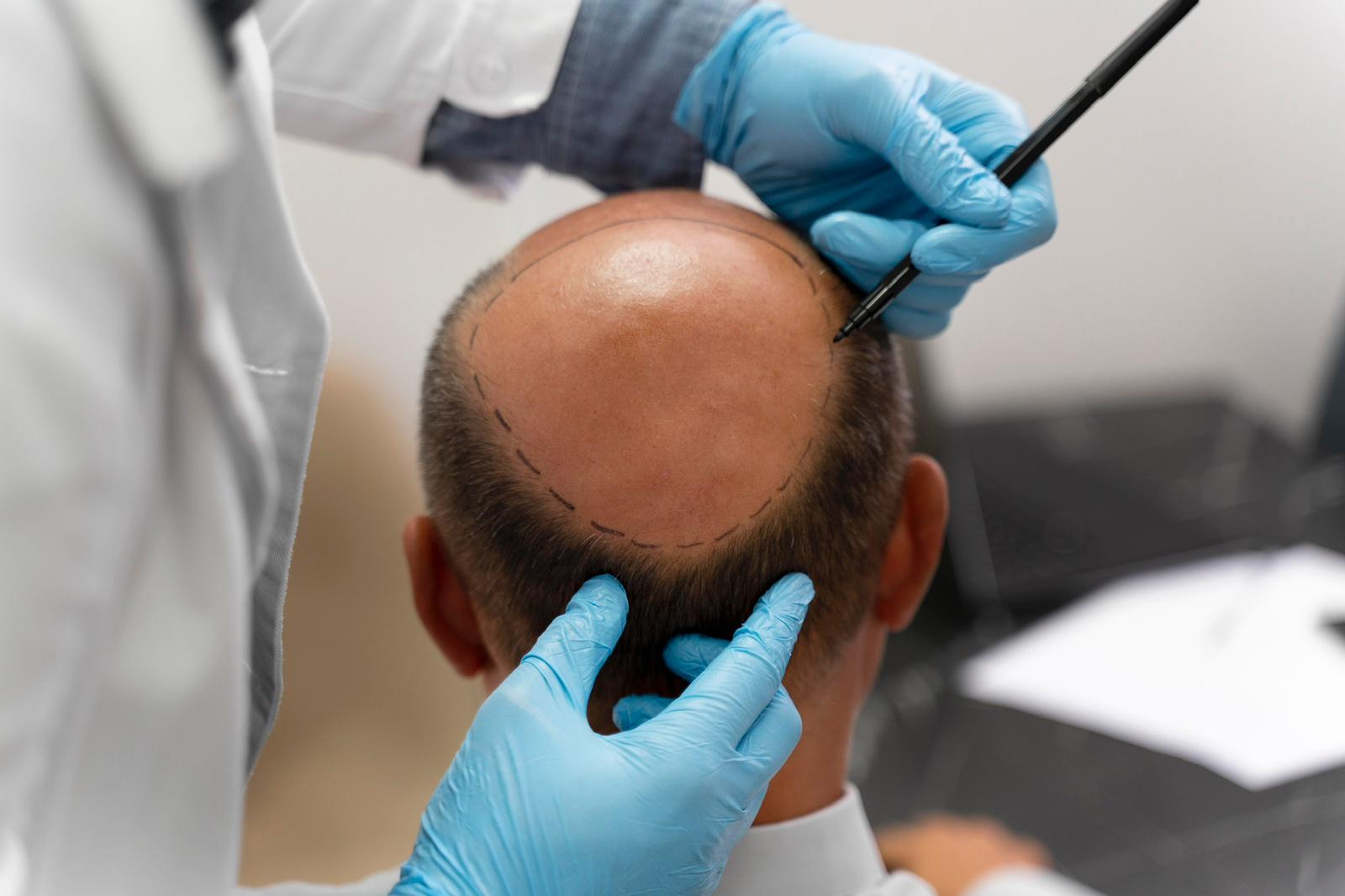
Realistic Expectations for Crown Hair Transplant Results
Setting expectations correctly before a crown procedure is more important than for almost any other area, because the gap between what patients sometimes hope for and what a crown transplant can realistically deliver is wider than for frontal work.
What a good crown hair transplant result looks like:
- Meaningful, natural-looking coverage of the treated area that reads as hair rather than visible scalp under most conditions.
- A natural whorl pattern that doesn’t look planted or geometric.
- Density in the range of 40 to 60 follicular units per square centimeter — enough for convincing coverage under normal viewing conditions, but not the density of a non-balding crown.
- Results that integrate naturally with surrounding native hair and that continue to look appropriate as the patient ages — assuming medical management of ongoing loss.
What a crown hair transplant cannot do:
- Restore the density of a crown that hasn’t experienced any hair loss. The transplanted zone achieves approximately half to two-thirds of native non-balding density, which is sufficient for natural appearance but isn’t identical to what was there originally.
- Guarantee permanent coverage without attention to ongoing loss. The transplanted hair is permanent; the native hair around it is not, and its trajectory matters for the five-year picture.
- Produce results that look the same at twelve months regardless of how it’s done. The quality of surgical execution — whorl design, implantation angle accuracy, graft handling — directly affects the naturalness of the result in ways that are visible in the mature outcome.
Questions Worth Asking in Your Consultation
If you’re going into a crown hair transplant consultation, these are the questions that separate a thorough clinical engagement from a sales conversation:
- How much of the crown area needs to be treated, in square centimeters? What density are we targeting, and how does the proposed graft count achieve that across the full area?
- Based on my hair characteristics — caliber, wave, color contrast — how will those factors affect the visual density my graft count produces?
- After this procedure, how much of my estimated lifetime donor supply remains? Is that sufficient for any future needs given my likely progression pattern?
- If my crown loss continues to progress after this procedure, what does that look like at five years, and what are my options for addressing it?
- How are you planning the whorl position and the angle distribution for grafts across the crown zone?
- Who specifically performs the implantation phase of this procedure, and what is their experience with crown work specifically?
A consultation that can answer these questions specifically is demonstrating the kind of clinical depth that crown work requires. If you get general answers to specific questions, keep asking until you get the specificity those decisions deserve.
At Hairpol, crown procedures are planned with explicit attention to the whorl design, angle distribution across the spiral growth pattern, and the relationship between the proposed graft count and the full area being treated — because the crown is the area where shortcuts in planning show up most clearly in the mature result, and where getting the details right from the start makes the difference between a result that holds up over time and one that requires revisiting.
Find this helpful? Add Hairpol as a preferred source on Google.
Graft Range Calculator
Answer three questions to see the typical graft range for your situation — based on our published clinical guides.
This is a preliminary estimate, not a medical assessment. The exact number can only be determined by a doctor after examining your donor area and hair characteristics.
Get a Free Consultation
Answer a few questions and the medical team will review your situation.
More Crown Transplant Questions
Is a crown hair transplant successful and worth it?
Crown transplants can work well, but success depends on donor supply and the size of the bald area. A crown that is thinning covers more convincingly than one that is fully bald and widening. Many surgeons treat the crown after the hairline is secured, since it consumes a large share of donor grafts. If your loss is still progressing, stabilising it first usually gives a better long-term result.
Do hair transplants actually work on the crown area?
Yes, transplanted follicles grow in the crown just as they do elsewhere, because they come from donor areas resistant to hair loss. The difficulty is optical, not biological: the crown's spiral growth pattern scatters light and reveals scalp easily, so it needs more grafts per square centimetre to look full. Careful angle and direction planning matters more here than in any other zone.
Why does the crown take longer to show results than the hairline?
Crown grafts tend to shed and re-enter growth more slowly, and the spiral pattern means partial growth looks patchy for longer. The hairline shows progress early because a single defined edge frames the face. In the crown, coverage only reads as complete once most grafts have matured and thickened, which is typically between months 12 and 18.
