

Most women notice it in a photograph before they notice it in a mirror. The light hits from above, the scalp shows through where it never used to, and the part line looks wider than it did last year. Then the small evidence starts accumulating: the ponytail that wraps four times instead of three, the shower drain that needs attention more often, the hairdresser who mentions, gently, that things feel thinner at the top.
If this arrives in your late forties or fifties, it rarely arrives alone. It comes with hot flushes, sleep that fragments at four in the morning, a body that seems to have changed the rules without warning. And somewhere in the middle of all that, you start typing “hair transplant for women” into a search bar at midnight.
That is a completely reasonable place to end up. It is also, quite often, the wrong first step. Menopausal hair loss behaves differently from the male pattern balding that most transplant marketing is built around, and treating it as though it were the same thing is how women end up disappointed by surgery that was technically well performed. At Hairpol, a meaningful share of the women we assess are told, honestly, that surgery is not their next move — at least not yet, and sometimes not ever. What follows is the reasoning behind that answer, and the circumstances in which the answer flips to yes.
What Actually Changes at Menopause
Estrogen does a lot of quiet work for your hair. Among other things, it helps keep follicles in the growth phase — anagen — for longer. Longer anagen means longer hair, thicker shafts, and a scalp where a high proportion of follicles are actively producing at any moment. When estrogen falls, that support falls with it. Anagen shortens. Hairs spend proportionally more time resting and shedding.
The second half of the story is about ratio rather than absolute levels. Your body has always produced androgens, including testosterone and its more potent derivative DHT. Before menopause, estrogen effectively counterbalanced them at the follicle. After menopause, androgen production declines too, but usually more slowly and less dramatically than estrogen does. The result is a shifted balance — relatively more androgenic influence on follicles that are genetically sensitive to it.
That relative shift is why some women who never had a hair problem in their thirties develop obvious thinning within a few years of their final period. Nothing new was added. The protective factor was removed. And genetically sensitive follicles that had been shielded for decades begin to miniaturise: each growth cycle produces a slightly finer, slightly shorter hair, until what remains is a colourless wisp that barely covers anything.
The Pattern Menopausal Thinning Usually Follows
Female pattern hair loss has a signature, and recognising it matters because it is the single biggest clue about whether surgery can help you.
The classic presentation is a widening central part. The hair on either side of your parting thins first and most, producing what clinicians describe as a Christmas-tree shape when viewed from above — narrow at the front, spreading wider as it moves back over the crown. Density drops across the whole top of the scalp rather than disappearing from one defined patch.
Crucially, the frontal hairline is usually preserved. You may keep an intact border of hair across your forehead even while the area an inch or two behind it has lost half its density. This is one of the most reliable differences between female and male pattern loss, and it is why women rarely need the aggressive hairline reconstruction that dominates male cases.
Temples can recede modestly. The area around a high ponytail can thin. But if you find yourself with a sharply receding hairline, bald patches with clean edges, rapid loss over weeks, or noticeable changes in body hair and voice, that is a different clinical picture and it deserves a proper medical work-up before anyone discusses grafts. Pattern reading is diagnosis, not aesthetics.
Why “Female Pattern” Does Not Automatically Mean “Transplant Candidate”
Here is where the marketing and the medicine part company. A hair transplant does not create hair. It relocates existing follicles from an area with dense, durable growth into an area that has lost coverage. It is a redistribution operation with a fixed budget, and the budget is your donor supply.
Male pattern baldness is generous in exactly this respect. It carves out defined regions — hairline, temples, crown — while leaving a horseshoe of permanent, DHT-resistant hair around the back and sides. Even an advanced case usually retains a strong donor zone.
Menopausal thinning is frequently not so tidy. It tends to be diffuse: density falls everywhere, including at the back and sides, just less visibly because you are not looking there and because the thinning is even rather than patchy. If the donor area is itself miniaturising, harvesting from it does two unhelpful things at once. It thins a region that was already losing ground, and it transplants follicles that carry the same vulnerability into the recipient zone — where, in time, they will thin as well.
That is the mechanism behind the disappointing result. Not surgical error. A donor that could not sustain the promise.
The Donor Assessment Almost Nobody Asks About Early Enough
When a woman sits down for an assessment at Hairpol, the first serious examination is not of the thin area she came to discuss. It is of the back and sides of her scalp, at magnification.
Under a trichoscope, a healthy donor zone looks uniform: consistent shaft diameters, follicular units mostly containing two or three hairs, minimal variation. A compromised donor tells a different story — a mix of thick and wispy shafts side by side, more single-hair units than expected, and an overall calibre that has drifted downwards. That variation is called miniaturisation, and even a modest amount of it in the donor changes the calculation completely.
We also measure density in hairs per square centimetre and estimate how many grafts could be removed without leaving the back of your head visibly thinner. Women wear their hair in ways that expose the donor constantly — up, tied back, tucked behind the ear. There is far less room for over-harvesting than there is in a man who can grow his sides out and hide it.
An honest donor assessment sometimes ends the conversation. It should. It is much better to hear it in a consultation room than to discover it eighteen months after paying for surgery.
Stability Matters More Than Severity
Two women can present with identical amounts of visible thinning and receive opposite recommendations. The difference is usually stability.
If your loss has been slowly progressing over eight years and appears to have plateaued, the situation is predictable. A surgeon can plan around it, allow for some future decline, and place grafts where they will still look sensible in a decade.
If you are shedding actively right now — clumps in the shower, hair on the pillow, a scalp that has changed noticeably in six months — nothing about the picture is planned around safely. Transplanting into a scalp in the middle of an active shedding phase risks shock loss in the surrounding native hair, produces results that are impossible to judge, and may place grafts into territory that will keep receding beneath them.
The clinical instinct in an unstable phase is to wait, stabilise, and reassess. That may mean six months. It may mean two years. It is frustrating advice to receive when you want the problem solved now, but stability is the foundation everything else stands on. A clinic willing to operate on an actively shedding scalp is telling you something about its priorities.
What Should Be Checked Before Anyone Talks About Grafts
Menopause is a plausible explanation for hair loss in your fifties, which is exactly why it gets blamed for causes that have nothing to do with it. Several conditions common in midlife women produce thinning that looks identical to female pattern loss and, unlike genetics, are treatable.
Thyroid dysfunction is the first of them. Both underactive and overactive thyroid disturb hair cycling, and both become more common with age. A basic thyroid panel is inexpensive and frequently revealing.
Iron status is the second. Ferritin — your stored iron — can sit low enough to affect hair growth while your haemoglobin remains normal, so a standard anaemia screen can miss it entirely. Women with a long history of heavy periods, and women who eat little red meat, are particularly worth checking.
Beyond those, a physician may look at vitamin D, a full hormone profile including androgens if there are signs of excess, and any medication that has been started recently. Antidepressants, beta blockers, some blood pressure drugs and certain hormonal treatments all have shedding as a recognised side effect.
None of this is something a hair clinic diagnoses on your behalf. It belongs with your doctor or a dermatologist. What a responsible clinic does is refuse to schedule surgery until that groundwork exists.
Telogen Effluvium Wearing Menopause as a Disguise
There is a specific pattern of shedding that catches women out repeatedly, because its timing makes menopause the obvious suspect.
Telogen effluvium is diffuse shedding triggered by a systemic disturbance — illness, surgery, significant weight loss, severe stress, a change in medication. Its defining feature is a delay. The trigger happens, then two to four months later the hair falls, by which point the connection is easy to miss. And unlike genetic thinning, telogen effluvium is generally self-limiting: once the trigger resolves, the follicles resume normal cycling and density recovers over six to twelve months.
The midlife years are dense with potential triggers. Crash diets. A parent’s illness. Perimenopausal insomnia running for eighteen months. A surgical procedure. Any of these can produce a wave of shedding that arrives during the same window as genuine hormonal thinning.
Distinguishing the two changes everything. Telogen effluvium requires patience and correction of the trigger, not surgery — and operating on a scalp mid-effluvium produces results nobody can interpret. Sometimes both are running simultaneously, which is why the assessment is a clinical judgement rather than a glance at a photograph.
The Treatment Ladder: What Comes Before Surgery
For most women with menopausal thinning, the useful sequence starts with non-surgical management. Not as a stalling tactic, and not as an upsell — but because diffuse thinning responds to it in a way that patchy male baldness often does not.
The logic is straightforward. In diffuse thinning, most of your follicles are still alive. They are producing finer, shorter hairs than they used to, but they exist. Anything that improves their output improves your overall density without touching your donor supply. Surgery cannot do that; it only moves what is already there.
Topical minoxidil remains the best-evidenced option and is prescribed for women at concentrations suited to them. Alongside it, Hairpol’s hair treatment programmes use mesotherapy and PRP to deliver growth factors and nutrients directly into the scalp, aiming to lengthen the growth phase and thicken shafts that have begun to miniaturise. Results are gradual and require maintenance sessions rather than a single course.
Set expectations properly: these approaches typically improve the calibre and cycling of hair you still have. They do not regrow hair from follicles that have already died. That distinction defines who benefits.
When a Transplant Genuinely Makes Sense for a Menopausal Woman
All of this can read as discouragement. It is not. Plenty of women are excellent candidates, and for them the outcome can be quietly transformative. The conditions are specific.
The first is localised rather than global loss. If your thinning concentrates in a definable area — a widened front part, receded temples, a scarred or thin patch from years of tight styling — and the rest of your scalp holds reasonable density, surgery has a defined target.
The second is a healthy, stable donor. Trichoscopy showing consistent calibre at the back and sides, adequate density, and no meaningful miniaturisation.
The third is stability over time. Loss that has been steady and slow rather than accelerating, ideally documented across photographs from several years.
The fourth is realistic expectation. Understanding that a transplant improves coverage in the treated zone and does not immunise the rest of your scalp against further change.
Traction alopecia — thinning from decades of tight braids, extensions or ponytails — deserves particular mention. It is common in women, often localised at the temples and front margin, and when the pulling has stopped and the pattern has stabilised, it is among the most rewarding cases we treat.
How Women’s Procedures Are Planned Differently
The technical work in a woman’s transplant is not a scaled-down version of a man’s. Several things change.
The most immediate is shaving. Most women will not accept a fully shaved scalp, and they should not have to. Unshaven and partial-shave techniques allow harvesting from a small strip in the donor area that is completely hidden by the hair above it, while recipient sites are opened between existing hairs with no shaving at all. The trade-off is honest: the procedure takes longer, graft numbers per session are generally lower, and it demands more of the surgical team. In exchange, you can go back to normal life within days rather than hiding for weeks.
Design differs too. Where male cases often rebuild a hairline from nothing, a woman’s hair transplant is usually about reinforcing density behind an intact border — filling the widened part, softening temple recession, adding weight to the mid-scalp. That means angling grafts to follow the existing part direction and placing them among native hairs without damaging them. It is finer, slower work than clearing open ground.
HRT and Your Hair: What Is Known, and Where It Ends
The question comes up in almost every consultation with a menopausal patient, and it deserves a careful answer rather than a confident one.
Hormone replacement therapy is prescribed for menopausal symptoms — vasomotor flushes, bone protection, urogenital changes — not for hair. That said, because estrogen supports the growth phase, some women do report that their shedding settles after starting HRT, and it is biologically plausible that restoring some estrogenic support helps follicles that were losing it.
The picture is not uniform, though. Different formulations carry different progestogens, and some progestogens have more androgenic activity than others. In a woman whose follicles are androgen-sensitive, that detail can matter. Delivery route, dose and individual response all vary. Some women notice improvement, some notice nothing, and a small number feel their hair got worse.
What that means practically is simple. HRT decisions belong entirely with your gynaecologist or GP, weighed against your full medical history — cardiovascular risk, breast health, personal symptom burden. At Hairpol we will discuss what your hair is doing and coordinate around whatever regimen your doctor has chosen, but we will not recommend starting, stopping or switching hormone therapy. That is not our clinical territory, and any hair clinic that treats it as though it were should give you pause.
What a Realistic Result Looks Like
The images that circulate online are almost always male, almost always dramatic, and almost always the wrong reference point.
A well-executed women’s transplant produces a change that reads as improved density rather than restored youth. Your part looks narrower. Scalp shows through less under overhead light. You stop reflexively arranging your hair to conceal a particular spot. Photographs stop bothering you. People notice you look well without identifying why.
Graft numbers are usually more modest than in male cases — frequently in the 1,500 to 2,500 range, sometimes less, because the goal is reinforcement of existing coverage rather than construction from bare scalp. And the density achieved in one session will not equal the density you had at twenty-five. Nobody can move enough follicles to accomplish that.
The other half of a realistic picture is continuity. A transplant addresses the area treated on the day. It does nothing to prevent your native, non-transplanted hair from continuing to thin, which is why nearly every woman who has surgery stays on some form of medical maintenance afterwards. Surgery and treatment are not alternatives competing for your decision. In female hair loss they are almost always partners.
The First Year After Surgery
If you do proceed, knowing the timeline in advance prevents a great deal of unnecessary panic.
The first fortnight is about healing. Small crusts form around each graft and clear within seven to ten days, with a prescribed washing routine from around day three. Swelling, when it happens, appears in the first few days and settles quickly. Because women usually have surrounding hair length to work with, the treated area is far less conspicuous than in a shaved male scalp.
Between weeks three and six, the transplanted hairs shed. This is expected — the follicle stays in place and enters a resting phase before starting a fresh cycle — but knowing that in advance rarely prevents the drop in mood when it happens. Some women also experience temporary shock loss in native hair around the grafts, which usually recovers.
Regrowth begins around months three to four as fine, unpigmented hairs. It thickens through months six to nine, which is when most women first say the result looks real. Full maturation — final calibre, final texture, final blending with the surrounding hair — takes twelve to eighteen months. Judging your outcome before the one-year mark is judging an unfinished picture.
Questions Worth Asking at Your Consultation
You can learn a great deal about a clinic from how it responds to a small number of direct questions.
- Did you examine my donor area under magnification, and what did the calibre look like?
- Do you consider my hair loss stable, and what evidence are you basing that on?
- What blood work would you want before agreeing to operate?
- What would non-surgical treatment realistically achieve for me first?
- How many grafts, in which specific zones, and why those?
- Will I need to shave, and if not, how does that change the plan?
- What will my hair look like in ten years with and without surgery?
The answers matter less than the manner. A clinic that gives you a graft number and a price within five minutes of seeing a photograph has not assessed you. A clinic willing to tell you that you are not a candidate — and to explain precisely why — is one whose yes means something. If you are still working out whether your thinning is diffuse or patterned, our guide to diffuse thinning versus pattern baldness is a useful place to start, and our overview of hair transplants for women covers the practical detail of the procedure itself.
Making the Decision Without Rushing It
Menopausal hair loss is not urgent in a medical sense, which is precisely what makes it hard. There is no deadline forcing a decision, so the decision sits there, being turned over at unhelpful hours.
The most useful thing you can do is turn a vague worry into information. Photograph your part line in consistent lighting every three months — same window, same time of day, same position. Six months of that tells you more about progression than any single consultation can. Get the blood work done. Address anything correctable. Give a medical approach a genuine trial of six to twelve months before judging it.
Then, with that in hand, get properly assessed. You will either be a candidate with a clear plan, or you will not be, and both answers are more comfortable to live with than uncertainty.
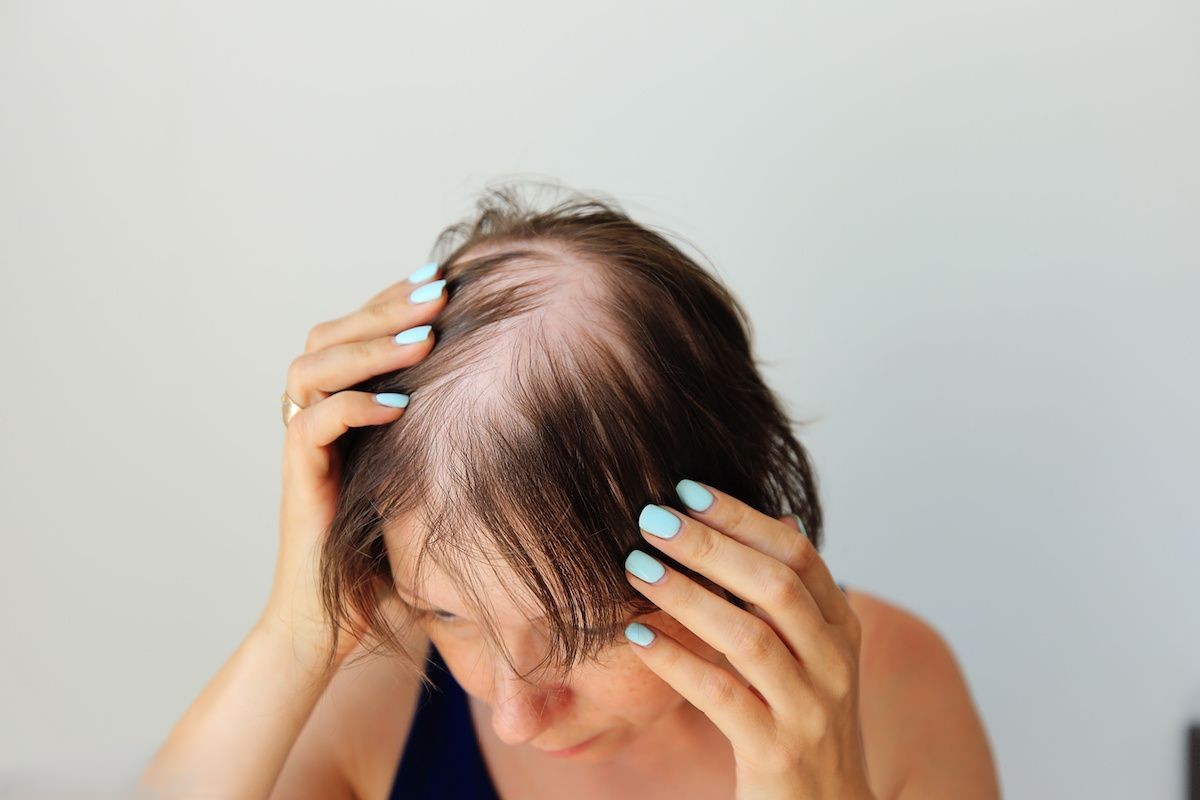
At Hairpol in Ataşehir, women’s cases are assessed on their own terms — donor calibre under magnification, stability over time, the medical picture behind the shedding, and an honest account of what surgery can and cannot deliver for your particular pattern. Sometimes that conversation ends with a surgical plan. Sometimes it ends with a treatment programme and a review date. If you want a clear answer about where you actually stand, our hair transplant team is ready to give you one, including the answer you may not have wanted to hear.
Find this helpful? Add Hairpol as a preferred source on Google.
Graft Range Calculator
Answer three questions to see the typical graft range for your situation — based on our published clinical guides.
This is a preliminary estimate, not a medical assessment. The exact number can only be determined by a doctor after examining your donor area and hair characteristics.
Get a Free Consultation
Answer a few questions and the medical team will review your situation.
