
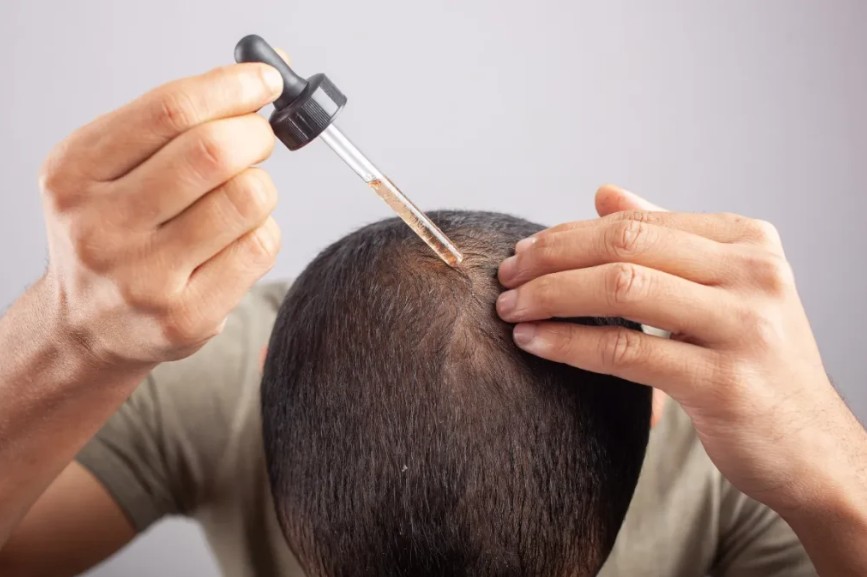
The bottle is a nuisance. That is the honest reason most patients start asking about the tablet, usually somewhere around week six, when the foam has begun to feel like a chore and the pillowcase has a permanent greasy patch on it. Nobody sits in a consultation dreaming about medication. They just want the result to hold, and they want the daily maintenance of it to stop dominating their bathroom shelf.
Then they read a forum thread. Low-dose oral minoxidil gets described there as the upgrade everyone has quietly been using, the thing surgeons prescribe to their own friends, the shortcut past the sticky liquid. Some of that is fair. What tends to get lost is that this is a prescription-only, off-label use of a blood pressure drug, that it acts on your whole body rather than one patch of scalp, and that the decision to take it is a medical one made by a doctor who has actually looked at your heart rate and your history. At Hairpol we are happy to have the conversation. We are not willing to have it as a shopping decision.
The short answer: surgeons who use oral minoxidil after a hair transplant typically start it somewhere between the second and fourth week, once the recipient area has settled, and some prefer to have patients already established on it before surgery. Doses reported in the hair-loss literature sit in a low range of roughly 0.25 mg to 5 mg daily, most often 1 mg to 2.5 mg, with women usually at the lower end. Every one of those numbers is a starting point for your doctor, not a prescription for you. It is off-label, it requires cardiovascular screening, and it does not suit everyone.
A Tablet Is Not Simply a Stronger Bottle
Minoxidil was developed as an oral antihypertensive. The hair growth was an unwanted side effect that turned out to be commercially interesting, which is how the topical solution came to exist at all. So the tablet is not a concentrated version of the lotion. It is the original drug, and the lotion is the derivative.
That matters more than it sounds. A topical product is trying to deliver a compound through the outer layer of your scalp, where it must be converted into its active form by an enzyme called sulfotransferase before it does anything at all. People carry different amounts of that enzyme, which is a large part of why topical minoxidil works beautifully for one person and does almost nothing for the next. A tablet bypasses the skin entirely. It is absorbed through the gut, converted in the liver, and distributed by the bloodstream to every follicle you own — and every follicle you would rather it left alone.
The consequence is that oral minoxidil is more consistent in delivery and less dependent on scalp chemistry, but its effects are systemic. It widens blood vessels everywhere, not just under the recipient area. That single sentence explains almost every advantage and every risk discussed below, and it is why the drug belongs in a conversation with a physician rather than in a comparison of shampoo prices.
For a closer look at what a second session can realistically add, read our second hair transplant guide.
Why Surgeons Started Reaching for the Tablet
Adherence is the unglamorous answer. Post-transplant medical plans fail for boring reasons — people stop applying things. Twice-daily topical minoxidil for a year is a genuine behavioural ask, and a meaningful share of patients quietly abandon it by month four. A tablet taken with breakfast survives real life better.
There are also patients for whom the topical route is a poor fit regardless of willpower. Contact dermatitis from propylene glycol is common enough that most clinics see it weekly. Some patients get persistent scalp itching, flaking or a stinging sensation on freshly healed skin. Others simply cannot tolerate what the solution does to their hair texture on the days they need to look presentable. And there is a group whose scalp appears to convert the drug so poorly that eighteen months of diligent application produced nothing measurable.
None of this makes the tablet superior. It makes it a different tool. If you are trying to work out which route your situation calls for, our companion piece on topical minoxidil after a hair transplant covers the application-based approach in detail — timing, technique and duration — and that remains the default starting point for most patients. Oral therapy is what we discuss when the default has failed, been rejected by the skin, or been abandoned in practice. Your surgeon and prescribing doctor decide which category you fall into.
When Can You Start Oral Minoxidil After a Transplant?
The recipient area is the reason for waiting, and it is worth understanding why, because the logic is different from the topical case.
With a lotion, the delay exists because you should not be rubbing anything into healing skin around unsettled grafts. With a tablet, nothing touches the scalp at all, so the mechanical objection disappears. What remains is a circulatory one. Minoxidil is a vasodilator, and in the first days after surgery the recipient area is inflamed, oedematous and prone to pinpoint bleeding. Most surgeons prefer not to add systemic vasodilation to that picture while the tissue is still stabilising. Post-operative swelling is also at its most obvious in the first week, and a drug that can cause mild fluid retention is unhelpful company for a forehead that is already puffy.
In practice, that generally puts the start somewhere in the second to fourth week, once the crusts have gone and the recipient area looks calm. A second common approach is to start well before the operation — often several weeks or a few months ahead — so that any dose adjustments, side effects and blood pressure changes have already been worked through by the time you are recovering from surgery. Both patterns are defensible, and the choice is your surgeon’s, made with the doctor writing the prescription. If you are already stable on the tablet before the procedure, the usual instruction is to continue without interruption unless you are told otherwise. Do not improvise the timing from a forum post; the answer depends on your operation, your swelling and your cardiovascular baseline.
The Doses You Will Read About, and Why Yours Is Decided in Clinic
This is the section people skim for a number, so let us be precise about what a number here means.
Published work on low-dose oral minoxidil for hair loss has generally used daily doses in the range of 0.25 mg to 5 mg, which is a fraction of the 10 mg to 40 mg range once used for severe hypertension. Within that band, the most frequently reported doses for men sit around 1 mg to 2.5 mg daily, and for women around 0.25 mg to 1.25 mg. Prescribers commonly begin at the lower end and reassess after several weeks rather than starting where they intend to finish.
Those figures describe what appears in the literature. They are not a recommendation, and reproducing them here is not us telling you what to take. Your dose depends on your resting blood pressure, your heart rate, your kidney function, your other medications, your body weight, your sex and how much unwanted hair growth you are prepared to live with. Two men of similar build can end up on different doses for entirely sound reasons. Your surgeon and your prescribing physician will decide the dose, and only after examining you. Splitting tablets bought online to approximate a number you read in an article is one of the few genuinely dangerous things a hair transplant patient can do.
What Should Be Checked Before the First Tablet
A responsible prescription for oral minoxidil starts with a proper history, not a form. The prescriber should be asking about diagnosed heart disease, previous arrhythmias, heart failure, chest pain on exertion, kidney disease, pregnancy or plans for pregnancy, and every medication and supplement you take — particularly other antihypertensives, nitrates and anything else that lowers blood pressure.
Baseline blood pressure and resting heart rate are usually recorded before starting and rechecked after the first few weeks. Some prescribers request an ECG, especially where there is any cardiac history, a family history of early heart disease, or symptoms that need clarifying. Blood tests may be added if kidney function has not been assessed recently. None of this is defensive box-ticking. Vasodilation reliably produces a small compensatory rise in heart rate, and the whole point of measuring beforehand is knowing whether the change you see later is expected or a signal to stop.
If you are planning surgery with us and want to discuss whether oral therapy belongs in your plan, that conversation is better had before you book the flight than in the recovery room. A consultation with our medical team can establish whether your history rules the tablet out, which saves you from arriving with expectations that cannot be met. It also gives us time to look at your existing non-surgical options, described on our hair treatments page, and to decide what your maintenance plan should actually look like.
Does Oral Minoxidil Make Shedding Worse After Surgery?
Starting minoxidil in any form can trigger a temporary increase in shedding, usually in the first four to eight weeks. The mechanism is not damage. Minoxidil pushes follicles from the resting telogen phase into the growing anagen phase, and a hair that is being replaced has to fall out before its replacement emerges. The shed is, uncomfortably, a sign the drug is doing something.
The problem after a transplant is timing. Transplanted grafts shed on their own schedule anyway, generally between weeks two and six, and your native hair may be shedding from surgical stress at the same time. Add a drug-induced shed and month two can look genuinely alarming in the mirror. We have seen patients convinced their operation had failed at exactly the point where three normal processes had simply lined up. Our article on shock loss after a hair transplant explains that overlap in more detail, and reading it in advance saves a great deal of panic.
What separates a benign shed from a real problem is duration and pattern. A drug-related shed settles within a couple of months and is followed by regrowth. Loss that keeps accelerating past month four, or that appears in a distinct patch rather than diffusely, is worth a photograph and a phone call to your clinic rather than a change of dose you make yourself.
The Side Effects Nobody Should Soft-Pedal
The most common one is the one people are least prepared for. Hypertrichosis — hair growth where you did not order it — affects a substantial minority of patients on oral minoxidil, and the usual sites are the cheeks, the sides of the forehead, the eyebrows, the forearms, the backs of the hands and the upper back. It is dose-related, it is reversible when the drug is stopped, and it is the single most common reason people discontinue. For someone whose work involves being looked at closely, this is not a footnote.
Cardiovascular effects come next. A mild increase in resting heart rate is common and usually unremarkable. Tachycardia that you can feel, palpitations, dizziness on standing or light-headedness are reasons to contact your prescriber rather than push through. Fluid retention is the third recognised issue: puffiness around the ankles, occasionally the eyelids, and sometimes a small weight gain over the first weeks. Mild ankle oedema is manageable and often settles; anything that comes with breathlessness needs assessment the same day, not next month.
Headaches occur, most often early and most often at higher doses. Rarer but serious cardiac effects, including pericardial effusion, are documented at the high antihypertensive doses and are considered unlikely in the low-dose range used for hair — but “unlikely” is not “impossible,” and it is the reason nobody should be self-managing this drug. Report symptoms honestly and early. Most problems on oral minoxidil are solved by a dose adjustment made promptly, and made by a doctor.

Who Should Not Take Oral Minoxidil
Some people should not be on this drug at all, and no amount of enthusiasm about density changes that.
- Anyone who is pregnant, planning pregnancy or breastfeeding. Minoxidil is not considered safe in pregnancy, and this is a firm exclusion rather than a caution.
- Patients with significant cardiovascular disease — heart failure, uncontrolled arrhythmias, angina, recent myocardial infarction or pericardial disease.
- Patients with meaningfully impaired kidney function, where fluid handling and drug clearance are both altered.
- Anyone with low or unstable blood pressure, or a history of fainting on standing.
- Patients on multiple antihypertensives or other vasodilators, unless the prescribing doctor has specifically reviewed the combination.
- Anyone with a known hypersensitivity to minoxidil, and anyone unwilling to attend the follow-up checks the drug requires.
There is also a softer category: people for whom the tablet is medically possible but practically wrong. If facial hypertrichosis would be professionally or personally intolerable for you, that is a legitimate reason to decline, and a good clinician will accept it without argument. The goal of a maintenance plan is a life you are comfortable in, not maximum pharmacological coverage.
Women, Low Dose, and a Different Conversation
Low-dose oral minoxidil is used in female pattern hair loss, and for some women it works well where topical treatment has failed or caused persistent scalp irritation. The framework is the same, but three things shift.
Doses used in women are generally lower, frequently in the 0.25 mg to 1.25 mg range, because hypertrichosis is both more likely and less acceptable at cosmetically visible sites. Contraception and pregnancy planning become central rather than peripheral parts of the discussion, and any woman who might conceive needs a clear plan agreed before starting. And the underlying diagnosis deserves more scrutiny: iron deficiency, thyroid disease, polycystic ovary syndrome and telogen effluvium all mimic or compound pattern loss, and treating the pattern while ignoring the cause produces a disappointing result whatever drug you use.
For female patients considering hair transplantation for women with us, the medical plan is usually agreed alongside the surgical plan rather than after it. That is deliberate. A transplant in a woman with untreated diffuse thinning behind the transplanted zone will look good briefly and then be undermined from behind.
Where It Sits Next to Finasteride and Everything Else
Minoxidil, in any form, does not touch the hormonal driver of pattern hair loss. It stimulates follicles; it does not protect them from DHT. That distinction is the whole reason the two main medications for pattern loss are usually discussed together rather than as alternatives, and our explanation of what DHT is and why it causes hair loss is worth reading if that mechanism is unfamiliar.
In male pattern loss, a DHT-blocking medication is generally what preserves the native hair sitting between and behind your grafts, while minoxidil improves the quality and calibre of what is still cycling. Neither replaces the other, and neither replaces the surgery. We have written at length about how the two fit into post-operative maintenance in finasteride and minoxidil after a transplant, and the same honest limits apply to the oral form.
What the tablet does not change is the arithmetic of your transplant. Graft survival is determined by planning, extraction technique and how the grafts are handled in the hours they spend outside your body — not by what you swallow afterwards. Whether the channels were opened with sapphire FUE or the grafts placed with the implanter pen used in DHI hair transplantation, no tablet changes that arithmetic. Medication protects the hair you were born with. It is a defence of the background, not an improvement of the surgery.
How Long Do You Stay On It?
Pattern hair loss is progressive and does not stop because you had an operation. Any medication that works does so only while you are taking it, which makes the honest answer to this question uncomfortable: for as long as you want the effect and your doctor is satisfied it remains safe.
In practice, most patients who tolerate it well and see benefit stay on it for years, with periodic review. A reasonable review rhythm is a check at around three months, again at six or twelve, then annually — with blood pressure, heart rate, side effects and standardised photographs looked at each time. Photographs matter more than memory here. Your recollection of your own density twelve months ago is unreliable, and the decision to continue or stop should rest on comparable images rather than impressions. More of the practical questions patients raise before surgery are answered on our frequently asked questions page.
Some patients use it in a defined window instead: starting before or shortly after surgery and continuing through the first twelve to eighteen months to support the native hair through the period when transplanted growth is still filling in. That is a legitimate strategy, provided everyone understands that native loss resumes its normal pace afterwards.
Stopping: What Actually Happens
Nothing dramatic happens to your transplanted hair. Grafts taken from the donor zone at the back and sides are genetically resistant to DHT, and they continue growing whether or not you take medication. That is the whole point of the operation and it does not depend on a prescription.
What returns is the trajectory of your native hair. Any density gained from the drug is lost over roughly three to six months, and the underlying pattern picks up where it left off. Unwanted body and facial hair also reverses, generally over several months, which is a relief to the people who stopped for that reason. Some patients experience a shed during the transition off the drug, mirroring the one that occurred at the start.
There is no established need to taper for hair-loss purposes, but blood pressure medication is not something to stop on a whim, and if you are on any other cardiovascular treatment the decision belongs with your doctor. Tell the person who prescribed it that you are stopping, and why. If the reason is a side effect, a lower dose sometimes solves the problem without giving up the benefit entirely.
What We Tell Patients Who Are Six Months In and Unconvinced
Twice a month, someone sends us a photograph at month six and asks whether the tablet is doing anything. Almost always, the photograph cannot answer the question, because it was taken in different light, at a different angle, with wet hair, on a phone held closer than the last one.
Before changing anything, get comparable images: same room, same lighting, dry hair, same four angles, ideally the same distance. Then look at the parts of your scalp that were never operated on — the mid-scalp and the crown, if they were not part of the surgical plan. That is where medication shows its work. Judging a systemic drug by the density of the transplanted hairline tells you about your surgeon, not your prescription.
And if the honest answer after a proper comparison is that nothing has changed, say so to your doctor rather than doubling the dose. Sometimes the response is genuinely poor. Sometimes the diagnosis needs revisiting. Sometimes the right conclusion is that a second procedure will do what no tablet can. At Hairpol we would rather tell you that plainly at month six than let you spend three more years on a medication that is not earning its place. If you want that assessment done properly, with photographs and a realistic plan rather than a sales pitch, our hair transplantation team will look at where you actually stand and tell you what the next twelve months can and cannot deliver.
Find this helpful? Add Hairpol as a preferred source on Google.
Get a Free Consultation
Answer a few questions and the medical team will review your situation.
