
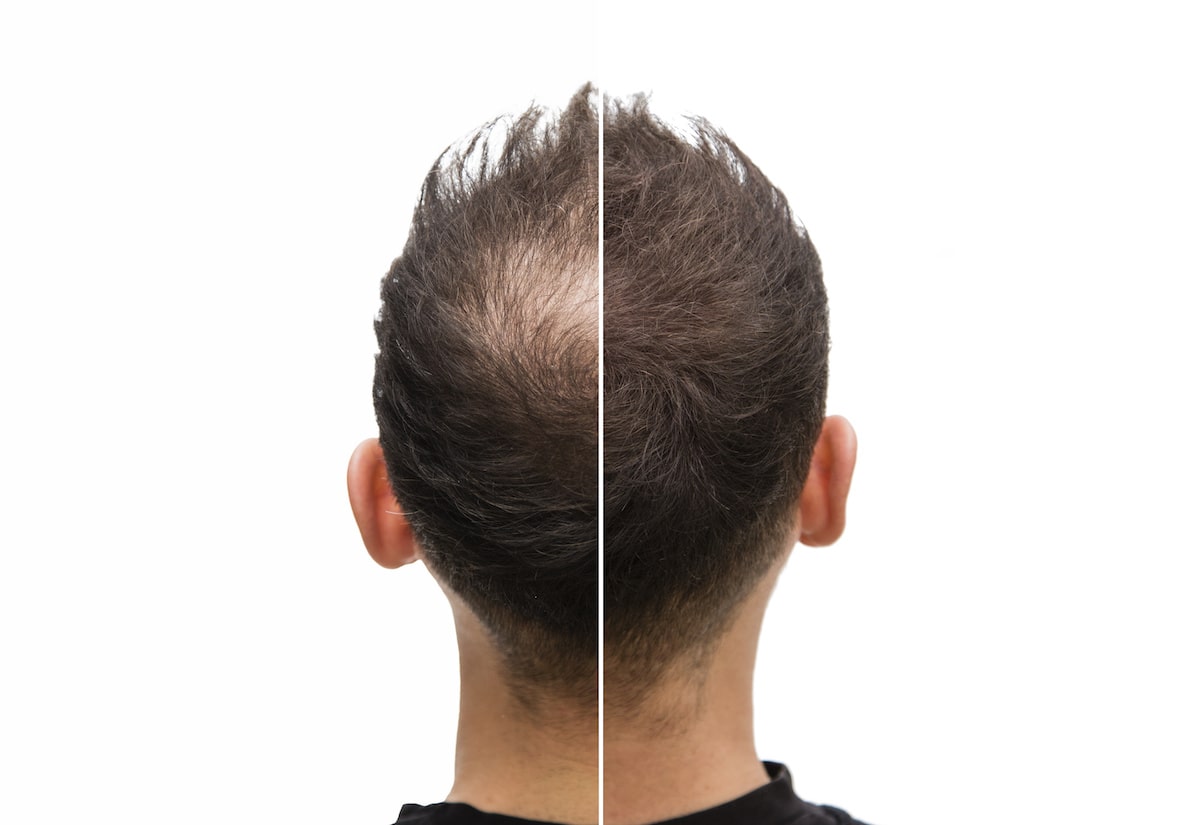
Two people can walk into a clinic with the same receding hairline and leave wanting completely different things. One wants the tattooed illusion of a fresh buzz cut, crisp and low-maintenance. The other wants real hair growing out of their scalp again, something they can run their fingers through and let grow long. That gap is the whole conversation, and it is why the choice between scalp micropigmentation vs hair transplant is not really about which one is better. It is about which problem you are actually trying to solve.
So let us be honest about both, without the sales gloss. These are not competing versions of the same result. One paints the appearance of density onto your skin; the other restores living, growing hair. They feel different, they age differently, they cost differently, and they suit different people and different goals. At Hairpol, plenty of the people who book a consultation arrive convinced they want one, and leave understanding that the other fits their life better, or that a combination of the two is the smartest move of all.
What scalp micropigmentation actually is
Scalp micropigmentation, usually shortened to SMP, is a cosmetic tattoo. A technician deposits tiny dots of pigment into the upper layer of your scalp, each one mimicking the look of a shaved hair follicle. Done well, thousands of these micro-dots create the convincing illusion of a closely cropped head of hair, or add the appearance of density to an area that is thinning.
The key word is illusion. SMP does not add a single strand of hair. Nothing grows, nothing gets thicker in a physical sense; the pigment simply tricks the eye into reading fullness where the skin would otherwise show through. That is not a criticism, it is just the honest mechanism. For the right person, that illusion is genuinely transformative. For the wrong expectation, it is a disappointment waiting to happen, which is exactly why understanding what it is and is not matters before you commit.
What a hair transplant actually is
A hair transplant works on a completely different principle. Instead of painting an effect onto the skin, a surgeon relocates your own living follicles from the permanent zone at the back and sides of your scalp into the thinning or bald areas. Those transplanted follicles keep growing, because they retain the genetic resistance to loss that they had in the donor area.
The result is real hair you can grow, cut, style and treat like any other hair on your head, because it is exactly that. This is the fundamental contrast at the heart of scalp micropigmentation vs hair transplant: one gives you the appearance of hair, the other gives you hair. A transplant is a surgical procedure with a recovery period and a growth timeline measured in months, whereas SMP is a cosmetic treatment with essentially no downtime. Both can look excellent. They simply achieve it in opposite ways.
The core difference: illusion versus living hair
If you take away only one idea, make it this one. SMP changes what your scalp looks like; a transplant changes what your scalp grows. Everything else, the cost, the maintenance, the candidacy, the feel, flows from that single distinction. Once you see it clearly, most of the confusion around the two options tends to dissolve.
This is why the honest framing is never simply which is better. A tattoo cannot fail to grow, because it was never going to grow; a transplant cannot smudge or fade with sun exposure, because it is biological hair. They carry entirely different promises and entirely different limits. The mistake we see most often is judging one by the standard of the other: expecting SMP to feel like hair when you touch it, or expecting a transplant to deliver the instant, uniform sharpness of a fresh tattoo the day after surgery. Understanding what each thing genuinely is protects you from both disappointments.
How each one actually looks and feels
Visually, both can be extremely convincing, but they convince in different contexts. SMP looks its most flawless on a closely shaved or buzzed head, where the pigmented dots blend seamlessly with the short stubble of your real hair and the eye reads a uniform, defined density. Push the style longer and the illusion weakens, because there is no length for the pigment to imitate. A transplant, by contrast, looks natural at any length precisely because it is real hair; you can grow it out, part it, run your hand through it.
The feel is where the gap is unmissable. Run your fingers over SMP and you feel skin, because that is what it is: pigment under smooth scalp. Run your fingers over transplanted hair and you feel hair, because that is what it is. Neither is wrong, but if the tactile reality of hair matters to you, this difference is decisive. At Hairpol, we make sure people touch on this honestly before choosing, because the look in a photo and the experience in daily life are not always the same thing.
Who scalp micropigmentation suits best
SMP tends to suit the person who is comfortable wearing their hair very short, or who already does. If your ideal look is a clean, defined buzz cut and you have made peace with keeping it that length, SMP can deliver a remarkably sharp, low-maintenance result. It is also a strong option for someone who is not a good surgical candidate, whether because their donor area is too depleted to supply enough grafts, or because they simply do not want surgery.
It also shines in specific supporting roles: adding the visual impression of density to hair that is thinning but not gone, or darkening the scalp so that sparse hair contrasts less starkly with bare skin. In those cases SMP is not pretending to be a full head of hair, it is reducing the see-through effect that makes thinning obvious. For the person whose goal is that shaved, defined aesthetic rather than length, it is often the more sensible and more honest choice.
Who a hair transplant suits best
A transplant suits the person who wants actual hair back: length, texture, the ability to style it, the feeling of hair under their hand. If you want to grow your hair out, wear it in any length, or simply have real strands rather than a convincing tattoo, no amount of pigment substitutes for that. This is the option for people whose goal is restoration in the literal sense, not the illusion of it.
Candidacy does depend on your own biology, particularly the health and capacity of your donor area, which is finite. Someone with early or moderate thinning and a solid donor supply is often an excellent candidate, whereas someone with very advanced loss and a limited donor may face harder trade-offs. If you are weighing surgery specifically for hair that is thinning rather than fully gone, our honest look at whether a hair transplant is the right solution for thinning hair walks through exactly when it makes sense and when it does not.
Permanence and maintenance: the honest timeline
People often assume SMP is permanent and a transplant needs upkeep, and the truth is closer to the reverse. Transplanted follicles are permanent in the meaningful sense: they keep growing for life because they are resistant to the loss process. SMP pigment, on the other hand, gradually fades over the years as your skin processes it and as sun exposure breaks it down, which means it typically needs a top-up session every few years to stay crisp.
Neither of these is a flaw, but both are worth budgeting for honestly. A transplant is a larger one-time investment with a months-long growth timeline before you see the full result, and then it is essentially done, though your surrounding native hair still ages. SMP is faster and cheaper upfront, with the trade-off that it is a maintained look, not a set-and-forget one. Deciding between them means being honest about whether you would rather commit once and grow, or pay less now and return periodically to keep the illusion sharp.
The cost logic behind each choice
On paper, SMP almost always costs less than a hair transplant, and that upfront gap is real. But comparing them purely on the first invoice misses the logic. SMP is priced as a cosmetic treatment, usually across a few sessions, with periodic top-ups thereafter. A transplant is priced as surgery, a single larger outlay that reflects the surgical team, the technique and the number of grafts moved. You are not buying the same thing twice at different prices; you are buying two genuinely different outcomes.
The smarter way to think about cost is per goal, not per procedure. If your goal is a sharp shaved look and you are happy to maintain it, SMP is efficient. If your goal is real, growable hair for the long term, a transplant is the only thing that actually delivers it, and its higher price buys a permanent biological result rather than a maintained cosmetic one. Cheap and expensive stop being useful words once you are honest about what each option is for.
When combining both makes the most sense
Here is where the versus framing genuinely breaks down, because for many people the best answer is both. The two techniques are not enemies, and used together they can cover for each other’s limits. A common and highly effective strategy is a transplant to restore living hair in the areas that matter most, with SMP layered underneath to add the illusion of extra density between the transplanted follicles.
This combination is especially useful when the donor supply cannot deliver truly dense coverage everywhere. The transplant provides real, growable hair and structure; the SMP darkens the scalp beneath so the eye reads more fullness than the graft count alone could achieve. Understanding realistic graft counts for a natural result is what makes this decision clear-headed rather than wishful. When the numbers say your donor cannot flood an area with density, SMP is often the honest, elegant way to bridge the gap without overharvesting.
Using SMP to camouflage a donor or strip scar
One of the most practical uses of SMP has nothing to do with the top of your head. If you have a linear scar from an older strip (FUT) procedure, or visible marks in the donor area, pigment can be deposited to reduce how sharply that scar contrasts with the surrounding hair. It does not remove the scar, but it can make it far less noticeable, especially when you wear your hair short and the scar would otherwise show.
This is genuinely useful because donor and recipient scarring is one of the quiet anxieties people carry, particularly those who want to buzz their hair down. If you want to understand what is realistic here first, our guide to what to expect from donor and recipient scars sets sensible expectations. SMP over a scar is a camouflage, not an erasure, and honest clinics say so, but as a finishing touch it can meaningfully improve how a shaved head looks after surgery.
The commitment to a shaved look with SMP
There is a trade-off with SMP that does not get mentioned in glossy before-and-afters, and you deserve to hear it plainly. Because SMP imitates shaved follicles, it looks its best when your real hair around it is kept short to match. If your native hair grows long while the pigmented area cannot, the contrast can become obvious, which is why many SMP patients essentially commit to maintaining a short, uniform style.
For someone who already loves and lives in a buzz cut, that is no sacrifice at all; it is simply the look they wanted. But for someone who dreams of longer hair, of styling it, of the option to change, SMP quietly closes that door in the treated area. This is not a reason to avoid it, it is a reason to be honest with yourself about the haircut you actually want to wear for years. A transplant keeps the length option open; SMP, for the most part, does not.
Density realism: what neither can promise
It helps to name the limit both options share, because chasing the impossible leads to bad decisions. Nobody, with any technique, gets back the density of a teenager’s scalp once loss has advanced. A transplant redistributes a finite donor supply, so its density is bounded by how many grafts you can safely harvest. SMP creates an impression of density, but push it to imitate a thick, long head of hair and the illusion collapses, because it was designed for the shaved look.
Being realistic about this is not pessimism, it is what separates a happy patient from a frustrated one. The best results, whether SMP, transplant or a blend, come from goals that respect the biology and the technique. At Hairpol, we would rather tell you honestly what your scalp can and cannot achieve than sell you a fantasy that photographs well and disappoints in the mirror. Density is always a negotiation with what you actually have to work with, and pretending otherwise helps no one.
Health, downtime and reversibility
The two options also differ in what they ask of your body and your schedule. A transplant is a minor surgical procedure: it involves local anesthetic, a healing period, careful aftercare and a growth timeline before the result matures. SMP is non-surgical, involves minimal downtime, and you walk out looking essentially finished, with only mild redness that settles quickly. If surgery or recovery time is a genuine barrier for you, that difference is not trivial.
Reversibility is another quiet distinction. A transplant permanently relocates follicles, so it is not something you undo, which is exactly why the planning and hairline design matter so much. SMP is longer-lasting than people expect but still fades and can be adjusted or removed over time with more effort. Neither is casually reversible, but the surgical permanence of a transplant is a bigger commitment to get right the first time. Weighing these practical realities alongside the aesthetic ones is part of making a choice you will still be glad about years later.
How to decide which is right for you
Strip away the marketing and the decision comes down to a few honest questions. What length do you actually want to wear your hair? If the answer is short and shaved, SMP is squarely in play. If you want length and real strands, only a transplant delivers that. How is your donor area, and are you a surgical candidate at all? How do you feel about a one-time investment versus a maintained look? And crucially, is the feel of real hair under your hand something you care about, or is the appearance in the mirror enough?
There is no universally correct answer, only the one that fits your goals, your biology and your life. For many people the sharpest solution is not one or the other but a considered combination, real hair where it counts and pigment to support the illusion of density. The point of a good consultation is to arrive at that honestly rather than being pushed toward whatever the clinic happens to sell. Answer these questions truthfully and the right path usually becomes obvious.
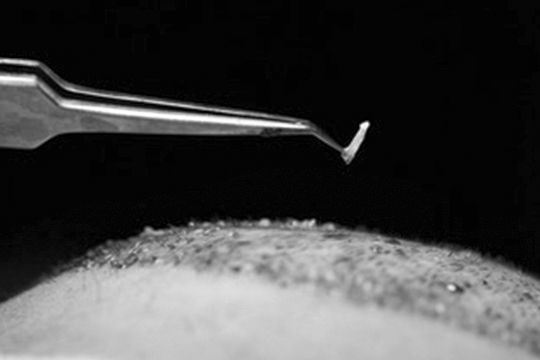
At Hairpol, our surgical focus is restoring your own living hair, and we would rather help you decide clearly than talk you into a procedure that does not fit your goal. If you want real, growable hair back, or you want an honest opinion on whether a transplant, SMP or a blend of both makes the most sense for you, explore our approach to hair transplantation and start a conversation with our team. The best result begins with an honest look at what you actually want your hair to do.
Find this helpful? Add Hairpol as a preferred source on Google.
Get a Free Consultation
Answer a few questions and the medical team will review your situation.
