
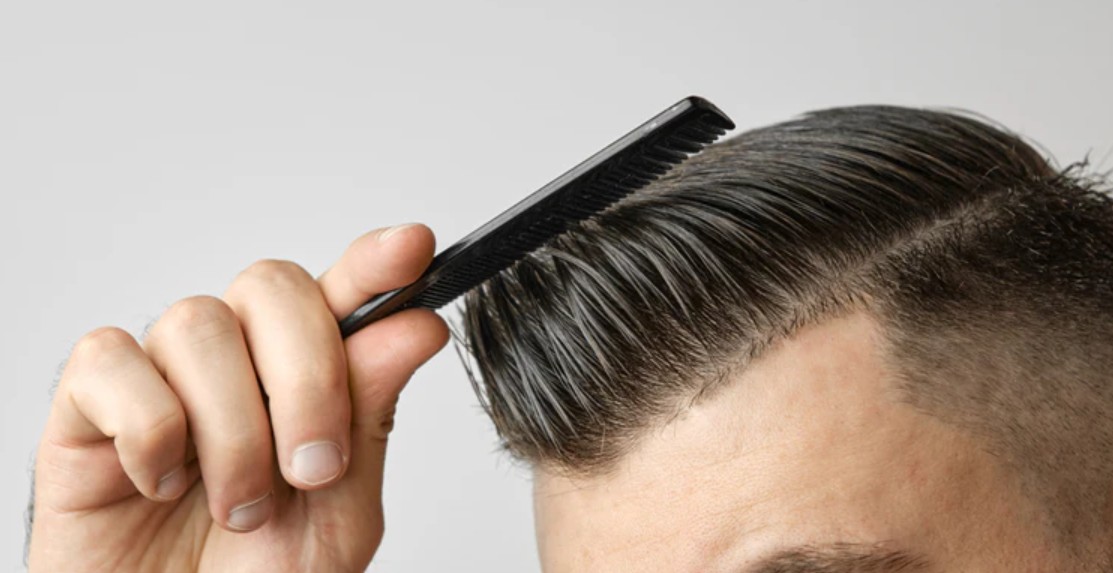
Nobody warns you about the mirror phase. Not the surgery, not the swelling, not the two weeks of scabs everyone talks about on forums. The part that catches people off guard comes later, around month four or five, when there is finally something up there to look at and you have absolutely no idea what to do with it.
The hair is short. It grows in odd directions. One patch stands up like it has a personal grudge against you, and another lies so flat it looks like it gave up. You want to comb it, cut it, put something in it, make it behave. And somewhere in the back of your head, a small anxious voice asks the only question that really matters: am I about to ruin this?
That question deserves a real answer, not a shrug and a “ask your doctor.” At Hairpol, this is one of the most common things patients message us about once the dramatic phase of recovery is behind them. So let’s go through it properly: what actually damages new hair, what only feels like it does, and when each tool in your bathroom drawer becomes safe again.
The Fear Is Reasonable, But It’s Usually Aimed at the Wrong Thing
Most people are afraid of the wrong month. They treat month five like month one, tiptoeing around their own scalp, afraid a comb will pull a graft out. Meanwhile the genuinely fragile window came and went while they were sleeping on a travel pillow and being careful with the shower.
Here is the part that resets everything: after roughly two weeks, your grafts are not sitting in the scalp. They are part of it. The body has connected them to a blood supply, and the follicle is anchored in tissue the same way the hair you were born with is anchored. You cannot pull one out with a comb any more than you could pull out a native hair. If you tug hard enough to remove hair, you’d be removing your own hair too, and you’d know about it, because it would hurt.
So the risk profile changes shape completely. In the first two weeks the danger is mechanical dislodgement, and it is real. After that, the risks are different and softer: irritation, inflammation, heat, chemical harshness, and traction over months rather than seconds. Different enemy, different defence. The problem is that most patients never get told the enemy changed, so they keep fighting the old one and worrying about the wrong tool.
Weeks One and Two: The Only Period Where “Don’t Touch It” Is Literal
During the first fourteen days, styling is not a category that exists. Your hair is not a hairstyle. It is a healing surface with grafts sitting in it, and those grafts are held by a fragile fibrin seal rather than real biological attachment. Friction, catching, scratching, or pulling can physically remove one, and it will not grow back somewhere else. It is simply lost.
So no combs. No brushes. No product of any kind, and that includes the light, “natural,” “gentle” ones. No towel rubbing. No pulling a t-shirt over your head in a way that drags across the recipient area. Wash exactly the way your clinic showed you, with the pouring and dabbing method rather than any kind of scrubbing, and let everything else wait.
The instinct to “tidy it up” is strong here, because this is the period when you look least like yourself, with redness, crusting and short stubble all at once. Resist it. There is nothing to gain in these two weeks and something genuinely irreversible to lose. This is the single stretch of the whole timeline where being obsessively passive is the correct strategy.
Weeks Three and Four: Combing Comes Back Before You Expect
Once the crusts have cleared and the grafts are secured, a wide-tooth comb is fine on the recipient area. Genuinely fine. Most patients don’t believe this and wait another two months out of pure nerves.
The technique is what matters, not the calendar. Comb gently, in the direction the hair grows, without forcing through anything that resists. If you hit a snag, don’t yank it. Work it loose from the ends upward. Wide teeth beat fine teeth because they distribute rather than concentrate force, and plastic with rounded tips beats anything with sharp edges that can scratch skin that is still recovering.
Brushes are a different animal and can wait. Bristles concentrate pressure on a small area and scrape the scalp in a way a comb doesn’t, and at this stage your skin is still more reactive than normal. There is no styling benefit to a brush on hair this short anyway, so the trade is all downside. Give it a couple more months.
The Awkward Growth Phase Nobody Photographs
Between months three and six, your hair enters a phase that is essentially unstylable, and understanding why makes it easier to endure. New hairs come through fine, often lighter in colour, and frequently kinked or curled even if your natural hair is dead straight. They don’t emerge in unison; they arrive on their own schedules over weeks. So you’re looking at a field of hairs at ten different lengths, several different textures, pointing several different ways.
No product fixes that. No haircut fixes that. This is not a styling problem, it’s a biology problem, and biology solves it on its own timeline. The kinks straighten out over the first few growth cycles. The lengths converge. The texture thickens and darkens. We wrote about the way this transformation reads visually in why hair transplant results change as hair grows longer, and it’s worth understanding, because a lot of the panic in this window is really impatience wearing a costume.
What we tell patients at Hairpol is simple: your job between months three and six is not to make it look good. It’s to not damage it while it sorts itself out. Keep it clean, keep it moisturised, keep the heat off it, and let time do the part you cannot rush.
Scissors, Clippers, and the Question of When to Sit in the Chair
The tools your barber reaches for are not equally risky, and lumping them together as “haircuts” creates confusion that leads people to either wait far too long or do something careless at week four.
Scissors are the safe option and they’re safe early. Scissors cut the hair shaft while never touching the scalp. If a barber is trimming with scissors over a comb, the blades don’t come near your skin at all. From around the one-month mark, a careful scissor trim on the recipient area is reasonable, and by six weeks it’s uncontroversial.
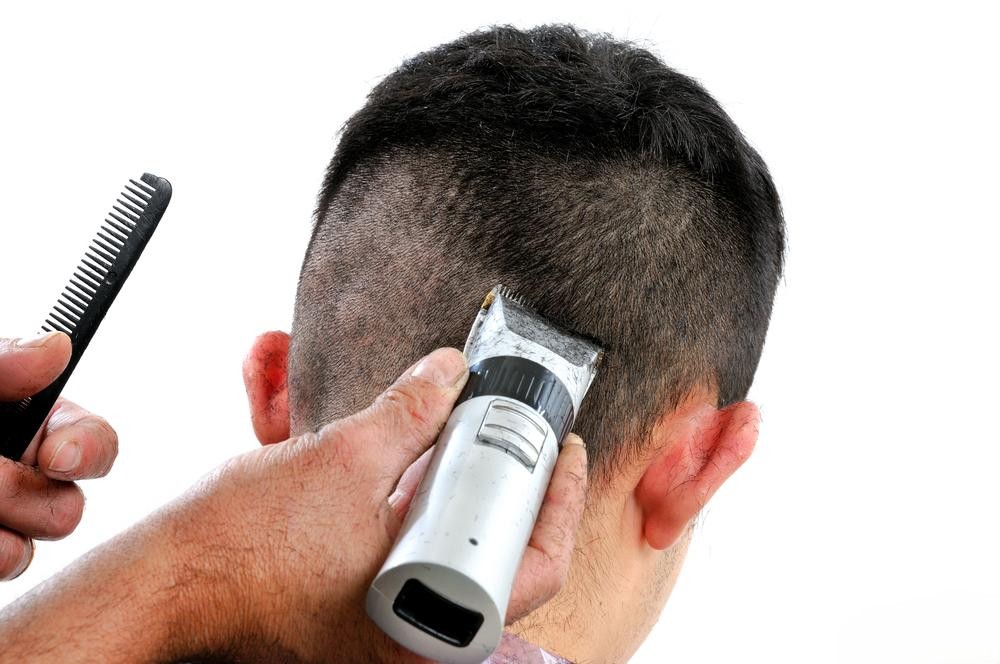
Clippers with a guard are close behind. The guard holds the blade off the skin, so it behaves much like a scissor cut in terms of contact. Most surgeons are comfortable with guarded clippers on the recipient area from around the one to two month mark, once redness has fully settled.
Clippers with no guard, and razors, are the real question. Zero-guard work presses steel against the scalp and drags across it. On skin that is still remodelling underneath, that means irritation, potential micro-trauma, and unnecessary risk for no benefit. Give the recipient area at least three months before anything goes to zero there, and honestly, six is a better answer. The donor area is a different story — it healed faster and can usually take short clipper work from around month two, though blending it too short too early can make the difference in density between the areas more obvious rather than less.
What to Tell Your Barber, and Why You Have to Say It Out Loud
Barbers are pattern-matchers with fast hands. Your barber has cut thousands of heads and works from muscle memory, and muscle memory does not know you had surgery. If you sit down and say nothing, you will get your usual cut at your usual speed, and that may involve a zero-guard neckline pass, a razor edge-up, and a hot towel — a combination that is fine for anyone else and not ideal for you at month two.
So tell them. Say when the procedure was, point to where the recipient area is, and be specific about what you want avoided. Ask for scissors over clippers on top. Ask them to skip the razor at the hairline. Ask them to be light with pressure and forget the hot towel for now.
Good barbers appreciate this rather than resenting it. They’ve cut transplanted hair before, more often than you’d guess, and many can spot the work immediately — something we covered in what barbers immediately notice after a hair transplant. What they can’t do is guess your timeline. Twenty seconds of conversation removes the entire risk.
There’s a wrinkle here for travelling patients. If you had a hair transplant Turkey procedure and flew home a few days later, your barber never saw the clinic, never got the aftercare sheet, and has no idea what was done. That’s not a problem, but it does put the responsibility on you to carry the information. Keep your discharge notes or a photo of the recipient area on your phone. If you’re mid-recovery and unsure what to ask for, message us before the appointment rather than after, and we’ll tell you exactly what to say.
Product: The Rules Are Simpler Than the Internet Suggests
The product question generates more anxiety than it deserves, mostly because people imagine gel somehow seeping down and poisoning the follicle. That’s not the mechanism. Product sits on the hair shaft and on the skin surface. The follicle underneath is not absorbing your pomade.
The real issues are three, and they’re all practical. First, timing: nothing goes on the recipient area for the first month, because the skin is still healing and doesn’t need chemicals or fragrance on it. Second, removal: strong-hold products need scrubbing to come out, and scrubbing is what you’re trying to avoid. Third, alcohol: many hold products are alcohol-heavy, which is drying and irritating on scalp skin that is already more reactive than usual.
From month two, light and water-soluble is the way in. Cream, light pomade, sea salt spray, mousse — things that rinse out with a normal wash and don’t require force. Skip anything that dries into a hard cast, and skip aerosol hairspray a bit longer since the propellant is drying and the application is close-range. By month six, you’re essentially back to normal and can use whatever you used before.
Heat, Dryers, and Why the Blast Setting Waits
Hair dryers are not banned, but hot air on a healing scalp is a bad trade. Heat dries skin that already tends toward dryness after a transplant, and dry skin flakes, and flaking makes you scratch, and scratching is the thing we’re actually trying to prevent. The chain matters more than the dryer.
For the first month, air dry. It’s a small inconvenience for a real benefit. From month two, cool setting only, held at a distance, kept moving. From around month four, warm air is fine if you want it, though there’s rarely a reason to push past that. Straighteners, curling irons and anything that clamps directly onto the hair should wait until at least month six, because those apply direct heat plus mechanical tension in the same motion, which is precisely the combination new hair handles worst.
None of this is about the follicle burning. It’s about the surface — the skin’s barrier function, the moisture balance, and the itch-scratch loop that quietly does more damage in this period than any styling tool.
Colour and Chemicals: The Long Wait That’s Actually Worth It
Dye is where we’re most conservative, and for a reason people don’t always like. Permanent colour works by opening the hair cuticle with alkaline chemistry and depositing pigment, and that chemistry doesn’t stop politely at the hair. It sits on the scalp for thirty to forty-five minutes. On a scalp that’s still remodelling, that’s a meaningful irritant.
Six months is the honest answer for the recipient area. Some clinics say three, and for the donor area, three is defensible. But new hairs coming through in months three to five have a cuticle that hasn’t fully matured, and they take colour unevenly and take damage more easily. You end up with patchy results on top of a chemical insult to healing skin. There’s no version of that worth rushing for.
Bleach is a longer wait still — nine to twelve months if you want to be sensible, because bleaching is a genuine structural attack on the shaft and new hair is not ready for it. If the grey is bothering you in the meantime, ammonia-free semi-permanent colour on the mid-lengths and ends only, avoiding scalp contact, is a reasonable bridge from month four. Not perfect. But it’s a compromise that doesn’t cost you anything biological.
Traction: The Slow Damage Nobody Notices in Time
Everything above is about acute damage. This one is different, and in some ways it’s the most important section here, because it’s the thing that harms results quietly over months while everyone is watching for something dramatic.
Traction alopecia is hair loss caused by sustained pulling. Tight buns, tight braids, tight ponytails, cornrows, aggressive slicking-back — anything that keeps constant tension on the follicle. Under that kind of chronic pull, follicles inflame, then miniaturise, then die. It’s the mechanism behind hair loss in people who’ve worn tight styles for years, and it applies to transplanted follicles exactly as it applies to native ones, because transplanted follicles are ordinary follicles in an ordinary scalp.
This matters most for patients with longer hair and for anyone whose styling habits involve tension. If you’ve had grafts placed at a hairline and you pull that hairline back into a tight style every day for years, you can lose what you paid for. Not in a month. Over a long, slow decline you’ll notice too late. The fix is easy and free: keep styles loose, vary where the tension sits, and if a style hurts or leaves your scalp tender, it’s too tight. That rule works for everyone, and it works forever.
The Haircut Strategy for the In-Between Months
There’s a strategic layer to this that goes beyond safety, and it’s about how you use haircuts to manage the appearance of a work in progress.
The mistake is going too short on the sides during months four to eight. It feels like the tidy option, but a tight fade next to a still-thin top creates maximum contrast, and contrast is exactly what makes thin areas read as thin. Leaving more length on the sides narrows the gap and lets the eye blend the two. Less definition, more forgiveness.
Length on top helps too, within reason. Hair that’s slightly longer lies across neighbouring hairs, and overlap creates visual density that isn’t there in a strict count. Texture beats slickness for the same reason — a matte, tousled finish scatters light and hides scalp, while a wet, combed, slicked look separates hairs into distinct strands and shows every gap between them. If you want density in month six, tousle it. If you want to see exactly how much progress you haven’t made yet, slick it back under a bathroom light.
And go a little more often, not less. Frequent light trims keep everything even as the new growth catches up, which reads far better than letting it all grow wild and then correcting with one aggressive cut.
When It’s All Just Hair Again
Somewhere around the one year mark, the whole framework in this article stops applying. The follicles are mature, the shafts are full thickness, the skin has finished remodelling, and the hair on your head is hair on your head. Clippers, razors, dye, heat, product, whatever you want — the rules are the same as they were before your first appointment.
The only permanent asterisk is traction, and that’s not a transplant rule. That’s a scalp rule that applied to you before surgery and will apply to you at eighty. Keep it loose, and the grafts placed in your scalp are as durable as anything else growing there.
The transition back is gradual and easy to miss. Most patients realise it retroactively — they catch themselves at month ten reaching for the dryer without thinking, or letting a barber run clippers up the back without a flicker of anxiety, and only afterwards notice they’ve stopped being careful. That moment, the one where you forget to worry, is what the whole timeline was building toward. We wrote more about that shift in when does hair feel normal again after a transplant.
Where Clinic Quality Quietly Shows Up
One last thing worth naming, because it connects to a decision you make long before you ever pick up a comb. How much styling freedom you eventually have is partly determined on the operating table.
Grafts placed at the correct angle and direction grow the way your natural hair grows, which means they take a part, fall the right way, and respond to styling like normal hair. Grafts placed at the wrong angle grow at the wrong angle forever, and no amount of product corrects that. You end up fighting your own head every morning for the rest of your life. Similarly, a well-designed, irregular hairline can be worn back, worn forward, worn short or worn long. A hard, straight, badly-designed one can only be hidden.
This is a large part of what separates clinics, and it’s not visible in a price list. It’s one of the reasons people research hair transplant Turkey options carefully rather than booking on cost alone — the technical execution determines what your hair can do for decades, not just what it looks like in a month-twelve photo. If you want to understand how angle and direction planning works in practice, our DHI hair transplantation page covers the implantation control side of it, and the Sapphire FUE page covers how channel geometry is created.
Send Us a Photo Instead of Guessing
Almost every question in this article has a general answer and a specific answer, and the specific one depends on your case: your graft count, your healing speed, where the work was done, how your skin is behaving. A guide can give you the framework. It can’t look at your scalp.
So don’t guess, and don’t take the advice of a forum thread written by someone whose situation isn’t yours. If you’re unsure whether you’re ready for clippers, or whether that flaking is normal, or whether your barber’s plan is safe — take a photo in daylight and send us a message. Hairpol patients do this constantly and it takes us minutes to answer. If you had your procedure elsewhere and you’re stuck, message us anyway. We’d rather tell you it’s fine than have you find out the hard way that it wasn’t.
The Short Version
Two weeks of touching nothing. Then a wide-tooth comb, gently, in the direction of growth. Scissors from month one, guarded clippers from month two, nothing to zero on the recipient area before month three and preferably six. Light water-soluble product from month two. Cool air only until month two, warm from month four, straighteners at six. Dye at six months, bleach at nine to twelve. Loose styles forever. And tell your barber before he starts, not after.
The rest is patience, which is the one part nobody can outsource. Your hair in month five is not your result. It’s a construction site, and construction sites always look worse than the building will.
At Hairpol, in Ataşehir, we plan the angle and direction of every graft around the way you actually wear your hair, because a result you can’t style is only half a result. If you’re thinking about hair transplant Turkey options and want a straight assessment rather than a sales call, or you’re already through a procedure and just want to know whether it’s safe to pick up the clippers this weekend, send us a message on WhatsApp with a couple of daylight photos. You can also read more about how we approach planning on our hair transplantation page, or look through real timelines in our before and after gallery. Either way, ask before you cut. It’s free, and it’s a lot easier than fixing it afterwards.
Find this helpful? Add Hairpol as a preferred source on Google.
Get a Free Consultation
Answer a few questions and the medical team will review your situation.
