
 Türkçe
 Deutsch
 Français
A hair transplant can be done in any season of the year; what determines the result is not the season but the planning and the aftercare. The season only changes how the first two months feel: in winter the main question is when you can wear a beanie, in summer it is the sun rule.
Below you will find the difference between the two seasons, a table showing which months shock loss and the final result fall in depending on your procedure month, and what to consider when choosing a date.
What is the best time of year for a hair transplant?
There is no single right season. The right time is the period in which you can most comfortably follow the rules of the first two months. Ask yourself three questions:
- Can I take a few days off work or school for the first days after the procedure?
- Can I go two months without sunbathing or spending long periods in the sun?
- Can I go out without a beanie for the first 40 days?
Your answers show whether winter or summer will suit you better.
Hair transplant in winter: advantages and what to watch out for
In the winter months the sun rule is easy to follow. For the first 14 days the transplant and donor areas are kept out of direct sunlight, and for the first 2 months you avoid sunbathing and long exposure that could cause sunburn. With no beach or pool holidays in winter, this period passes naturally for most people.
The main thing to watch in winter is covering your head. A hat can be worn after day 10 and a beanie after day 40; talk to your doctor about the type of hat, as your doctor will decide. What you can wear instead of a beanie on cold days in the first weeks is explained in detail in our article wearing hats after a hair transplant.
In cold weather, what really matters is protecting the transplant area from friction and knocks in the first weeks and not dropping the rules before their time.
Hair transplant in summer: advantages and what to watch out for
The advantage of summer is time: annual leave and school holidays fall in this period for most people, so it is easier to spend the first days resting. On the other hand, the sun rule is harder in summer. You need to keep fully out of direct sunlight for the first 14 days and avoid sunbathing for the first 2 months, which means the two months after your transplant are not suited to a beach holiday.
You can read how to deal with the sun in our article sun exposure after a hair transplant, and when you can return to sport and strenuous activity in exercise after a hair transplant. Your doctor will tell you when you can go back to the sea and the pool.
Calendar by procedure month
According to our official timeline, shock loss may occur between weeks 3 and 8 and is a normal part of the process; the final result settles at 12-18 months. Applied to your procedure month, the table looks like this:
| Procedure | Beanie (after day 40) | Shock loss (weeks 3-8) | Final result (months 12-18) |
|---|---|---|---|
| Early November | Second week of December | Late November to late December | The next November to the May after |
| Early January | Second week of February | Late January to late February | The next January to the July after |
| Early April | Second week of May | Late April to late May | The next April to the October after |
| Early July | Second week of August | Late July to late August | The next July to the January after |
Two conclusions follow from the table. First, many people find it convenient for shock loss to fall in winter, because these are the months of thick clothing and, after day 40, beanies. Second, if you want your hair to have fully settled for an important date, plan at least 12-18 months ahead. What happens month by month is covered in our article the hair transplant timeline, and shock loss in shock loss after a hair transplant.
Time off, holidays and special occasions
Whichever season you choose, plan a short break for the first days. You should not bend your head forward for the first 3-4 days, and your first wash takes place the day after the procedure. Coming from Europe, two nights in Istanbul are enough; after a flight of more than 8 hours we recommend three. You will find the day-by-day plan in our article how long to stay in Turkey for a hair transplant.
The Christmas and New Year break, Easter, a school half-term or, in the US, Thanksgiving week are all good options for these first days. What awaits you in the first week is described in the first 7 days after a hair transplant. If your date falls during Ramadan, please talk to our team about fasting in the first days before you book. If you have an important day coming up, such as a wedding or a graduation, set the date together with our team.

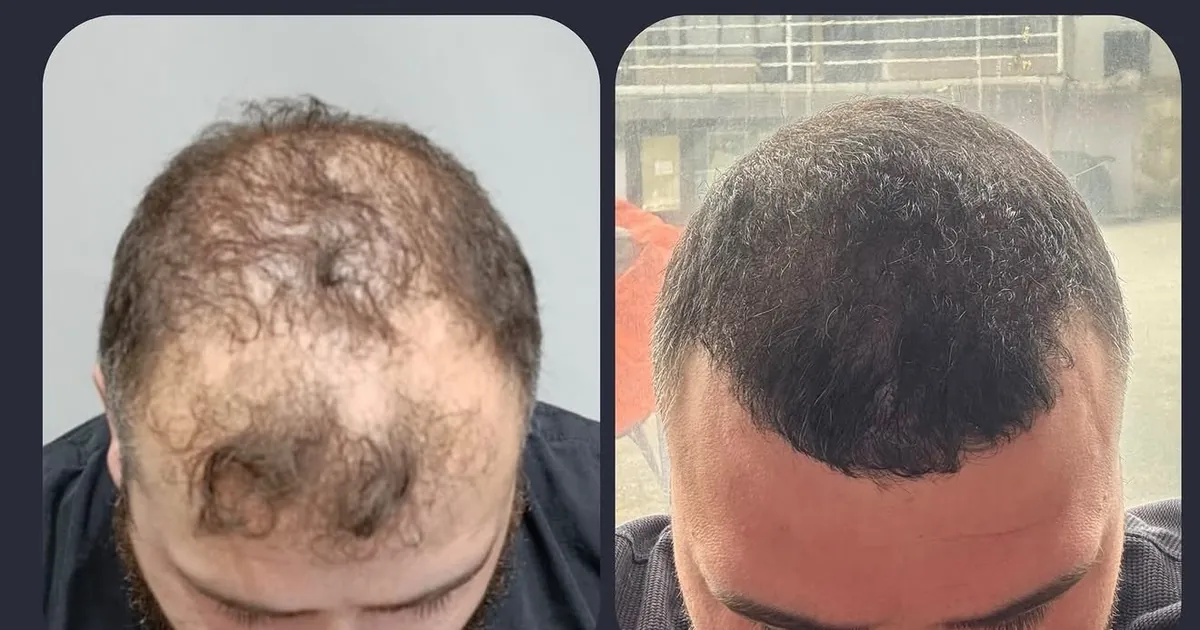
The photo shows one of our own patients and is shared with their permission. Results vary from person to person; the final look settles at 12-18 months.
Does the price depend on the season?
The price is set by the technique and the type of package, not by the season, and you are never charged per graft. With cash payment, the all-inclusive package costs $2,500£1,900€2,250CA$3,500. For patients travelling from abroad it includes 2-3 nights in a centrally located 4-5 star hotel, VIP transfers, an aftercare kit including medication, complication insurance, a guarantee certificate, a 24/7 VIP patient manager and monthly follow-up for 12 months. Details are on our hair transplant cost and hair transplant package pages.
Hairpol performs Sapphire FUE, DHI and Manual Punch Long Hair FUE. The transplant is carried out by our doctor and our experienced medical team. Our guarantee certificate guarantees that the transplanted hair grows in the transplant area and is valid for 18 months from the procedure; see all the conditions here. To get to know our clinic’s physician, visit the Dr. Barış Duman page.
Frequently asked questions
Can you have a hair transplant in winter?
Yes. The sun rule is easy to follow in winter. What you need to watch is not wearing a beanie before day 40; a hat can be worn after day 10, after checking the type with your doctor.
Can you have a hair transplant in summer?
Yes. You need to keep the transplant and donor areas out of direct sunlight for the first 14 days and avoid sunbathing for the first 2 months. So do not plan a beach holiday for the two months after your transplant.
What is the best month for a hair transplant?
There is no single month that suits everyone. The best time for you is a period in which you can take time off for the first days, stay out of the sun for the first 2 months and comfortably wait the 12-18 months it takes for the result to settle.
How many days after a hair transplant can I wear a beanie?
A beanie can be worn after day 40. If you need to cover your head earlier, a hat is possible after day 10; your doctor decides based on the type of hat.
Free photo analysis and date planning
Send us your photos and we will share the right plan for you, the price and a procedure date that fits your calendar, free of charge.
Message us on WhatsApp or see which photos to send. For the whole booking process, take a look at our article how to book a hair transplant in Turkey.
Find this helpful? Add Hairpol as a preferred source on Google.
Get a Free Consultation
Answer a few questions and the medical team will review your situation.
