

There is a moment, usually in a bright bathroom or a passport photo, when a hair transplant stops looking like restored hair and starts to look like a row of little plants pushed into soil. The line is there. The density might even be impressive. But something about the front reads as manufactured, and once you have seen it you cannot unsee it. That look has a name that patients dread, and it is the reason some people cover the very hairline they paid to rebuild: the pluggy hairline.
Here we are going to talk about it honestly. What a pluggy result actually looks like up close, the specific mistakes that create it, and how the same feature can be softened or rebuilt today. We will also be straight about the limits, because correction is real but it is not magic. At Hairpol, repairing an unnatural front is one of the more delicate things we do, and it starts with understanding exactly what went wrong.
What a pluggy hairline actually looks like
The word “pluggy” comes from the old hair plugs of decades past, and it survives because it describes the look so well. A pluggy hairline is one where the front does not read as a soft field of individual hairs but as a series of distinct clumps. You see small tufts sitting in a line, with visible scalp between them, like a doll’s head where the hair has been punched in at intervals rather than grown.
Up close the giveaways are consistent: little bunches of three, four or five hairs emerging from a single point instead of the fine, one-hair strands a natural hairline is made of. From a distance it can look dense, even too dense, but the eye still senses that the texture is wrong. The hairline behaves like a printed pattern rather than a gradual fade, and that is what makes people reach for a hat.
The doll-hair rows and the tuft problem
The most recognisable version of this is what people call the doll-hair look. Hair on a doll is inserted in evenly spaced tufts because a machine put it there, and a poorly executed hairline can mimic that exactly. When multi-hair grafts are placed along the leading edge, each one sprouts as a small clump, and a line of clumps with gaps between them is precisely what a doll’s scalp looks like.
A natural hairline is the opposite of orderly. It is built from single hairs scattered with deliberate randomness, so the front dissolves softly into skin rather than starting at a hard row. The tuft problem is not about how many grafts were used; it is about what kind of grafts sit at the very front and how evenly they were spaced. Regular spacing plus multi-hair grafts equals the doll-hair signature almost every time.
The abrupt wall: density in the wrong place
Another hallmark of a pluggy hairline is what we call the wall. Instead of easing in with a light, see-through zone of fine hairs, the hairline begins abruptly, as if someone drew a line and packed full density right up to it. There is no transition, no soft leading edge, just bald skin and then, suddenly, a thick front.
This looks unnatural because real hairlines are gradient events. The frontmost hairs are sparse and delicate, and density builds gradually as you move back into the scalp. When a surgeon puts the strongest density at the very front and forgets the feathered transition zone, the result is a hard shelf of hair. Ironically, the pursuit of a “full” hairline is often what creates the fake look, and it is one of the mistakes we unpack in our piece on why some hair transplants look fake.
Angle and direction: the detail people miss
Not every pluggy result is about graft type. A huge part of whether a hairline looks natural comes down to the angle and direction the hairs exit the skin. Natural frontal hairs lie very flat, almost grazing the scalp, and they fan forward and slightly to the side in a consistent flow. When grafts are implanted too upright, they stand away from the head and catch the light in a way the eye instantly flags as wrong.
Direction matters just as much. If neighbouring grafts point in scattered, inconsistent directions, the hairline loses the unified sweep that makes real hair look like it belongs. You can have single-hair grafts and still get an odd, bristly, pluggy impression purely from bad angulation. This is why technique and the surgeon’s eye matter more than the machine, a theme we return to in our look at why the hairline design matters more than graft count.
Why it happened: the old punch grafts
To understand where the worst pluggy hairlines come from, you have to go back to the older era of hair restoration. Decades ago, surgeons used round punch grafts, sometimes called plugs, that removed a small circle of scalp containing ten or more hairs and transplanted it whole. These were placed in rows across the front, and because each plug was a dense cylinder of hair, it grew as an obvious tuft.
That is literally where the word “pluggy” comes from. Anyone who had a transplant in that era, or an early, poorly done procedure that copied it, may carry a hairline of visible clumps with bare scalp between them. These are the hardest cases, because the problem is not just design but the physical nature of the grafts that were used. Modern follicular unit techniques do not create this, but the legacy of the plug era still walks into clinics today.
Multi-hair grafts at the leading edge
The modern version of the mistake is subtler but produces a similar effect. Even with today’s follicular unit methods, a hairline can look pluggy if the surgeon places multi-hair grafts, the units that naturally contain three or four hairs, right at the front row. Those belong further back, where density is meant to be, not on the leading edge where the eye demands single hairs.
A careful surgeon sorts grafts by hair count and reserves the single-hair units for the frontmost line, building a soft, irregular border before any thicker grafts appear. Skip that sorting, or rush it, and you get clumps at the very edge, which is the essence of a doll-hair look created with entirely modern tools. The technology was never the problem; the placement decisions were. Good restoration is a series of small, deliberate choices about which graft goes exactly where.
The straight, high, geometric line
Design geometry causes its own kind of pluggy impression, separate from graft type. Real hairlines are not straight lines, and they are not perfectly symmetrical arches. They wander. They have tiny peaks and recessions, small clusters of hair sitting slightly ahead of the main border, and a gentle irregularity that the brain reads as natural. Draw a hairline as a clean, ruler-straight band and it will look artificial even if every graft is placed perfectly.
Height compounds it. A hairline set too low or too aggressively, in an attempt to turn back the clock completely, tends to sit in a place a mature face would never naturally grow hair, which draws attention rather than deflecting it. The combination of a low, straight, geometric line and clumpy grafts is the full pluggy package. Understanding this is exactly why a proper hairline design consultation matters before a single graft is placed.
What a natural hairline is actually made of
It helps to know what you are aiming for, because the target is more specific than “more hair”. A natural hairline is a transition zone, not a border. At its very front sits an irregular scatter of single, fine, often slightly weaker hairs, sometimes called sentinel hairs, standing a little ahead of everything else. Behind them the density climbs gently, one and two-hair units mixing in, until you reach the fuller body of the scalp.
Nothing about it is uniform. The height rises and dips, small clusters push forward and fall back, and the whole thing reads as slightly random up close while looking coherent from across a room. A pluggy hairline fails on every one of these counts at once: it is uniform where it should be random, dense where it should be sparse, and hard where it should melt away. Repair is really the work of reintroducing all of that intentional imperfection.
Why the front row punishes shortcuts
The frontal hairline is the single least forgiving part of a transplant, and that is why pluggy results cluster there rather than in the crown. On the crown, a small error hides in the whorl and the surrounding hair. On the hairline, every graft is on display against bare forehead skin, lit from the front, and judged by anyone standing close to you in conversation.
That exposure means shortcuts that might pass elsewhere are merciless at the front. A slightly upright angle, a two-hair graft one row too far forward, a border half a centimetre too straight, all of it shows. This is why an experienced clinic slows right down at the leading edge, and why so much of preventing and repairing a pluggy hairline is simply refusing to rush the most visible centimetre of the whole procedure.
Can a pluggy hairline be fixed? The honest starting point
Here is the reassuring part and the realistic part in the same breath. Yes, a pluggy hairline can almost always be improved, often dramatically. No, it usually cannot be rewound to the state of someone who never had a bad transplant, because there is history in the skin. Correction is about softening, redistributing and refining what is there, working within the tissue and donor supply you have.
The first step is never surgery; it is assessment. A good clinic studies the direction of the existing grafts, how many hairs each contains, the scarring around them, the quality of the skin and how much donor hair remains for reinforcement. Only then can a repair plan be built. At Hairpol, we treat a pluggy correction as a reconstruction rather than a top-up, because you are not just adding hair, you are undoing a pattern the eye has learned to distrust.
Removing or reducing the offending grafts
The most direct tool for a truly pluggy front is removal. Individual clumpy grafts, and especially old plug grafts, can be excised with tiny punches, taking out the offending tuft so it no longer sits like an island in the skin. In some cases those removed grafts can be dissected into individual follicles and reimplanted properly, recycling the precious hair rather than wasting it.
This is meticulous work. Each clump removed leaves a small wound that must heal, and the surgeon has to balance how much can be taken out at once against the scarring that punching creates. Sometimes not every plug is removed; the worst offenders at the very front are excised, while others are camouflaged. Removal is powerful precisely because it addresses the physical clumps directly, but it is slow, deliberate and often staged across more than one session.
Redistribution and recycling the hair
Removal is only half the story, because taking clumps out leaves gaps that must be refilled thoughtfully. This is where redistribution comes in. The follicles harvested from excised plugs, along with fresh grafts from the donor area, are placed back as single hairs and small units in a natural pattern, spreading the density that was once locked into tufts across a softer, more even field.
Think of it as unbundling. The old hairline concentrated hair into a few dense points with bare skin between them; the repair takes that same hair and scatters it the way it should have been placed originally. Done well, the front stops reading as a row of dots and starts to read as a continuous, low-density border. The donor supply has to be respected here, because repair spends grafts on an area that already received some, and there is not an unlimited reserve.
Single-hair DHI refinement of the leading edge
The finishing move in most pluggy repairs is rebuilding the leading edge with single-hair grafts, and this is where the DHI technique earns its place. DHI lets the surgeon implant one-hair follicular units at a precise angle, depth and direction without pre-made incisions, which is exactly the control a delicate front row demands. A refined, feathered border of single hairs placed ahead of the old line can visually dissolve the hard wall behind it.
The goal is not more density; it is transition. A whisper-thin zone of individual hairs, angled flat and pointing forward in a consistent flow, tricks the eye into reading the whole hairline as gradual rather than abrupt. When single-hair DHI refinement is layered in front of a corrected, redistributed field, even a previously clumpy hairline can start to look like it grew there. This is subtle, patient work, and it is where an experienced hand separates a real repair from a second disappointment.
Softening with feathered, irregular design
Every element of a repair serves one aim: irregularity. Where the original hairline was a hard, straight, evenly spaced row, the corrected version deliberately breaks that order. The surgeon introduces micro-irregularity along the border, small sentinel hairs sitting ahead of the main line, tiny variations in height and density, and gentle transitions instead of shelves.
This feathering is the antidote to the doll-hair look, because it replaces pattern with randomness, and randomness is what the brain accepts as natural. It is counterintuitive, but a slightly messy, softly scattered hairline looks far more real than a perfect one. The whole craft of repairing a pluggy hairline is essentially teaching the front to look unplanned, even though every single hair has in fact been planned with great care.
Where SMP can support the result
Sometimes hair alone cannot do all the work, and this is where scalp micropigmentation, or SMP, earns a supporting role. SMP places tiny pigment dots in the scalp to mimic hair follicles, and in a repair it can be used to add the impression of density behind a softened hairline or to blur the contrast between clumps and bare skin while the transplanted hair matures.
It is not a substitute for good surgery, and used clumsily it creates its own artificial look, so it should be a considered addition rather than a shortcut. But in the right case, a light touch of pigment beneath a refined front can reduce the see-through gaps that make old plugs obvious, buying visual density without spending more grafts. The best repairs often combine techniques, using surgery to rebuild structure and pigment to support the illusion of fullness.
The honest limits of correction
This is the part clinics that oversell will skip, so we will say it plainly. Repairing a pluggy front is harder than doing it right the first time, and it does not always reach perfection. Scar tissue from old punches can limit blood supply and how densely new grafts survive. Donor hair spent on a previous procedure is gone, so there may be less to work with. Removed plugs leave marks of their own, and some redness or textural change can linger.
A realistic outcome is a hairline that looks dramatically more natural in normal life, not one indistinguishable from a virgin scalp under a magnifying glass. Correction often takes more than one session and a good deal of patience across a year or more. We say this not to discourage you but because false promises are how people ended up pluggy in the first place. At Hairpol, we would rather set an honest expectation you can actually meet than sell you a second miracle.
How a considered repair is planned
A thoughtful repair does not start with a scalpel; it starts with a plan that treats your existing hairline as a problem to be reverse-engineered. We map where the clumps are, how the grafts are angled, how much scar tissue exists, and how much donor reserve is available to spend. From there the sequence is decided: what to remove, what to redistribute, where to feather in single hairs, and whether pigment has a role.
Staging matters more in repair than in a first procedure, because the tissue has been operated on before and needs to recover between steps. Rushing a correction is how a second bad result happens. A good clinic will sometimes tell you that the best plan is patient and gradual, and that honesty is worth listening to. The aim is a hairline you stop thinking about, one that simply looks like hair rather than a repair of a repair.
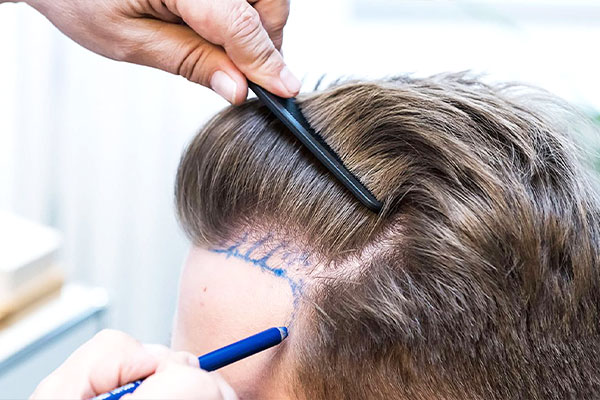
If you are living with a hairline that never looked right, or you are researching before a first procedure precisely so you never end up here, the most useful thing you can do is talk to people who repair these outcomes rather than only create them. At Hairpol, our team assesses pluggy and unnatural hairlines candidly, tells you what is realistic for your specific case, and builds a plan around your tissue and donor supply. Explore our approach to hair transplantation and start with an honest conversation about what your hairline can become.
Find this helpful? Add Hairpol as a preferred source on Google.
Get a Free Consultation
Answer a few questions and the medical team will review your situation.
