

Spend an evening reading Turkish clinic websites and one phrase keeps appearing: Sapphire FUE. It sits in headlines, on package names, in the corner of before-and-after photos. Some pages imply it is a different operation altogether. Others treat it as a premium tier worth paying extra for. It is easy to come away thinking that the word “sapphire” is doing most of the work.
It is not. Sapphire FUE is a real and widely used variation of FUE, and many surgeons like it for good reasons. But the blade is one tool in a long day, and the parts of the procedure that decide your result are mostly elsewhere. This guide explains what Sapphire FUE actually is, who it suits, and how to think about price without being sold a gemstone.
Plainly put: Sapphire FUE in Turkey is a standard FUE transplant in which the recipient channels are opened with a blade made of sapphire instead of steel; everything else is the same as classic FUE. It is common in medium to large sessions on a shaved scalp. At Hairpol it sits in the same package range as FUE and DHI, typically $2,500–5,000, with the exact figure after a free hair analysis.
What does “Sapphire FUE” actually refer to?
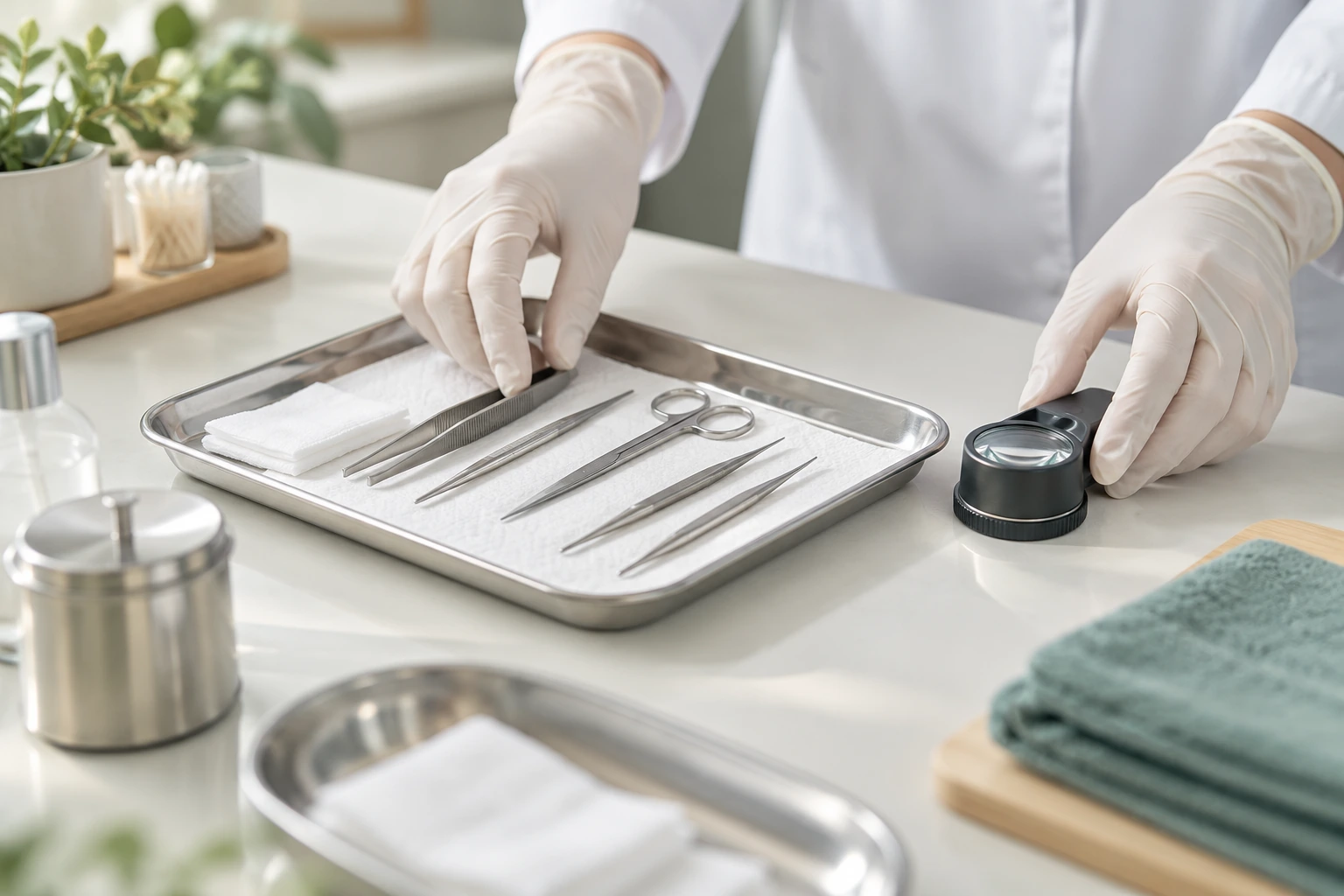
Every FUE transplant has three main steps: extracting follicular units from the donor area, opening small recipient channels, and placing the grafts into those channels. The word “sapphire” refers only to the middle step. Instead of a steel micro-blade, the surgeon uses a small blade cut from synthetic sapphire to make the recipient incisions.
That is the whole difference. The donor area is harvested in the same way, the grafts are sorted and stored in the same way, and they are placed with the same instruments. When a clinic describes Sapphire FUE as a separate method, it is describing one choice of tool within a familiar procedure.
It also helps to know what the word does not cover. Sapphire says nothing about the size of the punch used in the donor area, how many grafts are taken, how they are stored or who places them. Two clinics can both write “Sapphire FUE” on a quote and run completely different days, which is why the label alone is a poor basis for comparing them.
What the sapphire blade changes, in brief
Sapphire blades are very sharp, hold their edge well and can be made in small, precise sizes. Surgeons who prefer them often mention the consistency of the incisions they produce and the control they give when opening many channels close together. These are practical preferences, and they are reasonable ones.
What the blade does not do is decide your result on its own. Design, graft handling and the angle of each channel matter far more, and recovery follows the same timeline as classic FUE. We have set out the evidence and the marketing claims in detail in what the blade actually changes in Sapphire FUE vs classic FUE, so the short version is enough here: treat sapphire as a tool preference, not a tier, and read past the word to the plan underneath.
Reading the word “Sapphire” in a Turkish quote
In a quote from an Istanbul clinic, “Sapphire” usually appears in one of three places: in the package name, in the technique line, or as an upgrade priced above “classic FUE”. Each tells you something different. In a package name it is mostly branding. In the technique line it should be one entry among several: which zones get sapphire channels, which, if any, get DHI, and who opens the channels. As an upgrade, it is a question to ask rather than a box to tick.
The useful test is to cover the word with your thumb and read the rest. If the quote still tells you the graft range, the zones, the density, the team and what happens on the day, it is a real plan with a tool preference attached. If it says very little once the word is gone, the word was doing the selling. For how the whole day runs, from extraction to the first wash, our guide to FUE in Turkey covers the procedure step by step; if the question is whether your case needs channels at all, our guide to who DHI suits sets out the alternative.
Who is Sapphire FUE suitable for, and when does another approach fit better?
Sapphire FUE is a sensible choice for most patients who are suitable for FUE in general. It is particularly common in medium to large sessions on a shaved scalp, where many channels are opened across the front, mid-scalp and sometimes the crown. Men with Norwood 3 to 5 patterns and a healthy donor area are typical candidates.
Suitability is decided by your pattern, your donor area, your hair and your goals, not by the blade. Send a few photos and ask which tool we would use on your scalp: sapphire channels, DHI or a combination, with the reason in a sentence and no upgrade attached to the answer.
If you need to stay unshaven, or if grafts must be placed between a lot of existing hair, DHI hair transplantation is often the more practical choice, because the implanter pen places each graft directly without opening a field of channels first. Many women with diffuse thinning fall into this group.
For very fine hairline work, some surgeons prefer DHI at the front and channel-based FUE behind it. These combination plans are common. The point is not that one technique wins; it is that the right tool depends on the part of the scalp and the situation.
Sapphire FUE vs DHI: which fits where?
This is the comparison patients ask about most. Both extract grafts the same way. Sapphire FUE opens channels first and then places grafts into them; DHI implants each graft directly with a pen. Sapphire FUE tends to be efficient for larger areas; DHI tends to be chosen where angle control in the front edge or working between existing hair is the priority.
Neither is categorically better, and each has cases where it is the sensible option. Our practical comparison of DHI and Sapphire FUE walks through typical scenarios to help you see where your own case sits.
Graft count and survival: what matters more than the blade
The graft count depends on the area and density you want, not on the technique. As a guide, a Norwood 3 hairline with temples needs roughly 1,800 to 2,800 grafts; a Norwood 4 with crown involvement often needs 2,800 to 3,800; Norwood 5 and beyond usually starts around 3,500 and may need two sessions.
Hair calibre, curl, colour contrast and the amount of native hair left in the area all move these numbers. Be wary of a clinic that says Sapphire FUE needs fewer grafts for the same coverage; the number of follicles required to cover an area does not change with the blade used to make the channels.
The grafts are living tissue, and how they are treated between extraction and placement has a large effect on how many grow. Graft survival depends on how quickly they are moved, how they are stored, how gently they are handled and how well the channels match their size.
Well-organised teams keep out-of-body time short and work in a rhythm where extraction and placement overlap. None of this is visible in a photo gallery, which is why it is worth asking about directly. Our article on graft survival rate and how clinics protect it explains what to listen for in the answer.
Who opens the channels, and how are they planned?
Because the blade only matters in the channel-opening step, the useful questions are about that step. Who opens the recipient channels on your day, and for which zones? In most plans the hairline and temples get the closest attention, because that is where angle and direction show first; behind them, the work is about even spacing.
Ask how the channel size is matched to your grafts. Singles, doubles and triples need slightly different openings, and a size chosen for the graft helps it sit at the right depth. Ask too about channel density: how many channels are planned per square centimetre in each zone. That number, not the blade material, decides how full the result can look and how much of the native hair around it is disturbed.
Finally, ask how the channels will follow your existing hair. Natural hair leaves the scalp at a shallow angle at the front and changes direction across the crown, and a good plan describes how those angles are reproduced whatever the blade. When these answers are clear, the word on the package becomes a detail; when they are vague, no blade will make up for it.
How much does Sapphire FUE cost in Turkey, and is it worth paying extra?
The Sapphire FUE price is usually quoted as a package that depends mainly on the number of grafts, followed by session length and case difficulty. At Hairpol, Sapphire FUE sits in the same package range as classic FUE and DHI; we do not treat the sapphire blade as a premium tier.
Our hair transplant cost page shows the typical range for each technique and area; for your own figure, the free hair analysis comes first, because it is where the donor area and the plan are assessed.
That range is typically $2,500–5,000, the same whether the channels are opened with sapphire or steel. Graft count and the overall plan decide where a case lands within it; the exact price follows a free hair analysis.
That leads to the question many quotes push you towards.
Some clinics price Sapphire FUE as an upgrade over “standard” FUE. If you are offered that choice, ask what you would receive for the extra money in your specific case: a different graft count, a different design, a different team, or only a different blade.
If the honest answer is “only the blade”, the premium is buying a tool preference rather than a result. That does not make it wrong, but it should be a conscious choice rather than a fear of missing out. Money spent on a careful plan and an experienced team almost always does more for your result than money spent on the name of a technique.
What should a Sapphire FUE package in Turkey include?
Whatever the package is called, the contents matter more than the label. Before you pay a deposit, you should have in writing the planned graft range and the zones it covers, the technique for each zone, and who performs extraction, channel opening and placement. The package should also state what is included medically: blood tests, local anaesthesia, medication, the aftercare kit and the first wash at the clinic.
Practical inclusions vary. Some clinics bundle hotel nights and airport transfers; others price them separately. Neither is wrong, but you need to know which you are getting, and what happens to the price if the surgeon recommends more grafts on the day. A package that answers all of this clearly is worth more than one with a more impressive name.
Three Sapphire FUE quotes, compared line by line
Imagine three quotes built on the same photos. The first says “Sapphire FUE, 4,000 grafts, all-inclusive” and nothing else. The second says “3,200 grafts: 1,400 hairline and front, 1,800 mid-scalp; sapphire channels opened by the surgeon; placement by the named team; final count confirmed on the day within 200 grafts”. The third offers “classic FUE” at one price and “Sapphire FUE” at a higher one, with the same graft count in both.
The first is the easiest to say yes to and the hardest to hold anyone to. The second is less exciting and far more useful: you know what you are buying, and you can compare it with anything else in your inbox. The third deserves one question, what changes besides the blade? If the answer is nothing, the difference in price is paying for a preference, and you are entitled to decide whether that preference is yours or only the clinic’s.
Sapphire FUE for the crown, and do you have to shave?
The crown is one of the areas where channel-based techniques are often used, because the area is large and the hair grows in a whorl that needs many channels at carefully varied angles. Sapphire FUE is a common choice here, though classic FUE and DHI can also be used depending on the case.
What matters most for the crown is not the blade but the pattern of the channels and realistic expectations. Crown results come in later than the front, often taking twelve to eighteen months to mature, and the density achievable depends heavily on the donor area. A plan that spends too many grafts on the crown early can leave too few for the hairline later.
Crown or not, most sapphire sessions share one practical requirement.
In most cases, yes. Sapphire FUE is usually performed with the donor and recipient areas shaved, because opening many channels accurately is easiest when the surgeon can see the exit angle of the native hair. That is one reason it is common in larger sessions.
If you need to keep your hair long, discuss it at the assessment stage. Partially shaved or unshaven approaches exist, often using DHI, but they change the plan and the number of grafts that can be moved in one day.
Marketing claims worth questioning
- “Sapphire guarantees faster healing.” Ask what it is based on; the recovery timeline is the same as classic FUE.
- “Sapphire allows much higher density.” Density depends on design, graft count and handling, not the blade alone.
- “Sapphire means no scarring.” Extraction is the same as in any FUE, with the same tiny dot-like marks in the donor area.
- “Our sapphire package is our premium option.” Ask what the extra money changes in your plan besides the blade.
None of these questions are hostile. A good clinic will answer them directly, and the quality of the answer tells you more than the package name.
A fifth claim deserves the same treatment: that sapphire channels are the reason a gallery looks good. Galleries reflect design, density and twelve months of growth; the blade that opened the channels is one of the least visible ingredients in any photo.
The one question that cuts through the label
“What would be different about my result if you used a steel blade instead?” Ask it at every clinic that leads with sapphire. A thoughtful surgeon will give you a short, honest answer about incisions, handling and personal preference. A vaguer answer will lean on adjectives. Either way, you will learn more about the clinic than any package name could tell you.
At Hairpol we use sapphire channels where they suit the case and say so plainly when they do not. If you want the technique in more depth before sending photos, start with Sapphire FUE; for how it fits a complete plan, see hair transplantation.
Find this helpful? Add Hairpol as a preferred source on Google.
Get a Free Consultation
Answer a few questions and the medical team will review your situation.
