
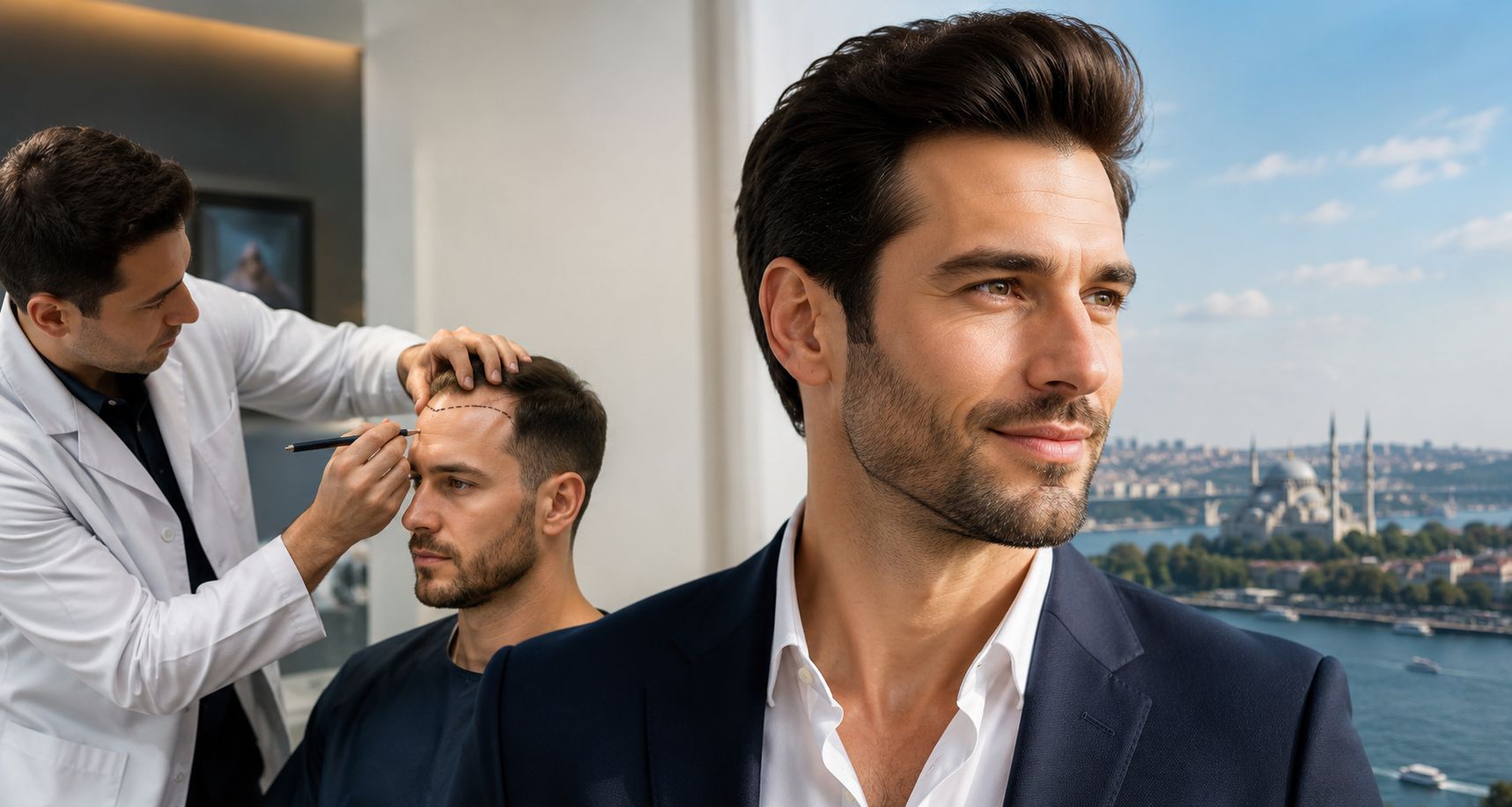
Book a flight to almost any major city and search for a hair transplant there, and the results feel thin, expensive, and oddly apologetic. Do the same search for Istanbul and you drown in options: hundreds of clinics, package deals with hotel transfers, before-and-after galleries stacked ten years deep. Somewhere along the way one city on the edge of Europe and Asia quietly became the default answer to a very personal problem. The question worth asking is not whether Istanbul earned the title, but how it happened at all.
This is not a coincidence, and it is not marketing. The rise of the Istanbul hair transplant capital story is a case study in economics, timing, government policy, and the compounding power of experience. At Hairpol, based in Atasehir on the Anatolian side of the city, we have watched this ecosystem grow up around us, and we think patients make smarter decisions when they understand the forces that built it rather than just the slogans that sell it.
Before the capital: where transplants used to happen
To understand the rise, you have to remember what came before it. Two decades ago, a hair transplant was something you got quietly in a private clinic in London, New York, or a handful of other wealthy cities, and you paid dearly for the privilege. The technique that made modern transplants possible, follicular unit extraction, was still maturing. Results were inconsistent, the old strip-scar reputation lingered, and the whole thing carried a stigma.
Turkey did not invent the procedure, and it is important to be honest about that. What Turkey did was industrialize access to it at exactly the moment the technique became reliable enough to scale. As FUE matured into a repeatable, minimally invasive process, a country with lower costs, a growing private medical sector, and an appetite for medical tourism found itself perfectly positioned to do the same operation for a fraction of the Western price. The timing was almost accidental, but the response was deliberate.
The health-tourism ecosystem and government support
The rise of Istanbul was never just about surgeons. It was about an entire ecosystem that the Turkish state actively encouraged. Beginning in the 2000s, Turkey treated health tourism as a strategic export, offering incentives, streamlining accreditation, and promoting the country as a destination for everything from dental work to cardiac surgery to hair restoration. Hair transplants, being relatively low-risk, high-volume, and cosmetic, were a natural flagship.
Around that policy, a supporting cast assembled: hotels that specialize in recovering medical tourists, drivers who know the clinics by name, translators, agencies, and aftercare hotlines. When a government decides an industry matters and clears the runway for it, private capital rushes in behind. That is exactly what happened here. The reason your Istanbul package includes an airport pickup and a night in a comfortable hotel is not generosity. It is the visible edge of a decade of coordinated infrastructure built to move international patients through the city smoothly.
The economics that made it unbeatable
None of this would have mattered without the numbers, and the numbers are the real engine. A procedure that costs fifteen thousand dollars in the United States can cost a couple of thousand in Istanbul, and that gap is not because the Turkish work is worse. It reflects a genuinely lower cost base: lower wages, lower clinic overheads, and above all a currency that has weakened substantially against the dollar and euro over the years, making Turkish prices feel like a permanent sale to foreign buyers.
Currency economics is the quiet force behind the whole phenomenon. As the lira fell, the effective price of an Istanbul transplant in hard currency dropped year after year, widening the gap with Europe and pulling in ever more international demand. We have written a full breakdown of why a hair transplant is so cheap in Turkey and the real economics behind it, because the honest version of this story is more interesting than the myth that Turkish clinics simply cut corners. Some do. Many do not. The price gap is structural, not a signal of quality.
Volume that built experience
Here is the factor that outsiders underestimate most: sheer repetition. When a city performs an enormous number of the same operation every single week, something happens that money alone cannot buy. Surgeons and technicians accumulate reps at a pace that is simply impossible in a market where a clinic does two transplants a month. A Turkish technician who has extracted grafts on thousands of scalps develops a feel for the work that a part-time operator never will.
This is the compounding advantage at the heart of the Istanbul hair transplant capital phenomenon. Volume creates experience, experience improves outcomes, better outcomes attract more patients, and more patients create more volume. It is a flywheel, and it has been spinning for fifteen years. The best Istanbul clinics are not good despite the volume; in a real sense they are good because of it. The same dynamic, of course, has a dark side we will come to, because volume without standards produces the opposite result.
Clustering and competition drove technique forward
Economists have a word for what happened in Istanbul: clustering. When dozens, then hundreds, of clinics concentrate in one city, they compete not just on price but on technique, and they poach each other’s best staff. Innovations spread fast because the talent pool is shared and mobile. A refinement that improves graft survival at one clinic does not stay secret for long when technicians move between employers and patients compare results online.
That competitive density is why techniques like Sapphire FUE and DHI implantation became standard offerings in Istanbul faster than almost anywhere else. Clinics had to keep improving simply to stay visible in a crowded market. Competition also drove the packaging, the hospitality, and the marketing to levels no single Western clinic could match. The result is a city where the baseline of what a transplant includes, from technique to aftercare kit, has been pushed upward by relentless local rivalry. For patients, that pressure is mostly good news, as long as you can tell serious competitors from noisy ones.
Accreditation and infrastructure caught up
Rapid growth in any medical field raises an obvious worry: is the oversight keeping pace? In Istanbul’s case, the infrastructure did eventually catch up with the demand, even if unevenly. Turkey developed accreditation systems, the health ministry set rules about who may perform procedures and where, and many of the larger clinics pursued international quality standards to reassure foreign patients. A modern airport with direct flights from most of Europe, the Gulf, and beyond made the city trivially easy to reach.
Hospitals and licensed surgical facilities gave the serious operators a foundation the early cowboys never had. This is the part of the story that separates a durable industry from a passing fad. Istanbul did not just get cheap and popular; over time it built the regulatory and physical scaffolding that lets a genuine medical sector function at scale. That scaffolding is imperfect and enforcement varies, which is precisely why choosing carefully still matters, but the difference between the Istanbul of 2010 and today is a real maturation, not just more billboards.
How demand compounded on itself
Demand did not grow in a straight line; it snowballed. Every satisfied patient who flew home with a fuller hairline became a walking advertisement among friends, coworkers, and family. Then social media arrived and poured fuel on the fire. Before-and-after posts, YouTube vlogs of the whole journey, footballers and reality stars openly discussing their trips to Istanbul, all of it normalized what had once been a secret and stigmatized procedure.
Word of mouth is the most powerful marketing there is, and Istanbul had it at industrial scale. The more people who went, the more it seemed like the obvious, unremarkable thing to do, which pulled in the next wave. This is why the phrase Istanbul hair transplant capital stopped being a marketing claim and became a simple description of reality. If you want the buyer’s-eye view of what draws so many people specifically to this city, our piece on what makes a hair transplant in Istanbul a global destination covers the patient experience in depth.
The honest downside: volume also built mills
We would be selling you the same fantasy as everyone else if we stopped there. The very volume that made Istanbul brilliant also made it dangerous, because scale without standards produces factories, not clinics. Some operations run on a model that maximizes patients per day, hands the actual surgery to undertrained technicians with little or no doctor involvement, and treats aftercare as an afterthought. These are the places behind the horror stories, and they exist precisely because the demand is so enormous that even bad clinics stay busy.
Honesty about this is not bad for Istanbul; it is the only way to use the city well. A hair transplant capital is not uniformly excellent any more than a famous restaurant city has no bad restaurants. The concentration that produces world-class work also shelters careless operators in the crowd. The task for you as a patient is not to avoid Istanbul, which would mean paying far more elsewhere for often no better result, but to navigate it with your eyes open and know how to separate the two.
How to tell a serious clinic from a mill
The good news is that the warning signs are fairly consistent once you know what to look for. Be wary of a clinic that will not name the doctor who oversees your surgery, that quotes an implausibly cheap flat price with no assessment of your donor area, or that pressures you to book immediately with a countdown discount. Real medicine involves a proper consultation, a realistic conversation about what your specific hair can achieve, and a named, qualified surgeon accountable for the plan.
Look for transparency about who does what during the operation, clear aftercare that does not vanish once you have paid, and honest photographs of results that resemble your own hair type and loss pattern. A clinic confident in its work will happily tell you the limits of what a transplant can do rather than promising a teenage hairline at forty. At Hairpol, we would rather lose a booking by being candid about your expectations than gain one by overselling, because the patients who understand the trade-offs are the ones who end up genuinely happy years later.
Turkey versus Europe: what the price gap really reflects
A fair question follows all of this: if Istanbul is so much cheaper, does that mean European clinics are simply overcharging for the same thing? The answer is more nuanced than either side likes to admit. Some of the European premium buys genuine value: tighter regulation, easier recourse if something goes wrong, and no long flight during recovery. Much of it, though, simply reflects higher wages and overheads rather than superior surgery.
The reverse is also true. The Istanbul discount is real and structural, but it does not guarantee quality at any given clinic, only that the ceiling of what your money can buy is far higher there. We lay out the trade-offs in detail in our comparison of hair transplant in Turkey versus Europe and the real difference in quality and price. The short version is that the best work in Istanbul rivals anything in the world at a fraction of the cost, while the worst is worse than anything you would find at home. Both facts are true at once, and holding them together is how you choose wisely.
Why the story is about Turkey, not just one city
It is tempting to treat Istanbul as a self-contained miracle, but the city sits inside a national story. Turkey as a whole cultivated the medical-tourism industry, trained the workforce, set the rules, and marketed itself abroad, and Istanbul simply became the concentrated hub where most of that activity landed. The airport, the clinics, the hotels, and the sheer density of talent made it the natural center of gravity, but the foundations are national.
If you want the wider frame, our article on what makes Turkey the global capital of hair transplants zooms out to the country level and explains the policy and industry backdrop that Istanbul then amplified. Thinking of it this way matters for a practical reason: it reminds you that the strengths and the risks are structural features of a whole system, not quirks of one address. The same country that produces the world’s best value in hair restoration also produces its most crowded, uneven marketplace, and understanding the system is how you use it to your advantage.
What all of this means for you today
Strip away the history and here is the practical takeaway. Istanbul became the hair transplant capital of the world through a rare alignment of cheap costs, government backing, enormous volume, fierce competition, and compounding reputation, and that alignment genuinely does give you access to excellent surgery at prices that seem impossible elsewhere. The opportunity is real. So is the responsibility that comes with it, because the same forces that created the opportunity also created plenty of ways to get it wrong.
Your job is not to be dazzled by the low number or scared off by the horror stories, but to treat this like the serious medical decision it is. Choose the clinic, not just the country. Ask hard questions, demand a real consultation, and judge a clinic by its candor as much as its gallery. The city has earned its reputation the hard way, over fifteen years of doing more of this work than anywhere on earth. What it cannot do is choose your clinic for you, and that single decision matters more than the map pin ever will.
Will Istanbul stay on top?
No dominance lasts forever, so it is fair to ask whether the crown is secure. Other destinations have noticed the money and are trying to copy the model, and if the lira strengthens sharply the raw price advantage could narrow. But the harder thing to replicate is not the low cost; it is the fifteen years of accumulated experience, the density of trained technicians, the infrastructure, and the reputation that now pulls patients in almost by default. Those are moats that a newcomer cannot build overnight.
What is more likely than Istanbul losing its place is the market maturing further. As patients grow more informed and the horror stories circulate, demand slowly tilts toward the serious, transparent clinics and away from the cheapest possible option. That is a healthy correction, and it favors the operators who were doing the work properly all along. The Istanbul hair transplant capital title, in other words, is not going anywhere soon, but the version of it that survives will be defined less by rock-bottom prices and more by the clinics that earned their reputation through results. For a patient today, that shift is entirely good news, because it rewards exactly the kind of careful choosing we keep urging you to do.
Before you decide, it helps to see the whole picture: our Turkey treatment process, explained step by step, from first consultation to flying home.
Where Hairpol fits into the picture
We are part of this story, and we try to be an honest part of it. Hairpol grew up inside the Istanbul ecosystem, on the Asian side in Atasehir, and we have built our practice around the belief that the city’s real advantage is best used carefully rather than cheaply. That means proper consultations, realistic expectations, named accountability for your procedure, and aftercare that does not disappear the moment you fly home. You can read more about who we are and how we work on our about page.
If the story of how this city rose has left you curious about whether a transplant here is right for you, the next step is a straightforward conversation, not a hard sell. Explore our approach to hair transplantation and reach out to our team with your questions. You came looking for the reason a single city became the answer to a global problem; the reason is real, but the result you get still comes down to choosing the right people inside it. That is the part we would like to help you get right.
Frequently Asked Questions (FAQ)
How did Istanbul become the world's hair transplant capital?
Through a rare alignment of forces: low costs and a weak currency, active government support for health tourism, enormous procedure volume that built surgeon and technician experience, dense clinic competition that pushed technique forward, and a compounding reputation spread by word of mouth and social media over roughly fifteen years.
Is a hair transplant in Istanbul actually cheaper for a real reason?
Yes. The price gap is structural, not a sign of worse work. It reflects lower wages, lower clinic overheads, and a lira that has weakened significantly against the dollar and euro, which makes Turkish prices feel like a permanent discount to foreign patients rather than a shortcut on quality.
Does high volume mean Istanbul clinics are lower quality?
Not inherently. Volume builds genuine experience, and the best Istanbul clinics are excellent partly because their teams perform the operation constantly. The downside is that huge demand also keeps careless, factory-style clinics in business, so quality varies widely and choosing carefully matters.
What made Turkey support the hair transplant industry?
From the 2000s, Turkey treated health tourism as a strategic export, offering incentives, streamlining accreditation, and marketing the country abroad. Hair transplants, being relatively low-risk, high-volume, and cosmetic, became a natural flagship, and private investment in hotels, transfers, and clinics followed the policy.
How do I avoid a bad clinic in Istanbul?
Be wary of clinics that will not name your surgeon, quote a flat cheap price with no donor assessment, or pressure you with countdown discounts. Look for a proper consultation, honest talk about realistic limits, transparency about who performs the surgery, and aftercare that continues after you have paid.
Is Istanbul really better than getting a transplant in Europe?
The best Istanbul work rivals anything in the world at a fraction of the price, while the worst is worse than you would find at home. European clinics offer tighter regulation and no flight during recovery, but much of their premium reflects higher overheads rather than superior surgery. Choose the clinic, not just the country.
Why did the technique improve so fast in Istanbul?
Because hundreds of clinics clustered in one city and competed on technique as well as price, poaching each other's best staff. Innovations spread quickly through a shared, mobile talent pool, which is why methods like Sapphire FUE and DHI became standard offerings there faster than almost anywhere else.
Is the Istanbul hair transplant reputation just marketing?
No. It began as marketing but became a description of reality. The volume, experience, infrastructure, and results are genuine, spread by satisfied patients and social media. The caveat is that a capital is not uniformly excellent, so the reputation gets you access to great surgery, not a guarantee at any single clinic.
Find this helpful? Add Hairpol as a preferred source on Google.
Get a Free Consultation
Answer a few questions and the medical team will review your situation.
