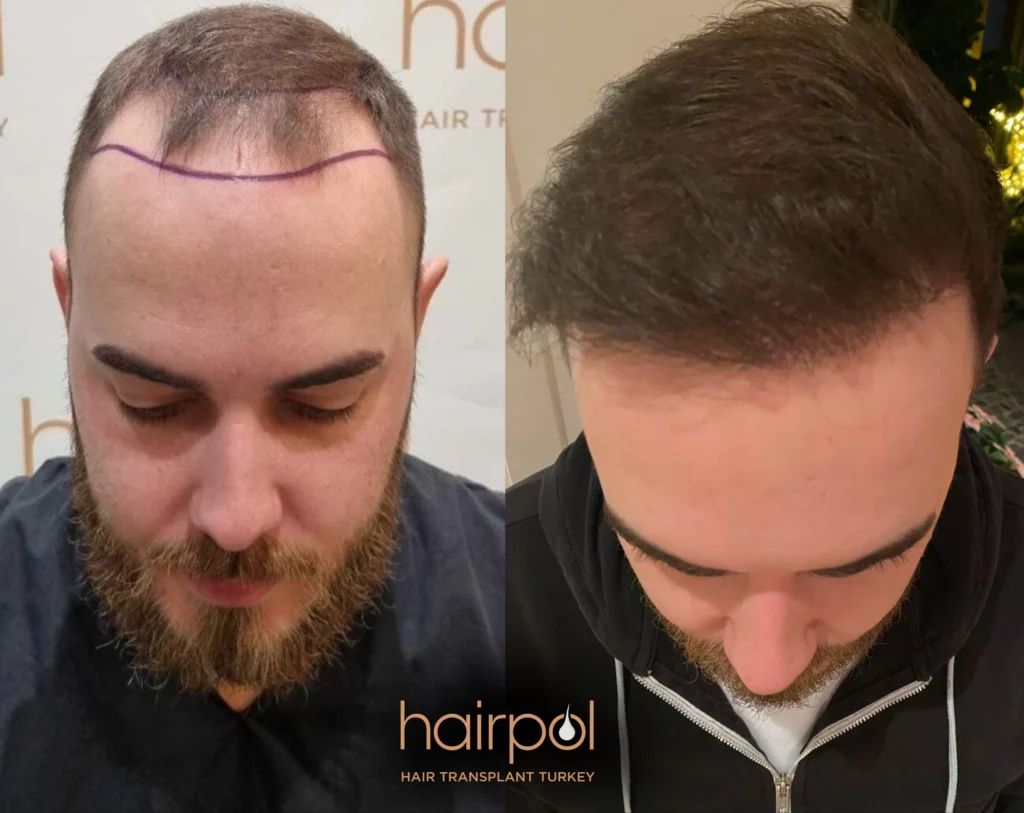
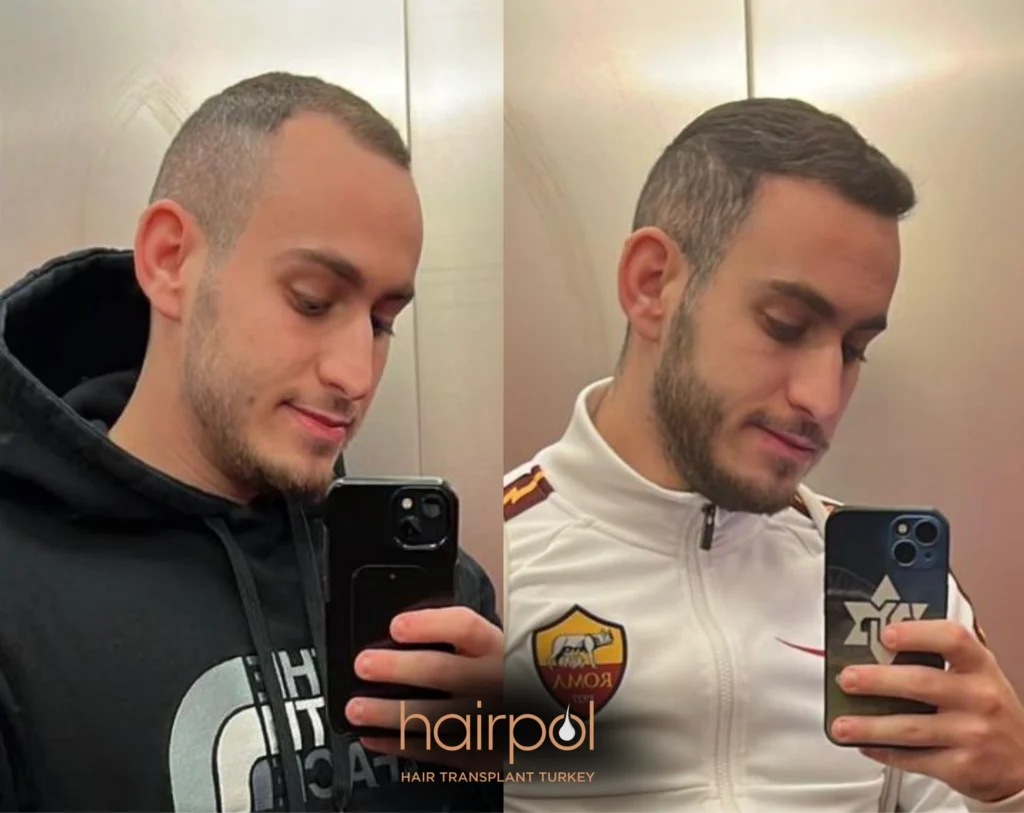
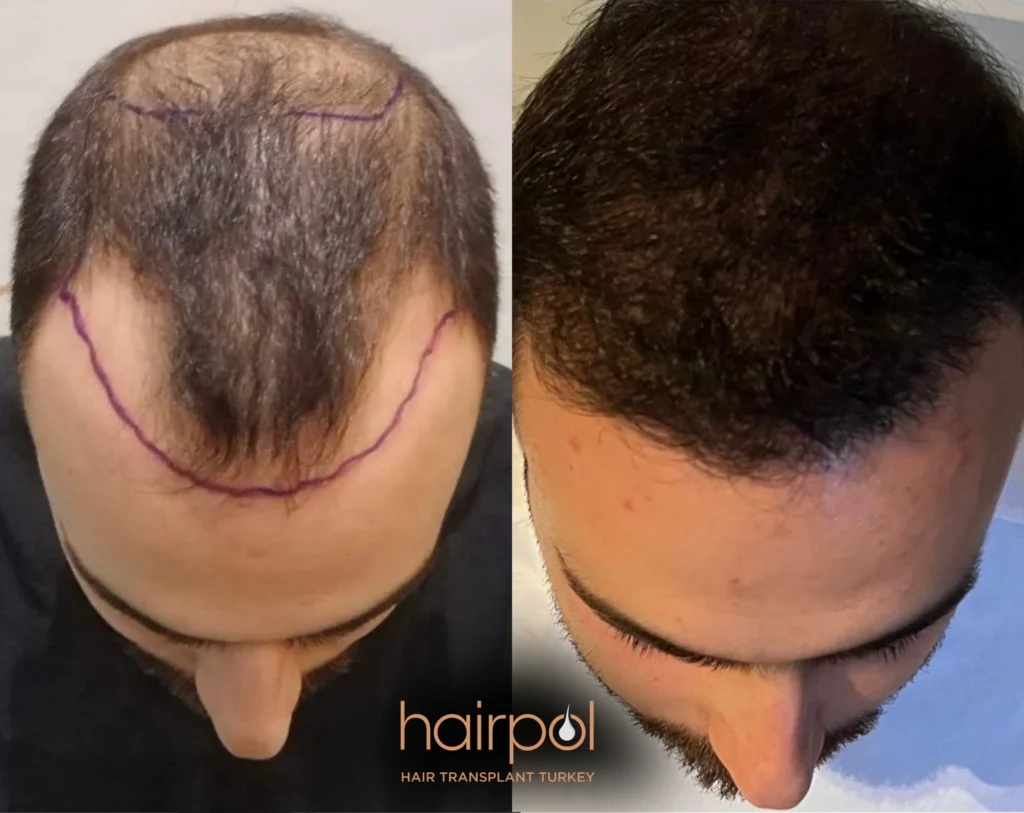
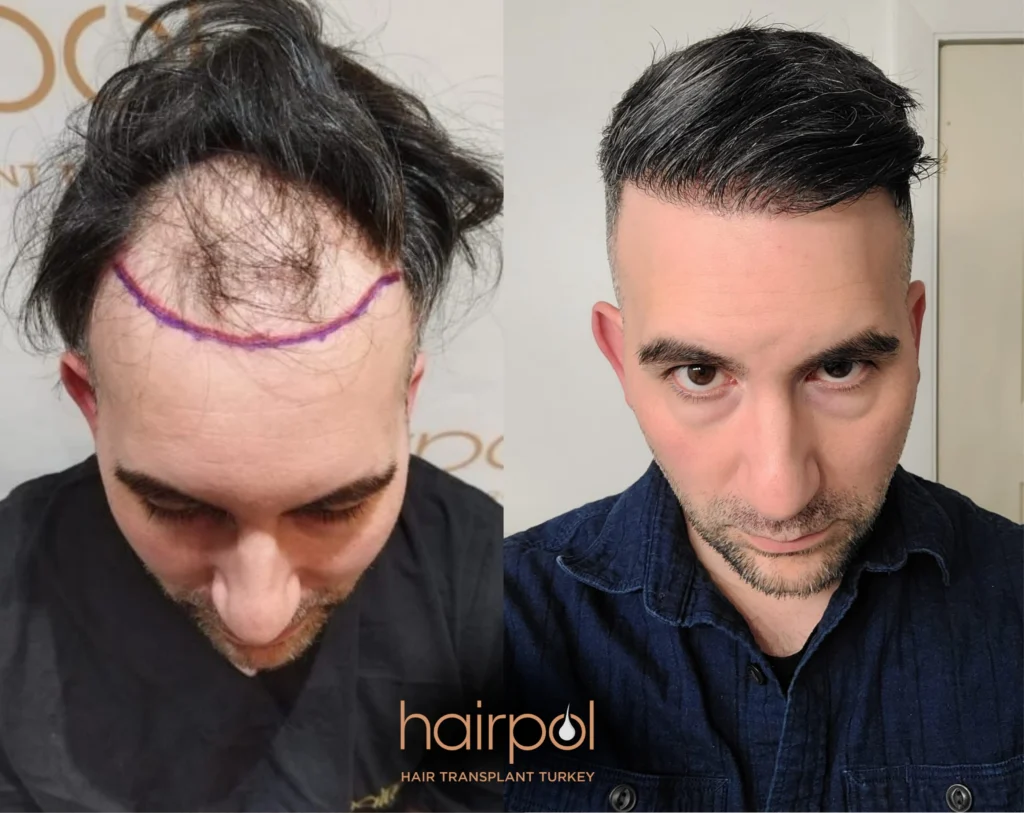
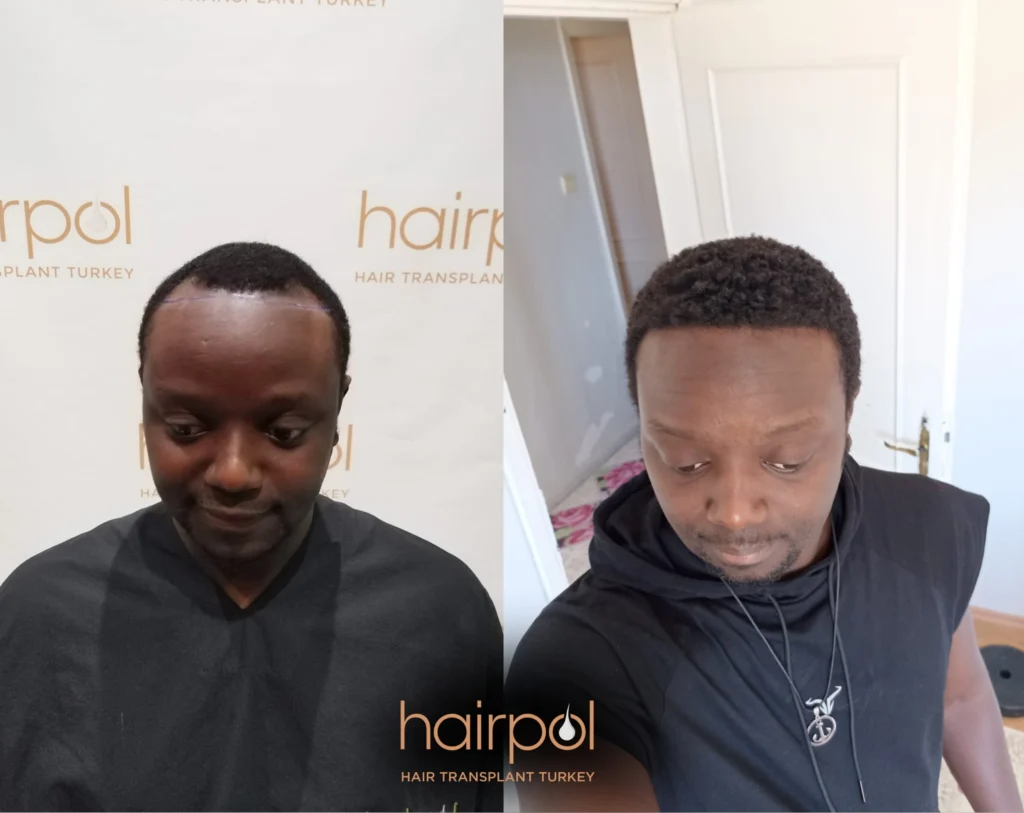
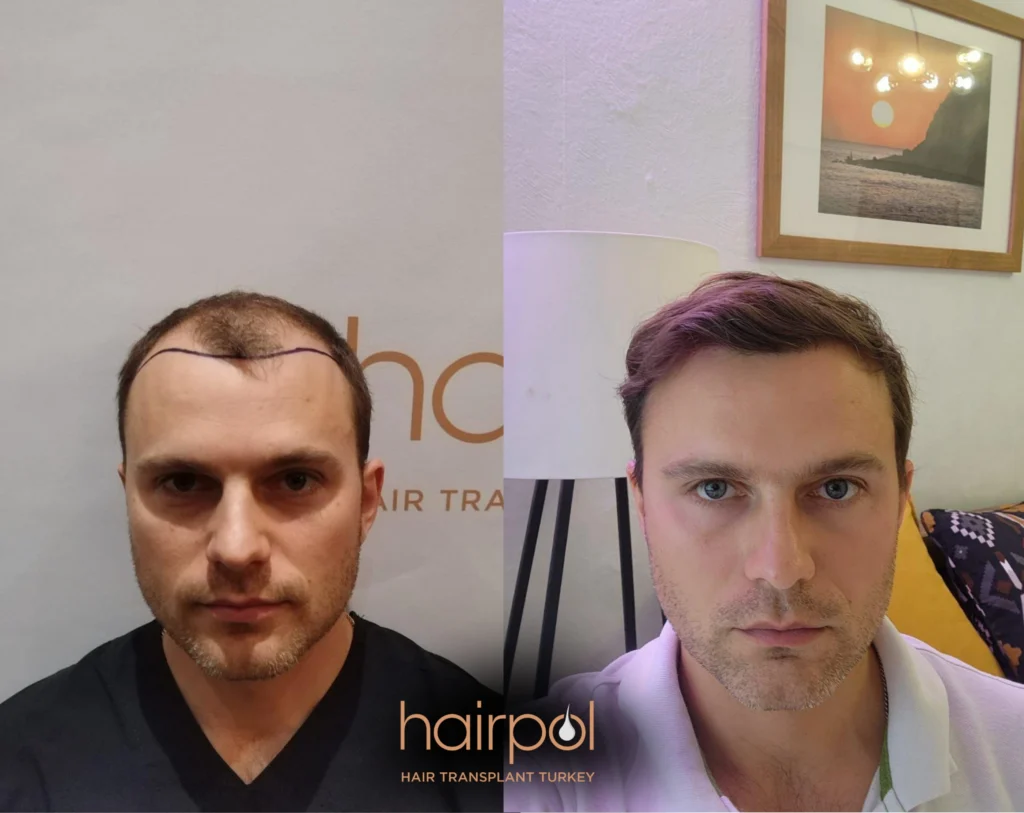
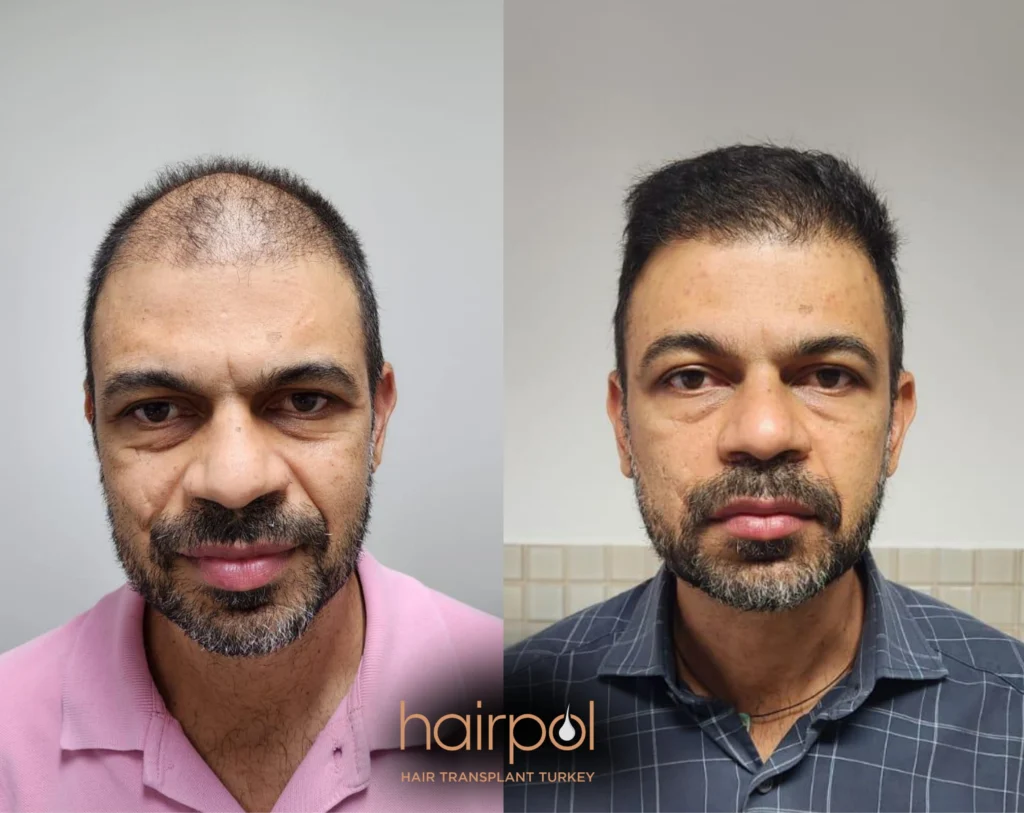
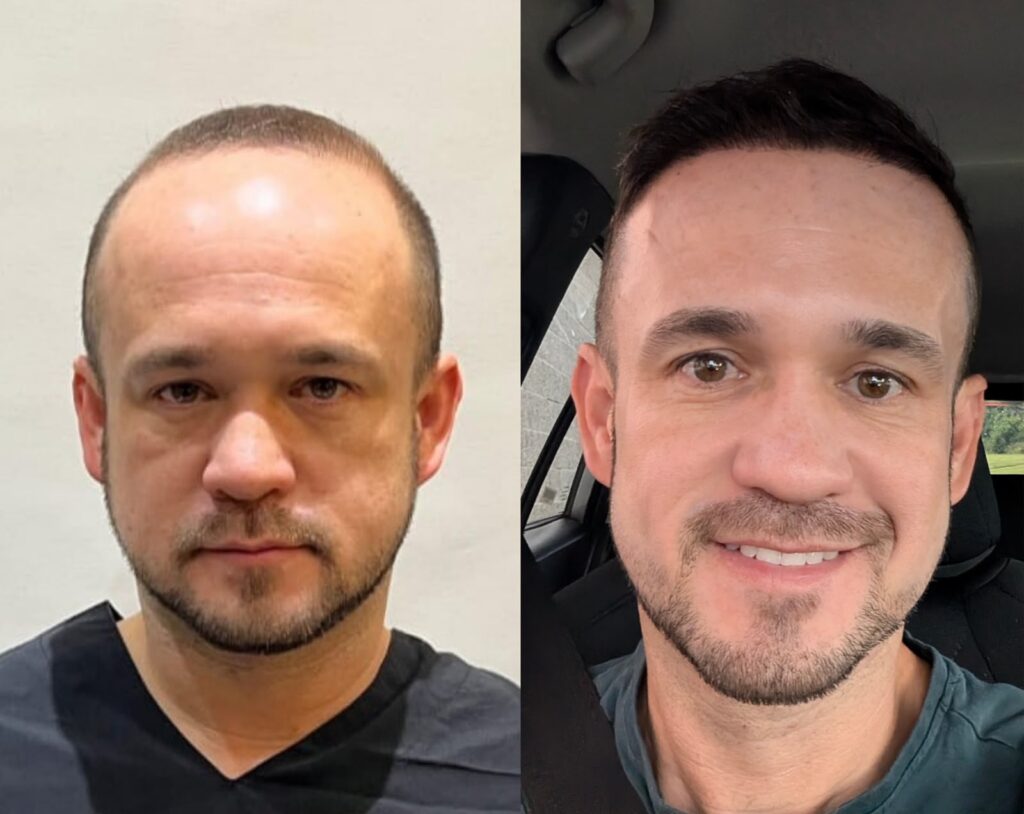
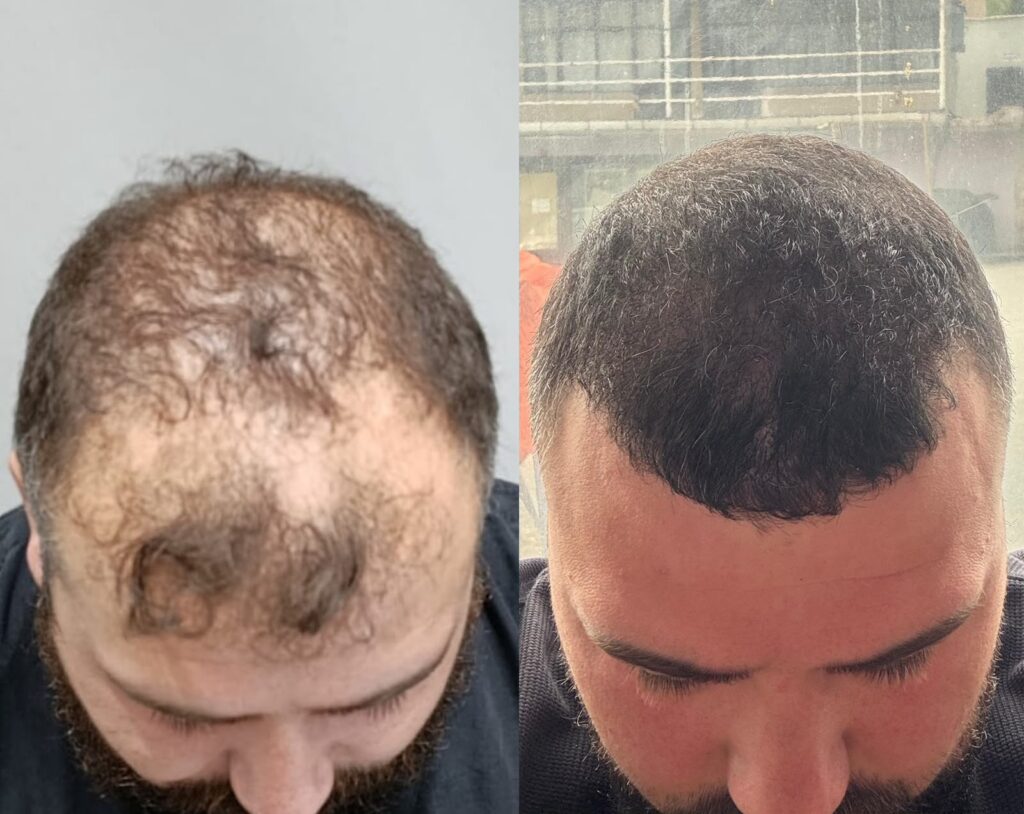
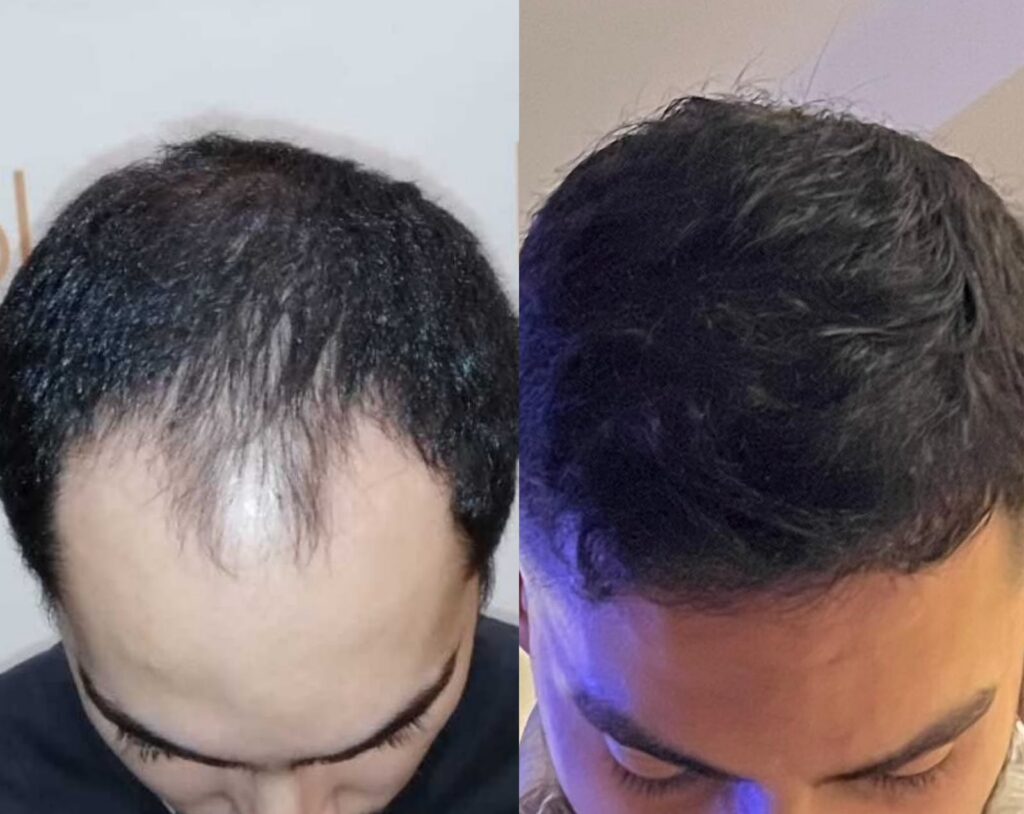
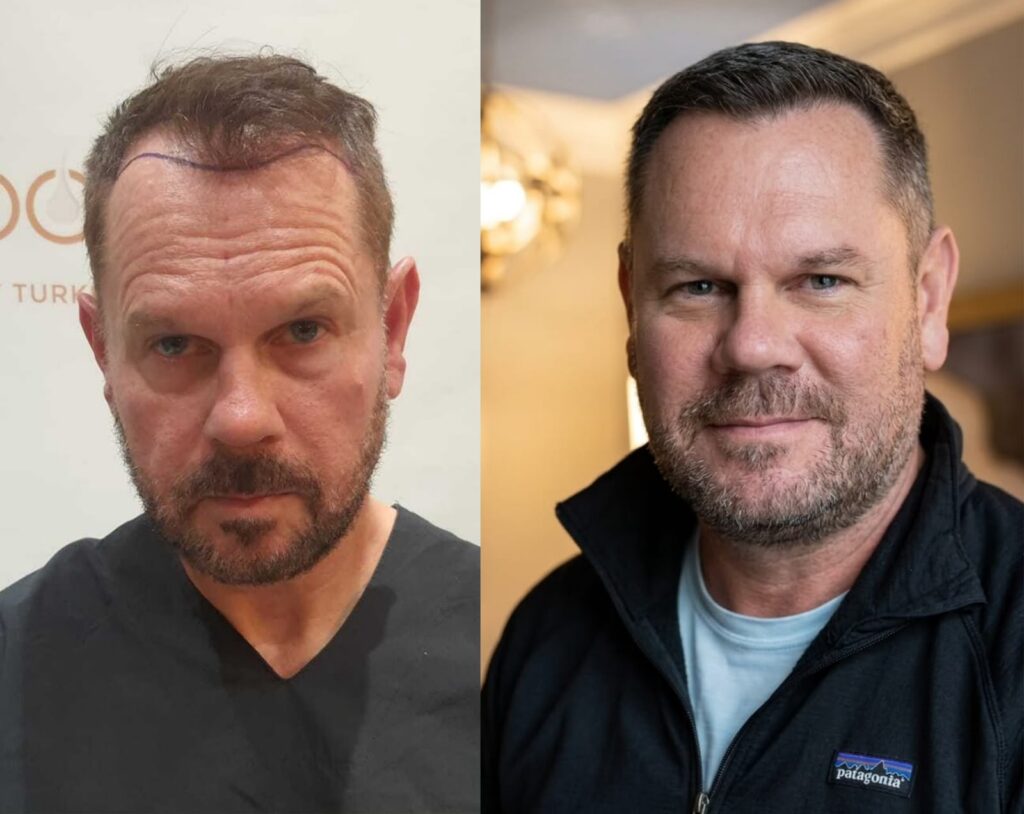
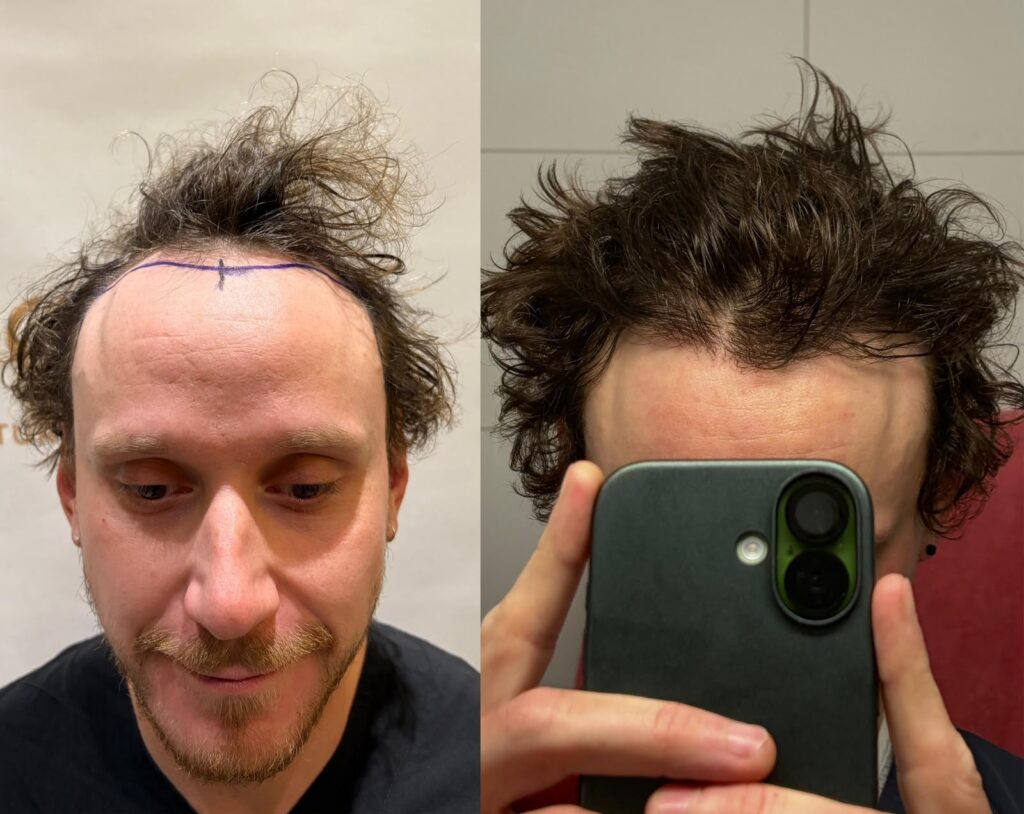
How much is a hair transplant in Turkey? Hair transplant packages in Turkey typically cost less than equivalent treatment in Western Europe or the United States. At Hairpol in Istanbul the usual range is $2,500 to $5,000, depending on graft count and technique. Clinics here quote a package rather than a per-graft rate. Your exact price follows a free hair analysis.
Ask five clinics what a hair transplant costs and you will get five different answers. The variation is not random: it reflects real differences in how long the procedure takes, who performs it, how many grafts are involved, where it happens and what is attached to it afterwards. The difficulty is that a quote rarely shows any of that — it shows a number.
This page explains what sits inside the price of a hair transplant, how clinics arrive at their quotes, what is commonly left out, and how to compare two offers that look different on paper. The range above is a starting point, not a quote for your case: a figure given before anyone has examined your donor area is still a guess, and what follows explains how that guess becomes a confirmed price.
Why there is no single price
A hair transplant is not a fixed product. Two patients walking into the same clinic on the same morning can need very different amounts of surgical time: one a modest hairline refinement, the other coverage across the front and crown with a donor area already harvested once. What you are mostly buying is skilled time, and skilled time varies with the case.
This is also why a published headline figure is usually a starting point rather than a price: if it is not tied to a graft estimate, a technique and a stated scope, it does not tell you what your own procedure will cost.
What is actually inside the price
Surgical time and the people spending it
The largest cost in a hair transplant is the hours of a trained team, and how those hours are distributed matters: how much the surgeon does personally, how experienced the technicians are, how many patients the team handles in a day, and how much time each graft gets. A clinic treating fewer patients per day with more surgeon involvement has a higher cost base than one running several cases in parallel.
Technique and instruments
FUE, Sapphire FUE and DHI differ in equipment and, more importantly, in speed: DHI implanters are slower per graft, meaning more chair time for the same coverage. These differences are modest next to the labour cost, but they are one reason quotes for the same graft number can differ.
The size and difficulty of the case
More grafts means more extraction, more placement and a longer session. Beyond volume, difficulty matters: tight or scarred donor skin, curly and afro-textured hair where the follicle curves beneath the surface, or a previously operated area all slow extraction.
Anaesthesia, monitoring and the facility
Local anaesthesia, sterile preparation, blood tests, single-use instruments and the standards of the room you are operated in all carry cost. This is what patients cannot see in a photograph of a reception area, and the part most likely to be quietly reduced when a price is pushed down.
Medication, products and the first weeks
Prescribed medication, lotions, shampoo and the supplies for your first washes may be included or billed separately. Neither is wrong; not knowing which applies to you is the problem.
Follow-up across the following year
A result cannot be judged for many months, so aftercare is not a formality. Whether follow-up is scheduled, how it works from abroad, how long it lasts and whether it costs extra are all part of what you are paying for.
The variables that move your own price
- The number of grafts your plan requires, and how that estimate was produced
- The technique chosen, and whether more than one is combined in a single session
- Session length, and whether the case is split across more than one day
- Donor characteristics — density, laxity, previous harvesting, scarring
- Hair type, since some textures take significantly longer to extract safely
- Whether this is a first procedure or a correction of previous work
- The composition of the team and how much of the work the surgeon does personally
- Where the procedure takes place
- What is bundled in: transfers, accommodation, interpreting, medication, follow-up
- Exchange rates and how the price is denominated, if you pay from abroad
Want a graft-count estimate first? Try our Hair Graft Calculator.
Cost by technique: FUE, Sapphire FUE and DHI
The three techniques differ mainly in speed, not in outcome quality — the difference is time and workload, not equipment superiority.
| Technique | How grafts are placed | Effect on session length | Effect on price |
|---|---|---|---|
| FUE | Manual punch extraction, grafts placed by hand into pre-made channels | Standard baseline | Same $2,500–$5,000 package range |
| Sapphire FUE | Same extraction, channels opened with a sapphire-tipped blade | Similar to standard FUE | Same $2,500–$5,000 package range |
| DHI | Grafts loaded into a pen-style implanter and placed directly, without pre-made channels | Slower per graft, longer chair time for the same coverage | Same $2,500–$5,000 package range; a longer session can push a quote toward the upper end |
The right technique is chosen for your case — donor characteristics, hair type, the area treated — not for its price. See the graft range calculator on this page for how graft count itself moves within that range.
Cost by area: hairline, crown, full head
| Area | Typical graft range | What changes the price |
|---|---|---|
| Hairline / front | 1,500–3,500 grafts | How far the recession has advanced, and how densely the hairline is designed |
| Crown | 1,500–4,000 grafts | Crown coverage often needs more grafts per visible area than a hairline of the same size — see our crown hair transplant guide |
| Full head (hairline + crown) | 3,500–5,000+ grafts | Combined cases are planned per area and sometimes across more than one session |
| Beard / eyebrow | See the dedicated pages | Different procedure, priced separately — beard transplant cost · eyebrow transplant cost |
All of the above fall within our typical $2,500–$5,000 package; the exact figure is set after a free hair analysis.
How clinics quote, and the trap in each model
Per graft
A price per graft looks transparent, which is exactly why it can mislead. Two things need checking. First, how a graft is counted: a follicular unit can hold one to four hairs, so a graft-based quote says nothing about how many hairs you actually receive. Second, who decides the final count — if the number is revised upwards during the procedure, a low per-graft rate can end at a high total. If you want to see how graft count maps to a typical package price, use our graft range calculator.
Per session or fixed scope
A session price is simpler, but “a session” needs defining. Ask what the upper limit on grafts is, what happens if your case needs more, and whether a second day counts as a second session at full price.
Package
Packages bundle the procedure with hotel nights, transfers and sometimes interpreting. They are convenient, and they make comparison harder, because the same total can represent very different amounts of surgery. Ask what the package would cost with the travel elements stripped out. If nobody can tell you, you are being quoted a holiday rather than an operation.
Building a like-for-like comparison
Before comparing two quotes, make sure each states the following. A clinic that will not put them in writing has answered you.
- The estimated graft number and the basis for it
- How grafts are counted and by whom
- The technique proposed, and why it was chosen for your case
- Who performs extraction, who opens channels and who places grafts
- How much of the procedure the surgeon performs personally
- How many patients the team treats on the same day
- The facility where the surgery takes place
- Whether blood tests, medication and aftercare products are included
- What follow-up consists of, over what period, and how it works from abroad
- What happens if more grafts prove necessary during the procedure
- What the clinic will and will not do if the outcome falls short of the plan
- An explicit list of what the quote excludes
What quotes commonly leave out
- Flights, and any change fees if your dates move
- Extra hotel nights beyond the package
- Airport transfers outside the standard arrangement, and taxis in the city
- Medication you need to buy once you are home
- Non-surgical treatments recommended alongside surgery, such as PRP
- Long-term medical therapy for your untreated hair — an ongoing cost rather than a one-off
- Time away from work, for many patients the second largest number in the exercise
- A possible further session, for additional coverage or because your own hair loss continues
- Travel insurance, and whether it covers anything connected to elective surgery abroad
Why the cheapest quote deserves the most scrutiny
Prices can be lower for good structural reasons — staffing costs, facility costs and exchange rates genuinely differ between countries. That is not the same as one clinic being cheaper than its neighbours on the same street, offering the same procedure.
When a quote sits well below the local range, something has been reduced, and it is worth asking what. The candidates are the surgeon’s personal involvement, the time given to each graft, the number of patients treated simultaneously, the experience of the technicians handling your follicles, preparation and sterility, and the aftercare you receive once you have flown home. None of these appear in a price list.
An unusually low entry price is also sometimes a starting figure that rises on the day, once a graft count is revised or additions are proposed while you are already in the chair. A quote you cannot get in writing, itemised, before you travel is not a quote.
The strongest argument against buying on price alone is what a correction costs. Donor hair is finite and non-renewable. A poorly planned hairline, an over-harvested donor area or grafts placed at the wrong angle can be improved by a second surgeon, but not always fully, and that procedure is harder and more expensive than the first would have been. The most costly hair transplant is the one that has to be redone.
Hair transplant cost by country: Turkey, the UK, Germany and the United States
The figures below are the ranges each country’s own sources publish. They are not like-for-like — a British range covers private clinics of every standard, a German one is built per graft, and ours is a package — which is exactly why a single headline number is a poor way to choose.
| Country | Published cost range | What that figure refers to |
|---|---|---|
| Turkey — Hairpol, Istanbul | $2,500 – $5,000, typically | A treatment package, varying with graft count and technique. The exact figure is set after a free hair analysis, and what it includes is itemised in your written quote. |
| United Kingdom | £1,000 – £30,000 | Private treatment. The NHS does not offer hair transplants, as it classes them as cosmetic surgery. The range reflects the extent of hair loss, the procedure and the clinic. |
| Germany | €3 – €8 per micrograft — roughly €4,500 – €12,000 for 1,500 grafts | The surgery itself, normally priced per graft rather than as a package. Germany’s aesthetic-surgery society puts a typical procedure at 500–3,000 grafts. |
| United States | $4,000 – $15,000 | The procedure, varying with method and clinic. Insurance rarely covers it, since it is treated as cosmetic. |
Sources: NHS — Hair transplant (UK); DGÄPC, the German Society for Aesthetic Plastic Surgery — patient guide (Germany, which also gives an overall range of €2,000–€10,000); Healthline, medically reviewed (United States). Each figure is shown in the currency its source publishes; exchange rates move, so converting them yourself on the day is more reliable than any conversion printed on a page.
Why the gap between countries is so large
Three things explain most of it, and none of them is a claim about anyone’s quality.
The first is the cost base. Staff, facility and operating costs, and the exchange rate, are genuinely lower in Turkey, and a clinic performing the procedure every working day spreads its fixed costs across far more cases than one performing it occasionally. These are structural differences, not discounts.
The second is that the numbers are not measuring the same thing. A German quote is usually assembled per graft; a Turkish one is quoted as a package. The same headline figure can therefore describe very different scopes — which is why the checklist earlier on this page asks what a quote includes before it asks what it costs.
The third is how wide the ranges are inside each country. The NHS puts UK treatment anywhere between £1,000 and £30,000. The gap between the cheapest and the most expensive clinic in one country is larger than the gap between countries. Where you go matters; how big your case is and which clinic you choose matter more.
Two things follow. If you travel, compare totals rather than procedure fees — flights, accommodation and time away from work belong in the sum. And a lower price is not, by itself, evidence of anything about the care: it tells you what the clinic charges, not what it does. The questions listed above are what separate the two.
Hair transplant cost in the USA vs Turkey
In the United States, a hair transplant typically costs between $4,000 and $15,000, depending on method and clinic, and is rarely covered by insurance since it is treated as cosmetic (Healthline, medically reviewed — source above). At Hairpol in Istanbul, packages for a comparable procedure typically fall between $2,500 and $5,000. The gap mainly reflects staffing, facility and operating costs rather than the surgery itself. For a wider regional comparison, see Hair transplant: Turkey vs Europe, the real difference in quality and price.
The total cost of treatment abroad
If you are weighing treatment at home against treatment abroad, compare totals rather than procedure fees: on one side the procedure, medication and follow-up; on the other the same plus flights, accommodation, transfers, time off work and a possible return trip.
For many patients the total is still meaningfully lower abroad, which is why the route exists — but the honest comparison is total against total. There is a non-financial column too: at home, follow-up is a short journey away; abroad it is remote, which puts more weight on the clinic’s aftercare.
Is a hair transplant covered by insurance?
Hair transplantation for pattern hair loss is generally treated as an elective aesthetic procedure and is typically not covered by health insurance. Coverage is sometimes considered differently where hair loss follows trauma, burns or a specific medical condition, but that depends entirely on your policy and country. Check the wording with your insurer rather than relying on what a clinic tells you.
Travel insurance deserves the same attention: many policies exclude anything connected to elective surgery abroad, including complications arising from it. Read the exclusions before you travel.
Where costs can appear across the first year
| Stage | What happens | Where an additional cost can arise |
|---|---|---|
| Before the procedure | Photograph assessment, examination, blood tests | Tests and consultation may sit inside or outside the quote |
| Procedure day | The session itself | Revisions to the graft count, or additions proposed on the day |
| First weeks | Washing routine, scabbing, swelling settling | Medication, lotions and shampoo; extra hotel nights if plans shift |
| Months 1-4 | Shedding of transplanted hairs, then early regrowth | Ongoing medical therapy for untreated hair, if recommended |
| Months 6-9 | Density becomes visible; remote follow-up continues | Usually nothing, provided follow-up is included |
| Month 12 onward | The result settles and can fairly be assessed | A further session, if more coverage is planned or your loss has progressed — a separate cost |
Timelines vary from person to person and depend on medical evaluation, the area treated and your hair characteristics.
Where value actually comes from
What determines whether a hair transplant still looks good in ten years does not appear as a line item on an invoice: the planning conversation, a hairline designed for the age you will be later rather than the one you are now, careful management of a finite donor supply, honest expectation setting, and aftercare you can actually reach at month three.
Price is a legitimate factor — it is simply the wrong first one. Work out which clinics you would trust with your donor area, then compare prices between those.