
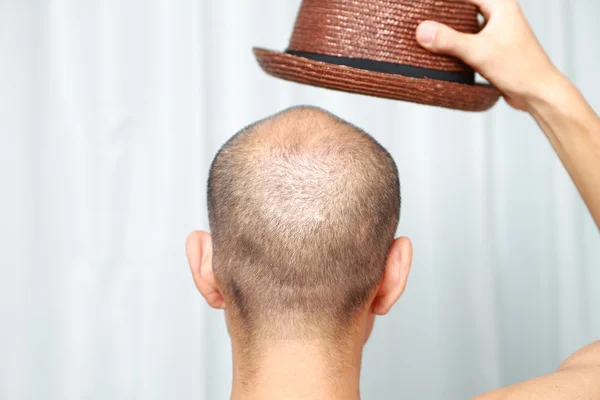
The first question a lot of people ask after surgery has nothing to do with growth or density. It is quieter and more practical than that: can I just put a hat on? You are walking out of the clinic with a red, crusted scalp that you are suddenly very aware of, and every instinct says to cover it. The problem is that the one thing you most want to do in those first days is also the thing most likely to cost you grafts.
So let us talk about hats honestly. Not with a blanket ban and not with a careless green light, but with the real timeline: when a hat is genuinely risky, when it becomes safe, and which styles protect your result versus which ones quietly sabotage it. At Hairpol, this is one of the most common conversations we have in the days after a procedure, and the answer is more nuanced than yes or no.
Why the urge to cover up is so strong
Nobody prepares you for how exposed you feel. After a hair transplant, the recipient area is dotted with tiny crusts, the donor zone at the back is shaved and tender, and the whole scalp can carry a pink flush that reads like sunburn from across a room. If you flew in for the procedure, you may be navigating a hotel lobby, an airport or a crowded street feeling like everyone can see exactly what you just had done.
That self-consciousness is completely normal, and it is exactly why hats become such a loaded topic. A cap feels like the obvious fix. But the grafts sitting in your recipient area are not anchored yet. In the first days they are held in place by nothing more than a delicate clot and the snug fit of the channel they were placed in. Anything that presses, drags or rubs across them can dislodge a graft before your body has had a chance to secure it.
Understanding that tension, the very real desire to cover up against the very real fragility of new grafts, is the whole reason the timing matters so much.
What actually happens to a graft in the first days
To know why hats are risky early, it helps to picture what is happening under the surface. When a follicle is harvested and implanted, it is placed into a small channel in the recipient skin. For roughly the first ten days, that graft is anchored by a fragile fibrin clot and by the tight fit of the site itself, not by living, healed tissue. Blood vessels are only just beginning to grow in and connect to the follicle, a process called revascularization.
During this window, friction is the enemy. A hat brim that sweeps across the hairline, a beanie that hugs the crown, a cap you tug on and off a dozen times a day, each of these can catch a graft and pull it out of its channel. Lose a graft in the first days and it does not grow back. It is simply gone, and with it a small piece of the density you paid for and planned around.
This is the same fragility that makes the early sleeping and washing rules so strict. If you want the fuller picture of that first stretch, our day-by-day guide to the first 14 days maps out exactly what is happening and when.
The honest answer: how long before any hat is safe
Here is the straight version people want. For most patients, the safest approach is to avoid all hats for at least the first ten days, and ideally to wait until your clinic confirms the grafts are secure and the crusts have cleared, which is usually somewhere around the ten to fourteen day mark.
That is the default rule, and it exists for a reason. By around day ten to twelve the crusts have typically flaked away during gentle washing, the grafts have begun to root, and the risk of dislodging one with light contact drops sharply. It does not vanish overnight, but the window of real danger is the first ten days, and everything about hats should be built around protecting that window.
At Hairpol, we would always rather you feel exposed for ten days than lose grafts you waited months to plan. The self-consciousness passes. A missing follicle does not come back.
The one exception: when a clinic gives you a hat
There is a nuance worth naming, because it confuses people. Some patients are sent home from the procedure with a specific, loose surgical hat or a very roomy fisherman-style hat that sits high off the recipient area. That is not a contradiction of the rule. It is a controlled exception.
A hat provided or approved by your surgical team is chosen precisely because it does not touch the grafts. It is oversized, it perches rather than presses, and it is meant for the drive or flight home, not for daily wear. The critical distinction is contact. A hat that hovers above the recipient area protects it from sun and stray bumps; a hat that rests on it endangers it. If your clinic hands you a hat, follow their instructions on exactly how and when to wear it, and do not swap it for your own snug cap.
When in doubt, message your coordinator. This is the kind of specific question your Hairpol team would far rather answer than have you guess at.
Why a normal cap is riskier than it looks
An everyday baseball cap seems harmless, which is exactly the trap. The inner seam of the band sits right along the hairline, one of the most heavily grafted and most visible zones. Every time you pull the cap on, the band drags backward across those front grafts. Every time you take it off, it drags forward. Multiply that by a normal day of habitual on-and-off and you have dozens of small friction events across the most delicate part of your result.
Fitted caps are the worst offenders because they grip. A snug band applies steady pressure to the crown and hairline and can trap heat and sweat against healing skin, which is its own problem in the early weeks. Even an adjustable cap, worn too soon, invites the habit of yanking it on without thinking. The issue is rarely the hat sitting still. It is the movement, the friction of putting it on and taking it off, that does the damage.
Beanies, the sweat problem, and why snug is the enemy
Beanies deserve their own warning. They are the single most tempting option in cold weather and among the most risky, because their entire design is to hug the head. A beanie sits directly on the crown and hairline and moves against the grafts every time it shifts. Worse, the knit traps heat and moisture, and a warm, sweaty recipient area in the first weeks is an invitation to irritation and, in the worst case, infection.
Sweat is an underrated villain here. Healing skin does not want to be damp and occluded. Whether it comes from a tight beanie, a workout or a hot day, moisture trapped against fresh grafts slows healing and raises the risk of problems. This is part of the same reason we ask patients to hold off on intense exercise early on, which our guide on when you can train at full intensity again covers in detail. If you must wear something on your head in the cold after the safe window opens, loose and breathable beats snug and warm every time.
What to wear instead in the first two weeks
If you genuinely cannot avoid being seen and the weather is mild, the goal is coverage without contact. A very loose, oversized hood that drapes rather than grips can shield you from view and sun without pressing on the recipient area, as long as you are careful pulling it up and down. Some patients simply plan their first two weeks around staying in, working from home, or scheduling their procedure for a stretch when they do not need to be camera-facing.
The honest truth is that the cleanest solution to the hat question in the first ten days is not a better hat. It is patience. There is no accessory that is truly safe against fresh grafts, only degrees of risk. Planning your recovery so you do not need to cover up removes the temptation entirely, and it is what we quietly encourage most patients to arrange before they ever fly in.
Week two onward: easing back into hats
Once you pass the ten to fourteen day mark and your clinic confirms the grafts are secure, you can begin reintroducing hats, but with a light touch. Start with the loosest option you own. A soft, oversized bucket hat or a roomy fisherman hat that sits high off the scalp is the gentlest way back in. Put it on and take it off slowly, lifting it straight up rather than dragging it across the hairline.
Even in this phase, keep wear time short and avoid anything that grips. The grafts are rooting but the area is still healing beneath the surface, and the transplanted hairs are about to enter their shedding phase anyway. Treat weeks two through four as a gradual reintroduction, not a return to normal. If a hat leaves a mark, feels tight, or makes your scalp sweat, it is too much too soon.
When can you wear any hat you like?
By around the one-month mark, most patients can wear ordinary hats again, including caps, provided the recipient area has healed on the surface and there is no lingering redness or scabbing. The grafts are anchored by now, and the friction that would have been catastrophic in week one is no longer a threat to their survival.
Two caveats keep this from being a free pass. First, comfort is your guide: if a hat still feels tight or irritates the skin, give it more time. Second, sun protection becomes the new priority. Once you are cleared for hats, a hat is actually one of the best tools you have for shielding the healing scalp from UV, which matters for the color and quality of the skin in the recipient area for the better part of the first year. In that sense, the hat goes from villain to ally.
Hats, shedding and not judging your result too early
There is a psychological trap tucked inside the hat timeline. Right as you are finally cleared to cover up comfortably, the transplanted hairs start to fall out. This is shock loss, a normal and temporary phase where the moved follicles shed their shafts before regrowing, and it can make the recipient area look thinner than it did on day one. Some patients suddenly want a hat for a very different reason: to hide a result they think has failed.
It has not failed. The follicles are alive and resetting beneath the skin, and the real growth arrives over the following months. If you find yourself reaching for a hat out of disappointment rather than protection, that is worth naming. Our timeline on the full recovery from day one to twelve months explains why the early months look the way they do, and why a hat should be about protection, not concealment.
How the technique changes the picture slightly
The core rules apply to everyone, but the technique you had shifts the details at the margins. With DHI, grafts are implanted directly and often sit densely and precisely, which does not change the ten-day fragility window but does mean the recipient area can look crowded with crusts early on. With Sapphire FUE, the channels are opened with fine sapphire blades, and the surface healing tends to be tidy, but the same no-friction rule governs the first days regardless.
What matters more than technique is your individual healing and your surgeon’s specific guidance. Graft anchoring speed varies from person to person, which is exactly why the clinic’s go-ahead, not a generic internet number, is the signal you should wait for before trusting a hat against your hairline.
The small habits that protect your investment
Most graft loss from hats does not come from one dramatic mistake. It comes from small, thoughtless habits: the reflex of yanking a cap on before leaving the house, tugging a beanie down against the cold, resting a hood back and forth while it drags on the hairline. In the first two weeks, the safest scalp is an uncovered one, handled gently and kept clean according to your aftercare plan.
Think of the hat question as a stand-in for the whole early-recovery mindset. The grafts you protect in the first fortnight are the density you keep for life. A few weeks of going bare-headed, or wearing only what your clinic approves, is a small price for a result that took planning, money and patience to build. If you are ever unsure whether a specific hat is safe yet, ask us before you wear it rather than after.
Sun, hats and the recipient area color
There is a second reason the hat conversation stretches beyond the first weeks, and it is about skin rather than grafts. The recipient area heals with new, delicate skin that is unusually sensitive to ultraviolet light for months. Sun exposure on that skin too early can darken it, provoke redness, and in some cases affect how evenly the area matures. A hat, once you are cleared to wear one, becomes the simplest, most reliable barrier against that.
So the arc of the hat story is not really a ban followed by permission. It is a handover of roles. In the first ten days a hat is a threat to your grafts. From roughly week four onward it becomes one of your best defenses for the healing skin beneath them. The trick is knowing which chapter you are in, and treating the accessory accordingly. When in doubt about sun protection in particular, a wide-brimmed style shields more of the scalp than a cap.
Reading your own scalp before you cover it
Beyond the calendar, learn to read the signals your own scalp gives you, because healing is not identical for everyone. Lingering redness, visible scabbing, tenderness when you touch the area, or a scalp that feels hot and tight are all signs that a hat is still too soon, regardless of how many days have passed. A recipient area that looks calm, has shed its crusts, and no longer flushes pink is telling you the surface has settled.
This is also why we ask patients not to benchmark themselves against a friend’s recovery or a forum post. Your donor density, your technique, your skin type and even your age all nudge the timeline. The safest habit is to combine the general rules here with your clinic’s direct feedback at your check-ins. If your scalp and your Hairpol team both say the area is ready, a gentle hat is fine. If either says otherwise, wait.
At Hairpol, our team walks every patient through exactly when and how to reintroduce hats around their specific procedure, because the honest answer depends on your healing, not a one-size rule. If you are planning a procedure or already in recovery and second-guessing what is safe to wear, reach out to Hairpol and let our specialists guide you through a recovery that protects every graft. You can start by exploring our approach to hair transplantation and the aftercare that comes with it.
Find this helpful? Add Hairpol as a preferred source on Google.
Get a Free Consultation
Answer a few questions and the medical team will review your situation.
