
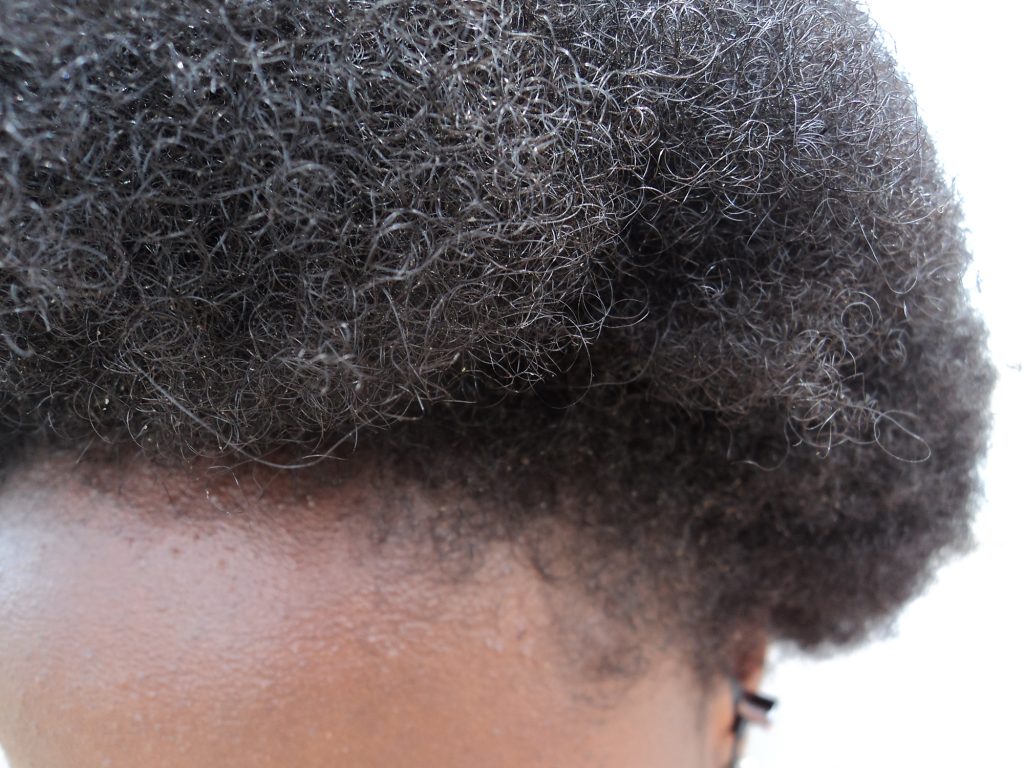
Ask a surgeon what makes a hair transplant difficult and most will start talking about design, or donor supply, or the patient’s expectations. Those matter. But there is a category of case where the difficulty starts a full millimetre below the skin, before anyone has drawn a line on your forehead, and it has nothing to do with artistry. It has to do with the shape of the follicle itself.
If you have afro-textured hair, type 4 coils, tight Z-patterns, hair that shrinks to a quarter of its true length when it dries, then the thing that gives your hair its character is also the thing that makes surgery harder. And the honest version of that sentence is one you rarely hear in a sales consultation. At Hairpol, we would rather you understood the mechanics up front, because understanding them is what tells you whether the clinic in front of you actually knows what it is doing.
The Curl Doesn’t Stop at the Skin
Here is the detail that reframes everything. In straight hair, the follicle sits in the scalp more or less like a nail in a plank. It goes in at an angle, it stays on that angle, and the hair that emerges continues in the same direction. You can see the exit angle on the surface and make a reasonable guess about what is happening underneath.
In tightly coiled hair, you cannot. The follicle curves beneath the skin. It typically enters at a sharp angle and then bends, often described as a C-shape or a hook, sometimes with a secondary bend deeper down. The visible hair on the surface tells you where the shaft came out, not where the bulb sits. Two follicles emerging from adjacent points on the scalp can have bulbs pointing in noticeably different directions.
The elliptical cross-section of the hair shaft reinforces this. Afro-textured hair is not round in cross-section; it is flattened, ribbon-like, which is part of why it coils. That flattened shaft is also structurally weaker at the bends, which is why it is more prone to breakage during ordinary grooming, and why it behaves differently under a surgical punch.
So the surgeon’s core problem in an afro hair transplant is a blind one. You are aiming a cylindrical instrument at a curved structure you cannot see, and you have to guess the curve correctly.
Transection: The Number That Decides the Result
Transection means cutting the follicle instead of extracting it whole. The punch descends, the follicle curves away from the punch’s path, and the blade shears through the shaft or the bulb. What comes out is a fragment. A transected graft may not grow at all, or may grow a thin, weak hair that never matches the rest.
In straight Caucasian or Asian hair with an experienced team, transection rates in the low single digits are normal and expected. In tightly coiled type 4 hair, published figures and clinical experience both show substantially higher rates in inexperienced hands, sometimes climbing past twenty or thirty percent. That is not a small difference in polish. That is one graft in four or five simply failing to produce hair, in a procedure where you have paid for every graft and, more importantly, where every graft came out of a donor area that will never regenerate.
This is the real reason afro-textured hair has a reputation for unpredictable transplant outcomes. The hair is not less transplantable. It is less forgiving of a surgeon who treats it like any other case. When a clinic tells you the technique is identical regardless of hair type, they are telling you something useful about themselves.
Punch Selection Is Not a Detail
In standard FUE, small punches are prized. A 0.7 or 0.8 mm punch leaves a smaller donor dot, heals faster, and lets the surgeon harvest more densely without visible thinning. Smaller is generally better, and clinics advertise it accordingly.
In coiled hair, that logic inverts. A narrow punch has almost no margin for error around a curving follicle; the follicle bends, meets the inner wall of the punch, and is cut. Afro cases usually require a wider punch, commonly in the 0.9 to 1.1 mm range, sometimes wider still, precisely so the curve has room to sit inside the cylinder untouched.
That is a genuine trade-off, and we say so plainly. A wider punch means a slightly larger donor wound and slightly more visible healing in the extraction zone. What you buy with it is graft survival. A 0.8 mm punch that destroys a quarter of your grafts is a far worse deal than a 1.0 mm punch that delivers nearly all of them intact.
Punch design matters as much as diameter. Blunt or hybrid-edged punches tend to push tissue aside and follow the follicle rather than slicing across it, which suits curved follicles better than a sharp cutting edge. Depth control matters too: going deep enough to free the graft, but stopping before the punch reaches the region where the follicle bends hardest.
Manual Control Beats Speed
Motorised and high-speed punches are efficient. Efficiency is exactly the wrong priority here. Extracting curved follicles reliably requires the surgeon to feel resistance, adjust angle mid-extraction, and abandon an approach that is not working before it damages the graft. That kind of feedback is available in slow, controlled, largely manual extraction and it disappears at speed.
The practical consequence is that a well-run afro case takes longer per graft than a comparable straight-hair case. If a clinic quotes you the same session length and the same graft count timeline they quote everyone else, either they have not thought about your hair type or they intend to work at a pace that will cost you grafts.
At Hairpol, the pace of an afro session is set by the tissue, not by the schedule. Some scalps release grafts easily; some fight every extraction. The team calibrates on the first small batch of grafts, inspecting them under magnification to see how many are intact, and adjusts punch size, angle and depth from what those first grafts reveal. That calibration step is not optional in coiled hair. It is the whole game.
The Advantage Nobody Explains: Coverage Per Graft
Everything above is the difficult half. Here is the half that works powerfully in your favour, and it is genuinely one of the best-kept secrets in hair restoration.
Coiled hair covers more scalp per hair than straight hair does. A tight coil occupies volume in three dimensions instead of lying flat. It also creates shade and shadow across the scalp rather than allowing light to reflect off bare skin between shafts. The optical result is that a given number of grafts looks considerably denser in type 4 hair than the same number would look in fine straight hair.
There is a colour dimension as well. Visual density in a transplant depends heavily on the contrast between hair and scalp. Dark hair on light skin is the highest-contrast, least forgiving combination; every gap shows. Dark hair on darker skin is lower contrast, and low contrast is flattering. Thinning is less obvious, and coverage reads as fuller earlier.
Put those together and the arithmetic changes. A result that would need 3,500 grafts in fine straight hair may read as equally full at 2,500 in dense coiled hair. Fewer grafts means less donor depletion, a shorter session, less trauma, and more reserve held back for the future. On our afro hair transplant page we go into how this shapes planning in practice, but the headline is simple: your hair type is a surgical challenge and a cosmetic asset at the same time.
Reading the Donor Area Correctly
Donor assessment in coiled hair requires a different eye. Density counts per square centimetre are done the same way, but the interpretation shifts, because what matters for your final look is not just how many follicular units you have but how much visual mass each one produces.
Hair calibre in afro-textured hair is often generous, and grouping into two- and three-hair units is common. Both push coverage up. But there are counterweights. Shrinkage means the donor zone can look denser than it is when the hair is short and coiled tight. A clinician who evaluates your donor by eye without measuring can overestimate supply significantly.
There is also the question of donor resilience. The occipital donor zone is chosen because it is genetically resistant to the hormone that drives pattern loss, and that holds across hair types. What varies is how the donor area heals and how visible the extraction pattern is afterwards, which we cover further below.
A proper assessment includes measured density, calibre, scalp laxity, an honest read of how far your loss is likely to progress, and a plan that leaves donor grafts in reserve. If you have already had procedures elsewhere, the donor evaluation becomes more delicate still, because previous extraction patterns and any scarring change what is safely available.
Skin Behaviour: Keloids, Hypertrophic Scars and Pigment
Skin type deserves a separate conversation and rarely gets one. Higher-Fitzpatrick skin carries a greater tendency toward keloid and hypertrophic scarring and toward post-inflammatory hyperpigmentation. Neither is a barrier to surgery for most people, but both need to be assessed before a punch touches your scalp, not discovered afterwards.
A true keloid history, especially keloids on the scalp, nape or shoulders, changes the risk calculation materially and sometimes rules out surgery or narrows it to a smaller, cautious approach. A history of raised scars after minor cuts, ear piercings or acne is worth mentioning even if you think it is irrelevant. It is not.
There is also a specific condition, acne keloidalis nuchae, which produces firm papules and keloid-like plaques at the nape, precisely where donor harvesting happens. Active disease there needs treatment and stabilisation before any transplant planning is realistic.
Post-inflammatory hyperpigmentation is the more common and more manageable issue. Recipient and donor sites can darken temporarily as they heal, sometimes for several months. It usually fades. Knowing to expect it, and protecting the scalp from sun during that window, keeps a normal healing phase from feeling like a complication.
At Hairpol, this part of the consultation is deliberately slow. We would rather ask five questions about how your skin scars than discover the answer during recovery.
PFB, Razor Bumps and What They Tell Us
Pseudofolliculitis barbae, the razor bumps that plague many men with coiled facial hair, is worth understanding because it is the same physics as the surgical problem, expressed on the skin.
A coiled hair cut close to the surface can curve back and re-enter the skin, or never properly exit, and the body responds to the buried shaft as a foreign object with inflammation, papules and sometimes lasting pigment change or scarring. The curvature that complicates extraction is the same curvature that drives ingrowth.
This has direct relevance to beard transplantation in coiled hair, where added density in an area already prone to ingrowth needs careful angle planning and realistic discussion. It also matters on the scalp, because a history of significant PFB or folliculitis suggests skin that reacts strongly to buried or disturbed follicles, which informs how grafts are placed and how aftercare is structured.
If you have active folliculitis or inflamed nodules anywhere in the intended donor or recipient zone, that is treated first. Operating through active inflammation is how avoidable scarring happens.
Placement, Angle and the Case for DHI
Extraction is only half the operation. Placement in coiled hair has its own rules.
Coiled hair typically exits the scalp at a sharper angle than straight hair, and it must be replanted to match. Get the angle wrong and the coil does not simply lie in an odd direction, it fights the surrounding hair and creates a visible discontinuity that no styling fixes. The recipient site must also be sized to accept the graft’s curve without bending or compressing it, which means slightly larger sites than a straight-hair case would use.
This is where implanter-pen techniques earn their reputation in afro cases. DHI hair transplantation allows the graft to be loaded and placed in one controlled motion, with the angle and depth set by the implanter, and it reduces the handling and forcing that curved grafts tolerate poorly. It is not automatically the right answer for every afro patient, and anyone who tells you one technique is always superior is selling rather than assessing. But the argument for it is stronger here than in most other case types.
Grafts also spend time outside the body, and coiled grafts are physically more fragile at their bends. Short holding times, correct holding solution and gentle handling are not luxuries in these cases; they are part of why the survival rate lands where it lands.
Women, Traction Alopecia and a Different Planning Problem
A large share of afro-textured hair transplant patients are women, and the driver is often traction alopecia rather than pattern loss. Years of tight braids, weaves, extensions and locs pull steadily at the follicle, and the damage concentrates at the temples, the frontal edges and along the part lines.
Traction alopecia is reversible early and permanent late. Once the follicle is scarred out, no topical, no supplement and no styling change brings it back, and surgery becomes the only route. But surgery into an area with ongoing traction is throwing grafts away. The tension has to stop first, and stay stopped, and that is a genuine lifestyle conversation rather than a medical instruction.
Timing is the other issue. Operating too early on hair that could still recover with tension relief and medical treatment wastes donor supply you may need in ten years. At Hairpol, women with traction patterns are often advised to change styling and treat medically for a period first, then reassess. Our page on hair transplantation for women sets out how these cases are staged.
Design differs as well. Restoring a female temple and frontal edge is a fine, low-density, soft-transition job, not a bold hairline, and it typically needs fewer grafts than men expect.
Healing Runs on a Different Clock
The overall timeline for an afro hair transplant follows the same broad arc as any transplant: shedding of the transplanted shafts in the first weeks, a quiet phase of two to four months, visible regrowth from month four, meaningful change by month eight, and a final result around twelve to eighteen months. Coiled hair often lands at the later end of that range because a coil needs more length before it reads as coverage.
The differences appear in the details. Donor dots from wider punches take a little longer to fade and may go through a pigment phase. Crusting can behave differently on coiled hair as the shafts trap scabs, so the washing routine has to be gentle, patient and correctly demonstrated rather than described in a leaflet.
Styling restrictions matter more than most patients expect. No tension, no braids, no cornrows, no extensions and no weaves for months. Chemical relaxers stay off the table well beyond the point where the scalp feels normal. Heat is minimised. These constraints are real, they conflict with the routines many patients have followed for decades, and they should be part of your decision before surgery rather than an unpleasant discovery after it.
Why Clinic Experience Is the Variable You Control
You cannot change your follicle shape, your skin’s scarring tendency or your donor supply. You can absolutely change who operates on you, and in afro cases that single choice carries more weight than in almost any other patient group.
The questions worth asking are specific. How many afro-textured cases has this team done, and can you see results in hair like yours rather than a general gallery? What punch diameters do they use for coiled hair, and why? Do they perform a test extraction and inspect grafts under magnification before committing to a plan? Who actually operates, the surgeon you met or a technician you have never spoken to? What is their approach if transection turns out to be high on the day?
A clinic experienced with type 4 hair answers these easily and specifically. A clinic that is not will generalise, reassure, and steer the conversation toward price. Our guide to choosing a hair transplant surgeon goes through the wider red flags, and if you want the broader picture of how texture affects outcomes across all hair types, how hair type affects hair transplant results covers the straight, wavy and curly comparison.
What a Realistic Plan Looks Like
A well-built afro case has a recognisable shape. It starts with a measured donor assessment and a documented conversation about scarring history and styling habits. It sets a graft number that reflects the coverage advantage of coiled hair rather than defaulting to a large round figure. It specifies punch strategy in advance and adapts it from the first extracted grafts. It plans a session length that suits slow, deliberate extraction. It leaves donor reserve for future loss.
And it comes with limits stated out loud. A transplant redistributes hair, it does not create it. It does not stop ongoing loss elsewhere, which is why medical treatment often runs alongside surgery. It does not undo scarring alopecia in areas where the follicles are gone. It does not give a twenty-year-old the density of a teenager.
What it does, done properly, is give you a hairline and coverage that suit your face, your texture and your age, that behave normally when you wash and style them, and that hold up over decades because the donor was managed with restraint.
Where to Start
If you have afro-textured hair and you have been putting off a consultation because you have read that results are unpredictable, the reading was half right. Results are unpredictable when the surgery is performed by people who do not adjust for your follicle shape. They become quite predictable when it is.
At Hairpol in Ataşehir, İstanbul, afro cases are planned around the specific mechanics described here, with punch strategy, session pacing and graft numbers set by your hair rather than by a template. If you want a straight answer about what your donor can support and what your result would realistically look like, start with a proper assessment through our hair transplantation department and bring your questions. The specific ones. Those are the ones worth answering.
Find this helpful? Add Hairpol as a preferred source on Google.
Get a Free Consultation
Answer a few questions and the medical team will review your situation.
