
The marketing version of an eyebrow transplant is a clean before-and-after photo and a tidy graft number. The real version is a few hundred individual hairs, each one placed by hand at an angle so flat it almost lies on the skin, each one pointing in a slightly different direction than the one beside it. That gap between the brochure and the operating room is exactly where natural-looking brows are won or lost. So before you book anything, it helps to understand what this procedure actually asks of the surgeon, and what it will ask of you in the months that follow.
You are not getting a stamp pressed onto your face. You are getting living hair rebuilt into the shape of a brow, and that shape only looks effortless when a lot of deliberate decisions go right.
Why the eyebrow is the hardest facial transplant to get right
People assume the hairline is the most demanding area a surgeon works on. In many ways the brow is harder. A hairline blends into hundreds of surrounding hairs that hide small mistakes. A brow sits alone on bare skin, framed by your eyes, studied by everyone who talks to you. There is nowhere for an error to hide.
The numbers are small, which sounds easier and is actually the opposite. A brow might take only two to four hundred grafts per side, but every one of those grafts is placed as a single hair, never the two-, three- or four-hair clusters used to build density on the scalp. Each hair is an individual decision about angle, direction and depth. There is no margin for batching.
And the brow is not one uniform field. It changes character from the inner corner to the outer tail, and a transplant that ignores those changes reads as fake the moment someone looks at you in good light.
The single-hair craft: angle, direction and the head, body and tail
Look closely at a natural brow and you will see it is not combed in one direction. At the inner corner, near the bridge of your nose, the hairs sweep almost straight up. Across the main body of the brow they begin to fan outward and downward. By the time you reach the tail, they lie nearly flat and point toward your temple. A real brow is three different grain directions blended into one shape.
Then there is the angle of exit. Scalp hair leaves the skin at a fairly steep pitch. Brow hair does the opposite. It emerges almost parallel to the skin, hugging the surface, which is why a brow looks soft and pressed rather than spiky. To recreate that, the surgeon at Hairpol opens each recipient channel at an extremely shallow angle, often close to flat, and orients it to match the natural grain at that exact spot on the brow.
Get the angle wrong by even a few degrees and the hairs stand up instead of lying down. Get the direction wrong and they cross awkwardly instead of flowing. This is why an eyebrow transplant is measured in patience, not speed.
Where the donor hair comes from, and why you will have to trim
Here is the honest part that consultations sometimes rush past. The hair used to rebuild your brows does not come from another brow. It is taken from your scalp donor area, usually the nape or the back of the head, the same reservoir used for a standard hair transplant.
That has a permanent consequence. Scalp hair is genetically programmed to grow long. Brow hair is programmed to grow a short distance and stop. When you move scalp hair into a brow, it keeps the scalp instructions. It does not magically learn to behave like a brow hair. So your transplanted brows will keep growing, and you will need to trim them regularly, roughly every one to two weeks, for the rest of their life.
This is not a flaw, and any clinic that hides it is not being straight with you. It is simply the trade-off for having permanent hair where there was none. Over time the transplanted hairs often soften and take on a slightly more brow-like texture, but the trimming habit stays. At Hairpol we would rather you walk in knowing this than be surprised by it three weeks after surgery.
What the procedure day actually feels like
The day itself is far less dramatic than people brace for. An eyebrow transplant is done under local anaesthetic only. There is no general anaesthetic, no breathing tube, nothing that puts you to sleep. You are awake, you can talk, and apart from the first few small injections to numb the area, you should not feel the work happening.
Plan for roughly two to four hours depending on how many grafts each brow needs. The time goes into two careful stages: harvesting the individual grafts from the donor area, then opening the channels and placing each hair one by one in the designed pattern. Because the counts are low compared with a scalp case, the bottleneck is never speed. It is precision.
You walk out the same day. There is no hospital stay, and most people feel well enough to have a quiet dinner that evening, as long as they protect the area and follow the aftercare you are given.
Healing week by week: crusting, redness and being seen in public
For the first week your brows will not look finished, and you need to expect that. Tiny crusts form around each transplanted hair as the skin seals over the graft. These scabs usually sit on the brows for about seven to ten days before they flake away on their own. Picking them off early risks pulling the graft with them, so you leave them alone.
There is also mild redness and sometimes a little puffiness around the brow and upper eye for the first few days. It looks more alarming to you in the mirror than it does to anyone else. Most people feel comfortable being seen normally after about ten days to two weeks, once the crusts have cleared and the redness has faded.
If you have an event you care about, count backwards and give yourself at least two weeks of buffer. Brows are the one area you cannot easily hide under a hat.
The shedding phase, and why your new brows disappear before they grow
This is the stage that frightens people who were not warned. Somewhere around weeks two to four, the transplanted hairs fall out. Almost all of them. You can go from having visible new brows to having bare brows again, and it feels like the whole thing failed.
It did not. This is normal shedding, and it happens with every hair transplant on every part of the body. The hair shaft sheds, but the graft, the living root beneath the skin, stays in place and goes into a resting phase. It is gathering itself to grow again.
New growth typically begins around the three to four month mark. The brows fill in gradually, not all at once, and the final result settles somewhere between eight and twelve months as the hairs thicken and the colour matures. Eyebrow transplants are a slow reveal. If you measure success at week four, you will panic for no reason.
How natural shapes are designed: mapping the brow to your face
A brow is not drawn from a template. It is mapped to your individual face. Before a single channel is opened, the design is worked out on your skin, and that design is the part that decides whether the result looks like you or like a sticker.
The starting points come from your own bone structure. The inner edge of each brow generally aligns with the side of your nose. The peak of the arch sits above a point roughly two-thirds of the way out, guided by the outer edge of your iris. The tail ends where a line drawn from your nostril past the outer corner of your eye would land. These are not arbitrary measurements; they are how brows naturally relate to the rest of a face.
From there the shape is adjusted to your features, your gender presentation and the look you want, whether that is a flatter, more horizontal brow or a higher, more defined arch.
Symmetry without making the two brows identical
You have heard the saying that brows are sisters, not twins, and there is real anatomy behind it. No natural face has two perfectly matching brows. They differ slightly in height, length and thickness, and the muscles under them move independently. If a surgeon forced both transplanted brows to be mirror-image identical, the result would look stamped on, not grown.
So the goal is balanced symmetry, not duplication. The two brows should read as a matched pair when someone looks at your whole face, while still carrying the tiny natural variations that make a face human. At Hairpol the design accounts for the asymmetry already present in your underlying features rather than fighting it.
This is also why the planning is done with you sitting upright and your face relaxed, then animated. Brows move when you talk and react. A shape that only looks right lying flat on a table is not a shape that will look right in conversation.
The arch and the tail, where shapes succeed or fail
If there is one place an eyebrow transplant tends to go wrong, it is the arch and the tail. The arch controls the entire expression of the brow. Place it too far inward and the face looks permanently surprised or severe. Place it correctly, just past the centre, and the brow opens up the eye and looks rested.
The tail is the other test. A natural tail thins out and tapers to a soft point; it does not end in a blunt, equally dense block. Recreating that taper means deliberately reducing the density of single hairs toward the outer end and letting the angle flatten as it goes. A heavy, square tail is one of the clearest signs of a poorly designed brow.
Done well, both the arch and the tail are things you never consciously notice. That invisibility is the entire point.
Density that looks realistic, not drawn on
A common request is for brows as full and dark as a makeup look. That is a trap. Real brows are not uniformly dense. They are thicker and slightly messier at the head, near the nose, and they thin gradually toward the tail. Pores of skin show through between the hairs. Light passes through a real brow.
If a transplant packs single hairs in at a flat, solid density across the whole shape, the brow stops looking like hair and starts looking like a painted block. So part of the craft is restraint. The surgeon places enough grafts to give a confident, present brow, while preserving the natural gradient and the small irregularities that keep it believable.
It is always easier to add a few hairs in a small touch-up later than to thin out an overfilled brow. Honest design errs slightly on the natural side, not the heavy side.
Designing with you, not just for you
The shape on your face has to be one you actually want to live with, because it is permanent. That makes the consultation a genuine collaboration rather than a surgeon imposing a template. You bring reference photos, your sense of how defined or how soft you want the brow, and any history of how your brows used to look before you lost them.
A good designer will draw the proposed shape and let you study it from the front and from each side, in the mirror, in different light, before anything is permanent. If a request would push the brow into territory that will not age well or will not look natural, you should be told honestly rather than simply sold what you asked for. This is the same principle behind a hairline design consultation: the drawing matters more than the graft count, and the planning is where the result is really decided.
Restoring thin brows versus full reconstruction
Not every eyebrow transplant starts from the same place, and the design changes accordingly. Restoring over-plucked brows, the legacy of years of thin pencil-line tweezing in the 1990s and 2000s, is often the most rewarding case. There is usually some native hair left to blend into, and the job is to rebuild fullness and a proper tail while matching the existing grain.
Brows lost to scarring, burns or surgery are a different challenge. Scar tissue has a poorer blood supply, which can lower graft survival, so the surgeon works more conservatively and may plan a second session. Brows thinned by alopecia or thyroid conditions need the underlying condition to be stable first, otherwise new losses can outpace the transplant.
Full reconstruction, where almost no brow remains, is the most design-intensive of all. With no native hairs to guide the grain, every direction and angle is built from anatomical landmarks and judgement. It is also where the difference between an experienced and an inexperienced hand shows most clearly. You can read more on how facial-hair restoration behaves in our piece on whether a hair transplant works for beard and eyebrow restoration.
Why a transplant beats microblading for permanence
Microblading and brow tattooing are pigment in the skin. They sit on the surface as colour, they fade and shift tone over one to three years, and they need repeated top-ups for the rest of your life. They never grow, never move, and in raking light they read as flat, because there is no actual hair catching the light.
An eyebrow transplant is the opposite. It is your own living hair, growing out of your own skin, casting real shadow and reflecting light like the brow you were born with. It does not fade in tone, and once it has matured it is yours permanently, with no scheduled re-inking. The trade is that it grows and needs trimming, and that you wait the better part of a year for the final result rather than walking out the same day with finished colour.
For someone who wants brows that are genuinely permanent and genuinely real rather than a recurring cosmetic appointment, the transplant is the more honest long-term answer.
Honest limits, and who is a good candidate
An eyebrow transplant is not right for everyone, and a responsible clinic will say so. If your eyebrow loss is being driven by an active medical condition, an untreated thyroid problem, or a habit of compulsive pulling, the cause has to be addressed first, or the new hairs will simply be lost the same way the old ones were. Stability comes before surgery.
You also need a healthy scalp donor area, since that is where the grafts come from. For most people seeking brow restoration this is not a limitation, because the counts are small, but it is part of an honest assessment. And you need realistic expectations about the trimming, the slow timeline and the shedding phase, all of which are normal and none of which mean anything has gone wrong.
For the right candidate, though, the result is quietly life-changing in a way few procedures are, because the brows frame everything else.
What to ask before you commit
Before you book, treat the consultation as your audition of the clinic, not the other way around. Ask to see the surgeon’s own healed brow cases at a year, not stock images and not week-one photos when the crusts make everything look dense. Ask how the shape will be mapped to your face, and watch whether the answer involves your actual bone structure or a generic template.
Ask directly about trimming and about the shedding phase, and listen for an honest answer rather than reassurance that glosses over both. Ask how many grafts they expect per side and why. A clinic that explains the reasoning, rather than just quoting a number, is a clinic that understands the area is about design and not volume.
The questions you ask now are the cheapest insurance you will ever buy against a brow you do not like staring back at you for years.
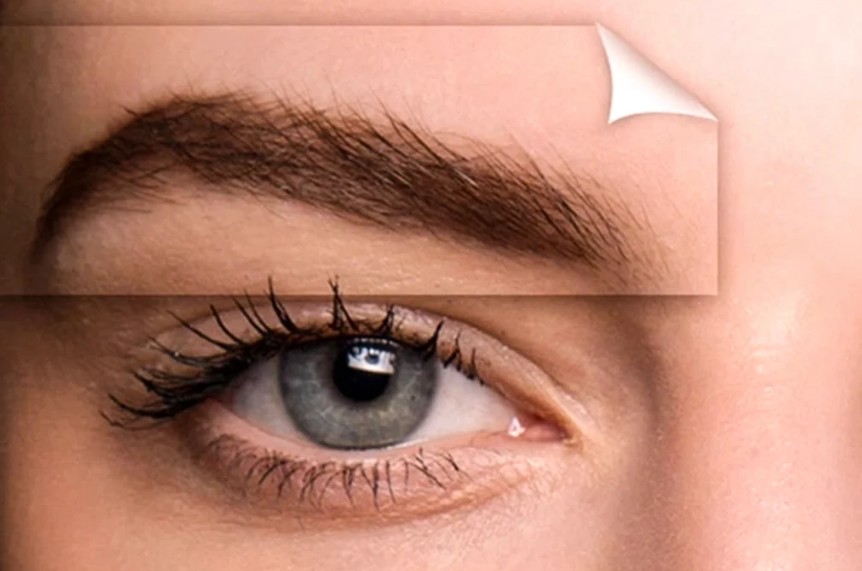
If you are considering rebuilding or refining your brows, the most useful next step is a proper design conversation rather than a quick quote. At Hairpol our team will map a shape to your face, set honest expectations about trimming and timelines, and show you what is realistic for your features before anything is decided. You can explore our full approach to hair transplantation and book a consultation whenever you are ready to talk through your options in detail.
Find this helpful? Add Hairpol as a preferred source on Google.
Get a Free Consultation
Answer a few questions and the medical team will review your situation.
