

When most people think about hair transplants, they think about scalp hair. The procedure’s most visible application — restoring a receding hairline, adding density to a thinning crown, addressing the frontal zone — is what drives the majority of consultations and what dominates the before-and-after galleries that clinics publish. But the same biological principle that makes scalp hair restoration possible applies to facial hair as well, and beard and eyebrow transplants are an increasingly significant part of what hair restoration surgery can address.
The questions patients bring to consultations about facial hair restoration are different from the scalp hair questions — both because the anatomy is different and because the motivations are different. Beard transplants are sought primarily by men who can’t grow a full beard naturally, who have patchy growth they want to fill, or who have lost beard hair to scarring or trauma. Eyebrow transplants address loss from over-plucking, alopecia, thyroid conditions, scarring, or simply naturally sparse brows that the patient wants fuller.
This guide covers what beard and eyebrow restoration actually involves — the biology, the surgical considerations, the realistic expectations, and the specific differences from scalp procedures that make facial hair restoration its own distinct domain of the surgery.
The Biology: Why the Same Principle Works in Different Locations
The fundamental principle behind all hair transplant procedures is donor dominance — the property that hair follicles retain the genetic characteristics of their origin site regardless of where they are transplanted to. Follicles extracted from the permanent zone at the back and sides of the scalp maintain their genetic programming in whatever new location they are implanted into.
For scalp-to-scalp transplants, this principle ensures that DHT-resistant follicles from the donor area remain DHT-resistant in the recipient zone — which is what makes scalp hair transplants permanent. For scalp-to-face transplants — which is what both beard and eyebrow procedures involve — the same biology applies. The transplanted follicles retain their characteristics from their scalp origin: they grow at scalp hair rates, they maintain their DHT resistance, and they cycle through anagen and telogen on scalp-hair timetables rather than facial hair timetables.
This biological reality is both the reason why facial hair transplants work and the source of one of the most important considerations patients need to understand: transplanted scalp hair in the beard or eyebrow will behave like scalp hair in its new location — which means it grows at scalp hair rates, grows to scalp hair lengths if not trimmed, and cycles differently from native facial hair. Managing these characteristics is a central part of life after a beard or eyebrow transplant, and understanding them before the procedure is essential for accurate expectations.
Beard Transplants: Who Is a Candidate and What Can Be Achieved
Beard transplants have become one of the most commonly performed facial hair restoration procedures, driven partly by the significant cultural emphasis on full beards in recent years and partly by the genuine improvement in surgical technique that makes natural-looking results increasingly achievable.
The range of patients seeking beard restoration is broad. Some have never been able to grow significant facial hair — their follicle distribution in the beard zone simply doesn’t support the density they want. Some have patchy beard growth, with areas that grow well alongside areas that produce little or nothing. Some have lost beard hair to scarring from acne, trauma, burns, or surgical procedures. And some have conditions like alopecia areata that have produced patchy or complete beard loss.
What all these patients share is a recipient area — the beard zone — that has insufficient follicle density for the coverage they want, and a donor area — typically the back and sides of the scalp — that can provide follicles to address that deficit.
The areas most commonly addressed in beard transplants include the full cheek and jaw coverage area for patients who can grow little or no beard; the moustache area for patients with sparse upper lip growth; the chin and goatee zone for patients with patchy central beard; and specific scar areas where beard growth has been interrupted by trauma or previous surgical scarring.
Realistic results from a well-executed beard transplant include permanent follicle establishment in the recipient area, natural-looking density when the beard is worn at appropriate length, and the ability to grow and style the beard in ways that weren’t previously possible. The transplanted hair grows permanently — the donor dominance principle ensures that scalp follicles retain their growth characteristics in their new facial location — and with appropriate design and execution, the result reads as genuinely natural facial hair rather than obviously transplanted.
The Surgical Specifics of Beard Transplants
Beard transplants use the same fundamental extraction technique as scalp procedures — FUE extraction from the scalp donor area using a punch instrument — but the implantation phase has specific requirements that make beard work technically demanding in ways that differ from scalp work.
The most critical technical consideration in beard transplantation is angle and direction of implantation. Beard hair in different zones of the face grows at different angles relative to the skin surface and in specific directions that vary across the face. Moustache hairs grow nearly parallel to the skin surface at extremely acute angles — sometimes as little as 10 to 15 degrees from the skin plane. Cheek hairs grow at slightly less acute angles but still significantly shallower than scalp hair. Chin hairs have their own characteristic direction that must be respected for the result to look natural.
Getting these angles wrong doesn’t just affect aesthetics at the time of implantation — it determines how the transplanted hairs grow permanently. A graft implanted at the wrong angle will grow at that wrong angle for life, pointing in a direction that doesn’t match native facial hair and can’t be corrected through styling. Beard transplants that look obviously transplanted — the most common failure mode — typically reflect incorrect implantation angles rather than poor graft survival.
The extreme acuteness of the angles required for moustache work in particular is why DHI — where the Choi implanter pen simultaneously creates the channel and deposits the graft — has specific advantages in facial hair restoration. The single-step precision of DHI allows more accurate angle control than the two-step process of channel creation followed by graft placement, particularly at the very shallow angles required in the moustache zone. This doesn’t make DHI the only appropriate technique for all beard work, but it is a genuine practical advantage in the zones where angle precision is most demanding.
The graft counts used in beard transplants vary significantly by what is being addressed. Full cheek and jaw coverage for a patient who can grow essentially no beard naturally requires a much higher graft count — typically 2,000 to 4,000 grafts — than filling in patchy areas of an otherwise-growing beard, which might require 500 to 1,500 grafts depending on the extent of the patchiness. The specific count requires assessment of the recipient area’s current follicle distribution and the target density.
What Beard Transplant Recovery Looks Like
The recovery timeline for beard transplants follows the same general biological sequence as scalp procedures — but with specific visual characteristics that are worth understanding because the face is significantly more visible in daily social interaction than the scalp.
In the first week after a beard transplant, the recipient area has the characteristic post-procedural appearance: small scabs or crusts around each graft site, redness, and the transplanted hairs visibly present. This appearance is more socially noticeable in the beard area than on the scalp, where hair length can provide concealment. Most patients find that a week’s recovery at home is appropriate before returning to normal social activity, though the specifics depend on the extent of the procedure and the patient’s social circumstances.
Shock loss occurs in beard transplants as it does in scalp procedures — the transplanted follicles enter telogen and shed their existing hair shafts between weeks two and eight. The beard area will look sparse during this phase. Native beard hair in adjacent areas that experienced stress from the procedure may also shed temporarily. This phase is temporary and the same biological recovery process that applies to scalp procedures applies here.
New growth begins emerging around months three to five, following the same biological timeline as scalp hair — which is the same timeline because the transplanted follicles are scalp follicles cycling on their scalp hair schedule. Early growth is fine and lighter than mature growth, and the result continues developing through months nine to twelve as hair caliber matures and density builds.
The ongoing management consideration specific to beard transplants is that transplanted scalp hair grows at scalp hair rates — approximately one centimeter per month — and will continue growing to scalp hair lengths if not trimmed. Native beard hair is often trimmed regularly as part of beard grooming, and transplanted hairs integrate into this grooming routine naturally. But patients who wear short stubble should understand that their transplanted hairs will need more frequent trimming than native beard hairs, because they grow faster and to longer potential lengths than native facial hair typically would.
Eyebrow Transplants: A Distinct Procedure With Different Requirements
Eyebrow transplants address one of the most visually significant features of the face — a region where even small amounts of hair make an enormous difference to overall facial expression and appearance, and where the precision requirements of the procedure are among the most demanding in all of hair restoration surgery.
The candidates for eyebrow transplants vary widely. Over-plucking — particularly years of aggressive plucking in eras when thin brows were fashionable — is one of the most common causes of sparse eyebrow growth, as repeated removal can damage follicles and permanently reduce density. Alopecia areata affects the eyebrows in many patients, producing patchy or complete loss. Thyroid conditions — both hypothyroidism and hyperthyroidism — are associated with eyebrow thinning, particularly in the outer third of the brow. Scarring from trauma, burns, or surgical procedures can interrupt brow growth in specific areas. And some patients simply have naturally sparse brows that they have always wanted fuller.
The emotional significance of eyebrow loss is frequently underestimated by people who haven’t experienced it. Eyebrows are central to facial expression and identity — they frame the eyes, signal emotion, and contribute substantially to facial recognition. Patients with significant eyebrow loss often report that it affects how they feel recognized by others and how expressive their face appears in interaction. The restorative impact of eyebrow transplants on quality of life, for patients with genuine loss, is genuinely significant.
The Surgical Complexity of Eyebrow Transplants
Eyebrow transplants are technically among the most demanding procedures in hair restoration surgery — arguably more demanding than scalp work — because the precision requirements are extreme and the margin for design error is very small.
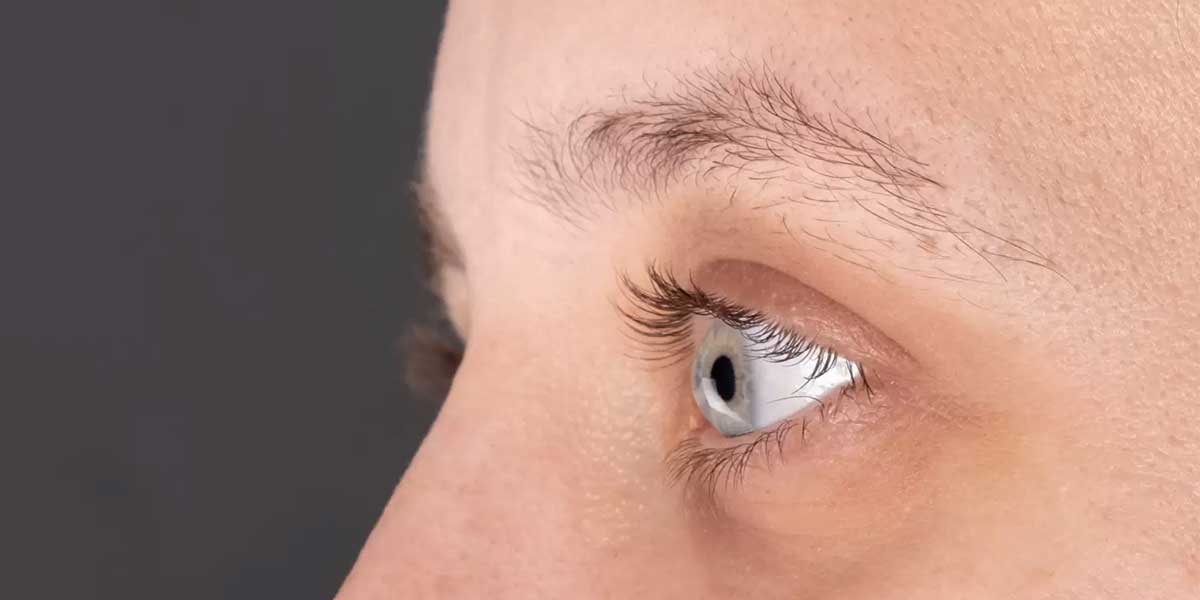
Natural eyebrows are not uniform in their growth pattern. The medial portion of the brow — the inner third, closest to the nose — has hairs growing primarily upward and slightly outward. The central body of the brow has hairs that transition through various angles as they progress laterally. The lateral tail of the brow — the outer third — has hairs growing primarily downward and outward, often at very acute angles to the skin surface. Each of these zones requires different implantation angles and directions to look natural, and the transition between zones must be gradual rather than abrupt.
The brow also has an arch — a specific three-dimensional shape that varies between individuals and between genders. Male eyebrows tend to be flatter with a less pronounced arch and a more uniform density distribution. Female eyebrows typically have a more defined arch with specific density characteristics in each zone. Transplanting into eyebrows requires specific design decisions about arch position, tail length, inner border definition, and density distribution that must be calibrated to the individual patient’s face, gender, and natural brow remnants.
The graft counts used in eyebrow transplants are much smaller than in scalp or beard work — typically 200 to 400 grafts per eyebrow, or 400 to 800 grafts for both brows. But small graft count doesn’t mean simpler execution — the precision required for each individual graft placement is higher in eyebrow work than in virtually any other area of hair restoration surgery. A graft placed at the wrong angle or in the wrong position in the brow is visible in a way that a similar error in the scalp is not.
DHI is the most commonly used technique for eyebrow transplants precisely because of the precision advantage of the Choi pen at the very shallow angles required throughout the brow — particularly in the lateral tail, where angles can approach 5 to 10 degrees from the skin surface. The single-motion implantation of DHI allows angle control that is very difficult to achieve with the two-step channel-plus-graft approach of standard FUE techniques.
The Most Important Thing About Eyebrow Transplants: Lifelong Trimming
There is one aspect of eyebrow transplants that every patient must understand clearly before the procedure, because it affects daily life permanently and is sometimes inadequately communicated in consultations: transplanted eyebrow hairs are scalp hairs, and they grow at scalp hair rates indefinitely.
Native eyebrow hairs have a very short anagen phase — typically two to four months — after which they enter telogen, shed, and restart. This is why eyebrow hairs don’t grow to significant length under normal circumstances: the growth phase is too short for them to reach lengths beyond a few millimeters before they cycle out and are replaced.
Transplanted scalp follicles in the eyebrow retain their scalp hair growth cycle. Their anagen phase is measured in years, not months. They grow continuously at approximately one centimeter per month rather than stopping at eyebrow length. If not trimmed, transplanted eyebrow hairs will grow into long hairs that extend well beyond the brow — potentially reaching several centimeters if left uncut for extended periods.
This means that eyebrow transplant recipients commit to regular trimming of their transplanted brow hairs for the rest of their lives. For most patients, this means trimming every one to three weeks to keep the transplanted hairs at an appropriate length that matches the natural brow appearance. This is not a significant burden — the trimming takes a few minutes — but it is a genuine and permanent change to the daily or weekly grooming routine that must be accepted before the procedure.
Patients who understand this before the procedure integrate it smoothly into their grooming routine. Patients who discover it afterward sometimes feel that this wasn’t adequately communicated, which is why it deserves specific and clear discussion in every eyebrow transplant consultation.
Realistic Results: What Eyebrow Transplants Can and Cannot Achieve
The results achievable from a well-executed eyebrow transplant are genuinely impressive — particularly given the significant visual impact of even modest amounts of eyebrow hair. Patients who had essentially no natural brow hair can achieve brows that look natural in daily social interaction and in photographs. Patients with partial loss can achieve more complete and symmetric brows that match their desired appearance.
The result looks natural when the design is appropriate for the patient’s face, when implantation angles correctly replicate the native brow growth pattern, and when the density distribution reflects natural brow characteristics rather than uniform coverage across the brow zone. When these elements are correctly executed, the transplanted brow reads as natural hair rather than as placed hair.
What eyebrow transplants cannot achieve is perfect replication of the original brow in all conditions. Very close inspection under harsh lighting can reveal the transplanted nature of the brow in ways not apparent under normal conditions — the same limitation that applies to scalp hairline work. The standard that a well-executed result achieves is natural appearance under normal social and photographic conditions, not undetectability under clinical examination.
The recovery timeline for eyebrow transplants follows the same general biological sequence as other transplant procedures — shock loss in weeks two to eight, the waiting period through months two to four, early growth beginning around months three to five, and substantially complete results by months nine to twelve. The eyebrow recovery is sometimes less emotionally challenging than scalp recovery because the pre-procedure brow is often sparse enough that the shock loss phase doesn’t represent a dramatic visual departure from baseline.
Donor Area Considerations for Facial Hair Transplants
Both beard and eyebrow transplants draw from the same scalp donor area as scalp procedures, which creates important planning considerations for patients who are also addressing — or may in the future address — scalp hair loss.
The graft counts used in facial hair procedures come from the same finite lifetime donor supply as scalp procedures. A patient who uses 2,500 grafts for a full beard transplant has 2,500 fewer grafts available for potential future scalp procedures. This isn’t necessarily a problem — many patients seeking facial hair restoration have no significant scalp hair loss and no expected future need for scalp procedures — but it is a consideration that must be explicitly discussed in planning for patients who have any degree of scalp hair loss or any family history suggesting future loss risk.
For patients in this situation — wanting facial hair restoration but with existing or likely scalp hair loss — the planning conversation must address how graft allocation across facial and scalp needs will be managed across the patient’s lifetime. This isn’t a reason to avoid facial hair procedures, but it is a reason to approach the planning with explicit awareness of total donor supply and likely total lifetime demand.
The extraction technique for both beard and eyebrow donor harvesting is standard scalp FUE — the same technique used for scalp-to-scalp procedures. The donor area appears the same after facial hair procedures as after scalp procedures: small circular extraction site dots that heal and become essentially invisible at normal hair lengths.
The Design Conversation: What Makes Facial Hair Restoration Succeed or Fail
The most reliable predictor of whether a beard or eyebrow transplant produces a satisfying result is not graft survival rate — which in experienced hands is consistently high — but the quality of the design decisions made before the first graft is placed.
For beard transplants, the design conversation covers: the target density and coverage area, the hairline of the beard boundary where it meets the cheek or neck, the distribution of density across different beard zones, and how the transplanted design will look at different beard lengths and styles. A design that looks appropriate for a short stubble may look different when grown to a longer beard, and vice versa — understanding the patient’s target beard style is essential for appropriate design.
For eyebrow transplants, the design conversation is even more critical because the margin for error is smaller. The position of the arch, the inner border definition, the lateral tail length, the density distribution across brow zones, and the overall shape must all be correct for the patient’s face and must account for the difference between how the design looks when drawn on the face before the procedure and how it will look when transplanted hair grows in. Small errors in brow design are more apparent than small errors in scalp hairline design because the eyebrow is a more precisely defined and more carefully examined facial feature.
This is why the consultation for facial hair restoration — particularly for eyebrow work — should involve specific discussion of the design, ideally with drawn examples on the patient’s face so both the patient and surgeon can see exactly what is being proposed before the procedure begins. A surgeon who doesn’t engage in this specific pre-procedure design discussion is taking an approach that transfers more risk to the patient than is appropriate for a procedure where design quality is the primary determinant of outcome quality.
Who Performs Beard and Eyebrow Transplants Well
The technical demands of facial hair restoration — particularly eyebrow work — mean that the surgeon and team’s specific experience with these procedures matters even more than it does for standard scalp work. The combination of extreme angle precision, small zone work, and design sensitivity makes beard and especially eyebrow transplants procedures where clinical experience with the specific area is highly relevant to outcome quality.
Patients evaluating clinics for facial hair restoration should specifically ask about the team’s experience with the procedure they’re seeking — not just general hair transplant volume — and should look for before-and-after examples specific to beard or eyebrow work rather than evaluating a clinic only through its scalp hair galleries. A clinic with excellent scalp hair results may have less refined technique for the specific demands of facial hair work, and the two shouldn’t be assumed to be equivalent without specific evidence.
At Hairpol, facial hair restoration procedures are approached with the same clinical rigor as scalp work — including specific design consultation before the procedure, angle-precise implantation in each facial zone, and realistic expectation-setting about what the result will involve in terms of ongoing grooming requirements. Because a beard or eyebrow transplant that looks excellent and integrates naturally into the patient’s appearance and grooming routine is what genuine success looks like in facial hair restoration.
The Bottom Line
Hair transplants work for both beard and eyebrow restoration — the biological principle of donor dominance applies fully, grafts establish permanently, and well-executed procedures produce results that genuinely transform the patient’s appearance in the ways they were seeking.
The specific considerations that distinguish facial hair restoration from scalp work — the extreme angle precision required for natural-looking results, the grooming implications of scalp-rate growth in facial locations, the design sensitivity of eyebrow work in particular, and the donor supply planning considerations for patients with coexisting scalp hair concerns — are not reasons to avoid these procedures. They are reasons to approach them with the specific understanding and the specific clinical expertise that makes the difference between results that look natural and results that don’t.
For patients who are appropriate candidates — with realistic expectations, appropriate donor supply, and access to surgical teams with genuine experience in facial hair restoration — beard and eyebrow transplants represent one of the more dramatically satisfying applications of a procedure whose results, in the right hands, genuinely deliver what they promise.
Find this helpful? Add Hairpol as a preferred source on Google.
Get a Free Consultation
Answer a few questions and the medical team will review your situation.
