“Is it safe to get a hair transplant in Turkey?” is one of the most searched questions in hair restoration, and it deserves an honest answer rather than either the defensive marketing of clinics or the alarmism of horror-story headlines. The truth sits between the two extremes: Turkey is home to some of the best, safest, most experienced hair transplant clinics in the world — and also to operations where corners are cut in ways that genuinely endanger patients. The country itself isn’t the variable. The clinic is.
This guide takes the safety question seriously and answers it without spin. What the real risks actually are, why Turkey has both an excellent reputation and a horror-story reputation simultaneously, what separates a safe clinic from a dangerous one, and the specific, verifiable things you can check to protect yourself. The goal is to replace fear and marketing with the information you actually need to make a safe decision.
The Short Answer
A hair transplant in Turkey can be very safe — when performed at a properly licensed clinic, by qualified medical professionals, with genuine surgeon involvement, in a sterile accredited facility, on a patient who is a suitable candidate. Under those conditions, the safety profile is comparable to having the procedure anywhere else in the world, and often better than at an under-regulated clinic in a country with a smaller, less experienced industry.
A hair transplant in Turkey can also be genuinely unsafe — when performed at a high-volume operation prioritizing throughput over care, where unqualified staff perform surgical steps, sterilization is inadequate, patient suitability is ignored, and no real surgeon oversees the procedure. These operations exist, they’re often the cheapest, and they’re the source of most of the horror stories.
So the honest answer to “is it safe?” is: it depends almost entirely on which clinic you choose. The single most important safety decision you make is clinic selection — and that decision is entirely within your control.
Why Turkey Has Two Reputations at Once
Turkey performs more hair transplants than any country on earth — Istanbul alone hosts hundreds of clinics and serves a huge share of the global market. This scale produces both of Turkey’s reputations simultaneously.
The positive reputation is earned: the sheer volume has produced surgeons and technicians with more hands-on experience than almost anywhere else, driven technical innovation, and created genuine centres of excellence. A patient at a top Istanbul clinic is being treated by a team that may perform more procedures in a month than a Western clinic does in a year — and that experience translates into skill and consistency.
The negative reputation is also earned: the same scale and demand attracted operators who treat hair transplantation as a volume business. When hundreds of clinics compete largely on price, the cheapest cut the things that cost money — surgeon time, proper staffing, sterilization standards, patient screening. The horror stories are real, but they’re stories about specific bad clinics, not about Turkey as a destination.
This is why averaging Turkey’s reputation into a single verdict is useless. The range of quality is enormous, and your experience depends on where in that range your chosen clinic sits.
The Real Risks — Honestly Stated
Every surgical procedure carries risks, and a hair transplant is no exception. An honest safety discussion names them clearly. At a quality clinic these risks are low and well-managed; at a poor one they’re substantially elevated.
- Infection. Any procedure that breaks the skin carries infection risk. Proper sterilization, a clean surgical environment, and correct aftercare keep it low. Inadequate sterilization — a real problem at the worst clinics — raises it.
- Poor graft survival and bad aesthetic results. Not a danger to health, but the most common genuine “failure”: low density, patchy growth, an unnatural hairline. Usually a result of inexperienced staff, poor technique, or over-large sessions.
- Donor area over-harvesting. Taking too many grafts to maximize a single session’s apparent result permanently damages the donor area, leaving visible thinning or scarring that’s very difficult to correct. This is one of the most consequential harms of volume-driven clinics.
- Unnatural or pluggy hairlines. Poor design — wrong angles, wrong density distribution, an age-inappropriate line — produces results that look obviously transplanted and are hard to fix.
- Necrosis. Rare but serious: tissue death in the recipient or donor area, usually from over-harvesting, oversized sessions, or poor technique compromising blood supply. Almost always a consequence of an operation pushing volume beyond safe limits.
- Anaesthesia reactions. Local anaesthesia is generally very safe, but reactions are possible, which is why proper medical screening and qualified staff who can manage complications matter.
- Unsuitable candidates being operated on. A subtle but important risk: a clinic that operates on someone who shouldn’t have surgery — active unstabilized loss, insufficient donor, unrealistic case — produces a bad outcome no matter how technically clean the surgery is.
The pattern is clear: most serious risks are dramatically reduced by the same things — genuine surgeon involvement, qualified staff, proper sterilization, sensible session sizes, and honest candidate screening. These are exactly the things budget operations cut.
What Makes a Clinic Safe vs Dangerous
The difference between a safe and an unsafe clinic comes down to a handful of concrete factors. Understanding them turns the vague question “is Turkey safe?” into the answerable question “is this clinic safe?”
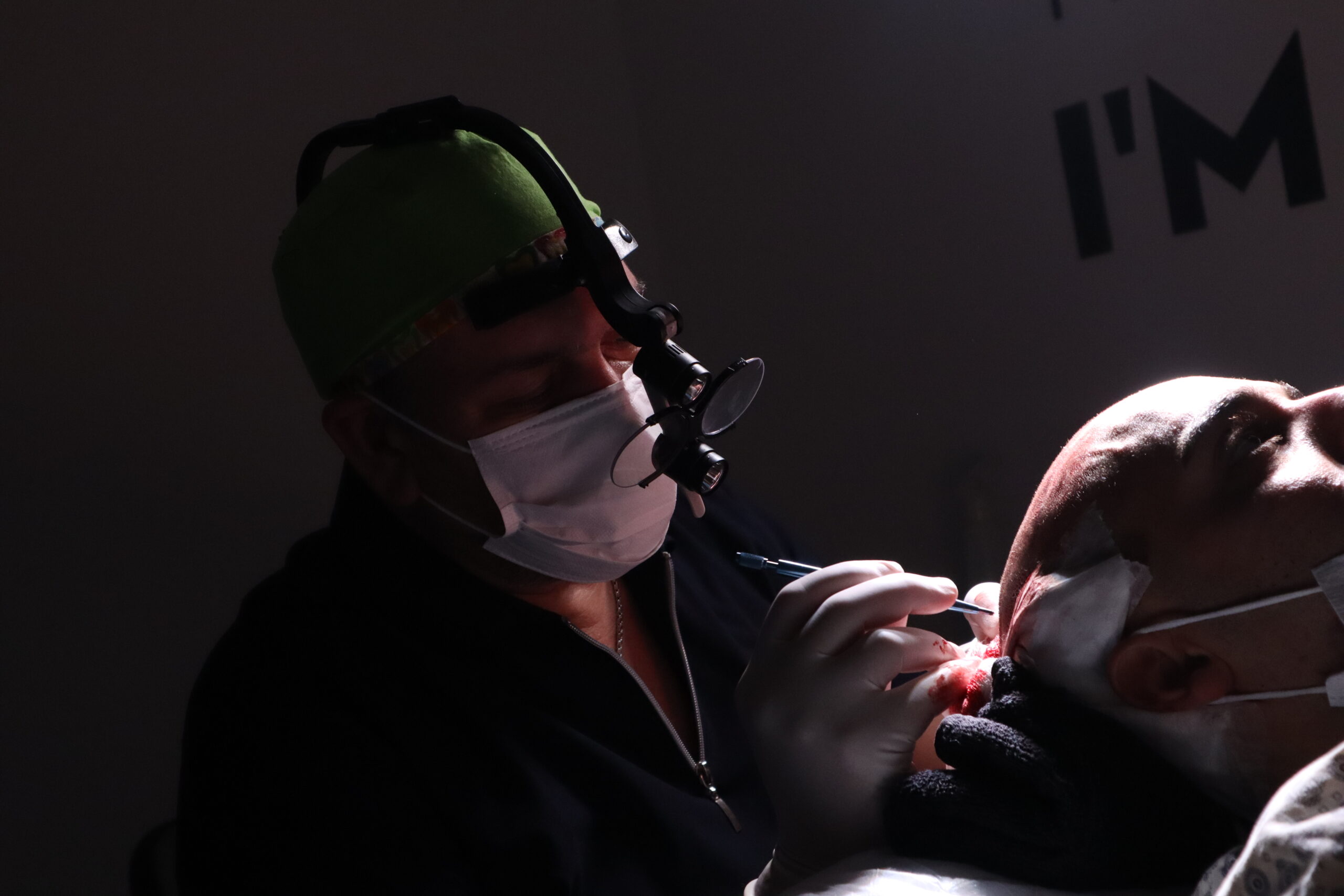
Genuine surgeon involvement. At safe clinics, a qualified doctor performs or directly supervises the critical surgical stages — planning, hairline design, the incisions that determine the result. At dangerous ones, you may never meet a doctor, with technicians performing the entire procedure unsupervised. In Turkey, certain stages are legally required to involve a physician; clinics that bypass this are operating improperly.
Ministry of Health authorization. Legitimate clinics hold Turkish Ministry of Health licensing and health-tourism authorization. This is verifiable and non-negotiable. Unlicensed operations have no regulatory oversight.
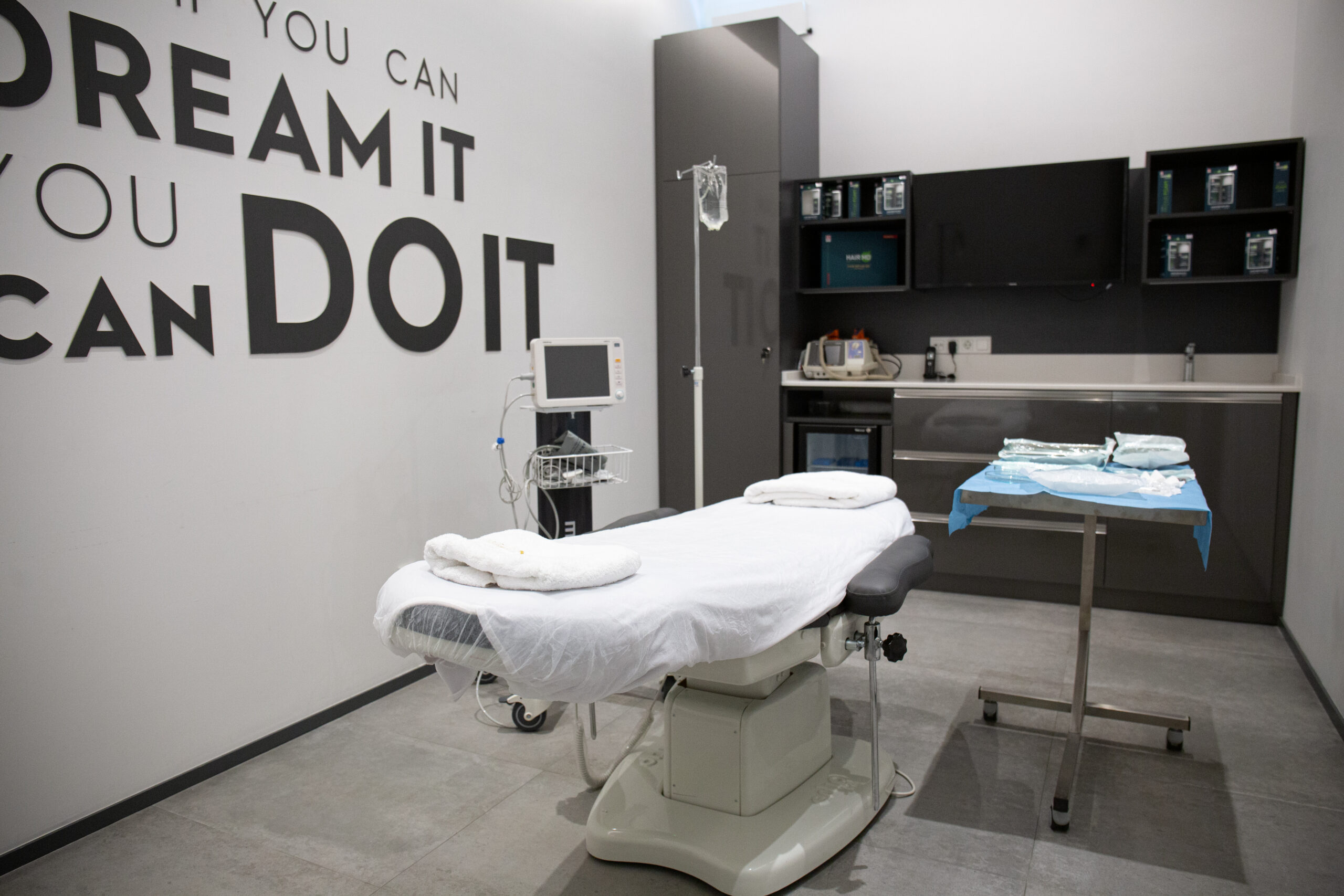
Proper sterilization and an accredited facility. A safe clinic operates in a sterile, properly equipped medical facility. The worst operations cut exactly here, because sterilization and proper facilities cost money.
Sensible patient volumes. Safe clinics limit how many patients they handle per day so each receives proper attention. Operations running many patients simultaneously, assembly-line style, are where care quality collapses.
Honest candidate screening. A safe clinic turns away unsuitable candidates and is honest about realistic outcomes. A dangerous one operates on anyone who pays.
Appropriate session sizes. Safe clinics extract a sensible number of grafts to protect the donor and graft survival. Dangerous ones over-harvest to inflate the apparent result, causing lasting damage.
The Specific Things You Can Verify
Safety isn’t something you have to take on faith. These are concrete, checkable things that distinguish a safe clinic — verify them before booking, not after arriving.
- Ministry of Health authorization. Confirm the clinic holds it. Legitimate clinics state this clearly and can evidence it.
- Who performs the surgery. Ask directly: does a qualified surgeon perform or supervise the critical stages, and will you meet them? A clear answer is a good sign; evasion is a red flag.
- ISHRS membership. Involvement with the International Society of Hair Restoration Surgery signals engagement with professional standards.
- The facility. Confirm the procedure takes place in a proper, accredited medical facility, not an improvised setting.
- Documented long-term results. Real 12-month results on real patients — ideally cases similar to yours — rather than only dramatic immediately-after photos.
- Verifiable independent reviews. Genuine patient reviews across independent platforms, not just curated testimonials on the clinic’s own site.
- Honest consultation. A clinic that assesses your suitability, discusses realistic outcomes, and is willing to say what it can’t do is demonstrating the honesty that correlates with safety.
- Clear aftercare and follow-up. A defined aftercare protocol and accessible follow-up — not a handshake at the airport — is part of safe practice.
The Red Flags That Signal Danger
Just as some signals indicate safety, others reliably indicate risk. Treat these as warnings:
- A price that’s dramatically below the market — safety costs money, and the very cheapest operations have cut something to get there.
- No clear answer about whether a surgeon is involved, or who performs the procedure.
- Pressure to book immediately, urgency tactics, or aggressive discounting.
- No proper medical or candidate assessment before accepting you.
- Promises that sound too good — guaranteed density, a teenage hairline, unrealistic graft counts.
- No verifiable licensing, no documented long-term results, no independent reviews.
- Reluctance to let you communicate directly about who does what during the procedure.
Encountering several of these doesn’t mean a clinic is necessarily dangerous, but it means you should not proceed without resolving them — and if they can’t be resolved, choose a different clinic.
How Turkey Compares to Having It Done at Home
A fair safety assessment has to compare like with like. The relevant comparison isn’t “Turkey vs my home country” in the abstract — it’s “a specific quality clinic in Turkey vs a specific clinic at home.” On that basis, a top Istanbul clinic frequently offers more experience and equal or better safety than an average clinic in a country where the procedure is performed far less often. The experience advantage is real: high volume, properly channelled, produces skill.
The risk in Turkey isn’t inherent to the country — it’s the wide quality range and the presence of cheap, unsafe operators that a price-sensitive patient might choose. The risk at home is typically less experience and much higher cost. Neither location is automatically safer; in both cases, the specific clinic determines the outcome. A well-chosen Turkish clinic is a genuinely safe option, and the lower price is not a safety compromise when the clinic is properly selected.
Reducing Your Own Risk
Beyond clinic choice, some of your safety is in your own hands. You reduce your risk substantially by: being honest in your medical history and disclosing all medications and conditions; confirming you’re a suitable candidate rather than pushing for surgery you may not need; following pre- and post-operative instructions precisely; not chasing the cheapest possible price; allowing proper healing rather than rushing back to high-risk activities; and choosing a clinic that screens you properly rather than one that accepts you instantly. A safe procedure is a partnership — the clinic provides safe conditions, and you provide accurate information and careful aftercare.
The Honest Conclusion
Is it safe to get a hair transplant in Turkey? Yes — at the right clinic. No — at the wrong one. The country isn’t the risk factor; the clinic is. Turkey’s enormous industry contains world-class, genuinely safe centres of excellence and also cut-corner operations that produce the horror stories, and the entire difference between a safe experience and a dangerous one is which clinic you choose. That choice is within your control, and it’s made safely by verifying the concrete things that matter: Ministry of Health authorization, genuine surgeon involvement, a proper accredited facility, sensible volumes, honest screening, and documented real results. Patients who verify these have a safe, well-evidenced path to an excellent outcome. Patients who chase the lowest price and skip the verification are the ones who end up in the horror stories.
At Hairpol, safety is built into how the clinic operates: Ministry of Health–authorized facilities, genuine surgeon-led planning and oversight of the critical surgical stages, proper sterile medical environments, sensible patient volumes, honest candidate assessment that turns away unsuitable cases, and documented long-term results with accessible aftercare and follow-up. The aim is to be exactly the kind of clinic the safe answer to this question depends on — so that for our patients, the honest answer to “is it safe?” is a confident yes.
Find this helpful? Add Hairpol as a preferred source on Google.
Get a Free Consultation
Answer a few questions and the medical team will review your situation.
