
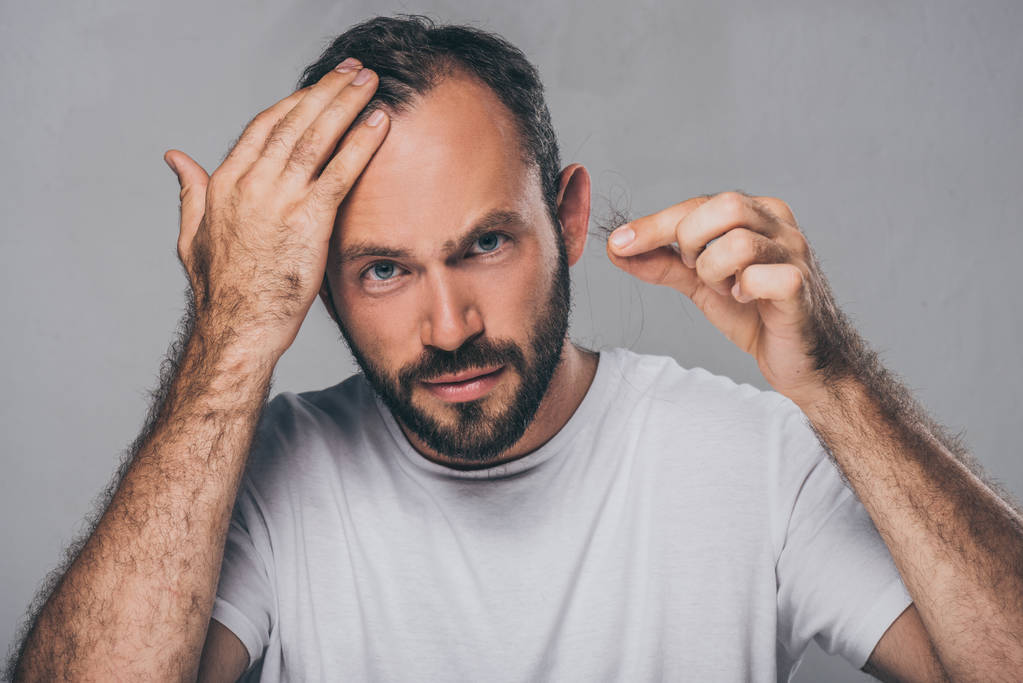
Hair loss is routinely dismissed as a cosmetic issue — something vain to worry about, something to simply accept, something that “doesn’t really matter.” Anyone who has actually experienced progressive hair loss knows how hollow that framing is. The psychological weight of watching your hairline retreat, of catching your reflection under overhead lighting, of noticing the change in old photos, is real, documented, and for many people, heavier than almost anyone around them realizes.
This is the part of the hair transplant conversation that gets the least serious attention. Clinics talk about grafts, techniques, and density. Patients talk about timelines and costs. But the actual reason most people walk into a consultation isn’t follicles — it’s how they feel when they look in the mirror, and how much mental energy hair loss has quietly been consuming for years.
This guide takes the psychology seriously. Why hair loss affects confidence so profoundly, what the documented psychological effects actually are, how a transplant changes self-image when it works, the emotional timeline of the recovery year that nobody prepares patients for, and — just as importantly — what surgery can and cannot fix. Because the honest answer is nuanced: a hair transplant can be genuinely transformative for confidence, and it can also be the wrong answer entirely for some people, depending on what’s actually driving the distress.
Why Hair Loss Hits So Hard
To understand why hair loss carries such psychological weight, it helps to see what hair actually represents — most of it operating below conscious awareness.
Hair signals youth. Across cultures, a full head of hair is one of the strongest visual markers of youth. Losing it — especially early — feels like aging ahead of schedule, watching a version of yourself disappear before you were ready to let it go. A 27-year-old with significant recession often reports feeling like he’s been pushed into a different life stage than his peers.
Hair is tied to identity. Hairstyle is one of the few aspects of appearance people actively choose and control throughout their lives. It’s part of how people present themselves to the world — and progressive loss steadily removes that choice. The styling options narrow year by year until the only “choice” left is how to manage what’s gone.
It’s a loss of control. Perhaps the most psychologically corrosive aspect of androgenetic hair loss is that it happens to you, on its own schedule, regardless of what you do. Diet doesn’t stop it. Exercise doesn’t stop it. Willpower doesn’t stop it. For people whose self-esteem rests partly on discipline and self-management, hair loss is a daily reminder of something fundamental they cannot control — and the helplessness itself often hurts more than the appearance.
It’s visible and social. Unlike most insecurities, hair loss is on permanent public display. It’s there in every conversation, every photo, every video call, every first impression. There is no off-duty.
It progresses. A scar is stable. A nose someone dislikes is stable. Hair loss moves. The psychological experience isn’t a single adjustment to a changed appearance — it’s an open-ended process of repeated losses, each thinner photo and each higher hairline restarting the grief.
The Documented Psychological Effects
Clinical research on the psychosocial impact of androgenetic alopecia has been consistent for decades, and it matches what hair loss sufferers describe. The most commonly documented effects include:
- Reduced self-esteem and self-image. People experiencing hair loss consistently rate themselves as less attractive and report lower satisfaction with their appearance — often far below how others actually perceive them.
- Social anxiety and self-consciousness. Heightened awareness of being looked at, particularly from above or behind, under bright light, in wind, or in water. Many sufferers can list, instantly, the exact lighting conditions in their workplace that they avoid.
- Avoidance behaviors. Skipping swimming, declining photos, positioning themselves strategically in group pictures, avoiding video calls, wearing hats far beyond practicality, structuring social life around concealment.
- The constant mental load. Perhaps the most underestimated effect: the sheer cognitive bandwidth hair loss consumes. Checking reflections. Arranging hair before every interaction. Monitoring the shower drain. Researching treatments at 2am. People describe “thinking about it dozens of times a day” — a quiet, exhausting background process running for years.
- Impact on dating and professional confidence. Whether or not others actually judge them, sufferers behave as if they’re being judged — holding back in dating, in interviews, in presentations — and the held-back behavior produces real consequences that then confirm the fear.
- Symptoms of anxiety and low mood. For a meaningful subset, the distress goes beyond ordinary self-consciousness into persistent anxiety or depressive symptoms. This is documented, legitimate, and deserves real support — including professional mental health support where the distress is significant, not just cosmetic solutions.
The research also consistently shows that the impact is greater in those who lose hair younger, in women — for whom hair loss carries an additional layer of stigma because it’s wrongly perceived as not happening to women — and in people whose social or professional lives involve high visibility.
The Hidden Cost of Concealment
Most people don’t move directly from noticing hair loss to addressing it. They spend years in the middle phase: concealment. The strategic haircut. The careful combing. The standing-in-the-right-spot at parties. The hat that became part of the personality. The gradual, unspoken withdrawal from situations where the concealment fails — pools, beaches, rain, wind, bright rooms, back-facing cameras.
Concealment works, partially, for a while. But it carries a documented psychological cost that compounds over time. Every successful concealment reinforces the belief that the underlying reality is unacceptable. Every avoided situation shrinks life a little. And because the loss keeps progressing, the concealment requires escalating effort for diminishing returns — until many people reach the point where managing the secret consumes more energy than the hair loss itself ever did.
This is the state in which most people finally research solutions seriously. Not because the hair suddenly got worse, but because the psychological cost of managing it crossed a threshold.
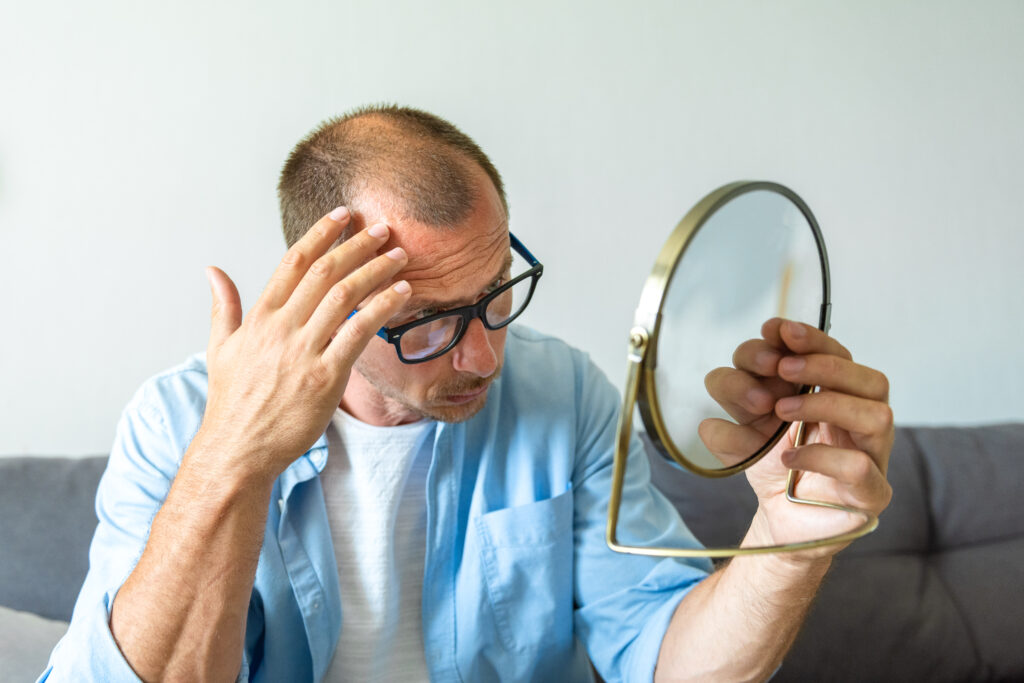
What a Transplant Actually Changes Psychologically
When a hair transplant is done well, on the right candidate, with realistic expectations, the psychological change patients describe is remarkably consistent — and it’s subtler and deeper than “I look better now.”
The thinking stops. The single most commonly reported change isn’t about appearance at all. It’s that the background mental process — the checking, the arranging, the monitoring, the positioning — gradually shuts down. Patients describe the strange experience, somewhere around month eight or ten, of realizing they haven’t thought about their hair in days. For someone who thought about it dozens of times a day for a decade, this is not a small change. It’s the return of genuine cognitive and emotional bandwidth.
Avoidance reverses. Swimming returns. Photos stop being threats. Video calls stop requiring preparation. Wind becomes weather again instead of an exposure event. The life that concealment had quietly shrunk re-expands — and patients often only realize in retrospect how much they had given up.
The mirror relationship normalizes. Not into vanity — into neutrality. The reflection stops being a daily audit and becomes just a reflection. Patients describe this as the difference between seeing “my hair loss” and simply seeing “me.”
Control returns. The helplessness that made hair loss uniquely corrosive — the sense that something was happening to you that nothing could influence — is replaced by the experience of having acted, chosen, and changed the outcome. For many patients this restored sense of agency generalizes beyond hair, showing up as broader confidence in dating, work, and social life.
Studies back this up. Research on post-transplant patients consistently documents improvements in self-esteem, perceived attractiveness, social confidence, and overall quality-of-life measures — with satisfaction strongly tied to two factors: the naturalness of the result and the realism of pre-operative expectations. Which leads directly to the honest part of this conversation.
The Emotional Timeline Nobody Prepares You For
Here’s what clinics rarely explain: the psychological journey of a hair transplant is not a straight line from decision to confidence. It has a specific emotional arc, and knowing it in advance is one of the strongest predictors of experiencing it well.
The decision phase: relief. Many patients report that simply making the decision — after years of monitoring and concealing — produces immediate psychological relief. The open-ended problem becomes a project with a plan.
Weeks 1-2: exposure. The early healing period is visible, and for people who spent years concealing, being visibly “a hair transplant patient” can feel exposing. This passes quickly as the scabs clear.
Weeks 2-8: the psychological test. Shock loss — the normal, universal shedding of transplanted hair — is the hardest emotional phase of the entire process. The patient paid for hair, and now watches it fall out. Patients who weren’t warned can spiral into genuine distress, convinced they’re in the rare failure category. Patients who understood the biology in advance describe the same weeks as unpleasant but manageable. The difference is purely informational — which is why honest pre-operative education is itself psychological care.
Months 2-4: the quiet phase. Nothing visible happens. The area looks sparse. This is where impatience and doubt peak — and where monthly progress photos become genuinely protective, because they prove to an anxious mind that the timeline is the timeline.
Months 4-8: emergence. New growth appears, thickens, and the daily mirror experience starts shifting from monitoring a problem to watching a result develop. Most patients describe this as the period when mood visibly lifts.
Months 8-18: normalization. The result matures — and, more importantly, becomes ordinary. The hair stops being “the transplant” and becomes simply hair. This quiet normalization, more than any dramatic reveal, is what the confidence change actually consists of.
What a Transplant Cannot Fix — And When It’s the Wrong Answer
An honest discussion of hair transplant psychology has to include the limits, because the patients who skip this part are the ones who end up dissatisfied with technically excellent results.
A transplant changes hair, not underlying mental health. The psychological benefit of a transplant comes from removing a specific, identifiable stressor. If hair loss was genuinely the stressor, removing it helps enormously. If hair loss was the surface onto which deeper distress was projected, the surgery succeeds and the distress relocates. Patients with depression or anxiety that exists independently of their hair should address that directly — with professional support — whether or not they also pursue a transplant. Surgery is not therapy, and a good clinic never sells it as such.
Body dysmorphic disorder is a genuine contraindication. A small subset of people seeking cosmetic procedures experience body dysmorphic disorder — a condition involving obsessive preoccupation with perceived appearance flaws that others see as minor or invisible. For these individuals, cosmetic surgery characteristically fails to relieve the distress regardless of the objective result, and the preoccupation shifts or intensifies. Warning signs include distress wildly disproportionate to the visible loss, repeated dissatisfaction with previous cosmetic procedures, and seeking surgery for a flaw others genuinely cannot see. Responsible clinics screen for this and refer to mental health professionals rather than operating — because operating would harm, not help.
Crisis-driven decisions deserve a pause. A transplant decided in the weeks after a breakup, a divorce, or a professional blow is a decision made by the crisis, not the person. The surgery is permanent; the crisis isn’t. Quality clinics gently slow these patients down.
Unrealistic expectations guarantee disappointment. A transplant restores density and a natural hairline within the limits of donor supply. It does not restore a teenage hairline, deliver the density of a 16-year-old, or make anyone into a different person. Patients whose expectations are calibrated to their actual case report high satisfaction; patients expecting transformation beyond what surgery does report dissatisfaction with identical clinical results.
Regaining Control Before Surgery: The Psychology of Medical Management
One underappreciated point: the psychological recovery from hair loss often starts before any surgery, with medical management. Starting finasteride and minoxidil — and watching the shedding slow and stabilize over months — directly attacks the most corrosive element of the experience: the helplessness. The loss stops being an unstoppable process and becomes a managed condition. Many patients describe the first stabilized months on medication as the moment the panic ended, well before any transplant entered the picture. For some, stabilization alone resolves enough of the distress that surgery gets postponed for years. For those who do proceed to surgery, arriving psychologically calm rather than desperate produces better decisions at every step — clinic choice, hairline design, expectation setting.
Setting Yourself Up for the Psychological Win
For patients who are good candidates and choose to proceed, a few practices reliably improve the emotional experience of the year ahead:
- Learn the full timeline before surgery — especially shock loss and the quiet phase. Informed patients experience the same biology with a fraction of the distress.
- Take monthly photos in identical conditions. They are anxiety insurance: objective evidence against the daily mirror’s distortions.
- Choose a clinic that talks about expectations, not just grafts. A consultation that discusses what your specific case can and cannot achieve — and that uses modern techniques like Sapphire FUE and DHI in service of natural, age-appropriate design rather than maximum-density marketing — is protecting your future satisfaction.
- Keep perspective during months 2-4. The sparse phase is the price of the result, not evidence against it.
- If your distress feels bigger than your hair, talk to a professional too. The two paths aren’t competitors. Plenty of patients benefit from both.
The Honest Summary of What Changes
Does a hair transplant change confidence? For well-selected patients with natural results and realistic expectations — yes, consistently and often profoundly. But the mechanism is worth stating precisely, because it’s not magic and it’s not vanity. The transplant removes a chronic, visible, progressing stressor that had been consuming attention, narrowing behavior, and eroding self-image for years. What patients get back is not just hair. It’s the mental bandwidth the monitoring consumed, the activities the concealment excluded, the neutrality of an ordinary mirror, and the sense of agency that the helplessness had taken. The hair is the visible part; the quiet disappearance of a years-long background burden is the actual transformation.
At Hairpol, the psychological side of hair restoration is treated as part of the medical work, not an afterthought: consultations that take the emotional impact seriously while honestly assessing whether surgery is the right answer for your specific situation, expectation-setting grounded in your actual case rather than marketing, preparation for the real emotional timeline of the recovery year, and support through the phases — including the difficult ones — that turn a surgical procedure into the confidence outcome patients actually came for. Hair loss was never “just cosmetic.” Treating it well means taking both the follicles and the person seriously.
Find this helpful? Add Hairpol as a preferred source on Google.
Graft Range Calculator
Answer three questions to see the typical graft range for your situation — based on our published clinical guides.
This is a preliminary estimate, not a medical assessment. The exact number can only be determined by a doctor after examining your donor area and hair characteristics.
Get a Free Consultation
Answer a few questions and the medical team will review your situation.
