
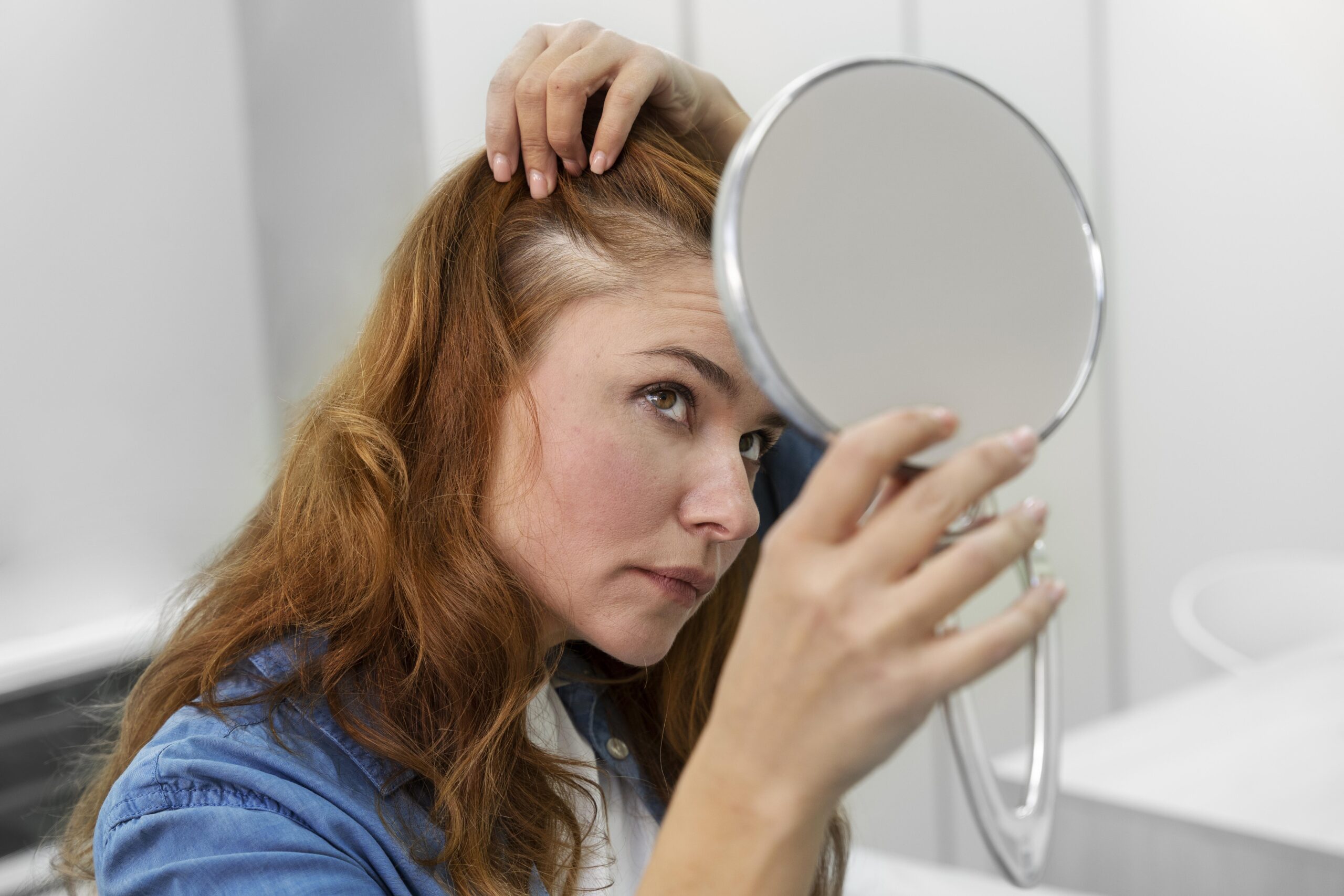
Hair loss is described in medical literature as a cosmetic condition. It affects appearance, not organ function. It doesn’t shorten life expectancy or impair physical health in any measurable clinical sense. By the framework that medicine typically uses to assess severity, it ranks low.
By the framework that human beings actually use to assess the impact of things on their daily lives, it often ranks much higher than that.
The research on the psychological effects of hair loss is consistent across decades and across cultures: significant hair loss in both men and women is associated with elevated rates of anxiety, depression, reduced self-esteem, social withdrawal, and diminished quality of life. These effects are not imagined or disproportionate. They reflect the genuine importance of hair in how people construct and present their identity, how they feel they’re perceived by others, and how they navigate the social world.
What is less well understood — and less well communicated in the context of hair transplant consultations — is that these psychological effects don’t automatically resolve when the procedure is performed. The hair grows back. The emotions don’t always follow the same timeline. And for some patients, the emotional landscape after a hair transplant is more complicated than the one they were hoping to leave behind.
Understanding the psychological dimension of hair loss — and of the decision to treat it surgically — doesn’t require anyone to feel worse about their experience. It requires honesty about what the procedure can and cannot fix, what the emotional recovery looks like alongside the physical one, and when professional support is more appropriate than waiting for the hair to grow.
Why Hair Loss Affects People More Deeply Than It Should
The gap between how much hair loss “should” matter according to any rational assessment and how much it actually matters to the person experiencing it is a source of significant private suffering. People feel embarrassed that they care so much. They tell themselves they’re being vain. They compare their problem to genuinely serious illness and feel ashamed of their distress.
This self-dismissal is understandable but misguided, and it often prevents people from acknowledging the genuine psychological impact of hair loss or seeking appropriate support for it.
Hair carries extraordinary cultural and symbolic weight. It is one of the primary signals through which people communicate identity, attractiveness, youth, vitality, and group membership. The social significance of hair is ancient and deeply embedded, which means the psychological response to losing it is not vanity. It’s a response to a change in something that genuinely matters in how humans relate to each other and to themselves.
For men, hair loss intersects with cultural narratives about masculinity, attractiveness, and aging in ways that are particularly acute for younger men experiencing loss before they feel ready for it. The disconnection between internal self-image and reflected appearance creates a persistent low-level distress that is present in almost every mirror, every photograph, every interaction where appearance feels salient.
For women, hair loss occurs against a cultural backdrop that treats female hair as even more central to attractiveness and femininity than male hair, while simultaneously providing far less social acknowledgment that women experience significant hair loss. Women with visible thinning often suffer in relative silence because the condition is less recognized, less socially acceptable to discuss, and less well served by the existing cultural and medical conversation around hair restoration.
The psychological impact of hair loss is also affected significantly by the rate at which it occurs and the age at which it begins. Rapid loss in early adulthood is genuinely more distressing than gradual loss across decades because the identity disruption is more sudden and because the social context — dating, early career, establishing self-image — makes appearance feel more consequential.
What People Expect the Transplant to Fix
The decision to pursue a hair transplant is almost always driven by a combination of the desire for physical restoration and the hope — sometimes explicit, sometimes unexamined — that the emotional consequences of hair loss will resolve along with the physical ones.
This hope is understandable and partly justified. Improved appearance does improve self-confidence for many people. Patients who achieve results they’re satisfied with genuinely feel better about how they look, engage more comfortably in social situations, and report improvements in quality of life that reflect the genuine psychological benefit of looking more like the person they feel themselves to be.
But the relationship between the physical result and the psychological outcome is not as direct or as complete as patients typically expect going into the procedure. Several patterns emerge consistently in the experience of patients after hair transplants that represent the gap between what the procedure delivers and what it was expected to deliver.
The first is that the physical result takes much longer than the emotional timeline the patient was operating on. The actual hair transplant timeline — with shock loss, the long waiting period, gradual regrowth, and full maturation extending to twelve or eighteen months — means that the period of emotional relief is significantly delayed relative to when patients expect it.
The second pattern is that improved appearance doesn’t automatically translate into improved self-perception. Years of hair loss create thought patterns and behavioral adaptations — avoiding certain lighting, specific mirror behaviors, habitual self-checking, social avoidance strategies — that were formed in response to the hair loss and don’t automatically dissolve when the hair grows back. A patient who spent three years avoiding photographs doesn’t suddenly become comfortable in front of cameras because their hair looks better.
The third pattern is that some patients find, after achieving a satisfying result, that the emotional relief is real but more modest than they expected. The hair looks good. The outcome is genuinely better than before. And yet the deep confidence boost they were anticipating — the sense of being fundamentally restored to who they were before the loss — doesn’t fully arrive.
The Emotional Phases of the Hair Transplant Journey
The psychological experience of a hair transplant follows a recognizable arc that has its own distinct phases, each with its own emotional character. Understanding these phases before the procedure helps patients identify what they’re experiencing when they’re in it, which significantly reduces the distress that comes from being surprised by emotions that are actually normal and expected.
The period before the procedure is often characterized by a combination of hope and anxiety. Hope that the decision is right, that the result will meet expectations, that the change will produce the emotional relief being sought. Anxiety about the procedure itself, about the recovery, about whether the investment of money, time, and trust will prove worthwhile.
The first week after the procedure is intensely physical and absorbing. The focus on aftercare, on the mechanics of washing and sleeping and protecting the grafts, gives the mind something concrete to do that temporarily reduces the broader emotional weight of the situation.
The shock loss and waiting period — roughly weeks two through month four for many patients — is consistently the most psychologically difficult phase of the entire journey. The hair is falling out or has fallen out. The scalp looks worse than before. Progress is invisible. The emotions from this period are frequently not what patients were told to expect — the information they received prepared them for physical recovery, not for the specific quality of distress that comes from looking worse while waiting to look better.
The emergence of new growth around months three to five brings genuine relief for most patients. Visible progress is psychologically powerful — the evidence that the procedure is working, that the waiting is ending, that the result is coming. Many patients describe this phase as the first time they feel genuinely optimistic about the outcome.
The final result phase, as hair matures through months nine to eighteen, produces the fullest picture of the emotional outcome. For most patients who achieve satisfying results, this phase genuinely does bring meaningful psychological improvement — more comfort in social situations, reduced self-consciousness, better relationship with their appearance.
The Patients for Whom Emotions Don’t Resolve
The honest conversation about the psychological side of hair transplants has to include the patients for whom emotional resolution doesn’t come — or comes only partially — after the procedure.
Some patients achieve good results by any objective measure — density is improved, the hairline looks natural, the surgical outcome is successful — and remain significantly distressed about their hair. The hair looks better but they don’t feel better in the way they expected. They continue to check mirrors obsessively, continue to avoid photographs, continue to structure social situations around concealing their hair.
This pattern often reflects body dysmorphic disorder — a condition where the preoccupation with perceived appearance flaws is not primarily driven by the appearance itself but by a psychological process that continues regardless of how appearance changes. Patients with body dysmorphic disorder are particularly likely to be dissatisfied with hair transplant outcomes, not because the outcomes are poor but because the condition generates ongoing appearance preoccupation that surgical improvement doesn’t resolve.
Other patients experience significant improvement in confidence and self-perception but develop a new relationship with their result — a constant monitoring of whether the hair is maintaining, whether the result is stable, whether additional procedures might improve it further. This represents a pattern where the emotional relief the procedure provided is perpetually conditional on the hair remaining exactly as it is, creating a fragile rather than stable improvement in self-perception.
Some patients are simply disappointed by their result — either because the outcome didn’t match expectations, because additional native hair loss after the procedure changed the appearance of the result, or because the density achieved didn’t meet their hoped-for standard. Appropriate responses to genuine result disappointment include honest clinical reassessment and discussion of whether additional procedures are indicated.
The Role of Support During Recovery
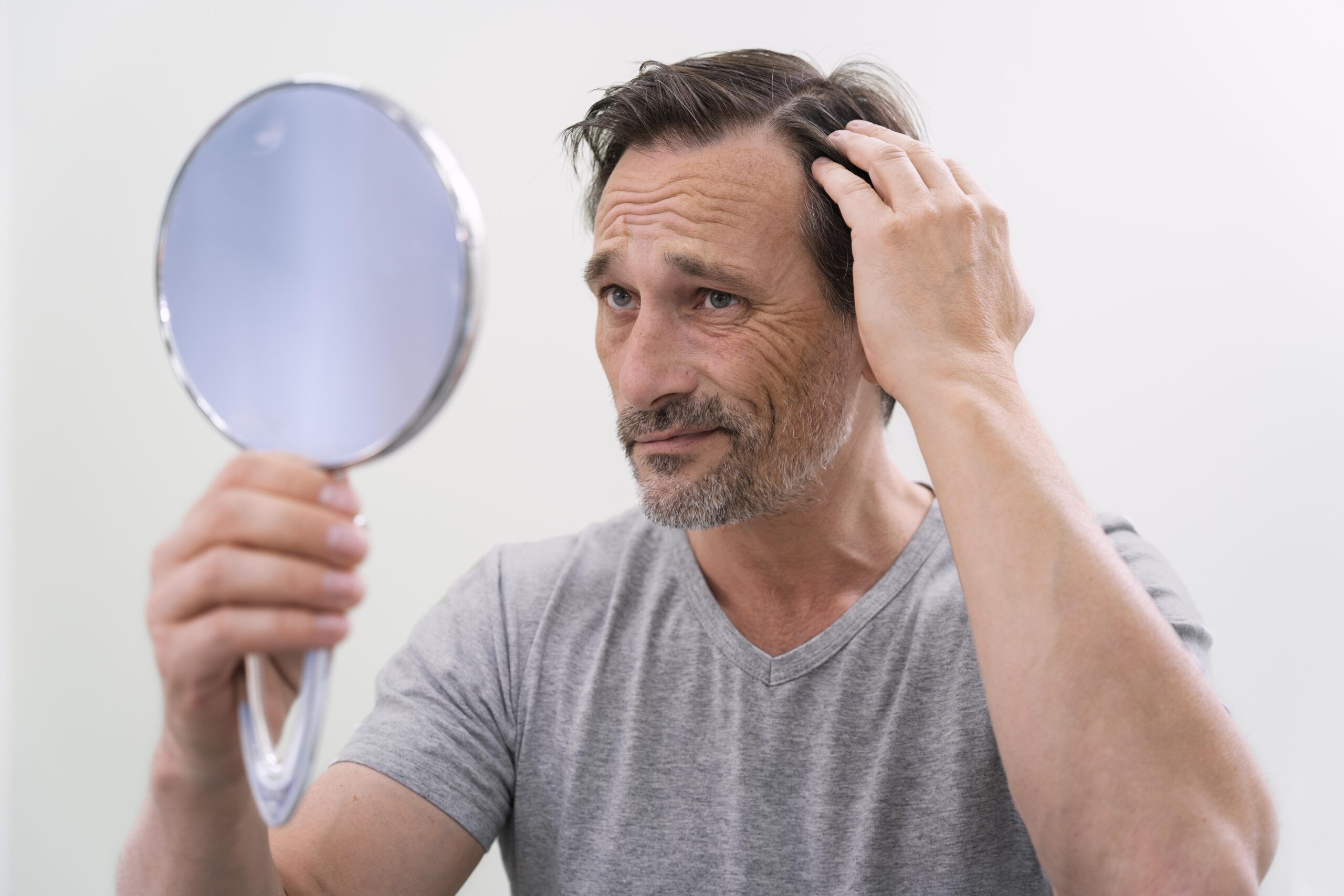
Most hair transplant patients navigate the recovery process alone in the sense that the emotional dimension of recovery is rarely addressed by the clinical team managing the physical one. Clinics provide detailed aftercare instructions, follow-up assessments, and medical support for the healing process. They rarely provide structured emotional support for the psychological experience of recovery.
The patients who navigate the psychological aspects of recovery best typically share certain common characteristics. They have at least one person in their life — a partner, a close friend, a family member — who knows about the procedure and provides realistic emotional support. Not reassurance that everything will definitely be fine, but genuine companionship in the uncertainty of the waiting period and genuine celebration of progress as it becomes visible.
Disclosure decisions about the procedure affect the emotional experience of recovery significantly. Patients who tell no one about the procedure carry the full weight of the emotional experience privately, with no outlet for the anxiety of the shock loss period or the relief of early regrowth. The social isolation of private recovery, while it protects privacy, adds emotional difficulty that patients who have even one trusted confidant don’t experience in the same way.
Online communities of people going through the same process can provide a specific kind of support that friends and family without personal experience of the journey can’t fully offer — the reassurance that comes from people who have been through the shock loss phase and are now at month eight with good growth, who understand the texture of the waiting period in a way that someone outside the experience can’t.
Professional psychological support — therapy or counseling — is not a last resort for patients who are genuinely struggling with the emotional aspects of hair loss or hair transplant recovery. It is appropriate whenever the psychological impact of the experience is significantly affecting daily function, sleep, relationships, or ability to engage normally with life.
What the Procedure Can and Cannot Provide
Being precise about this matters because the gap between expectation and reality is where most of the psychological suffering of hair transplant recovery lives.
A successful hair transplant can restore hair in areas where it has been lost. It can improve how a person looks in a way that is visible to themselves and to others. It can reduce the daily friction of managing appearance-related self-consciousness. It can create a physical change that genuinely supports improved self-perception over time. For many patients, it provides a meaningful and lasting improvement in quality of life that was genuinely limited by the psychological effects of hair loss.
A hair transplant cannot restore the person someone was before hair loss began. It cannot reverse the years of self-consciousness that preceded the procedure or automatically undo the identity changes that accumulated during that period. It cannot guarantee that the confidence it provides will be stable rather than conditional on the hair continuing to look exactly as it does at the peak result. It cannot resolve underlying psychological patterns around appearance, identity, or self-worth that were present before hair loss began and that hair loss amplified rather than created.
The procedure works on hair. The rest is separate work, and whether patients do that work is independent of whether the hair grows well.
Moving Forward With Realistic Understanding
The patients who report the most sustained psychological benefit from successful hair transplants are consistently those who entered the process with accurate expectations about both the physical and the emotional dimensions of the experience. They knew the hair would take a year to grow. They knew the shock loss would be distressing. They knew the emotional relief would come gradually and might be more modest than the dramatic transformation they’d imagined.
This framing doesn’t diminish the value of the procedure or discourage people from pursuing it. It places it accurately within a complete picture of what’s involved in genuinely improving your relationship with your appearance and your self-perception — a picture that almost always involves more than any single physical change can provide.
The hair matters. The emotions around it matter. Both deserve serious, honest attention — before the procedure, during the recovery, and in the longer life after the result is established. Treating the psychological dimension of this experience with the same seriousness that the clinical dimension receives is not weakness or over-sensitivity. It’s the approach that produces the most genuine and lasting benefit from an experience that, at its best, gives people something real back that hair loss took from them.
Find this helpful? Add Hairpol as a preferred source on Google.
Graft Range Calculator
Answer three questions to see the typical graft range for your situation — based on our published clinical guides.
This is a preliminary estimate, not a medical assessment. The exact number can only be determined by a doctor after examining your donor area and hair characteristics.
Get a Free Consultation
Answer a few questions and the medical team will review your situation.
