
Nobody walks into a clinic asking for G Cell by name. They walk in with a photo on their phone — their own hairline eighteen months ago — and a question they have already put to two or three other places: is there anything that works before surgery?
That question is exactly where this treatment lives. It is not a rescue for a scalp that has been smooth for a decade, and it is not a quieter version of a transplant. It occupies a narrower, more honest slot: follicles that are shrinking but still alive, early thinning that photographs worse than it looks in the mirror, and the months after an operation when new grafts are settling in and you want every advantage you can get.
The short answer: G Cell hair treatment is an injectable scalp therapy given as a course, not a one-off. Most plans run 3 to 6 sessions spaced 3 to 4 weeks apart, followed by a maintenance session every 4 to 6 months. It suits people with early to moderate thinning who still have visible hair in the treated area. Against PRP, the practical difference is that nothing is drawn and spun from your own blood, so the active content does not vary with your own plasma quality on the day. It will not regrow hair on skin where the follicle is already gone.
What G Cell actually is, and what it is not
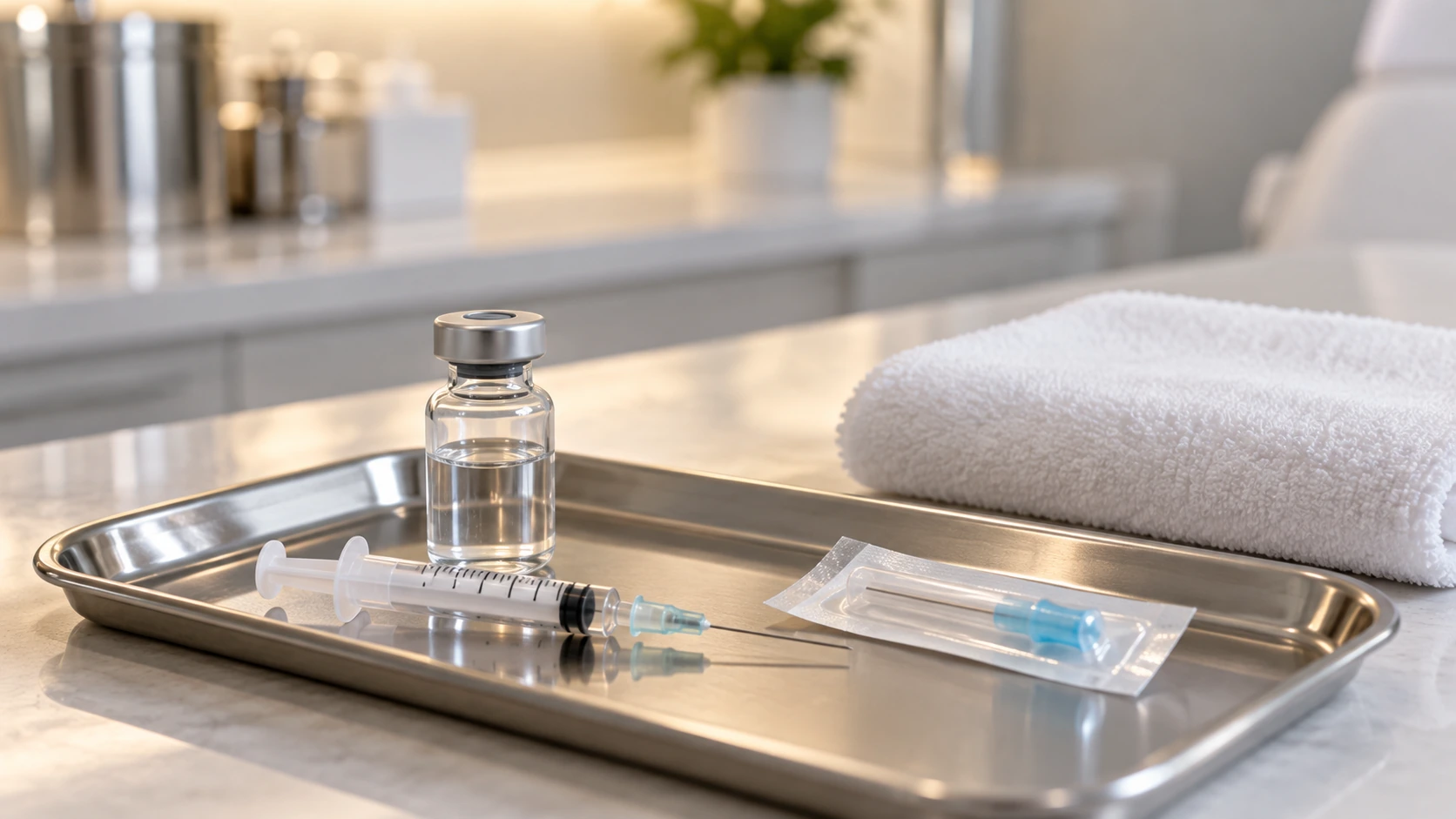
The name suggests something more exotic than the reality. In practice, G Cell therapy is a growth-factor and peptide preparation injected into the dermal layer of the scalp, in a grid pattern, across the thinning zone. The injections are shallow. The whole point is to deposit the material at the depth where the follicle’s own signalling machinery sits, rather than into fat or muscle where it would simply disperse.
What it is not: a stem cell transplant, a drug, or a replacement for medical treatment of hormonal hair loss. If your loss is androgenetic and progressing, G Cell does not switch off DHT. That job belongs to medication, and any decision about finasteride or minoxidil belongs to a doctor who has seen your history and bloodwork, not to a blog. Treating a signalling therapy as a substitute for the underlying cause is the single most common mistake patients make with any injectable hair treatment.
At Hairpol we are deliberately blunt about this in consultation, because the disappointment that follows an oversold treatment is worse than never having had it. A patient who understands that G Cell is a support measure gets what they expected. A patient who was told it would “reverse” a Norwood 5 crown does not.
Who G Cell suits — and who it does not
The best candidates share one feature: there is still something there to work with. If you part the hair in the thinning zone and see fine, short, pale hairs rather than bare skin, those are miniaturising follicles, and miniaturisation is at least partly reversible. That is the target.
Typical good fits are men in the first two or three years of visible recession, women with diffuse thinning across the mid-scalp where the part line has widened, patients recovering from a stress-driven shed who want to shorten the recovery, and post-operative patients in the window between month two and month eight after a transplant.
Poor fits are just as clear. A crown that reflects the light with no visible hair shafts is not a candidate — the follicle is not miniaturised, it is absent, and no injection brings it back. Active scalp disease, untreated inflammatory conditions, and any scarring alopecia are also exclusions. If you are not sure which category you are in, the honest answer is that a dermatoscope settles it in about four minutes, and that is worth far more than any online quiz.
How many G Cell sessions do you actually need?
This is the question people arrive with, and the honest answer has a range in it. Most courses run between 3 and 6 sessions, spaced three to four weeks apart. The lower end suits early thinning and post-transplant support. The higher end suits diffuse thinning across a larger surface area, or cases where the scalp condition has been neglected for years.
Session count is not a loyalty scheme. It is driven by the surface area treated and by what the scalp looks like at the halfway point. We photograph the same zones under the same light at session one and session four, because the eye is a terrible judge of its own scalp and the camera is not. If the mid-course photographs show no change in shaft calibre, extending the course is not automatically the right call — sometimes the correct answer is that this is the wrong treatment for this scalp.
After the initial course, maintenance is where most of the long-term benefit sits. One session every four to six months is the usual rhythm. Stop entirely and the scalp drifts back toward its baseline trajectory over roughly nine to twelve months, because the underlying cause of the loss has not changed.
What a session actually feels like
A session takes about twenty to thirty minutes of actual injection time, plus preparation. The scalp is cleaned, a topical anaesthetic is applied for around fifteen minutes, and then the grid is worked through methodically from the front of the treated zone backwards.
Patients describe the sensation as a series of quick pinpricks with a pressure feeling behind them. The crown tends to be less sensitive than the frontal hairline. There is no downtime in any meaningful sense: you will have small red dots for a few hours and occasionally mild tenderness overnight. You can fly the same day. You should not wash aggressively for twenty-four hours, and you should skip the gym and the sauna for a day, which has more to do with keeping the scalp clean than with any risk to the injected material.
People who have had hair mesotherapy before usually find the experience almost identical in feel. The difference is in what is being delivered, not in how it gets there.
G Cell vs PRP: what is actually different
This comparison drives most of the searches, so it deserves a straight answer rather than a marketing one.
PRP uses your own blood. Roughly 15 to 20 ml is drawn, spun in a centrifuge to concentrate the platelets, and the resulting plasma is injected back into the scalp. Its great virtue is that it is autologous — it is yours, so allergy risk is effectively nil. Its great weakness is variability. Platelet yield differs between people and between days, and it is affected by hydration, recent illness, anti-inflammatory medication and the spin protocol itself. Two patients receiving “PRP” can receive meaningfully different concentrations.
G Cell removes that variable. The preparation is standardised, so the dose you receive in session four matches the dose in session one. There is no blood draw, which matters more than you would think for patients who are needle-averse or who have had a difficult venepuncture experience. The trade-off is that it is not autologous, so candidate screening for allergy and for medical history is stricter.
Neither one is superior in the abstract. They target the same broad mechanism from different starting points. In practice we often use them in different situations: PRP around a transplant when the patient wants an autologous option and has no scheduling constraints, and G Cell when session-to-session consistency matters more, or when repeated blood draws over several months are unwelcome.
If you are weighing up injectables against surgery rather than against each other, the more useful comparison is laid out in our piece on when surgery is actually necessary. Injectables buy time and quality; they do not move hair from a donor zone to a bald one.
G Cell vs mesotherapy: overlapping, not identical
Hair mesotherapy is an umbrella term. It describes a delivery method — micro-injections into the scalp — rather than a fixed formula, and the cocktails used vary enormously between clinics. Some are essentially vitamin and amino acid blends. Some include biotin, some include peptides, and a few include ingredients with very little evidence behind them.
That is the real distinction. G Cell is a defined preparation with a defined protocol; mesotherapy is a technique that can carry almost anything. When a clinic quotes you a very low price for “hair mesotherapy”, the question to ask is not how many sessions but what exactly is in the syringe and at what concentration. You will learn a great deal from how quickly that question gets answered.
Both sit under the same umbrella of non-surgical hair treatments, and in a well-built plan they are alternatives rather than additions. Stacking three injectables in the same month is not three times the benefit; it is three times the cost and a scalp that has no rest between appointments.
Where G Cell fits around a hair transplant
The most defensible use of any scalp injectable is around surgery, and the logic is straightforward. A transplant moves permanent follicles into a thinning area. It does nothing for the native, miniaturising hairs still sitting between those grafts — and those native hairs are what make the result look dense at month six rather than month twelve.
There are two sensible windows. Before surgery, a short course can improve the condition of the recipient area and give a clearer picture of what native hair is salvageable, which in turn changes the graft plan. After surgery, we generally wait until the scalp has fully settled — commonly around month two to month three — before starting, and then run the course through the period when shock loss is at its most demoralising.
If you are in that stretch and the mirror is telling you the operation failed, read our explanation of why density looks thin in the first months before you book anything reactive. The number of patients who book a revision consultation in month five for a result that is entirely normal is higher than any clinic likes to admit.
What results look like, month by month
Nothing visible happens in the first month. That is not a failure; it is biology. A hair shaft grows roughly one centimetre a month, and a follicle that has been signalled to thicken still has to push that thicker shaft out through the skin.
The realistic sequence looks like this. Weeks 1 to 4: often a slight increase in shedding, which alarms people and is usually the synchronising of the hair cycle rather than a bad sign. Months 2 to 3: the first change most patients notice is not new hair but less hair in the shower drain. Months 3 to 6: shaft calibre improves, which reads to the eye as “fuller” rather than “more”. Months 6 to 12: whatever gain there is has stabilised, and maintenance decides whether it holds.
Be suspicious of anyone promising a count of new hairs. Response varies by patient, by the age of the loss, and by whether the underlying driver is being treated at all. What we can say honestly is that the patients who do best are the ones who started early and stayed consistent — and that is unglamorous advice, which is probably why it is rarely the headline.
What G Cell cannot do
It cannot create a hairline. It cannot fill a crown that has no follicles left in it. It cannot stop androgenetic hair loss, because it does not act on the hormonal driver. And it cannot substitute for a proper diagnosis: if the real problem is iron deficiency, thyroid dysfunction or a scarring condition, injecting growth factors into the scalp is treating the smoke and ignoring the fire.
We also do not claim it is an alternative to surgery for someone who needs surgery. If your thinning has crossed into visible scalp show through in daylight, honest planning starts with graft numbers, not syringes. Our article on what a hair transplant cannot fix takes the same approach in the other direction — every treatment has a boundary, and the useful clinics are the ones that name theirs.
The assessment that has to come first
Before any injectable is booked at Hairpol, three things happen. The scalp is examined under magnification to assess miniaturisation and follicular unit density. The pattern is staged, because a diffuse thinner and a patterned recession need different plans even when they photograph similarly. And the history is taken properly: medication, recent illness, family pattern, how fast the change happened.
That third part catches more than people expect. Sudden, diffuse shedding that started three months after a surgery, a fever or a crash diet is rarely pattern loss, and it frequently resolves on its own. Injecting it makes the clinic money and makes the patient feel active, but it does not change the course.
If you are unsure whether your thinning belongs in a treatment plan or a surgical one, send clear photographs of the front, top and crown taken in daylight without product in the hair — a photo assessment usually settles the question in a day, and you can book that assessment here without committing to anything.
What it costs and what moves the number
Injectable courses are priced by session count and by the surface area treated, not by a single headline figure, which is why a straight answer requires knowing what is being treated. A frontal zone is not the same as a full mid-scalp and crown.
Three things move the number in every clinic worth considering: how many sessions the plan calls for, how large the treated area is, and whether maintenance is quoted separately or bundled. Ask for all three in writing. A course quoted as a single price with no session count attached is not a quote, it is a number.
For context on how our surgical pricing is structured — and it is structured very differently, as a package rather than per session — see our hair transplant cost breakdown. Patients frequently arrive assuming treatments and surgery are priced the same way. They are not, and conflating them leads to some genuinely strange expectations.
Where it sits next to stem cell protocols
Patients often ask about G Cell and stem cell therapy in the same breath, as though they are competing products on a shelf. They are not the same category. Stem cell and placental stem cell protocols are a separate line of treatment with their own session structure, their own candidacy criteria and their own evidence discussion.
If you want the sceptical, evidence-first reading of that whole field rather than a service description, we wrote it: stem cell and exosome therapies, hype versus evidence. It is deliberately unenthusiastic in places. That is the point of it.
The practical takeaway is that you should be choosing one line of treatment and running it properly, not sampling three. Consistency over eight months beats novelty every time.
Questions worth asking before you book anything
A good consultation is adversarial in a friendly way. You should leave knowing the answers to four things: how many sessions, over what period, what the maintenance commitment looks like, and what specifically would make the clinic tell you to stop.
That last one is the tell. A clinic that has no stopping criterion has no clinical logic, only a schedule. At Hairpol the stopping criterion is the mid-course photograph — if shaft calibre has not moved by session four in a scalp that should have responded, we say so and we change the plan.
Bring your own information too. Photographs from one and two years ago are more useful than any description you can give, and a list of your current medication is more useful still. Our frequently asked questions page covers the practical logistics of visiting; the clinical part is best settled in conversation.
If you are choosing a direction this year
Here is the framing that helps most people. Injectable treatments are for preserving and improving what you still have. Surgery is for replacing what is gone. The two are not rivals, and the sequence matters: treatment that starts while there is still something to preserve is worth far more than treatment started after the window closed.
If you are in your twenties or thirties with early recession and a family history, a course of injectables alongside a proper medical plan is a reasonable way to buy years. If you are staring at daylight through the crown, no injectable is going to change that, and the useful conversation is a surgical one — you can start it on our hair transplantation page.
Either way, the decision improves enormously once someone has actually looked at your scalp. Everything above is a framework. Your scalp is the evidence.
Frequently Asked Questions (FAQ)
What is G Cell hair treatment?
G Cell is an injectable scalp therapy containing growth factors and peptides, delivered into the dermal layer of the thinning area in a grid pattern. It is given as a course of sessions rather than as a single appointment, and it targets follicles that are miniaturising but still alive.
How many G Cell sessions do I need?
Most plans run 3 to 6 sessions spaced 3 to 4 weeks apart. Early thinning and post-transplant support usually sit at the lower end; diffuse thinning over a larger area sits at the higher end. Maintenance afterwards is typically one session every 4 to 6 months.
Is G Cell better than PRP?
Neither is better in the abstract. PRP uses your own blood, so allergy risk is essentially nil but the concentration varies between patients and between days. G Cell is standardised, so the dose is consistent across sessions and no blood draw is needed. The right choice depends on your priorities and medical history.
Does G Cell work on a completely bald area?
No. If the scalp is smooth and reflects light with no visible hair shafts, the follicle is gone rather than shrunken, and no injectable brings it back. In that situation the honest conversation is a surgical one.
When will I see results from G Cell?
Nothing visible happens in month one. Most patients first notice less shedding around months 2 to 3, then improved shaft thickness between months 3 and 6. Whatever gain occurs has usually stabilised by month 12, and maintenance decides whether it holds.
Does G Cell hurt?
A topical anaesthetic is applied for about fifteen minutes beforehand, and most patients describe the injections as quick pinpricks with a pressure sensation behind them. Small red dots last a few hours and mild tenderness can last overnight.
Can I have G Cell after a hair transplant?
Yes, and it is one of the most defensible uses. We usually wait until the scalp has fully settled, commonly around month two to three, then run the course through the period when shock loss is most visible. It supports the native hair between the grafts.
Do I still need medication if I have G Cell?
If your hair loss is androgenetic, G Cell does not act on the hormonal driver, so it does not replace medical treatment. Any decision about finasteride, minoxidil or oral alternatives should be made with a doctor who has reviewed your history and bloodwork.
Find this helpful? Add Hairpol as a preferred source on Google.
Get a Free Consultation
Answer a few questions and the medical team will review your situation.
