
There is a line on almost every hair transplant quote that slides past without much scrutiny: PRP included. It sits there next to the graft count and the hotel nights, presented as a bonus that sweetens the package, and most people accept it the way they accept a free airport transfer, as a nice extra they will not think about again. That is exactly the wrong way to understand it. PRP is neither the miracle some clinics imply nor the empty upsell that skeptics claim. It is a specific, limited tool with a specific, limited job, and the value you get from it depends entirely on knowing where that job ends.
So let us have the honest conversation, the one that separates what PRP therapy with a hair transplant genuinely contributes from what the marketing quietly lets you assume. At Hairpol, we use PRP as an adjunct to surgery, not as a headline, because we think you make better decisions when you know precisely what you are paying for. This is not a sales page for a wonder treatment. It is a straight account of what the add-on adds, what it does not, and how to judge whether it belongs in your own plan.
What PRP actually is, minus the marketing
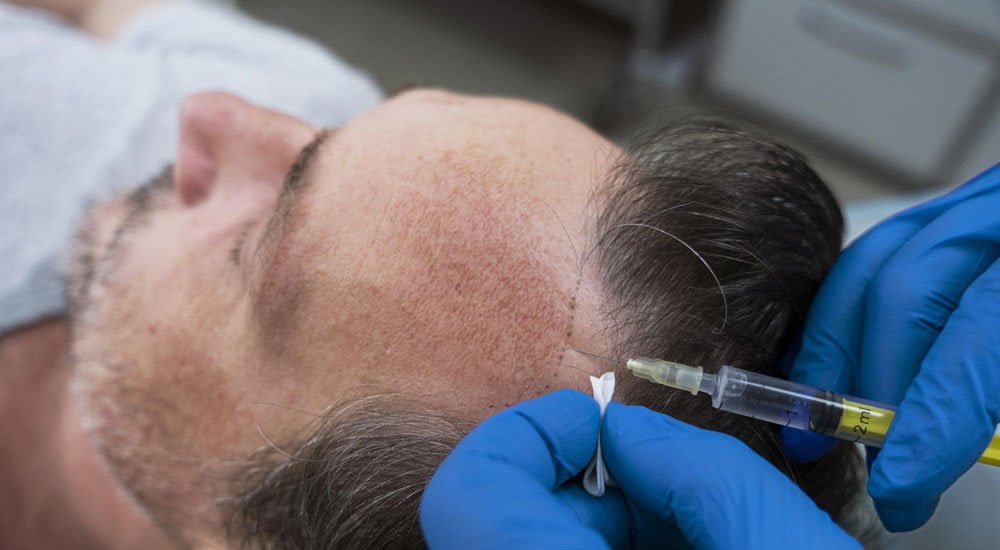
PRP, or platelet-rich plasma, is made from your own blood. A small sample is drawn, spun in a centrifuge to concentrate the platelets, and the resulting plasma is injected into the scalp. Platelets carry growth factors, the signalling molecules your body uses to trigger healing and tissue repair. The idea behind PRP therapy is simple: deliver a concentrated dose of those growth factors directly to the follicles and the healing tissue, and you nudge the local biology toward repair and growth.
That is the whole mechanism, and it is worth understanding plainly because it explains both the promise and the limits. PRP is not a drug, not a hormone, and not a transplant. It does not add new follicles, it does not change your genetics, and it does not create hair where the follicle is already dead. It supports the biology that is already there. Everything reasonable you can expect from PRP, and everything you should not expect, flows from that one fact. When a clinic talks about PRP as if it grows hair from nothing, they are selling past what the science supports.
Why pair it with surgery at all
The logic of combining PRP with a transplant is genuinely sound, and it is worth stating clearly before we get to the caveats. A transplant is, at the cellular level, a controlled injury. Follicles are removed from the donor zone and re-implanted into a recipient area that has to accept them, feed them with a new blood supply, and heal around them. Anything that credibly supports that healing environment is worth considering, and growth factors are, in principle, exactly that kind of support.
This is the honest case for PRP therapy with a hair transplant: it is aimed at the healing and survival phase, the vulnerable window when your grafts are settling in, and at the health of the native hair sharing that scalp. It is a support therapy layered onto the main event, not the main event itself. That framing matters, because a support therapy is judged by how much it improves an already-good procedure at the margins, not by whether it can carry the result on its own. Keep that distinction in mind and the whole PRP question becomes much easier to reason about.
What PRP adds: graft survival and healing
The most defensible reason to add PRP is to support graft survival in the early phase. When follicles are relocated, a proportion of what determines your final density comes down to how many of those grafts survive the transplant and establish themselves. The growth factors in PRP are thought to improve the local healing environment, encourage new blood vessel formation, and reduce the stress on freshly implanted follicles during the days and weeks when they are most fragile.
If PRP nudges even a modest additional percentage of grafts through that vulnerable window, that is a meaningful contribution, because those are follicles you do not get a second chance at. It can also support a smoother, quicker recovery of the scalp itself, with the healing tissue benefiting from the same growth-factor boost. None of this is dramatic or visible in a mirror the week after surgery. It works quietly, at the level of biology you cannot see. That invisibility is part of why PRP is easy to undervalue and also easy to oversell, and it is why honest expectations matter so much here.
What PRP adds: supporting your native hair
The second genuine contribution has nothing to do with the grafts and everything to do with the hair you already have. Around and behind a transplant sits your native, non-transplanted hair, some of it healthy, some of it thinning, some of it miniaturizing under the same process that thinned you in the first place. PRP is often used to support that native hair, aiming to strengthen existing follicles and keep the surrounding hair fuller and healthier for longer.
This matters more than people realize, because a transplant that looks great at first can be undermined if the native hair around it keeps thinning. Anything that helps hold that background hair steady protects the coherence of your whole result. PRP is one of the tools that can play into that maintenance picture. It is not the strongest tool for the job, and we will get to why, but as part of a layered approach to keeping the scalp healthy, it earns its place. Our team treats it as one input among several, not a standalone answer to ongoing loss.
What PRP does not do: it is not a substitute for surgery
Here is the limit that matters most, stated without hedging: PRP will not replace a hair transplant. If you have genuine pattern baldness, with areas where the follicles are gone or all but gone, no amount of platelet-rich plasma will bring dense, natural hair back to bare skin. PRP works by supporting follicles that still exist. Where there is nothing left to support, it has nothing to do. This is the single most important thing to understand before anyone sells you a course of injections as an alternative to surgery.
People occasionally arrive hoping PRP alone will rescue a receding hairline or fill a bald crown, and that hope, however understandable, sets them up for disappointment and wasted money. If surgery is what your pattern actually calls for, PRP is a complement to it, not a way around it. We walk through exactly when each tool is the right one in our comparison of hair transplant versus PRP versus medication and when surgery is actually necessary, because choosing the wrong tool for the stage of loss you are at is one of the most common and costly mistakes in this whole field.
What PRP does not do: it is not a substitute for finasteride
The second hard limit is just as important. PRP does not address the hormonal cause of male pattern hair loss. That loss is driven largely by DHT, a hormone that gradually shrinks susceptible follicles, and the medication that acts on that mechanism is finasteride. PRP does not lower DHT. It does not switch off the process that is thinning your native hair; it can only support the follicles while that process continues in the background.
This is why we are wary when PRP is presented as a gentler, needle-based alternative to taking a daily tablet. It is not doing the same job. Finasteride protects your native hair by attacking the cause; PRP supports the hair by improving its local environment. If your loss is active and hormonally driven, dropping the medication in favour of PRP alone means leaving the actual engine of your loss running untouched. The tools work at different points in the problem, and treating one as a swap for the other is a misunderstanding that can cost you native hair you did not have to lose.
It will not create new density on its own
Even setting surgery and medication aside, it is worth being blunt about what PRP does to density by itself: not enough to solve a real problem. In patients with early thinning and follicles that are stressed but still alive, a course of PRP may produce a modest improvement in the caliber and health of existing hairs, which can read as a slight increase in fullness. That is a real but small effect, and it fades without maintenance.
What PRP cannot do is manufacture the kind of density change that people picture when they imagine fixing their hair. It will not turn a Norwood 4 into a full head of hair. It will not rebuild a hairline. The visible transformation people want from hair restoration comes from adding follicles, which is surgery, or from halting loss, which is medication. PRP sits alongside both as a supporter, improving the odds and the environment at the edges. Judged as a booster, it can be worthwhile. Judged as a producer of new density on its own, it will always disappoint, and any clinic implying otherwise is overselling.
What the evidence actually says
Honesty about PRP means honesty about the evidence, which is genuinely mixed. There are studies suggesting PRP can improve hair density and support graft survival, and there are studies showing minimal or inconsistent effects. The reason for the inconsistency is not mysterious: PRP is not one standardized product. Preparation methods vary widely between clinics, from the centrifuge settings to the platelet concentration to how and where it is injected, and those differences change what the treatment actually delivers.
What this means for you is that PRP is best understood as a plausible, low-risk adjunct with real but variable benefit, not as a guaranteed intervention with a predictable, measurable payoff. Because it uses your own blood, the safety profile is reassuring and the downside is small. But you should treat grand promises about specific percentage gains with healthy skepticism. Our deeper look at whether PRP therapy after a hair transplant actually helps growth goes through the realistic picture in more detail, and the short version is that the benefit is real, modest, and worth having in the right context rather than transformative on its own.
How PRP is timed around a transplant
When PRP is used well, timing is deliberate rather than a single injection tacked onto surgery day. Some clinics apply PRP before the procedure to support the scalp and the follicles going in. Some use it during or immediately after implantation, on the reasoning that the grafts benefit most from growth-factor support in their earliest and most vulnerable hours. And many use it in sessions over the months that follow, to support the healing recipient area and the native hair as the grafts establish and enter their growth phase.
There is no single universally agreed protocol, which is partly why results vary and why the details of your plan should come from your clinic rather than a generic schedule. The reasonable principle is that PRP is a phased support therapy, most useful across the survival and early-growth window rather than as a one-off event. At Hairpol, when PRP is part of a plan, it is scheduled around your specific procedure and healing rather than dropped in as a token inclusion, because a support therapy only helps if it is delivered when the biology can actually use it.
Where it fits alongside other treatments
PRP is rarely the only supporting tool in a serious plan, and it is most useful understood as one layer among several. Mesotherapy, targeted scalp treatments, and medication all address different parts of the maintenance picture, and PRP overlaps with some of them while complementing others. The point of a layered approach is not to pile on every available treatment, but to match the supports to what your hair and your loss actually need.
Our hair treatments bring these supportive options together so they can be combined sensibly rather than sold piecemeal. For one patient the right layer might be PRP plus medication; for another, medication alone carries most of the weight and PRP adds little. The honest position is that PRP is a useful component of a maintenance strategy for the right person, not a mandatory add-on for everyone. Deciding whether it belongs in your plan is a question of your specific hair, not a box every patient should tick.
Who actually benefits from adding PRP
So who gets real value from pairing PRP with their transplant? Broadly, patients who still have a meaningful amount of native hair to support, whose loss is being managed with medication, and who want to give the healing environment and the surrounding hair every reasonable advantage. For a younger patient with active loss and plenty of vulnerable native hair, the maintenance case for supporting that hair is strongest, and PRP can be a sensible part of that layered protection.
Patients who take graft survival seriously and want to support the early healing window also have a rational reason to include it, given the low risk of using your own blood. The benefit will be modest and largely invisible in the short term, but for someone thinking in years rather than weeks, marginal gains to survival and native-hair health are worth having. The key is going in with correct expectations: PRP as an edge, a supporter, a booster to an already-solid plan, rather than as a treatment that will visibly change your hair by itself.
Who probably will not notice much
Equally honestly, there are people for whom PRP adds little of value. A patient who has already lost most of their native hair and has had a transplant into a largely bald area has little susceptible hair left to support, so the maintenance benefit that justifies much of PRP largely evaporates. There is not much native hair for the growth factors to strengthen, and the grafts, once survived and grown, are permanent regardless.
Someone expecting PRP to substitute for surgery or medication will also feel let down, not because PRP failed but because it was asked to do a job it was never capable of doing. And anyone hoping for a visible, dramatic increase in density from PRP alone is likely to conclude it did nothing, because the effect it produces is subtle by nature. None of this means PRP is worthless. It means the honest answer to whether you should add it is genuinely person-dependent, and a good clinic will tell you when the answer for you is probably no.
Is the add-on worth paying for
The practical question most people actually have is whether the PRP line on the quote is worth the money. When PRP is bundled in at little or no extra cost, the calculus is easy: it is low-risk, plausibly beneficial, and there is no strong reason to refuse it. When it is sold as a significant paid add-on or an expensive ongoing course, the calculus deserves more thought, and it depends on how much native hair you have to protect and whether your expectations are set correctly.
The trap to avoid is paying premium prices under the impression that PRP will transform your result, because it will not. Paying a reasonable amount to support graft survival and native-hair health as part of a considered plan is defensible; paying a lot in the hope of a visible density miracle is not. At Hairpol, we would rather you understand PRP as the modest, honest booster it is and decide accordingly than have you sign up for a costly course sold on promises the treatment cannot keep. The value is real, but it is measured at the margins, and it should be priced that way.
How Hairpol thinks about PRP as an adjunct
Our whole approach to PRP follows from treating it as what it is: a support therapy with a real but bounded role. We do not present it as a substitute for the surgery that actually restores your density, nor as a replacement for the medication that actually protects your native hair. We present it as one layer in a plan whose foundation is a well-designed transplant and, where appropriate, proper maintenance. Used that way, PRP earns its place. Used as a headline, it sets patients up to be disappointed.
That is why the conversation we have with you about PRP is the same one we have about every part of your treatment: honest about the benefit, honest about the limits, and tailored to your actual hair rather than a package template. If you understand that PRP therapy with a hair transplant is there to improve the odds and the environment at the edges, not to carry the result, you will value it correctly and never feel misled by it. That clarity, more than any single treatment, is what protects your outcome and your money over the long run.
At Hairpol, we would rather give you the honest picture of where PRP helps and where it does not than let a bundled line on a quote do your thinking for you. If you are planning a procedure and want to understand which support therapies genuinely make sense for your hair, reach out to our team. Explore our approach to hair transplantation, where every add-on, PRP included, is treated as part of a considered plan rather than a promise you did not ask for.
Frequently Asked Questions (FAQ)
What does PRP actually add when combined with a hair transplant?
PRP delivers concentrated growth factors from your own blood to the scalp, which is thought to support graft survival in the fragile early phase, encourage healing, and help keep your native, non-transplanted hair healthier. Its role is to support an already-good procedure at the margins, not to change the result on its own.
Can PRP replace a hair transplant?
No. PRP works by supporting follicles that still exist. Where the follicles are gone, as in genuine pattern baldness, it has nothing to work with and cannot bring back dense, natural hair on bare skin. If your pattern calls for surgery, PRP is a complement to it, not an alternative.
Is PRP a substitute for finasteride?
No. PRP does not lower DHT, the hormone that drives male pattern loss, so it does not address the cause the way finasteride does. It only supports the follicles while the underlying process continues. Dropping medication in favour of PRP alone leaves the actual engine of your loss running untouched.
Will PRP create new density by itself?
Not to any meaningful degree. In early thinning it may modestly improve the caliber and health of existing hairs, which can read as slightly more fullness, but that effect is small and fades without maintenance. It will not rebuild a hairline or fill a bald crown; visible density comes from surgery or from halting loss.
When is PRP used around a transplant?
There is no single agreed protocol. Some clinics apply it before surgery, some during or immediately after implantation to support fragile grafts, and many use sessions over the following months to support healing and native hair. It is best understood as a phased support therapy, timed by your clinic to your specific procedure.
Does the evidence support PRP?
The evidence is mixed, largely because PRP is not standardized; preparation and injection methods vary widely between clinics. The honest picture is a plausible, low-risk adjunct with real but variable benefit, not a guaranteed intervention. Because it uses your own blood, safety is reassuring, but you should treat specific percentage promises with skepticism.
Who benefits most from adding PRP to a transplant?
Patients with a meaningful amount of native hair to support, whose loss is managed with medication, and who want to give graft survival and the surrounding hair every reasonable advantage. Younger patients with active loss often have the strongest maintenance case. The benefit is modest and largely invisible short term, so expectations must be correct.
Is paying extra for PRP worth it?
When PRP is bundled at little or no extra cost, it is low-risk and reasonable to accept. When it is an expensive add-on, the value depends on how much native hair you have to protect and whether your expectations are realistic. Paying a premium expecting PRP to transform your result is a mistake, because it works at the margins, not as a density miracle.
Find this helpful? Add Hairpol as a preferred source on Google.
Get a Free Consultation
Answer a few questions and the medical team will review your situation.
