

The most valuable sentence you can hear in a consultation is not “yes, you’re a great candidate.” It’s the sentence that comes before it, the one that maps out exactly what surgery will never do for you. Most clinics skip that part. It doesn’t sell, it slows the booking down, and it forces a conversation about medication and time and biology instead of graft numbers and flight dates.
But that sentence is the one that protects you. Almost every unhappy hair transplant patient we meet at Hairpol is unhappy for the same reason: nobody drew the boundary. The surgery may have been technically fine. The grafts grew. The problem was that the operation was asked to solve something it was never capable of solving. So here is the inventory nobody hands you before you pay a deposit, limit by limit, with the honest alternative for each one.
Surgery Moves Hair. It Does Not Make Hair.
Everything on this page follows from one biological fact, and if you hold on to it you’ll be able to evaluate any clinic’s promise in about ten seconds. A hair transplant is a redistribution procedure. Follicles are taken from an area of your scalp that is genetically resistant to DHT — usually the back and sides — and placed into an area that is not. Nothing is manufactured. Your total follicle count on the day you leave the clinic is the same as the day you arrived; the follicles are just standing somewhere more useful.
That single fact generates all the limits below. It’s why surgery cannot protect the hair it didn’t touch. It’s why density has an arithmetic ceiling. It’s why a scalp that is inflamed or immunologically hostile is a bad destination for transplanted follicles no matter how skilled the surgeon is. And it’s why the question “how many grafts do I need?” is far less important than “what is my scalp going to look like in fifteen years, with and without treatment?”
Clinics that lead with graft counts are answering the easy question. At Hairpol we prefer to start with the hard one, because the hard one determines whether the easy one is even worth asking.
Limit One: A Transplant Does Not Stop Hair Loss
This is the limit that causes the most disappointment, and it’s the one most consistently glossed over in sales conversations. The grafts you receive are permanent in the sense that they carry their donor genetics with them. They keep growing in their new home for decades. That part is real.
What isn’t real is the idea that surgery pauses your androgenetic alopecia. It doesn’t. The native, non-transplanted hairs sitting between and behind your new grafts are still under hormonal attack. They will keep miniaturising on their own schedule, indifferent to the fact that you’ve had an operation. So two things happen simultaneously after surgery: your transplanted hair thickens, and your native hair thins.
For a year or two the first process dominates and you look better every month. Then, if nothing else has changed, the second process catches up. Patients describe it as their result “fading,” but that’s not what’s happening. The transplant is intact. The background it was placed against has moved. The classic version of this is a man in his early thirties with a beautifully restored front and a new gap opening behind it — sometimes called the halo effect or a transplant island — because the mid-scalp kept receding while the grafts stayed put.
What to Do Instead: Treat the Loss, Then Transplant the Gap
The constructive answer here is not “don’t have surgery.” It’s “don’t have surgery alone.” Medical therapy and surgery are not competing options; they do completely different jobs. Surgery restores what is already gone. Medication defends what you still have.
For most men that means a DHT-blocking medication such as finasteride, ideally started and tolerated well before the operation, plus topical minoxidil to support the hairs that are still cycling. For women, and for men who can’t take oral therapy, the plan is built differently — topical options, hormonal assessment, nutritional correction, and in-clinic support such as mesotherapy and PRP to improve the quality of the scalp environment. None of this regrows a bald zone. All of it slows the clock on the zone that isn’t bald yet.
At Hairpol, when a patient tells us they’re unwilling to take any maintenance treatment at all, that’s not an automatic refusal — but it changes the design completely. We plan a more conservative hairline, we reserve donor grafts for the future recession we now expect, and we say out loud that a second procedure is likely. Surgery without a maintenance plan isn’t forbidden. It’s just a different, more expensive, more staged path, and you deserve to know that before you book rather than at month eighteen.
Limit Two: You Cannot Buy Back Teenage Density
Here’s the arithmetic that no marketing page wants to show you. A healthy young scalp carries roughly 80 to 100 follicular units per square centimetre. A safe lifetime donor harvest from a good donor area is somewhere in the region of 6,000 to 8,000 grafts across all sessions — for many people it’s less. The bald or thinning area you want covered might be 100 to 200 square centimetre.
Divide it out and the picture is unavoidable. Even a generous surgical plan places grafts at something like 30 to 45 units per square centimetre, and only in priority zones. That is a third to a half of original density, spread over a region that used to be full. No surgeon on earth can double your donor supply, and any clinic promising “full density restoration” across an advanced Norwood pattern is either redefining the words or planning to overharvest your donor area, which creates a permanent second problem.
The good news is that density and the appearance of density are not the same thing. Scalp visibility drops sharply once you pass roughly half of native density, especially with the right angle, direction and graft distribution. Hair also lies over hair. Which is why a well-planned 3,500-graft result can look convincingly full while an aggressively packed, badly distributed 5,000-graft result looks thin and patchy in daylight.
How Coverage Is Actually Engineered
Understanding this changes what you should be asking a surgeon. Coverage is bought through design, not volume. The front third of the scalp — the part that frames your face and that you see in every mirror and every photograph — gets the highest concentration of grafts and the finest single-hair units at the leading edge. Behind it, density steps down in a gradient so there’s no visible line where the transplant starts.
The crown is treated as a separate budget line because it behaves differently: it’s a whorl, it demands a spiral direction, and it’s a hungry area that can swallow thousands of grafts and still look sparse if your loss pattern is expanding. Sometimes the honest recommendation is to leave the crown alone entirely for now and spend the donor supply where it does the most visual work.
Hair calibre matters enormously here too. A patient with thick, coarse, slightly wavy hair gets far more visual coverage per graft than a patient with fine, straight, high-contrast hair against pale skin. Two people with identical graft counts can walk away with visibly different outcomes for reasons that have nothing to do with the surgeon’s technique. That’s not unfairness, it’s physics — and it’s why a proper assessment measures your hair, not just counts your bald patch.
Limit Three: Unstable Loss Is Not a Surgical Moment
If your hair loss is actively galloping — you’re twenty-three, you shed heavily every month, and the pattern looked different a year ago — surgery is not the answer yet. Not because you’ll never be a candidate, but because operating into a moving target produces a result that has to be chased with more surgery.
The problem is that nobody can predict from a single snapshot where your pattern will stop. You can be Norwood 3 at twenty-four and Norwood 6 at thirty-four, or you can stabilise and stay put. A surgeon designing a hairline for a twenty-four-year-old is designing for a face that will be sixty. Lower it too aggressively now and you’ve spent grafts on a decorative frame while the area behind it collapses, and you’ll be back for repair work that costs more donor hair than the original operation did.
The constructive move is medical stabilisation and observation — often twelve to twenty-four months of consistent treatment with documented photography, so that the trajectory reveals itself. Patients hate this answer. It feels like being told to wait while the problem gets worse. In practice it usually does the opposite: treatment slows the loss, the pattern declares itself, and when you do operate, you operate once and well. We’ve written about this decision in more depth in our guide to who should delay a hair transplant and why.
Limit Four: Alopecia Areata Is Not a Transplant Problem
Not all hair loss is pattern hair loss, and this is where the limits become absolute rather than a matter of planning. Alopecia areata is an autoimmune condition in which your immune system attacks your own hair follicles, producing sharply defined round patches that can appear anywhere on the scalp or body, sometimes overnight.
Transplanting into it makes no sense, and here’s why: the follicle isn’t destroyed, it’s suppressed. The immune attack is against the follicle itself, so grafts moved into an affected area are attacked with the same enthusiasm as the native hair. You would be spending irreplaceable donor follicles to feed the same immune process. Worse, the donor area itself is not immune — areata can appear on the back of the scalp too.
The right route is dermatological, not surgical: topical or intralesional corticosteroids, topical immunotherapy, and in recent years JAK inhibitors for severe or extensive disease. Many patches also regrow spontaneously. Surgery only enters the conversation, very cautiously, in cases that have been completely stable and inactive for years, and even then it’s a considered exception rather than a standard plan. If you have well-demarcated round patches rather than a receding pattern, your first appointment should be with a dermatologist.
Scarring Alopecias: Why Active Inflammation Rejects Grafts
The cicatricial (scarring) alopecias — lichen planopilaris, frontal fibrosing alopecia, discoid lupus, folliculitis decalvans, central centrifugal cicatricial alopecia — are a different category again. In these conditions, inflammation destroys the follicle and replaces it with fibrous tissue. The hair loss is permanent because the follicular structure is gone, not just shrunken.
Two things make surgery hazardous here. First, the recipient bed is scar tissue with compromised blood supply, so graft survival is far lower than in a healthy scalp. Second, and more importantly, an active scarring alopecia will attack transplanted follicles exactly as it attacked the originals. Operating during an active phase means burning donor hair to fuel an ongoing disease. Some of these conditions can even be provoked by surgical trauma.
The constructive path is diagnosis first — often a scalp biopsy — then medical suppression of the inflammation. Surgery is only considered after a long, documented quiet period, usually measured in years rather than months, with the patient fully informed that survival rates are lower and a test session may be wise. At Hairpol, if a scalp shows the shiny, smooth, follicle-free patches and loss of follicular openings that suggest scarring, we stop the surgical conversation and start a diagnostic one. Booking that patient would be easy. It would also be wrong.
Telogen Effluvium: The Loss That Repairs Itself
Then there’s the category where surgery is not just unnecessary but actively wasteful. Telogen effluvium is a diffuse shedding triggered by a shock to the system: major illness, surgery, high fever, severe iron or vitamin D deficiency, thyroid dysfunction, crash dieting, childbirth, a new medication, or intense psychological stress. It typically shows up two to four months after the trigger and presents as a frightening amount of hair in your hands and on the shower floor, thinning across the whole scalp rather than in a pattern.
The crucial feature is that the follicles are alive. They’ve been pushed prematurely into the resting phase, and once the trigger is removed they cycle back. Most cases resolve within six to nine months with no intervention at all beyond correcting the cause.
Operating on someone in the middle of a telogen effluvium is the clearest example of surgery answering the wrong question. You’d be transplanting into a scalp that is about to regrow its own hair, and you’d be harvesting from a donor area that is also shedding, which makes any assessment of donor quality unreliable. The correct response is blood work — ferritin, full blood count, thyroid panel, vitamin D — a medication review, and time. If diffuse shedding is your main symptom and there’s a clear stressor in the last six months, no responsible clinic should be quoting you a graft price.
Limit Five: Surgery Cannot Change the Hair Itself
People often arrive hoping that a transplant will upgrade their hair, not just move it. It won’t. A transplanted follicle keeps every characteristic it had in the donor area: its calibre, its curl pattern, its colour, its growth rate, its texture. If your hair is fine at the back of your head, it will be fine at the front. If it’s coarse and wiry in the donor zone, it arrives coarse and wiry.
This matters practically. Fine hair means each graft delivers less visual coverage, so a fine-haired patient needs more grafts for the same apparent density — and may hit the donor ceiling sooner. Very high contrast between dark hair and light scalp also makes any given density look thinner than it is. Neither of these can be corrected surgically.
Nor can a transplant fix greying, restore lost shine, thicken existing native strands, or change how your hair behaves in humidity. If your complaint is texture or general thinning across a scalp that still has hair everywhere, surgery is the wrong tool. Medical therapy, scalp health treatments and, in some cases, mesotherapy or PRP can improve the calibre and cycle length of hairs that are still there. Adding grafts to a scalp that isn’t bald is a good way to spend money and donor supply on a change nobody notices.
Limit Six: A Transplant Cannot Carry Your Self-Image
This is the most uncomfortable limit and the one clinics almost never discuss, but it deserves a place in this inventory because it determines satisfaction more reliably than graft counts do.
Hair loss genuinely affects confidence — that isn’t vanity, and we’d never dismiss it. Restoring a hairline can change how people carry themselves in a way that shows in their posture, not just their photographs. But surgery restores hair. It doesn’t restore a relationship, undo a difficult period, or resolve a broader dissatisfaction with your appearance that happens to have settled on your hairline.
There’s a specific clinical concern here too. Body dysmorphic disorder is a condition in which a person is preoccupied with a flaw that is minimal or invisible to others, and it’s more common in cosmetic surgery populations than in the general public. The warning signs are recognisable: distress out of all proportion to the visible change, hours a day spent examining the area, multiple previous procedures that never satisfied, an expectation that the surgery will fix life circumstances rather than an appearance. In these cases surgery reliably fails — not technically, but personally. The patient sees the same flaw afterwards, or relocates the dissatisfaction somewhere else. The evidence-based answer is psychological support, and it works far better than a scalpel.
At Hairpol, part of an honest consultation is listening to what a patient expects the result to change. If the answer is “I’d like my hairline back,” that’s a surgical conversation. If the answer is “everything will be different afterwards,” we slow down and talk about it properly, because that expectation isn’t something any surgeon can meet.
Limit Seven: A Body That Isn’t Ready Changes the Risk Maths
A hair transplant is minor surgery, but it is still surgery — thousands of micro-incisions, several hours under local anaesthetic, and a healing process that depends entirely on your circulation and immune function. General health isn’t a box-ticking formality; it determines whether the grafts survive.
Poorly controlled diabetes is the clearest example. High blood glucose impairs wound healing and raises infection risk, and micro-vascular disease reduces the blood supply the grafts depend on in their first critical days. That doesn’t mean diabetic patients can’t have surgery — well-controlled patients with good HbA1c results routinely do — but uncontrolled disease should be corrected first, with a physician, not worked around.
The same logic applies to uncontrolled hypertension, which increases bleeding during the procedure; blood-thinning medication that may need supervised adjustment; active scalp infection or severe untreated seborrhoeic dermatitis; bleeding disorders; recent cardiac events; and heavy smoking, which measurably constricts the microcirculation feeding new grafts. Certain medications, including recent isotretinoin, change tissue healing enough to justify a waiting period.
None of these are permanent disqualifications in most cases. They’re sequencing problems. Fix the medical issue, then operate. A clinic that doesn’t ask detailed health questions before quoting you a price isn’t being efficient — it’s skipping the part that protects you.
Limit Eight: When the Donor Is Already Spent
The hardest consultations are the ones where the answer is that there isn’t enough hair left to work with. This happens to patients who have had two or three previous procedures at high-volume clinics, to those who were operated on too young and chased their loss with repeated sessions, and to anyone whose donor area was overharvested by a surgeon who prioritised graft count over long-term supply.
You can see it: a see-through back and sides, visible white dots where follicular units were extracted, a donor zone that no longer camouflages itself even at moderate hair length. Once the donor is depleted, no technique retrieves it. Extraction technology has improved, but there is no method that creates new follicles.
What remains are honest, useful options rather than surgical ones. Body hair transplantation — usually beard, sometimes chest — can supply limited additional grafts, though the hair characteristics differ and survival rates are lower. Scalp micropigmentation is often the most transformative single intervention for a depleted donor, because it reduces the contrast between scalp and hair and disguises both thinning and extraction marks. Medical therapy protects whatever native hair remains. Modern hair systems have improved dramatically. And for some patients, a well-executed short crop with SMP is genuinely a better outcome than a fourth operation that spends the last of the reserve.
What a Transplant Genuinely Does Well
None of this is an argument against surgery. It’s an argument for using it precisely. Within its limits, a hair transplant does something no medication can: it puts permanent, growing hair into an area that had none, and it does so with a result that is yours, washable, cuttable, and requires no daily maintenance.
It rebuilds a receded hairline and restores the frame of the face. It fills a defined bald zone in a patient whose loss pattern has declared itself. It repairs a temple point, softens an aggressive widow’s peak, camouflages a scar, adds density to a thinning mid-scalp when the native hair is stable, and restores a crown in the right candidate. It works reliably in stable pattern loss with a good donor supply and a realistic design, which describes a large proportion of the people who walk through our door.
The difference between a satisfied patient and a disappointed one is rarely the surgeon’s skill. It’s whether the operation was asked to do a job it can actually do. If you want more on the gap between what patients imagine and what happens, our guide to hair transplant expectations versus reality covers the emotional and visual timeline in detail, and our piece on whether a hair transplant works for everyone looks at candidacy from the other direction.
Why a Clinic That Can Say No Is Worth More
There’s a commercial reason limits go unmentioned. A consultation that ends in a booking pays. A consultation that ends in “come back in eighteen months, here’s a treatment plan in the meantime” does not. In a market where hundreds of clinics compete on price and speed, the pressure runs entirely towards yes.
That’s exactly why the refusals matter. A clinic willing to turn away a young patient with unstable loss, to send a patient with round patches to a dermatologist, to tell someone with a depleted donor that a fourth surgery would be a mistake, or to explain that a diffuse shed will resolve on its own — that clinic is demonstrating something you cannot verify from before-and-after galleries. It’s demonstrating that its recommendations are driven by your outcome rather than its calendar.
At Hairpol we’d rather lose a booking than produce a result someone regrets in three years, and a meaningful number of consultations here end without a surgery date. Some of those people come back later, properly stabilised and properly planned, and get a much better outcome than they would have got on the day they first walked in. Others never needed surgery at all, which is also a good result.
How to Read Your Own Case Before You Book
Before any consultation, you can do a surprising amount of the assessment yourself. Look at the shape of your loss: is it a receding pattern at the temples and crown, or a diffuse thinning everywhere, or defined round patches? Pattern loss is surgical territory. Diffuse and patchy loss usually is not, at least not yet.
Check the timeline. Has this been happening slowly over years, or did it start suddenly a few months ago? Sudden diffuse shedding points to effluvium and a medical workup. Ask whether anything changed in the six months before it started: illness, weight loss, new medication, pregnancy, a period of extreme stress.
Look at the back of your head with two mirrors or a phone camera. Density there is your entire budget. If it’s thinning too, no plan can be aggressive. Then be honest about your age and your family history, because both predict where this is heading. And decide in advance whether you’re willing to take maintenance treatment, because that single answer changes the design more than any technology choice will.
Bring these observations to your consultation and ask the surgeon to respond to them specifically. A good clinician will engage with each one. A sales team will steer you back to graft numbers and package prices.
The Questions That Reveal an Honest Clinic
Ask what your loss will look like in ten years without treatment, and whether the proposed design accounts for it. Ask how many grafts are being reserved for future sessions rather than spent now. Ask what happens to the native hair between the new grafts, and what the plan is when it goes. Ask whether the person designing your hairline is a doctor and whether that doctor will be present throughout the procedure. Ask what would make you a poor candidate, and listen carefully to whether the answer is specific or evasive.
The answers you want are unglamorous. A good clinic will describe a staged plan, a conservative hairline, a maintenance protocol and a realistic density target. It will show you results from patients with your hair type and your degree of loss, not its single best case. It will put limits in writing. If every question is answered with reassurance and no question is answered with a constraint, you are talking to a sales operation rather than a medical one.
You’re allowed to leave a consultation without booking. You’re allowed to ask for a second opinion, to request the reasoning behind a graft number, or to say that you’d like to try medical therapy for a year first. Any clinic that treats those requests as an inconvenience has told you everything you need to know.
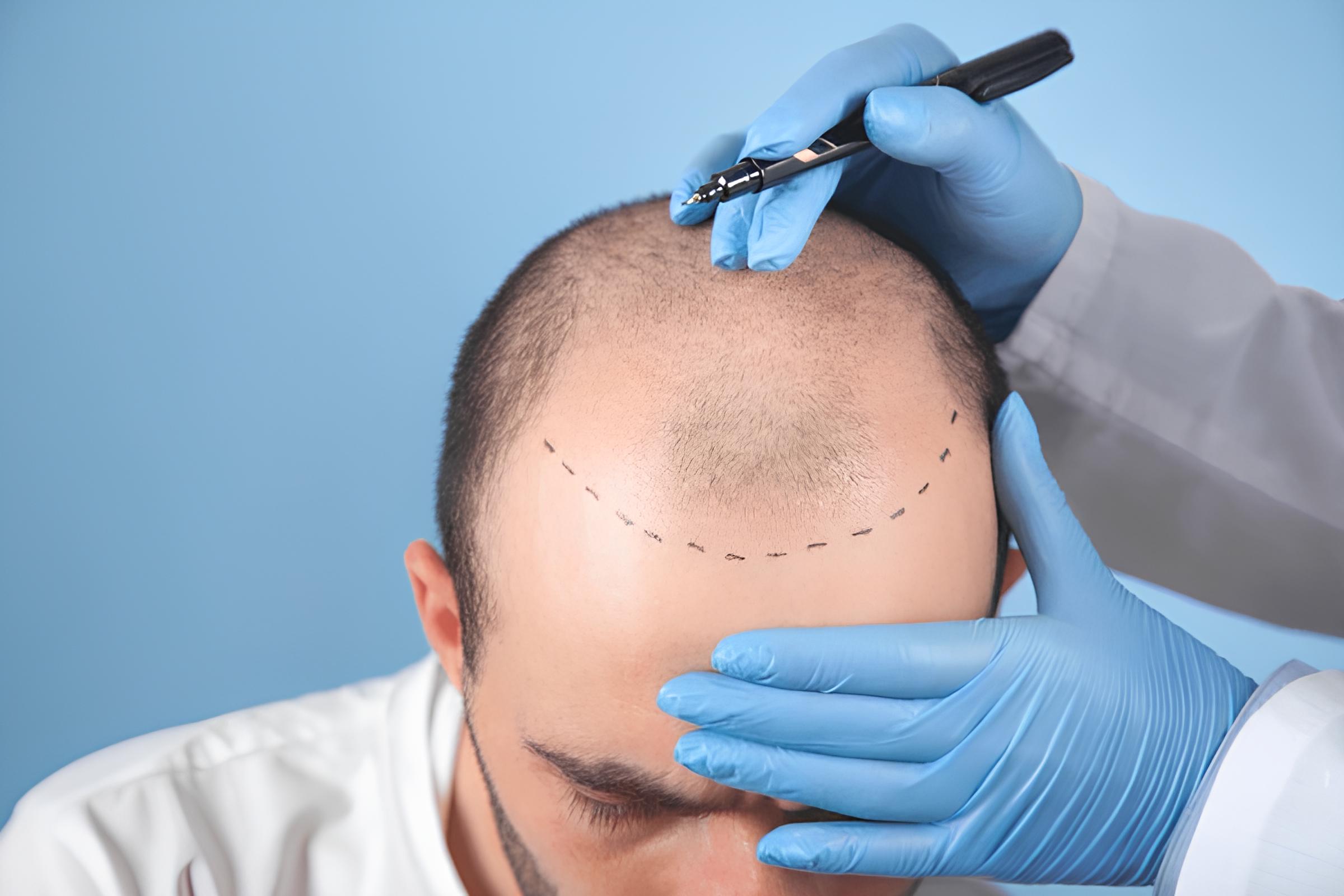
If you’ve read this far and recognised your own situation in one of these limits, that’s useful information rather than bad news. Knowing that surgery won’t stop your loss tells you to start treatment. Knowing that your donor sets a ceiling tells you where to spend it. Knowing that your pattern isn’t settled tells you to wait and document. At Hairpol we’d rather have that conversation with you honestly, in detail, and without a countdown timer on a discounted package. If you’d like an assessment that begins with what is realistic rather than what is bookable, our team can walk you through hair transplantation at Hairpol and tell you plainly whether surgery is the right answer for you — or whether something else is.
Find this helpful? Add Hairpol as a preferred source on Google.
Get a Free Consultation
Answer a few questions and the medical team will review your situation.
