
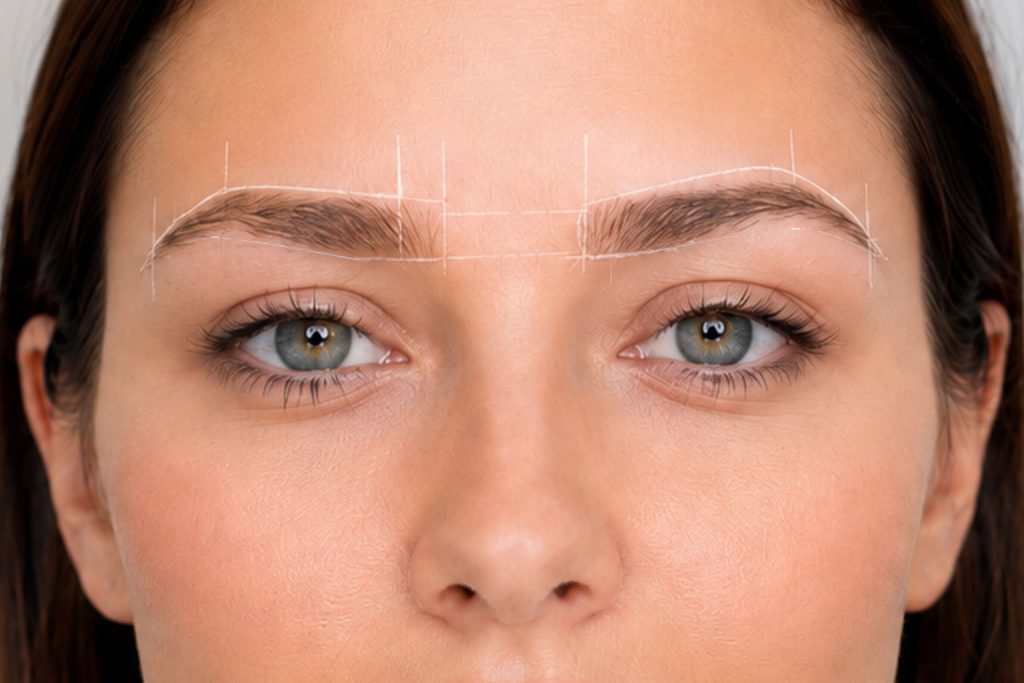
Almost every question people ask before an eyebrow transplant is about the surgery. How many grafts, which angle, how the arch will sit. Almost every question they ask afterwards is about something much smaller and much more constant: what to do with these hairs, every week, for the rest of their life. That gap is the reason so many good eyebrow results end up looking slightly off a year later. The design was fine. The maintenance was never explained properly.
This is the part of the journey nobody photographs. It is also the part that decides whether your brows read as naturally yours or as something you had done. If you want the planning and design side of it, the shape logic, the graft counts, the anatomy of an arch, that is covered in detail in our guide on what to expect and how natural eyebrow shapes are designed. What follows here is everything that happens after you leave the chair.
The First Forty-Eight Hours Are About Restraint
You will leave the clinic with two rows of very small dots, each one holding a single hair, and a faint pinkness across the brow area. Within a few hours, tiny crusts start to form around each implanted hair. They are smaller than the ones people get on the scalp because the grafts themselves are smaller, usually single-hair follicles taken from a fine, soft part of the donor zone. That is exactly what should happen. The crust is a biological seal, not a cosmetic problem.
The instruction for the first two days is almost embarrassingly simple: leave them alone. No water directly on the brows, no rubbing, no sleeping face-down, no reaching up absent-mindedly when your forehead itches. Sleep on your back with your head slightly raised. Most of the graft loss we see in the first week comes from a moment of unthinking contact, not from anything medical.
Some patients get mild swelling around the eyelids on day two or three. It looks alarming and resolves on its own. Cold compresses can be held near the temples and cheekbones, but never pressed onto the transplanted area itself. At Hairpol, we tell patients that these first two days are the only part of the whole process where doing nothing is the entire job.
Washing: Later, Gentler, and With Your Fingertips
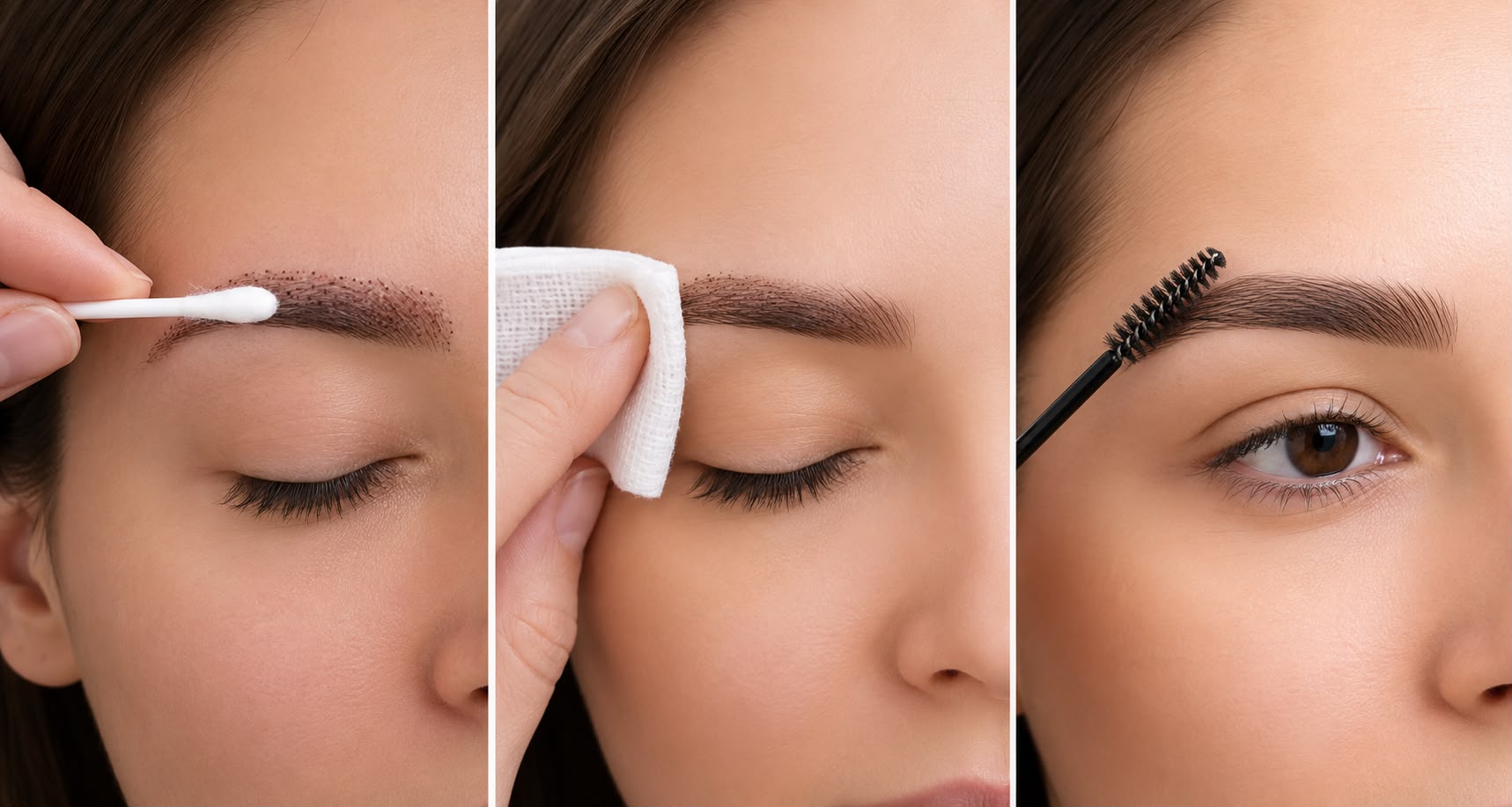
Brow washing usually starts on the third day, though the exact timing is set by your surgeon and depends on how the grafts were placed. The technique matters more than the calendar. You wet the area with lukewarm water using a cupped hand or a soft cloth held above the brow so the water runs down rather than hits directly. A very small amount of the gentle lotion or foam you were given goes on with your fingertip, dabbed rather than rubbed, and is rinsed the same way.
No shower head aimed at your face. No washcloth dragged sideways across the brow. No exfoliating anything. The motion you want is a light tapping, always in the direction the hairs are lying, never against them. Pat dry with a clean towel by pressing, not wiping.
Crusts typically loosen and fall away between day seven and day twelve with this routine. Some will still be clinging on at day ten, and that is normal. What is not acceptable is helping them along with a fingernail. A crust that comes away early takes the graft with it, and unlike the scalp, an eyebrow has no density to hide a missing hair. Every single graft in a brow is visible. That is why brow aftercare is stricter than scalp aftercare, not looser.
Makeup, Pencils and Powders: The Timing Nobody Explains
This is the question that comes up in every consultation, usually quietly. The honest answer is that you need to give up brow makeup for around two weeks, and that includes the products you would use to hide the fact that you had anything done.
The reason is not the pigment. It is the removal. Brow pencils, powders and pomades all have to be taken off, and taking them off means friction, cleanser and repeated wiping over the exact area that must not be disturbed. Micropigmentation, tinting and any semi-permanent brow product are pushed out further, generally to the one-month mark or beyond, because they involve either needling or a chemical sitting on healing skin.
Foundation and concealer can go back on the rest of the face earlier, as long as you keep a clear margin around the brows and are careful with how you remove them. If you have an important event, plan the surgery around it rather than trying to negotiate the aftercare down. Two weeks of bare brows is a short price for a result you keep for decades.
Why Transplanted Brow Hairs Behave Like Scalp Hairs
Here is the fact that reframes everything about eyebrow maintenance. The grafts placed into your brows come from the back or side of your scalp. They are chosen for being fine, soft and single-haired, but they are still scalp follicles, and a follicle does not change its programming because it moved address.
Natural eyebrow hair has a short growth phase, roughly four to seven months, and then it stops and sheds. That is why your brows do not grow down to your chin. Scalp hair has a growth phase measured in years. So the hairs transplanted into your brow will keep growing past the length a natural brow hair would reach. Left alone, they get long, they start to curve, they lift away from the skin and they stop lying flat.
That is not a complication and it is not a sign of poor work. It is the unavoidable consequence of using the only reliable permanent donor tissue the body has. Every eyebrow transplant in the world, at every clinic, has this characteristic. The difference between a natural-looking brow and an obvious one is almost entirely down to whether the person understood this and trimmed accordingly. Our eyebrow transplantation consultations always cover this before surgery, because a patient who is not prepared to trim is a patient who will not be happy at month eight.
Shock Loss at Week Two to Four: The Part That Frightens People
Between roughly two and four weeks after the procedure, most of the transplanted hairs fall out. Not some. Most. People message us in genuine panic at this stage, convinced the whole thing has failed.
It has not. The hair shaft sheds while the follicle underneath, which is the part that was actually transplanted, stays in place and enters a resting phase. It is the same shedding that happens after a scalp procedure, but on a brow it feels far more dramatic because you are watching a small, highly visible area empty out over a couple of weeks. You may end up looking sparser than before you had anything done. That phase is temporary and expected.
A small number of hairs never shed and simply keep growing. That is also normal and does not mean those hairs are somehow better. There is no pattern to predict, and no way to influence it. The follicles are underneath, healing, and there is nothing useful you can do except stay off them.
The Regrowth Timeline: Months Three Through Twelve
New growth usually starts appearing around month three, sometimes month four. The first hairs come through fine, pale and often oddly directed. They can point outward, upward or in a slight spiral before they settle. Judging the result at this point is pointless, and yet almost everyone does it.
By month six you should have most of your hairs back and the shape becomes readable. The brow looks thinner than it will finally be, because the hairs are still thin and not all of them have arrived. Between months six and nine, the shafts thicken, colour deepens and the direction consolidates. Month twelve is when a brow can be honestly assessed, and for some people the picture is still improving slightly at month fourteen.
What frustrates patients most is the unevenness of it. One brow often runs ahead of the other by four to six weeks. Growth cycles are individual to each follicle, and follicles do not coordinate. By the one-year mark that asymmetry has usually evened out on its own. Comparing left to right at month five will only make you miserable.
The First Trim: When It Happens and Why It Is a Milestone
The first trim is the moment your transplanted brows stop being a healing site and start being brows you manage. For most people it lands somewhere between month five and month seven, when the earliest regrown hairs have outrun the length of the surrounding natural ones.
There is no fixed date. The trigger is visual, not calendar-based. You trim when a hair no longer lies within the outline of the brow, when it curls away from the skin, or when you can see individual long hairs standing proud of the rest in daylight. If you have to look for it, it is too early. If a friend has noticed it, you left it too late.
Before that first trim, the rule is absolute: no cutting, no plucking, no shaping of any kind, even if a stray hair is annoying you at month three. Those early hairs are anchoring themselves and the follicle is still consolidating its blood supply. At Hairpol, we would rather see a patient at a check-up with a few unruly hairs than one who tidied them up at month four and disturbed grafts that had not finished settling.
How to Trim Properly: Scissors, and Never Tweezers
The trim itself takes about ninety seconds once you know what you are doing. Use small, sharp, straight or slightly curved scissors of the kind sold for nails or facial hair. Blunt scissors crush the hair rather than cutting it and leave a frayed end that catches the light.
Brush the brow hairs upward with a clean spoolie, so they all stand in the same direction, then cut only the tips that project above the natural upper line of the brow. Cut small amounts, check in the mirror, and cut again if needed. Then brush the hairs downward and repeat for anything hanging below the lower line. Work in daylight if you can, and never in a magnifying mirror, which makes every hair look like an emergency and leads to over-cutting.
Now the part that matters most. Do not tweeze. Do not wax. Do not thread. A transplanted follicle sits in tissue that has been surgically created, and pulling the hair out puts direct traction on a graft that took months to establish. It can be damaged, and it can be lost permanently. There is no cosmetic reason to pull a hair when trimming achieves the same look with none of the risk. The only exception is a hair growing so far outside the designed shape that it needs professional removal, and that is a conversation to have at the clinic rather than a decision to make with tweezers at midnight.
Training Direction: Water Works, Oil Does Not
Transplanted brow hairs grow in the direction the surgeon angled the incision, which is why the placement stage of the procedure takes so long. But some hairs still come through slightly off, and some stand up more than their neighbours because of the natural stiffness of scalp-origin hair.
Direction training is genuinely effective, and it is far simpler than the internet suggests. Wet your fingertip or a clean spoolie with plain water, and comb the hairs flat into the direction they should lie, inner hairs angled upward and outward, mid-brow hairs sweeping horizontally along the arch, tail hairs angled slightly downward. Do this every morning after washing your face, while the hair is damp and pliable. Over months, the hairs learn to fall that way.
Castor oil, coconut oil and the various brow serums sold for this purpose do not train direction. Oils weigh the hair down temporarily, which can look like it worked on the day, but they also block pores in a small area with fresh follicles and can contribute to irritation and small pimples in the first months. There is no credible evidence that any oil improves graft survival or growth. If you want a product, use a clear brow gel, and use it after the hair is already lying where you want it, not as a substitute for combing it there.
Brow Gel and Soap Brows: What Is Actually Safe
Once you are past the first month and healing is complete, a clear or tinted brow gel is fine and honestly the most useful product you can own. It holds trained hairs in place through the day and stops the longer ones from drifting. Apply it with the spoolie in the direction of growth, in a thin coat.
The soap brow technique, where a brow bar or a bar of soap is used to set hairs into place, is also fine after healing, but it is stiffer and needs proper removal at night. That removal means cleanser and friction on the brow, so keep it gentle and do not scrub. Wax-based pomades hold well but are the hardest to take off, which makes them the least appealing option for a transplanted brow.
Whatever you use, take it off before you sleep. Product left overnight sits in the follicle openings, and a brow with implanted grafts is more prone to small inflammatory bumps in the first year than an untouched brow. If you notice recurring pimples in the brow line, the product is usually the culprit before anything else is.
Sleep, Sweat, Sun and the Small Daily Frictions
Beyond the obvious first-week restrictions, a few habits deserve attention through the first three months. Sleeping face-down into a pillow drags the brows sideways every night and, in the early weeks, can genuinely dislodge grafts. Back sleeping for the first ten days at minimum is worth the discomfort.
Heavy sweating from the gym, saunas and steam rooms should wait around two to three weeks, both because salt sitting on healing skin is irritating and because you will instinctively wipe your forehead. Swimming pools and the sea wait longer, usually a month, since chlorine and salt water on fresh grafts are unnecessary risks.
Sun is the underrated one. The brow area is on the most exposed plane of the face and healing skin pigments unevenly. For the first two to three months, use a hat or high-factor sunscreen applied carefully around, not scrubbed into, the brow. Sunburn over healing grafts causes more prolonged redness and can leave the area looking blotchy for months longer than it should.
When Shaping Can Restart: Threading, Waxing and Tinting
People with transplanted brows still have hair growing outside the designed shape, because your own native brow hair carries on doing what it always did. So shaping does not stop forever, it just changes.
Outside the transplanted zone, threading and waxing can resume at around three to four months, once healing is fully complete. Inside the transplanted zone, they should never resume. That distinction has to be explained to whoever does your brows, and it is worth being blunt about it, because a technician working quickly will not see the difference between your native hairs and your grafts. Many of our patients simply stop having their brows threaded altogether and switch to scissor maintenance at home, which is safer and, once you have practised, entirely adequate.
Tinting and henna can be used from about the two-month mark and are genuinely useful, since transplanted hairs are sometimes slightly lighter or a different texture from native brow hair. A tint evens the tone and makes the whole brow read as one thing. Laser hair removal near the brow is off the table permanently, as it targets exactly the follicles you paid to put there.
The Long-Term Routine: Two Minutes a Week, Indefinitely
Once the first year is behind you, eyebrow maintenance settles into something small and permanent. Most people trim every two to four weeks, brush and set the hairs each morning, and think about it very little the rest of the time. Some find that a monthly trim is enough, others with faster-growing donor hair do it fortnightly.
The routine does not get harder over time and the brows do not become more demanding as years pass. Transplanted brow follicles are permanent in the same way transplanted scalp follicles are permanent, so what you have at month twelve is broadly what you keep, aside from the slow thinning that affects everyone with age.
What does change is your eye. Six months in, patients tend to over-analyse every hair. Two years in, they trim by reflex on a Sunday morning without a second thought. Hairpol’s follow-up appointments exist partly to get people through that first stretch, where the difference between a good result and a perceived problem is usually just knowing what is normal.
Warning Signs Versus Ordinary Nuisances
Most of what worries people in the first year is expected. Some things are not. Redness lasting a couple of weeks is ordinary; redness that intensifies after day five, especially with warmth, tenderness or discharge, needs to be seen. A few small pimples as hairs push through are common; a cluster of painful, spreading lesions is not.
Persistent itching around week three usually means healing. Itching that makes you scratch is a problem regardless of its cause, so treat it rather than tolerate it. Numbness in the brow area for a few weeks is normal and resolves. Complete absence of any regrowth by month eight in one specific patch is worth an examination, though even then it is sometimes just a slow zone that catches up.
The clinic that placed your grafts should be reachable for these questions, and getting a straight answer within a day is a fair expectation. If you are considering a procedure and want to see how brows look at different stages of healing, our before and after gallery gives a more honest picture than any single result photo.
What We Tell Patients Before They Book
An eyebrow transplant is a small procedure with a large presence on your face, and its long-term success depends on a habit rather than on a surgery day. If the idea of trimming your brows with scissors every few weeks sounds like a burden, that is worth saying out loud in consultation, because there are situations where micropigmentation or simply leaving things alone is the better call.
If it sounds trivial, which it should, then the procedure delivers something that makeup cannot: brows that are there when you wake up, when you swim, and when you cry. The trade is a couple of minutes a week and a permanent ban on tweezers. Most people take that deal happily.
At Hairpol, brow patients get their aftercare plan on the day of surgery and a follow-up schedule that runs through the first year, because we would rather you asked us at month three than guessed. Whether you are considering brows, beard or a full hair transplantation plan, the consultation starts with what your donor tissue can realistically support and what living with the result actually involves. Come and talk it through before you commit to anything.
Find this helpful? Add Hairpol as a preferred source on Google.
Get a Free Consultation
Answer a few questions and the medical team will review your situation.
