
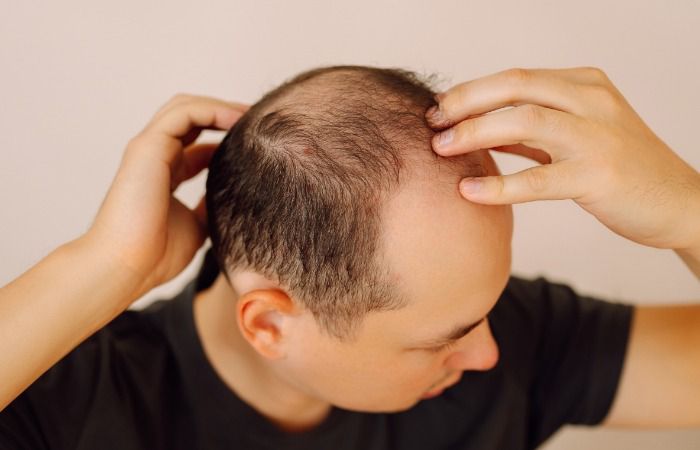
Most crown hair transplants fall between 1,500 and 3,500 grafts. A small, early thinning spot typically needs around 800-1,500 grafts; a moderate, coin-to-palm-sized crown around 1,500-2,500; a wide, fully bald crown 2,500-3,500+.
Two things move your number most: the actual surface area being covered, and your donor supply combined with hair calibre, since coarser hair covers the crown's whorl with fewer grafts than fine hair does.
One of the first questions almost every patient asks when planning a crown hair transplant is some version of “how many grafts will I need?” It’s a sensible question. The graft count drives almost everything else about the procedure — the cost, the duration of the surgical day, the demand on the donor area, and ultimately the density and coverage of the result. Getting this number right matters.
Quick answer
Crown graft requirements depend on the measured size of the treatment area, the target density, individual hair characteristics and how much native hair still contributes. As a reference framework: early crown thinning typically requires 1,500 to 2,000 grafts, a moderate deficit 2,000 to 2,800, a large fully bald crown 3,000 to 4,000, and very extensive loss 4,000 or more — often across more than one session. These are reference ranges, not a quote. The accurate number comes from measuring the area in square centimetres and assessing donor supply.
The challenge is that the answer is genuinely variable. Different patients with what looks like similar crown loss can require significantly different graft counts based on factors that aren’t immediately obvious from a photograph. Clinics that hand out standardized numbers without measuring the actual area being treated or assessing the patient’s specific hair characteristics are providing guesses, not clinical recommendations. And the marketing-driven race to advertise ever-higher graft counts has produced an environment where the number itself sometimes becomes the selling point — when what actually matters is the relationship between the number and the specific case it’s being applied to.
Before comparing offers, see what shapes hair transplant costs in Turkey and what a package should include.
This guide works through the graft count question carefully. What general reference ranges look like for different stages of crown loss, what specific factors push the number up or down in any individual case, why the crown consistently requires more grafts than patients expect, and how to evaluate whether a number you’ve been quoted is appropriate for your situation. The goal isn’t to give you a single number — that requires an actual assessment — but to give you the framework to understand what number makes sense for you and why.
The General Reference Ranges
For patients looking for a starting point, here’s the practical reference framework that most surgical teams work with when planning hair transplant procedures for the crown.
| Crown presentation | Typical graft range |
|---|---|
| Early crown thinning | 1,500–2,000 |
| Moderate crown deficit | 2,000–2,800 |
| Large, fully bald crown | 3,000–4,000 |
| Very extensive crown loss | 4,000 or more, often across more than one session |
These are reference ranges used for orientation, not a quote. Target density for the crown typically runs between 35 and 60 follicular units per square centimetre, with 40 to 55 being most common. The accurate figure for any individual comes from measuring the treatment area in square centimetres, assessing donor supply, and accounting for hair caliber, wave and the colour contrast between hair and scalp.
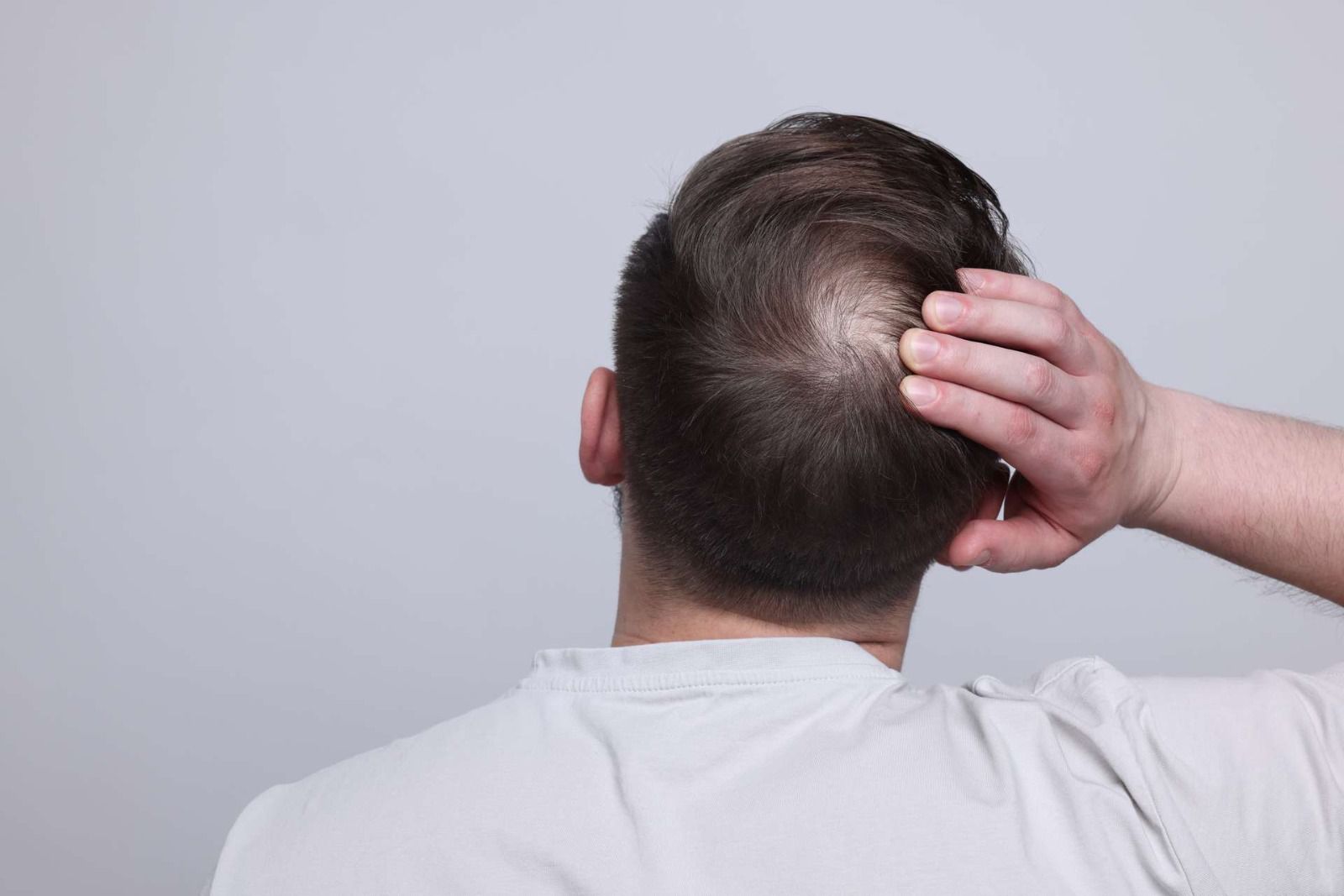
- Early crown thinning (Norwood 3 vertex, early Norwood 4): 1,500 to 2,000 grafts. This range applies when the crown shows visible thinning — scalp showing through the existing hair — but the area isn’t fully bald and there’s still meaningful native hair contributing to coverage.
- Moderate crown deficit (mid Norwood 4 to early Norwood 5): 2,000 to 2,800 grafts. This range applies when the crown has a clearly defined area of significant loss — either fully bald or with very sparse remaining native hair — but the area is still contained rather than expansive.
- Large fully bald crown (Norwood 5 to 6): 3,000 to 4,000 grafts. This range applies when the crown represents a substantially expanded bald area, often connecting toward or fully merged with frontal loss.
- Very extensive crown loss (Norwood 6 to 7): 4,000+ grafts, often requiring multiple sessions or careful prioritization. At this stage, total donor supply becomes the limiting factor rather than the size of the area needing coverage.
These ranges represent what experienced surgical teams typically plan for similar cases. They are not guarantees, and the specific number for any individual patient can land anywhere within or even outside these ranges depending on the factors below.
Why the Crown Always Needs More Grafts Than It Looks Like
One thing patients consistently underestimate is how many grafts the crown actually requires. Looking at a photo of their own head, the bald area looks like a discrete circle — surely a couple of thousand grafts would fill that in completely?
The crown reliably needs more grafts than patients estimate visually, and for specific reasons that are worth understanding before any number gets discussed.
- The area is larger than it looks. Patients estimating their crown size by looking at photographs consistently underestimate the actual surface area. A crown that looks like a small circle in a photo often measures 50 to 100 square centimeters or more when measured directly on the scalp. At a target density of 40 to 60 follicular units per square centimeter, that translates to significantly more grafts than the initial visual impression suggests.
- The spiral growth pattern reduces coverage per graft. Crown hair grows in multiple directions radiating from the central whorl. Hairs growing in different directions don’t overlap and reinforce each other the way frontal hairs do, where everything points forward. This means each graft contributes less visual coverage per follicle than it would in the frontal zone — so more grafts are needed to achieve the same visual density.
- The central whorl area needs adequate filling. Underfilling the center of the crown produces a result that looks sparse from above even when the edges appear full. Adequate central coverage requires committing graft count to the middle of the treatment area, not just to its perimeter.
- The donor character may differ from the recipient site. Donor follicles taken from the permanent zone are sized and angled for their original location. Implanted in the crown, they create the new growth pattern, but the inherent character of those follicles affects how much visual coverage each one produces.
Patients who go into planning with realistic expectations about crown graft counts navigate the consultation conversation more comfortably than those who arrive thinking 1,500 grafts will cover a fully bald crown. Most of the time, it won’t.
The Specific Factors That Move the Number
Once you understand the general ranges and why the crown typically falls toward the higher end of patient expectations, the next step is understanding the specific factors that determine where within a range — or above or below it — your specific number lands.
Size of the Bald or Thinning Area
The most obvious factor is the actual square centimeter area requiring coverage. This needs to be measured on the scalp, not estimated from a photograph. Measurement involves identifying the boundary of the loss area, defining what constitutes the treatment zone, and calculating the surface area. A treatment zone of 40 square centimeters at 50 follicular units per square centimeter requires 2,000 grafts. A treatment zone of 80 square centimeters at the same target density requires 4,000. Same target density, twice the area, twice the grafts.
Target Density
The second factor is the density target — how many follicular units per square centimeter the plan aims for. Realistic crown densities typically range from 35 to 60 follicular units per square centimeter, with 40 to 55 being the most common target range. Higher density targets produce more visible coverage but consume more grafts. The decision about target density involves balancing the desired coverage against the available donor supply and future needs.
Important context: native non-balding crown density is typically 60 to 100 follicular units per square centimeter, depending on the patient. The transplanted result at 40 to 55 FU per square centimeter is genuinely below the original density of non-balding crown. This is sufficient for natural appearance because the visual perception of density doesn’t require matching original density precisely — but it’s not identical to what was there originally.
Hair Characteristics
Several individual hair properties affect how much visual coverage a given graft count produces, which directly affects how many grafts are needed for a target visual result.
- Caliber (thickness): Coarser, thicker hairs produce more visual coverage per follicle. Patients with naturally fine hair need higher graft counts to achieve the same visible density as patients with coarser hair.
- Curl or wave: Wavy and curly hair fills space more effectively than straight hair, producing more apparent coverage per follicle. Straight-haired patients often need higher counts for equivalent visual density.
- Color contrast with scalp: Dark hair against pale scalp creates higher contrast — gaps between hairs are more visible. Patients in this combination need higher density to avoid scalp showing through. Patients with lower contrast (lighter hair against similar-toned scalp, or any hair color against tanned scalp) can achieve visually convincing coverage at somewhat lower densities.
- Follicular unit composition: The donor zone contains follicular units that can be one-hair, two-hair, three-hair, or four-hair groupings. Patients whose donor zones are dominated by higher-hair groupings get more total hairs per graft than those with more single-hair grafts, which affects the relationship between graft count and resulting visual density.
Existing Native Hair
A crown with significant remaining native hair requires fewer transplanted grafts to reach a target visual density than a fully bald crown of the same size. The existing hairs contribute to the coverage picture, and the transplanted grafts add to that baseline rather than starting from zero.
This is one of several reasons why earlier intervention — addressing crown thinning before it progresses to full baldness — can be more donor-efficient than waiting until the area is completely bare. Combined with medical management to protect the existing hair, an earlier procedure with a lower graft count can produce equivalent visual results to a later procedure requiring substantially more grafts on a bald canvas.
Donor Supply Constraints
For patients with limited donor supply — either due to previous procedures, naturally limited donor density, or extensive overall loss requiring coverage in multiple areas — the graft count for the crown is often constrained by what’s available rather than what would ideally be planned. In these cases the question shifts from “what does this crown need?” to “what can be done for this crown given the donor reality?”
Honest acknowledgment of donor constraints is part of responsible planning. A patient with marginal donor supply who is told their crown can be fully restored to high density is being misled. The honest version is that the procedure can do what the donor supply allows, which may be more limited than the patient would prefer.
How Different Crown Sizes Translate to Different Plans
Working through several specific scenarios may make the general framework more concrete.
Scenario 1: Early Norwood 3 vertex with thinning crown. A patient in their mid-thirties with visible thinning at the crown but no fully bald area. The treatment zone measures about 30 square centimeters. With substantial native hair still contributing, a target density of 30 to 40 transplanted FU per square centimeter (added to the existing native hair) produces convincing coverage. Graft count: approximately 1,200 to 1,600 grafts. This patient is also an ideal candidate for medical management to protect existing native hair, which extends the value of the procedure significantly.
Scenario 2: Defined Norwood 4 crown with sparse remaining hair. A patient in their early forties with a clearly defined bald crown area but some sparse hair still present. The treatment zone measures about 50 square centimeters. With minimal native hair contribution, a target density of 50 to 55 FU per square centimeter is needed for convincing coverage. Graft count: approximately 2,500 to 2,800 grafts.
Scenario 3: Large Norwood 5 crown, fully bald. A patient in their late forties with a large fully bald crown area. The treatment zone measures about 75 square centimeters. With no native hair contribution, target density of 50 FU per square centimeter is needed throughout. Graft count: approximately 3,500 to 3,800 grafts.
Scenario 4: Norwood 6 with crown and frontal areas connecting. A patient in their fifties with extensive loss where the crown and frontal areas have merged into a single bald zone. The total treatment area measures 120+ square centimeters. Graft count for adequate coverage: 5,000+ grafts, which approaches or exceeds what can be safely extracted in a single session. Planning often involves staged procedures or careful prioritization of which zones receive higher density.
These scenarios show how the same general framework — area times target density, adjusted for hair characteristics and existing coverage — produces meaningfully different graft counts for different presentations.
What Maximum Graft Counts in a Single Session Look Like
For patients with large crown areas, the question of how many grafts can actually be extracted and implanted in a single session becomes relevant. There are practical limits.
Most surgical teams can comfortably perform procedures up to about 4,000 grafts in a single session. Beyond that, several constraints become limiting:
- Donor extraction limits: Safe extraction without over-harvesting any specific donor zone limits how many grafts can be taken from the available donor area in one session. Extraction beyond this limit risks creating visible thinning or scarring in the donor area.
- Out-of-body time for grafts: The longer grafts are outside the body before implantation, the more their viability declines. Very large procedures stretch out-of-body time in ways that can affect overall graft survival.
- Patient physical demands: Procedures running ten-plus hours are physically demanding for patients, who are lying still in specific positions for extended periods. This affects safety and comfort.
- Surgical team capacity: Even the most experienced teams have practical limits to what they can execute well in a single day without precision starting to suffer.
For patients whose crown requires more grafts than a single session can deliver, the choices are staging the procedure across multiple sessions (typically 12 to 18 months apart) or prioritizing which parts of the treatment area receive coverage in the available graft count. Both approaches have valid use cases. Clinics that advertise procedures of 6,000 or 8,000+ grafts in a single day are usually either operating outside reasonable surgical standards or counting grafts using methodology that inflates the number relative to what other clinics would report.
The Marketing Inflation Problem
Worth addressing directly: graft counts have become a marketing variable in ways that distort the conversation around appropriate planning. Patients shop based on advertised graft counts, clinics compete on quoting higher numbers, and the relationship between the number on the marketing material and the actual surgical reality becomes unreliable.
Some specific patterns worth being aware of:
- Counting hairs as grafts: A follicular unit can contain one, two, three, or four hairs. Some clinics report the total number of hairs as their “graft count,” inflating the number significantly compared to clinics that count actual follicular units. A procedure described as “6,000 grafts” by hair count might be 3,000 follicular units by the more standard accounting.
- Promised counts that exceed donor capacity: Some clinics promise graft counts that simply can’t be safely extracted from the patient’s actual donor area. The discrepancy is sometimes addressed by aggressive over-harvesting that creates visible donor thinning, by extracting from body hair to make up the difference (with lower survival rates and different growth characteristics), or by simply not delivering the promised count and presenting whatever was actually done as if it matched the original quote.
- Numbers without measurement: A graft count quote that comes before any actual measurement of the treatment area or assessment of donor density is a marketing number, not a clinical plan. Real graft count recommendations follow from real assessment.
The appropriate response is to engage with the methodology of how a number was reached rather than just accepting the number itself. Was the treatment area measured? What target density does the number correspond to? How does the proposed count relate to the donor supply assessment? A clinic that can answer these questions has thought about the planning. One that can’t is offering a number without supporting clinical reasoning.
How to Evaluate the Number You’ve Been Quoted
If you’ve already had a consultation and been quoted a graft count, here’s how to evaluate whether the number is appropriate for your situation.
- Was the crown area actually measured? A specific number, in square centimeters, indicating the treatment zone. Without this measurement, the graft count is an estimate based on visual impression rather than a calculation based on actual area.
- What target density does the count correspond to? The expected follicular units per square centimeter in the treated area should be discussed explicitly. “As much density as possible” is not a target.
- How was your donor supply assessed? The clinic should have measured your donor density (follicles per square centimeter in the donor zone) and assessed the total available donor area. Without this, any graft count quote ignores whether the supply actually exists.
- Does the proposed count match your hair characteristics? Patients with fine, straight, dark hair against pale scalp need higher counts than patients with the opposite combination. If the consultation didn’t engage with your specific hair characteristics, the graft count was set without considering one of the most important variables.
- What happens to your remaining donor supply after this procedure? A good plan addresses not just the immediate procedure but the lifetime donor management question. If this procedure uses most of your available donor supply, what does that mean for future needs as ongoing loss progresses?
A graft count that comes from a consultation engaging with these questions is one you can have confidence in. One that doesn’t may be a number selected for marketing reasons rather than clinical ones.
At Hairpol, crown graft count recommendations follow from explicit measurement of the treatment area, assessment of individual hair characteristics, evaluation of donor supply, and discussion of target density — because the number itself is only useful when it represents an actual plan rather than a starting point for negotiation.
Numbers like these are easier to judge against your own case. The hair graft calculator takes your loss stage and the zone you want treated and returns the graft range similar cases usually need — a sensible starting figure to bring to a consultation, not a quote.
What to Do With This Information
The goal of understanding graft counts isn’t to walk into a consultation with a number in mind and check whether the clinic confirms it. The goal is to engage with the planning conversation as an informed participant, ask the right questions, and recognize whether the answers you’re getting reflect actual clinical reasoning or marketing-driven approximation.
The right number for your crown is the one that follows from a real assessment of your specific situation — area, hair characteristics, donor supply, target density, existing native hair, and overall hair loss pattern. That number could land anywhere within the reference ranges above, or in unusual cases outside them. What matters is that it makes sense in relation to your actual situation rather than being plucked from a price list or generated by marketing logic.
Patients who understand this framework navigate consultations differently than patients who arrive with only a vague sense that they need “a lot of grafts.” The former can engage with the planning conversation; the latter can only accept or reject whatever number they’re given. Being in the first group serves you significantly better in producing a result that actually matches what your crown specifically needs.
Find this helpful? Add Hairpol as a preferred source on Google.
Graft Range Calculator
Answer three questions to see the typical graft range for your situation — based on our published clinical guides.
This is a preliminary estimate, not a medical assessment. The exact number can only be determined by a doctor after examining your donor area and hair characteristics.
Get a Free Consultation
Answer a few questions and the medical team will review your situation.
More Graft Number Questions
Are 2,000 grafts enough for the crown?
For a small or moderate crown, 2,000 grafts is often a reasonable plan and can give a natural, softly covered look, especially when some native hair remains. For a wide, fully bald crown it usually delivers thinner coverage than patients expect. Much depends on hair calibre, the colour contrast between hair and scalp, and how the whorl is designed.
Can 1,500 grafts cover a small crown?
Often yes, if the thinning area is genuinely small — roughly the size of a large coin — and native hair is still present to support the result. 1,500 grafts can add visible density there. If the crown has already widened toward the vertex, the same number spreads too thin and coverage tends to look patchy under direct light.
Why do clinics quote such different graft numbers for the same crown?
Because they measure and count differently. Some quote grafts, others quote hairs, which inflates the figure two- to three-fold. Some assess from photos rather than in person, and some build packages around a round number instead of the area involved. Ask for the measured crown size, the graft count, and the planned density per square centimetre.
