

The flight is the easy part. Plenty of people in Manchester, Leeds or London have already worked out that Istanbul is four hours away and that hair transplant clinics there are used to patients from abroad. The question that keeps them up at night is a different one: what happens when I’m back home, my scalp looks alarming at day six, and the nearest person who has ever seen a transplant is 2,500 kilometres away?
That question deserves a proper answer, and it is mostly about planning. A trip to Turkey from the UK works well when the aftercare is designed before you book, not improvised after you land at Gatwick.
From the UK, in short: a hair transplant in Turkey from the UK usually means a flight of about four hours and three to four days in Istanbul. NHS guidance on cosmetic surgery abroad warns that overseas clinics may not provide follow-up to the standard you expect at home, so plan it before you pay. Your GP is there for your general health; at Hairpol, follow-up runs through scheduled photo reviews with the medical team.
Flying to Istanbul from UK airports
Istanbul has two airports, Istanbul Airport on the European side and Sabiha Gökçen on the Asian side, and both have direct flights from several UK cities, including London, Manchester, Birmingham and Edinburgh, depending on the season. Flight time from London is roughly four hours. Turkey is two hours ahead of the UK in summer and three in winter, which matters more than people expect when you are scheduling a 7am clinic start.
Hairpol is in Ataşehir, on the Asian side, so Sabiha Gökçen is usually the shorter transfer, although either airport works. Clinics that see international patients arrange transfers between the airport, the hotel and the clinic, so you are not navigating Istanbul traffic with fresh grafts.
A small tip from patients who have done it: choose a flight that lands in the afternoon rather than late at night. You want a calm evening, a proper meal and a full night’s sleep before procedure day, not a midnight transfer followed by a 7am start.
British passport holders can currently visit Turkey for short stays without a visa, but rules change. Check the Turkey page of the UK government’s foreign travel advice before you book, including how long your passport must remain valid after arrival.
How many days should you plan in Istanbul?
Most trips are built around three to four days. Day one is arrival and an early night. Day two is the procedure, which usually takes most of the day. Day three is the first check and the first wash at the clinic, where you learn how to clean the area without disturbing grafts. You can usually fly home that evening or the following morning.
On procedure day there is little for you to do except arrive, sign the consent form, confirm your hairline with the doctor and settle in. Bring headphones and something to watch. The area is numbed with local anaesthetic, most patients are comfortable once it takes effect, and the day tends to pass faster than expected.
Our guide to hair transplants in Istanbul sets out how a typical stay is organised, and our Turkey hair transplant package explains what is included in the trip. At Hairpol, a hair transplant is priced as a package, typically $2,500 to $5,000, with the exact figure set after a free hair analysis.
If your plan is large, or you would rather not fly the day after surgery, adding a night costs little and buys calm. Patients who leave a buffer rarely regret it; patients who book the last flight on day three sometimes do.
What does the NHS say about cosmetic surgery abroad?
The NHS website has a page on cosmetic surgery abroad, and it is worth reading in full before you travel. Its central point is simple. When you have an operation in the UK, follow-up is the responsibility of the surgeon who treated you. Overseas clinics may not provide follow-up treatment, or may not provide it to the same standard. The page also advises thinking about what would happen if something went wrong, and how you would get back to the clinic.
Read that as a planning brief rather than a warning to stay home. It tells you exactly what to check: whether the clinic has a real follow-up process, how it works from another country, and what you would do in the unlikely event of a complication. It also explains why standard travel insurance, which usually excludes planned treatment abroad, should not be your only plan.
The practical takeaway: do not plan on the NHS for routine aftercare or for correcting a cosmetic result. Plan on the clinic for that, make sure it is written into your plan, and know where to go for urgent medical help if you ever need it.
Will your GP help after a hair transplant abroad?
Your GP is your doctor for everything else, and that does not change. If you develop a fever, a spreading infection, or a reaction to medication, your GP or NHS 111 is the right first call, alongside messaging the clinic. GPs deal with wound infections and medication questions every day.
What your GP is not is a hair transplant specialist. Most will not have seen a fresh transplant up close, and they are not responsible for judging graft growth, shedding or whether your hairline is developing as planned. That is the clinic’s job.
The most useful thing you can do is make your GP’s life easy. Ask the clinic for a short discharge summary in English: the date, the technique, the number of grafts, any medication given and the aftercare instructions. Keep it on your phone. If you plan to take finasteride, minoxidil or anything else afterwards, discuss it with a doctor first, because suitability and dose depend on your health and other medicines.
Plan the follow-up before you book
This is where most of the difference between a good and a stressful trip is made. Before paying anything, ask each clinic to describe its remote follow-up in plain terms and to put it in writing.
- At what points after surgery are you asked to send photos, and who reviews them?
- Which channel do you use, and in which language do you get answers?
- How quickly does someone reply in the first week, including weekends?
- What happens if a photo shows something unusual?
- How is the result reviewed at 12 months, and what are the options if growth falls short?
Follow-up from Hairpol after you fly home runs on photos and messages at agreed points through the first year, and answers come in English. To see how that would look for your own case, start with a free photo assessment: the reply sets out a graft range, a proposed technique and when the follow-up check-ins would fall.
Before you fly: what to sort out in the UK
A few weeks before the trip, tell your GP or practice nurse what you are planning if you take regular medication, especially anything that thins the blood, or if you have diabetes, high blood pressure or a heart condition. The clinic will ask about these too. Bring an up-to-date medication list and any recent test results.
If you smoke, stopping for at least two weeks before and after surgery supports healing. Plan time off work realistically: most desk-based patients go back after about a week if they are comfortable with a visible healing scalp, while physical jobs may need longer. Pack a loose button-up shirt, a neck pillow and a loose hat for the flight home.
Travel insurance needs a careful read. Standard policies usually exclude planned medical treatment abroad and its complications. Specialist medical travel cover exists if you want extra peace of mind. If your package includes insurance, ask what it covers and get the answer in writing.
Picking dates around UK life
Most UK patients find the timing easier than expected once they think in weeks rather than days. The trip itself takes three to four days, but the period when the grafts look visibly fresh lasts closer to two weeks. If you can work from home, or take a week off and go back after a weekend, that window is easy to cover.
Season matters a little. In summer, fresh grafts need protection from strong sun for the first months, which means a loose hat on holiday and no sunbathing on the scalp. In winter, the main temptation is a tight beanie in the first week, which is best avoided. Neither season is wrong; each just changes what you pack.
Watch for obvious clashes: a wedding, a work trip or a family holiday in the first fortnight. Think about months three and four as well, when shedding can make the area look thinner than before surgery. If you have a big event with photos, put it either before the procedure or after month eight.
The flight home
Most patients fly back to the UK a day or two after surgery without trouble. Wear the loose shirt so nothing pulls over the grafts, keep your aftercare kit and medication in hand luggage, and use a neck pillow so you do not rest your head against the window. Some swelling of the forehead is common around days two to four; it is not a reason to cancel a flight, but it is a reason not to book a meeting the next morning.
If you have a connecting flight, keep the layover comfortable rather than tight. Rushing between terminals with a backpack strap near the donor area and a hat pressing on the grafts is exactly what you want to avoid, so a direct flight is worth a small premium on the way home.
Our travel guide for flying home after a hair transplant covers the details, from airport security to what to do if your hat touches the recipient area.
Once you land, the clinic’s instructions travel with you. The routine you learned at the first wash in Istanbul is the same one you follow in your bathroom in Bristol.
The first two weeks at home
The first ten days are the most hands-on part of the whole process. You wash the area gently as shown, keep it out of direct rain and sun, sleep with your head slightly raised for the first nights, and avoid the gym, swimming and anything that makes you sweat heavily. Scabs usually loosen and fall away between days ten and fourteen.
Expect some itching from around day five as the skin heals. It is a good sign, even if it is irritating, and the clinic will tell you what you can safely use for it. Scratching is the one thing to resist.
British weather has its own small challenge: rain. A loose hood or umbrella is better than a tight cap in the first week. Our guide to the first seven days walks through the early stages, and it is worth reading before you travel rather than after.
Most problems in this period come from well-meant shortcuts: rubbing scabs off early, skipping washes, or going back to heavy training too soon. Our article on what happens if you don’t follow aftercare instructions explains why the rules exist.
What people around you will notice, and when
For the first week, anyone standing close to you will see that something has been done: small scabs in the recipient area, some redness, and a shorter donor area at the back if your plan required shaving. Swelling of the forehead, if it appears, usually settles within a week.
By around day ten to fourteen, once the scabs have gone, most patients simply look like someone with a slightly pink scalp and a short haircut. Redness can linger longer in fair skin and may take a few weeks to fade fully. A loose cap is fine once the clinic says so.
How much you tell people is your choice. Some patients tell everyone and find it a relief; others say they had a small procedure and leave it there. Both work. What helps is deciding in advance, so the first question in the office kitchen does not catch you off guard.
If you work in a client-facing role, a few days of working from home in the first week usually settles the question entirely. By the time you are back in meetings, what remains looks like a fresh haircut rather than surgery.
When to message the clinic and when to see a doctor in the UK
Most questions in the first weeks are about normal healing: redness, itching, small spots, a little swelling, numbness in the donor area. Send a photo to the clinic; you will usually get a quick answer and some reassurance.
Some signs need a UK doctor as well as the clinic: spreading redness or heat, pus, a fever, pain that is getting worse rather than better, or any symptom that makes you feel unwell. Contact your GP or NHS 111, and in an emergency call 999. Then let the clinic know, so your records stay complete.
A good habit is to send photos at the points the clinic asks for even when everything looks fine. Normal photos create a baseline, so if something does change later, the team can see the difference straight away instead of guessing.
Most patients never need that plan. Knowing who to call simply means that if something does happen, you act quickly and calmly.
Months two to twelve: remote reviews
After the first fortnight, things slow down. Transplanted hairs often shed between weeks two and eight; that is normal and expected. New growth usually starts around months three to four and builds through months six to twelve at the front, with the crown taking longer.
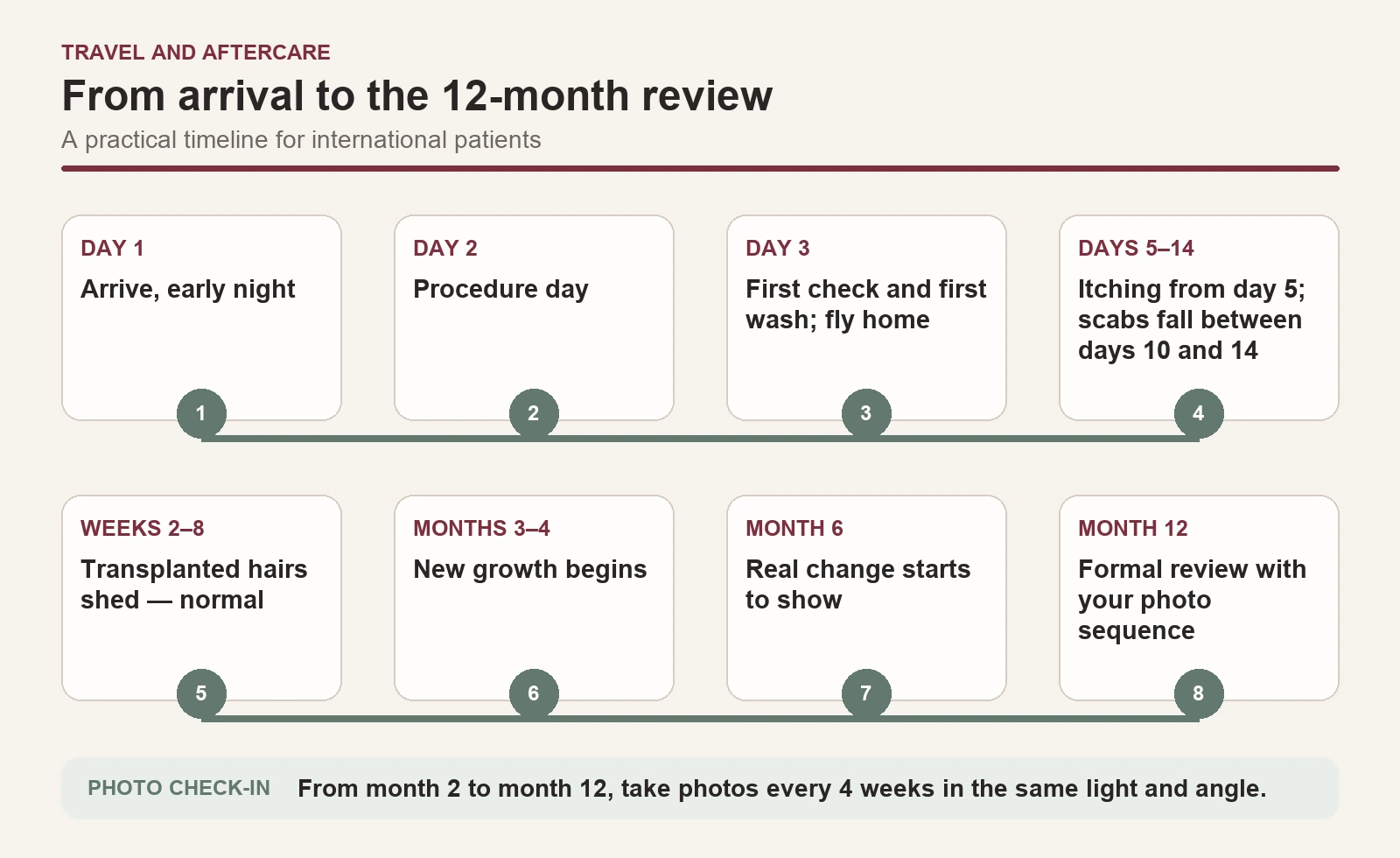
During this stage your job is mostly patience and photographs. Take pictures in the same place, in the same light, from the same angles every four weeks: front, top, both sides, crown and donor area. A sequence like this makes remote review accurate, and it is far more reassuring than staring at the mirror at month three.
Around month six, many patients start to see a real change in the mirror, and by month twelve most of the front has usually filled in. That is also when the formal review of the result normally takes place, using the same photo sequence you have been building all year.
If your plan includes protecting your native hair, treatments from our hair treatments department or prescribed medication may be part of it, always with a doctor’s approval.
If you ever need to come back
Most patients never need a second trip. Some choose one later to add density or to treat an area such as the crown that was not part of the first plan. In that case, the planning is the same as the first time, with one advantage: the team already knows your donor area and your history.
When a return trip is planned, it usually fits into the same three to four days. If you would like to know how a second procedure is assessed and priced, the patient team can explain it when you first get in touch. And if you have more questions about travel and timing, our frequently asked questions cover the most common ones.
Keep the photo sequence and paperwork from your first trip together in one folder. If you do return, they make the second assessment faster and more accurate.
Rather talk before planning anything? Tap WhatsApp on this page, tell the team which UK airport you would fly from and roughly when, and they will sketch a realistic schedule.
What to sort out this week if you are serious
If you are seriously considering a hair transplant in Turkey from the UK, three things will move you forward more than more forum reading. Take clear photos in daylight: front, top, crown, both sides and the back. Write down your medication and health history. And make a short list of the follow-up questions above to send to every clinic you are comparing.
Ask each clinic the same questions in the same order and keep the answers together in one note on your phone. Our practical checklist for choosing a hair transplant clinic covers the clinical questions worth adding to that list.
Then compare the answers, not the adverts. A clinic that can explain your plan, your follow-up and your options clearly, in writing, is a clinic you can be looked after by from 2,500 kilometres away.
The way the team plans and performs each procedure, including DHI hair transplantation for hairline work, is set out under hair transplantation. When you are ready, send your photos for a free analysis and the UK side of the plan can be built around them.
Find this helpful? Add Hairpol as a preferred source on Google.
Get a Free Consultation
Answer a few questions and the medical team will review your situation.
