
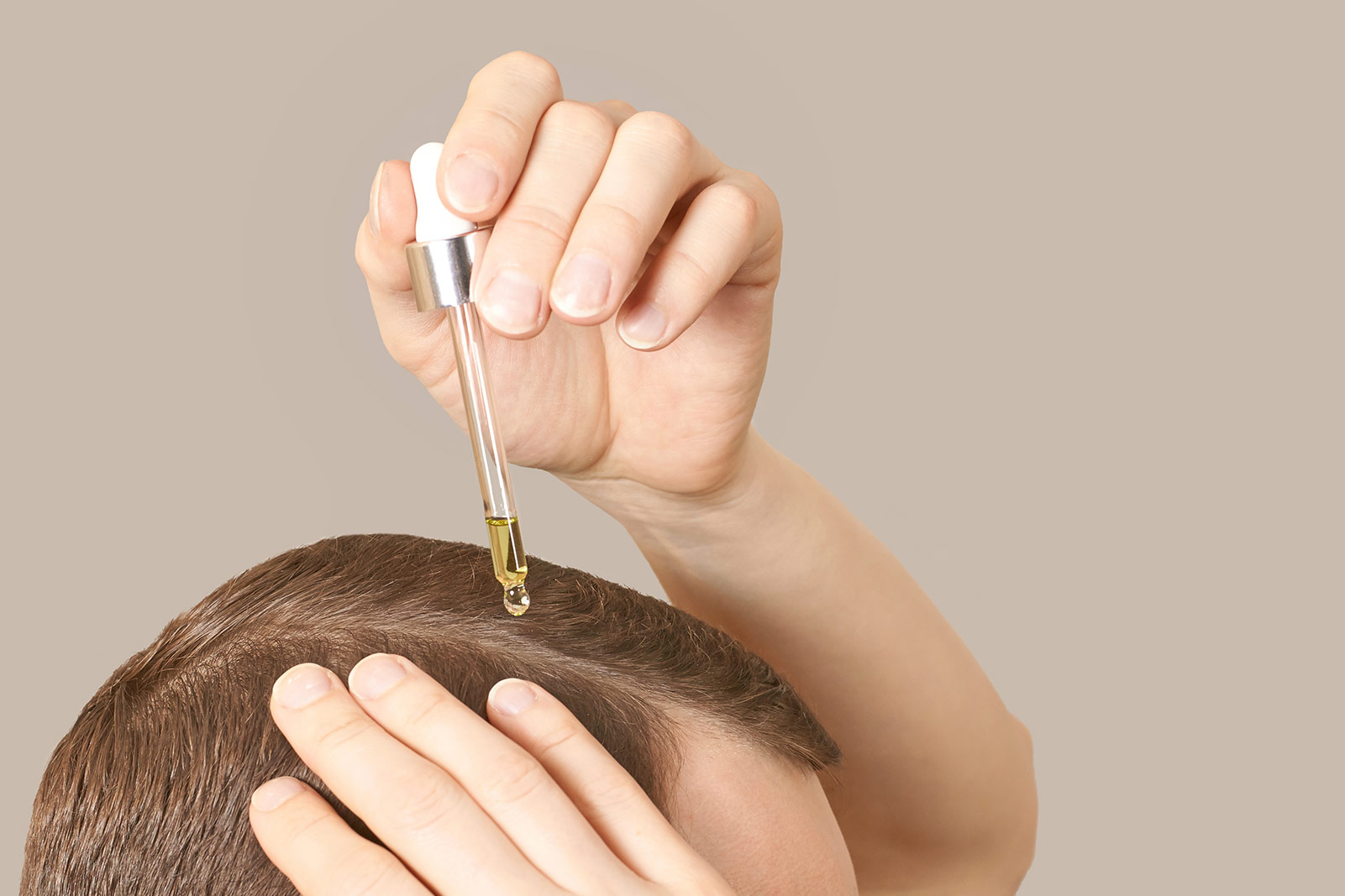
Your surgeon hands you a prescription and a short set of instructions, and in that moment the plan sounds almost trivial. Take a tablet. Rub on some foam. Keep doing it. But a maintenance plan is not a piece of paper, it is a behaviour you have to repeat several thousand times over the next decade, on ordinary mornings when your hair looks fine and nothing about your day is nudging you to remember. That gap, between a prescription and a routine you actually keep, is where most people quietly lose the plot.
We have written elsewhere about whether you even need these drugs. If you are still weighing that question, our companion piece on finasteride and minoxidil after a transplant and whether you still need them is the place to start. This article assumes you have decided to protect your result and asks the more practical question almost nobody addresses honestly: how do you actually build and run a routine for finasteride and minoxidil after a hair transplant so it survives the boring years, the travel, the plateaus, and the moment your hair looks so good the pills feel pointless?
Treat it as a routine, not a prescription
The first mental shift is the most important one. A prescription is a decision made once, in a clinic, when you are motivated and paying attention. A routine is a system that keeps working when you are none of those things. The patients who protect their transplant for fifteen years are almost never the most disciplined people we meet. They are the ones who built the habit into the furniture of their day so that skipping it would feel stranger than doing it.
That reframing changes what you optimise for. You stop asking which drug is theoretically strongest and start asking which version of the plan you will genuinely still be doing next spring. At Hairpol, the maintenance conversation is deliberately practical for this reason. A slightly less aggressive routine you follow every day beats a perfect protocol you abandon in four months, because the benefit of both finasteride and minoxidil comes from accumulation, not intensity. Consistency is the active ingredient that no pharmacy stocks.
Oral versus topical finasteride: choose the form you will keep taking
The evidence base sits most solidly behind oral finasteride, the standard once-daily 1mg tablet. It is simple, it is cheap, and its effect on protecting susceptible native hair around your grafts is the best documented of anything in this field. Our deeper look at whether finasteride can improve hair transplant results walks through what that evidence actually shows and where its limits are.
Some patients prefer topical finasteride, applied to the scalp, in the hope of a lower systemic dose and a reduced chance of side effects. It is a reasonable option to discuss, but the data behind it is thinner and the practicalities are fiddlier: it takes longer each day, it can be messy, and adherence often suffers as a result. The honest framing is that the best form is the one you will not resent. If a daily tablet is something you will swallow without thinking, that simplicity is itself a clinical advantage. If you have specific reasons to avoid the oral route, the topical version is worth raising with your doctor rather than deciding alone.
Oral versus topical minoxidil: the practical trade-offs
Topical minoxidil, the classic foam or solution, is the version most people know. Foam tends to be easier to live with than the liquid, dries faster, and irritates less, which matters enormously when the whole point is doing it twice a day for years. The downside is time and texture: it adds a step to your morning and evening, and some people never make peace with the residue.
In recent years, low-dose oral minoxidil has become a genuine alternative, prescribed off-label and taken as a small daily tablet. For people who could never sustain the topical routine, swapping foam for a pill can transform adherence overnight, because it folds into the same moment you take your finasteride. It is not a decision to make casually, as oral minoxidil has its own considerations around blood pressure and fluid, and it belongs firmly in a doctor-supervised plan. But if the topical version is the thing quietly killing your routine, raising the oral option is often the single most useful conversation you can have.
How finasteride and minoxidil work together day to day
These two drugs are not rivals and they are not interchangeable, which is exactly why they are so often run together. Finasteride works on the hormonal cause, reducing the DHT that shrinks your susceptible follicles, so it defends the native hair around your transplant from thinning. Minoxidil works on the growth side, prolonging and strengthening the hair cycle so existing hair grows thicker and healthier. One holds the line; the other improves the ground you are holding.
Run together, they cover both halves of the problem, which is why a combined routine is the standard backbone of maintenance after surgery. In daily terms this usually means a finasteride tablet once a day and minoxidil once or twice a day, at whatever times you can reliably repeat. The specifics are individual, and your clinic sets them, but the principle is stable: you are not choosing between the two drugs, you are learning to carry both without either one becoming the excuse that ends the whole routine.
Anchoring the habit so it survives ordinary life
Here is the part no prescription covers. A habit survives when it is attached to something you already do without fail. Anchor your finasteride tablet to brushing your teeth, your coffee, or your phone alarm, so it rides on an existing routine rather than relying on fresh willpower each morning. Keep the bottle somewhere you physically cannot miss it, not in a drawer where out of sight becomes out of mind by week three.
Minoxidil is harder because it takes longer and feels more like a chore, so make it as frictionless as you can. Foam by the toothbrush, a fixed order to your morning, a spare bottle for the bag you travel with. Travel is where routines die, so plan for it in advance rather than improvising at the airport. At Hairpol, we tell patients bluntly that the goal is not heroic discipline but a system so ordinary that a missed dose feels like leaving the house without your keys. Design the environment and the behaviour tends to follow.
The first months: sequencing medication into recovery
The early period after surgery has its own rules, and getting them wrong at the start can sour your relationship with the whole routine. Minoxidil in particular is usually held off in the immediate aftermath, because a fresh, healing scalp reacts badly to it, and it is reintroduced only once the area has settled. Our guide on when to start minoxidil after a transplant and how long to use it lays out that timing in detail.
Finasteride is often handled differently. Many surgeons prefer suitable candidates to already be on it before surgery so the native hair is stabilised going in, and it is typically resumed on a defined schedule afterwards. The key point for building a lasting routine is not to improvise these early decisions. Follow the specific plan your clinic gives you, ask before you restart either drug rather than after, and treat the first few months as the foundation of the habit rather than a separate, temporary phase. How you begin tends to set the tone for the years that follow.
Step-ups and alternatives: dutasteride and dose changes
A maintenance routine is not fixed forever, and part of running it well is knowing that it can be adjusted. If finasteride alone is not holding your loss as firmly as hoped, one option a doctor may consider is dutasteride, a related drug that blocks DHT more completely. It is more potent, which cuts both ways: potentially stronger protection, but a different side-effect profile and a decision that belongs entirely with a physician who knows your history.
Dose and frequency can also be tuned. Some patients do well on standard dosing; others adjust with medical guidance based on response and tolerability. The important thing is that these are deliberate, supervised changes, not something you improvise by doubling up when you feel anxious or halving when you feel fine. A step-up is a considered response to how your hair is actually behaving over time, which is only possible if someone is genuinely reviewing your routine rather than leaving it on autopilot for a decade.
Why a doctor adjusts the plan by Norwood stage
Not everyone should run the same routine, and one of the biggest reasons is where you sit on your loss trajectory. Someone with early, aggressive thinning and a lot of vulnerable native hair has a great deal to protect and a fast-moving process to hold back, which usually argues for a committed, combined routine started early and taken seriously. Someone further along, with most of the loss already behind them, is defending less and may need a lighter plan.
This is why your Norwood stage and your age shape the prescription rather than a one-size template. A younger man at the start of decades of potential loss is protecting a moving target, so his routine is built to hold a line that is still shifting. Reading your own pattern honestly is part of this, and understanding where you sit on the Norwood scale helps you see why your plan looks the way it does and why a doctor may weight one drug more heavily than another.
Reviewing the routine over the years
A routine you never look at is a routine slowly drifting out of date. The whole point of maintenance is that it responds to a moving process, which means it needs periodic review rather than blind repetition. A sensible rhythm is a proper check-in every year or so: standardised photos in consistent lighting, an honest look at whether your native hair is holding, and a conversation about whether the current plan is still doing its job.
Photographs matter more than memory here, because hair loss is slow enough that your eyes normalise to it and you genuinely cannot judge your own change from month to month. A yearly comparison, taken the same way each time, is what turns a vague sense of things into evidence you can act on. That review is also where step-ups, dose changes, or the addition of a supporting treatment get decided. At Hairpol, we treat maintenance as an evolving plan you revisit, not a prescription you fill once and forget, because the hair you are protecting keeps changing whether you look at it or not.
Adjusting or tapering, deliberately rather than by drift
There may come a point where you want to change or reduce your routine, and there is a right way and a wrong way to do it. The wrong way is drift: gradually forgetting doses, running out and not reordering, letting the habit lapse by accident until months later you realise you stopped without ever deciding to. That is how people lose ground they did not mean to give up, because coming off finasteride lets the DHT-driven thinning of native hair resume, often within months.
The right way is deliberate. If you are considering stopping or tapering, do it as a decision made with your clinic, with a clear understanding of what you are trading and a plan to watch what happens. Sometimes tapering makes sense; sometimes switching forms solves the problem that made you want to quit; sometimes the honest answer is that stopping will cost you the result and you would rather not. Either way, a real decision beats a slow accident every time. Your maintenance routine should end, if it ends at all, on purpose.
Keeping the habit when your hair looks great
The most dangerous moment for any maintenance routine is not a bad day, it is a good one. A year or two after surgery your hair looks excellent, the daily foam feels like a pointless chore, and a quiet voice suggests the drugs have done their job and you can ease off. This is the plateau trap, and it catches conscientious people constantly. The reason your hair looks great is partly that the medication is working; stopping does not lock in the win, it removes the thing producing it.
The mental trick that helps is to reframe success as evidence the routine is worth keeping, not proof it is finished. Good results are the return on your consistency, not a signal to cash out. If the habit genuinely feels unsustainable, that is a conversation for your clinic about switching forms or simplifying the plan, not a reason to quietly stop. At Hairpol we would far rather help you build a lighter routine you will actually maintain than watch a great result slowly unravel because it started looking too good to bother protecting.
Running a routine around side effects
Side effects are a real part of the picture and worth planning for rather than either ignoring or catastrophising. A minority of men report sexual side effects on finasteride, which for most resolve on stopping, while many take it for years with no trouble at all. Running a routine sensibly means monitoring how you feel, raising anything that concerns you with a doctor who knows your history, and making changes as informed decisions rather than panicked ones.
Minoxidil’s side effects are usually milder and local: scalp irritation, or unwanted facial hair if foam is applied carelessly and migrates. Both are often manageable with technique, such as switching from solution to foam, applying more precisely, or adjusting the routine with medical input. The point is that side effects are something you build the routine around, not a reason to abandon protection at the first sign of a problem. A supervised adjustment usually beats an abrupt, unplanned stop that hands your native hair straight back to the process you were holding off.
Where PRP, mesotherapy and other supports fit
Finasteride and minoxidil are the backbone, but they are not the only tools, and a mature routine sometimes layers in support treatments. Therapies such as PRP and mesotherapy can be used alongside the core medication to support scalp health and the strength of existing and transplanted hair. They are complements rather than replacements, because they do not switch off the hormonal cause the way finasteride does, but they can add to the overall condition of the area when used as part of a plan.
If you are interested in a layered approach, our hair treatments bring these supportive options together, and the right combination depends on your goals and how your hair is behaving over time. It is also worth understanding where surgery, medication and these adjuncts each belong, which our comparison of hair transplant versus PRP versus medication sets out. The theme throughout is the same: maintenance is a small, sustainable system tailored to you, not a single heroic decision.
The long game: building something you will still be doing in ten years
Step back and the whole thing is really a question of durability, not intensity. The routine that protects your transplant is not the most aggressive one you can imagine on day one; it is the one you are still quietly running when the surgery is a distant memory and your hair has looked fine for so long that you barely think about why. That is the outcome worth designing for, and it comes from small, boring, repeatable choices rather than bursts of motivation.
So build for the version of you who is tired, travelling, or complacent, because that is who has to keep the routine going. Pick forms you will tolerate, anchor the habit to things you already do, review it honestly once a year, and treat any change as a decision rather than an accident. Do that, and finasteride and minoxidil after a hair transplant stop being a chore you resent and become the quiet infrastructure that keeps your result looking natural for decades. The surgery restored your hair; the routine is how you keep it.
At Hairpol, we would rather help you design a maintenance plan you will genuinely sustain than hand you a prescription and hope for the best. If you are planning surgery or already navigating aftercare and want a routine built around your actual hair, your Norwood stage and the life you actually lead, reach out to our team. Explore our approach to hair transplantation, where protecting your result over the long term is treated as part of the plan from the very first consultation.
Frequently Asked Questions (FAQ)
How do I actually build a maintenance routine for finasteride and minoxidil after a transplant?
Treat it as a habit, not a one-time prescription. Pick forms you will tolerate long term, anchor them to something you already do daily like brushing your teeth or morning coffee, keep the products visible, plan for travel, and review the whole plan with your clinic about once a year. Consistency over years is what protects your result.
Should I take oral or topical finasteride after my transplant?
Oral finasteride, the standard once-daily 1mg tablet, has the strongest evidence and is the simplest to keep taking. Topical finasteride may lower systemic dose but has thinner data and is fiddlier to apply, which can hurt adherence. The best form is the one you will reliably use, so discuss the choice with your doctor.
Is oral minoxidil better than the topical foam?
Neither is universally better. Topical foam is well established and works locally, but it adds a step twice a day and some people never sustain it. Low-dose oral minoxidil, prescribed off-label, can transform adherence because it folds into your tablet routine, but it needs medical supervision for blood pressure and fluid considerations.
How are finasteride and minoxidil combined day to day?
They target different parts of the problem, so they are usually run together. Finasteride reduces DHT to protect susceptible native hair, taken once daily. Minoxidil supports the growth phase so hair grows thicker, applied or taken once or twice daily. Your clinic sets the exact schedule, but the combined routine is the standard backbone of maintenance.
What is dutasteride and when might a doctor step me up to it?
Dutasteride is a related drug that blocks DHT more completely than finasteride. If finasteride alone is not holding your loss as well as hoped, a doctor may consider it for potentially stronger protection. It is more potent with a different side-effect profile, so it is strictly a supervised decision, never something to add on your own.
Why does my routine depend on my Norwood stage?
Your Norwood stage reflects how much vulnerable native hair you have and how fast you are losing it. Early, aggressive loss with lots of native hair usually argues for a committed combined routine started early, while someone further along may need a lighter plan. Age and pattern shape the prescription instead of a one-size template.
How do I keep the habit going when my hair looks great?
The plateau trap catches conscientious people because good results feel like permission to stop. But your hair looks great partly because the medication is working, so stopping removes the thing producing the result rather than locking it in. Reframe success as evidence the routine is worth keeping, and if it feels unsustainable, simplify it with your clinic rather than quitting.
Can I stop or taper my medication safely?
You can, but do it deliberately with your clinic rather than by drifting into missed doses and lapsed refills. Coming off finasteride lets DHT-driven thinning of native hair resume, often within months, so a real decision with a plan to monitor is far better than a slow accident. Sometimes switching forms solves the problem that made you want to stop.
