
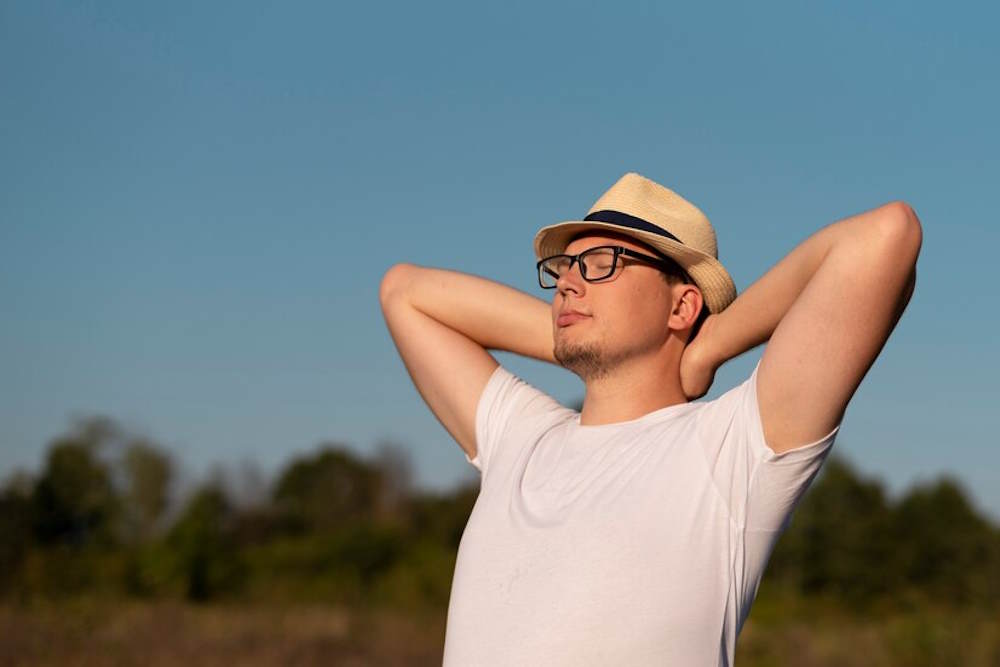
You spent months deciding, saved for the procedure, sat through the surgery and got through the fragile first weeks. Then summer arrives, or a holiday, or just a bright walk to work, and a risk almost nobody warned you about is quietly waiting overhead. Sunlight is one of the most underestimated threats to a healing hair transplant, and unlike friction or sweat, it does its damage silently, without any obvious sting to tell you something is wrong.
This is the guide to getting your new grafts through their first year with the sun as an ally rather than a saboteur. When UV is genuinely dangerous, how long the sensitivity lasts, and the practical habits that protect both the grafts and the skin they sit in. At Hairpol, sun protection is one of the aftercare points we return to most, because it matters for far longer than patients expect and it is so easy to get casually wrong.
Why the sun is such an underrated threat
Most aftercare fears are tactile. You can feel a hat rubbing, a pillow pressing, sweat pooling. The sun is different because the harm is invisible in the moment. You can sit outside on a mild day, feel perfectly comfortable, and still be exposing freshly grafted skin to ultraviolet light that it is in no state to handle. There is no immediate pain to warn you, which is exactly why so many patients underestimate it.
After a hair transplant, the recipient area is essentially a field of tiny wounds healing into new, delicate skin. That skin is more vulnerable to UV damage than mature scalp skin, and the grafts themselves are metabolically busy trying to survive and reconnect to a blood supply. Add strong sun into that equation and you introduce inflammation, pigment changes and stress at precisely the moment the area needs calm. The threat is real; it just does not announce itself.
What UV actually does to healing grafts
In the earliest phase, sunburn is the acute danger. Burning the recipient area while the grafts are still fragile can cause inflammation that may compromise graft survival, and it can damage the thin new skin that is only just forming. A sunburned healing scalp is not a cosmetic annoyance; it is a genuine setback that can affect how well the transplant takes.
Beyond the burn risk, UV drives changes in pigmentation. Healing and recently healed skin is prone to reacting to sun by darkening unevenly or developing patches, and the fresh scars in the recipient and donor areas are especially reactive. Exposed too early, a scar that would have faded to near-invisible can instead darken and become more noticeable, sometimes for a long time. This is why the sun matters not just for graft survival in the first weeks but for the cosmetic quality of your result across the whole first year.
The first two weeks: total avoidance
The rule for the initial healing window is the strictest and the simplest: keep the sun off your scalp entirely. For roughly the first two weeks, direct sunlight on the recipient area should be avoided altogether, not reduced but avoided. The grafts are at their most fragile, the skin is openly healing, and there is no safe amount of direct sun on it during this phase.
Crucially, you cannot use sunscreen on the recipient area during these early weeks, because rubbing anything onto the grafts risks dislodging them and the chemicals can irritate open, healing skin. That removes your usual tool and leaves avoidance and shade as the only options. If you must be outside, seek full shade and keep it brief. This is one more reason many patients plan their procedure for a season or a stretch of life when staying out of strong sun is easy, rather than fighting the sun at its peak.
Shade and timing beat everything early on
Since sunscreen is off the table at first, your protection comes down to physical avoidance. Stay in the shade, choose cloudy days or early mornings and late afternoons for any time outside, and steer clear of the midday hours when UV is strongest. A short walk before the sun is high is very different from an afternoon in open glare, even if both feel pleasant.
Be aware that UV is sneakier than it feels. It penetrates light cloud, reflects off water, sand and pavement, and reaches you in the shade of a thin umbrella. On an overcast day you can still accumulate meaningful exposure without any sensation of heat. Treat the first weeks as a period where you actively route your day around avoiding direct sun rather than assuming a mild sky is safe. Our overview of how sunlight and UV exposure affect recovery goes deeper into why this early caution matters so much.
When a hat becomes your best tool
Here is where the timeline turns, because the very accessory that was forbidden in the first days becomes your single best defense against the sun. In the earliest window you cannot wear a hat, since anything pressing on the grafts can dislodge them. But once your clinic confirms the grafts are secure, usually around the two-week mark, a loose, breathable hat becomes the easiest and most reliable sun barrier you have.
Choose a hat that shields without gripping. A soft, wide-brimmed hat protects far more of the scalp than a cap, covering the crown and the sides that a peak leaves exposed. Make sure it sits comfortably without pressing tightly on the recipient area, and keep it breathable so you are not trapping heat and sweat underneath. For the rest of the first year, a hat is the simplest way to make going outside a non-event. If you want the full timeline on reintroducing headwear safely, our guide on common aftercare mistakes covers where people slip up.
When you can start using sunscreen
Once the recipient area has healed on the surface, typically after the first few weeks and once your clinic gives the go-ahead, sunscreen becomes an option and a good one. At that point, applying a broad-spectrum SPF to the scalp on sunny days adds a layer of protection that shade and hats alone cannot always guarantee, especially if your hair is still short and the skin is exposed.
The key is not to rush it. Applying sunscreen too early, while the area is still healing or crusted, risks irritation and disturbing grafts, so wait for the clear signal from your clinic rather than a date on a calendar. When you do start, a gentle, high-SPF, broad-spectrum product reapplied through the day is the aim. For most patients the practical approach is layered: a hat as the main barrier, with sunscreen on any exposed scalp as backup. Together they let you live a normal life outdoors without gambling with your result.
Scars, donor area and the pigmentation problem
It is not only the recipient area that needs shielding. The donor zone at the back and sides, where follicles were harvested, is also healing and its tiny scars are sun-sensitive too. In FUE, those scars are minuscule dots, and kept out of the sun while they heal they fade until they are hard to find. Exposed to UV too soon, they can darken and stand out, undoing some of the discretion that makes modern harvesting so hard to detect.
Pigmentation is the through-line of the whole first year. Healing skin that gets too much sun can develop uneven color, and once that happens it can take a long time to even out. Protecting both the recipient and donor areas from UV is therefore not just about the first fragile weeks; it is about the color, texture and invisibility of your result maturing cleanly. A little diligence with shade, hats and eventually sunscreen pays off in a result that looks natural under any light.
Why the first year, not just the first weeks
Patients often assume sun caution ends once the crusts are gone and the scalp looks normal, around the first month. It does not. While the acute burn-and-graft risk is concentrated in the early weeks, the skin and scars continue maturing for many months, and their sensitivity to pigment changes lingers well into the first year. The recommendation to protect the area for roughly the first twelve months is about this longer, quieter phase.
Think of it as two overlapping timelines. The first is about graft survival, and it is most urgent in the opening weeks. The second is about the cosmetic quality of the skin and scars, and it runs the length of the first year. You do not need to hide indoors for twelve months, but you do need to keep sun protection as a standing habit rather than something you drop the moment your scalp stops looking freshly operated on. The habit is light; the payoff is a result that ages well.
Holidays, beaches and strong-sun destinations
A specific scenario trips people up: booking a beach holiday or traveling somewhere intensely sunny in the months after a transplant. Strong sun, reflective sand and water, and long days outdoors are the exact conditions your healing scalp is least equipped for. If you can, avoid planning a high-sun trip in the first couple of months, when the grafts and skin are most reactive.
If a trip is unavoidable or already booked, protection becomes non-negotiable. Once you are past the sunscreen-free window, that means a wide-brimmed hat worn consistently, broad-spectrum SPF reapplied on any exposed scalp, shade during peak hours, and a realistic acceptance that you cannot treat this holiday like a pre-transplant one. Many patients simply time their procedure around their travel plans, scheduling surgery so the most sun-sensitive weeks fall in a season they will spend at home. Planning around the sun is far easier than repairing what it damages.
How sun protection connects to your long-term result
It is worth zooming out, because sun care is not an isolated chore. The same discipline that protects your grafts and scars in the first year also protects the health of your scalp and hair for the long run. Chronic UV exposure is hard on skin and hair everywhere on the body, and a scalp you now have real reason to look after is a scalp worth protecting for good.
The transplant gives you a natural reason to build sun-smart habits that keep paying off. A hat on bright days, mindful timing, and sunscreen when the scalp is exposed are small routines that guard both the result you invested in and the surrounding hair that frames it. At Hairpol, we frame first-year sun protection not as a temporary restriction but as the start of caring for a scalp you now have every reason to value.
Short hair, exposed scalp and why early growth changes the math
One thing that catches patients off guard is how exposed the scalp stays for the first several months. After the procedure your hair is short, the transplanted hairs shed and then regrow slowly, and for a good stretch there simply is not enough length to shade the skin the way a full head of hair eventually will. That means the scalp is directly in the line of UV during exactly the window when the skin is most reactive.
As your hair grows back in over the months, it gradually provides its own natural shade, and the need for vigilance eases. But do not let the appearance of early regrowth trick you into dropping your guard too soon; thin, short new hair offers very little UV protection. Until you have real density and length, treat the scalp as exposed skin and keep the hat and, once cleared, the sunscreen in play. The coverage your own hair provides is a gradual handover, not a switch that flips at three months.
Everyday exposure adds up more than you think
Patients tend to picture sun damage as something that happens on a beach, but for most people the real exposure is incidental and cumulative: the walk to the car, time in the garden, a commute, an outdoor coffee, driving with the sun through the windscreen. None of these feels like sunbathing, yet across a week they add up to meaningful UV on an unprotected scalp. This drip-feed of everyday exposure is exactly what catches people out, because it never feels dramatic enough to worry about.
The fix is to make protection part of leaving the house rather than something reserved for obvious sun. In the early months, a hat by the door that you grab automatically does more good than any amount of good intentions about big sunny days. Once you are cleared for sunscreen, keeping some by your keys makes it easy to apply before an ordinary day out. Small, boring consistency beats occasional heavy caution, because it matches how the exposure actually reaches you.
Reading your skin and knowing when to ask
Because healing varies from person to person, learn to read the signals your own scalp gives you rather than relying only on a calendar. Lingering redness, visible crusting, tenderness, or an area that still looks freshly healed are signs the skin is not ready for either sun or sunscreen. A recipient area that has settled, shed its crusts and returned toward your normal skin tone is telling you the surface has matured, though its sensitivity to pigment changes can still outlast its appearance.
When in doubt, the safest move is always to ask your clinic rather than guess, because the right timing to shift from strict avoidance to sunscreen depends on your individual healing, your skin type and even the technique you had. At Hairpol, we would far rather answer a question about whether you are ready for sun than have you find out the hard way with a burn or a darkened scar. A quick message at your check-in can settle it in seconds.
Building the habit without living in fear
None of this should turn you into someone afraid of daylight. The goal is a light, consistent routine, not anxiety. Once you are past the strict early window, the whole system becomes almost automatic: reach for a hat when it is bright, put sunscreen on exposed scalp before a long day out, favor shade at midday, and stop worrying the rest of the time. It is far less restrictive than it sounds when you read it as a list.
The patients who get this right are not the ones who hide indoors; they are the ones who made shade and a hat a reflex. Over the first year those small choices compound into a result that matured evenly, with scars that stayed invisible and skin that healed cleanly. That is the quiet reward of taking the sun seriously when it counted. If you are ever unsure whether you are ready to move from avoidance to sunscreen, ask your clinic rather than guessing, because the timing is individual.
At Hairpol, we walk every patient through a first-year sun-protection plan tailored to their procedure, their skin and their lifestyle, because the honest answer depends on all three rather than a single rule. If you are planning a hair transplant or already navigating recovery and want clear guidance on protecting your result through the seasons, reach out to our team and explore our approach to hair transplantation, where aftercare is treated as part of the result, not an afterthought.
Frequently Asked Questions (FAQ)
How long do I need to protect my grafts from the sun?
Direct sun on the recipient area should be avoided completely for roughly the first two weeks, and sun protection should continue as a habit for about the first year. The urgent burn-and-graft risk is early, but the skin and scars stay sensitive to pigment changes for months.
Why is sun so dangerous after a hair transplant?
Freshly grafted skin is a field of tiny healing wounds that is far more vulnerable to UV than mature scalp. Sun can cause inflammation that threatens graft survival early on, and it can darken healing skin and scars unevenly, harming the cosmetic quality of your result.
Can I wear sunscreen right after surgery?
No. In the first weeks you should not apply sunscreen to the recipient area, because rubbing it on can dislodge grafts and the chemicals can irritate open healing skin. Rely on shade and avoidance until your clinic confirms the area has healed enough for sunscreen.
When can I start using sunscreen on my scalp?
Once the recipient area has healed on the surface, usually after the first few weeks and with your clinic's go-ahead, a gentle broad-spectrum high-SPF sunscreen becomes a good backup to a hat. Wait for the clear signal rather than a fixed date, since timing is individual.
Is a hat enough to protect against the sun?
A loose, wide-brimmed hat is your best single barrier once grafts are secure, covering more than a cap does. For strong sun it is best combined with sunscreen on any exposed scalp. Together a hat and SPF let you be outdoors without gambling with your result.
Do I need to protect the donor area from the sun too?
Yes. The donor zone at the back and sides is also healing, and its tiny FUE scars are sun-sensitive. Kept out of the sun they fade until they are hard to find, but exposed too early they can darken and become more noticeable, undoing some of the discretion.
Can I go on a beach holiday after a hair transplant?
It is best to avoid strong-sun trips in the first couple of months, when grafts and skin are most reactive. If a trip is unavoidable, use a wide-brimmed hat consistently, apply SPF to exposed scalp once you are past the sunscreen-free window, and stay in shade during peak hours.
What happens if my healing scalp gets sunburned?
A sunburn on a healing scalp is a genuine setback, not just discomfort. It can cause inflammation that may compromise graft survival in the early weeks and can damage the thin new skin and cause lasting pigment changes in the scars, so avoiding burns is a priority.
Find this helpful? Add Hairpol as a preferred source on Google.
Graft Range Calculator
Answer three questions to see the typical graft range for your situation — based on our published clinical guides.
This is a preliminary estimate, not a medical assessment. The exact number can only be determined by a doctor after examining your donor area and hair characteristics.
Get a Free Consultation
Answer a few questions and the medical team will review your situation.
