
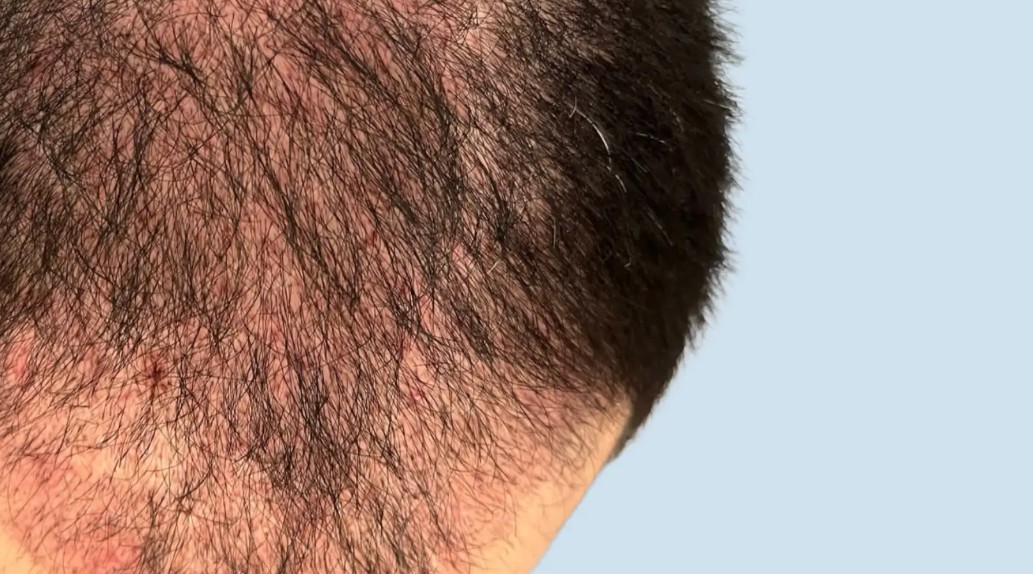
A few weeks after a hair transplant, something unsettling happens to most patients. The transplanted hair — the visible result they just paid for and waited weeks to recover from — starts falling out. Hairs appear on pillows, in the shower drain, in towels. The treatment area, which looked relatively normal at the end of the first week, suddenly starts looking thinner. By the second month, it can look worse than it did before the procedure.
If no one warned the patient that this was coming, the experience is genuinely alarming. The natural assumption is that something has gone wrong — the grafts didn’t take, the procedure failed, the money was wasted. Patients in this phase often spend hours online searching for confirmation that what they’re seeing is normal, or in the worst case, contacting their clinic in a panic.
The shedding is normal. It’s universal. And it’s not actually the grafts being lost. Understanding what’s happening biologically — why the transplanted hair sheds, what’s still happening beneath the surface, and when the new growth returns — is the single most useful piece of information a hair transplant patient can have during the first three months of recovery. This guide explains it completely.
What Shock Loss Actually Is
Shock loss is the technical term for the temporary shedding of transplanted hair shafts that begins around two to three weeks after a hair transplant procedure. It’s caused by the trauma of moving follicles from one location to another, which triggers those follicles to enter the resting phase of the hair growth cycle.
To understand why this happens, it helps to understand how hair grows normally. Hair follicles cycle through three phases:
- Anagen — the active growth phase, when the follicle is producing a hair shaft. This phase lasts two to seven years for scalp hair.
- Catagen — a brief transitional phase lasting two to three weeks, when growth stops and the follicle begins to detach from the hair shaft.
- Telogen — the resting phase, lasting roughly three months, when the follicle is dormant and the hair shaft is no longer actively attached. At the end of telogen, the old hair shaft is shed as a new one begins to form, and the follicle re-enters anagen.
Under normal circumstances, hair follicles cycle through these phases independently of each other. At any given moment, about 90 percent of your scalp hair is in anagen, about 1 percent is in catagen, and about 10 percent is in telogen — which is why everyone sheds some hair every day. This is normal turnover.
What happens during a hair transplant is that follicles are physically extracted from their original location and moved to a new one. This is significant trauma at the cellular level. The body’s response is to push those traumatized follicles into telogen — the protective resting phase — almost simultaneously. The follicles enter the resting state, the hair shafts they had been producing are released, and the visible result is what looks like sudden hair loss in the treatment area.
What Sheds and What Doesn’t
The critical distinction to understand: what’s shedding is the hair shaft, not the follicle. These are two different things, and confusing them is the source of most patient anxiety during this phase.
The follicle is the structure beneath the skin that produces hair. It’s the part that was transplanted. It contains the cells that generate hair shafts, the blood supply that nourishes them, and the genetic programming that determines whether the follicle is resistant to DHT or not. The follicle is what makes a hair transplant possible, and it’s what stays in place permanently after the procedure.
The hair shaft is the visible strand of hair that emerges from the follicle. It’s made of keratin, it has no living cells, and it’s essentially dead protein extruded by the follicle below. Hair shafts come and go throughout life as follicles cycle through their growth phases. Shedding a hair shaft is biologically inconsequential — the follicle that produced it is still there, and will produce a new one when it re-enters anagen.
What shock loss looks like is hair shafts shedding. What it doesn’t represent is follicles being lost. The follicles transplanted in the procedure are firmly anchored in the recipient area within the first week. By the time shock loss begins at weeks two to three, the follicles are integrated into their new location. They’re not going anywhere. They’re just temporarily not producing visible hair.
Why It Happens This Way
The synchronized entry into telogen that produces shock loss isn’t random — it’s the body’s protective response to follicle trauma. There are several reasons follicles shift into the resting phase after being transplanted.
The extraction process itself is traumatic at the cellular level. A follicle that has been growing in one location for years, supplied by its own established blood vessels and embedded in familiar tissue, is suddenly separated from all of that context. The micro-punch tool used in Sapphire FUE and DHI minimizes the trauma compared to older techniques, but extraction is still extraction.
The follicle then spends time outside the body before being implanted. Even with optimal handling, brief out-of-body time is stressful for living tissue. The follicle is exposed to different temperature, different oxygenation, and the absence of its normal blood supply.
Once implanted in the recipient area, the follicle has to establish new connections. New blood vessels need to grow to supply it. The surrounding tissue has to accept and integrate it. This process, called revascularization, takes one to two weeks.
During all of this — the extraction trauma, the out-of-body period, and the revascularization phase — the follicle has more important things to do than continue producing a hair shaft. The cellular energy needed to keep growing hair is diverted to survival and integration. The simplest way for the follicle to conserve resources is to enter telogen, release the hair shaft it had been producing, and rest while the new connections establish themselves.
The Timeline of Shock Loss
Shock loss follows a predictable pattern in most patients.
Weeks 1–2: The transplanted hair shafts are still in place. The visible result at one week looks roughly like the immediate post-procedure appearance — scabbing has settled, and the transplanted hair is still attached.
Weeks 2–3: Shedding begins. The first hair shafts start releasing. Patients notice hairs on pillows and during washing. The visible coverage in the treatment area begins to decrease.
Weeks 3–6: Peak shedding. The majority of the transplanted hair shafts release during this period. The treatment area can look genuinely thin. Some patients also experience shedding of native hair in the treated zone, compounding the visible thinning.
Weeks 6–8: Shedding tapers off. Most of the transplanted hair shafts have released. The follicles are now in telogen, dormant beneath the surface.
Months 2–4: The quiet phase. No visible hair from the transplanted follicles, which are still in telogen. New hair shafts are forming beneath the surface but haven’t emerged yet.
Months 4–5: First new growth emerges. The follicles re-enter anagen and begin producing new hair shafts that push through the scalp surface.
Months 6–12: Progressive density development as the new hair matures, more grafts emerge from telogen, and hair caliber increases.
The complete cycle from procedure to first visible new growth is roughly four to five months. The complete cycle to mature result is twelve to eighteen months.
Native Hair Shock Loss: A Related Phenomenon
Some patients experience shedding not just of transplanted hair but of existing native hair in and around the treatment area during the same window. This is also called shock loss, though the mechanism is slightly different.
Native hair in the treatment area can be affected by the procedure for several reasons. The recipient channel creation process disrupts the local tissue. The local anesthesia and the inflammation that follows affect surrounding follicles. The general stress of the procedure on the body can trigger telogen entry in vulnerable follicles — particularly those that were already in the late stages of androgenetic miniaturization.
The result is that some native hair around the transplanted grafts may shed during the same weeks-two-to-eight window. For most patients this is also temporary — the affected follicles return to normal anagen growth within a few months. For some patients with active androgenetic loss, the procedure may accelerate the loss of hair that was already on its way out. This is one of the reasons why being on finasteride before a procedure is recommended for patients with active androgenetic alopecia — it stabilizes the surrounding native hair and reduces the likelihood of meaningful native shock loss.
When the New Hair Returns
The question every patient in the shock loss phase is silently asking is: when does the new hair come back?
The timeline varies somewhat by individual, but the general pattern is:
- First new hairs visible at the surface: months four to five for most patients.
- Meaningful density improvement: month six.
- Majority of final result visible: months nine to twelve.
- Full maturity: months twelve to eighteen.
The new hair that emerges is typically fine in caliber at first, sometimes lighter in color than the patient’s mature hair color, and grows at variable rates across the treatment area. Coverage builds gradually rather than all at once. By month nine, most patients have a result that genuinely begins to resemble what they envisioned when they planned the procedure.
What’s Happening Beneath the Surface During the Quiet Phase
Between weeks eight and month four — the period after shock loss has completed but before new growth becomes visible — patients often feel like nothing is happening. The treatment area looks unchanged, week after week. The early excitement has worn off, the visible procedure marks are gone, and there’s no daily progress to mark.
Biologically, a great deal is happening. The follicles are in telogen, but telogen is not a passive state — it’s the preparation phase for the next cycle of anagen. Within each dormant follicle, the cellular machinery for hair production is being rebuilt. The dermal papilla, the cluster of cells at the base of the follicle that signals when to start growing again, is preparing its next instruction. The keratinocytes that will produce the new hair shaft are dividing and organizing.
By the time the follicle re-enters anagen at the four-to-five month mark, the new hair shaft is already forming. What looks like sudden emergence is actually the visible end of a process that’s been quietly underway for weeks.
This is why patience during the quiet phase is biologically rewarded. The work is happening — it’s just invisible until the hair pushes through the surface.
How to Get Through the Shock Loss Phase
The most important practical advice for navigating this phase is to expect it and not interpret it as failure. A few specific things that help:
- Know the timeline before the procedure. If you walk into shock loss expecting it, the experience is dramatically less distressing than if you encounter it without warning.
- Take monthly progress photos in consistent lighting and angle. The slow progress between any two consecutive months is hard to see, but the change between month two and month seven is obvious. Photos help you see what your eyes can’t perceive day to day.
- Don’t look in the mirror obsessively. Multiple checks per day during shock loss won’t show you anything different than one check per day, but they will amplify your anxiety. Limit how often you assess the treatment area.
- Stay off forums where panicked patients reinforce each other’s fears. The same shock loss images that look like failures to anxious patients are universally normal recovery. Online communities sometimes feed the anxiety rather than calm it.
- Trust the biology, not your fears. Shock loss is one of the most well-documented phenomena in hair restoration medicine. The follicles are intact. The new hair will return. The timeline is consistent across hundreds of thousands of procedures performed annually.
- Stay in touch with your clinic if you have specific concerns. Good aftercare includes ongoing communication about what’s normal at each stage.
Patients who go into the shock loss phase with realistic expectations report dramatically lower distress than those who don’t. The same biological process — hair shafts shedding as follicles enter telogen — feels completely different depending on whether you understand it as the normal pre-growth phase or as evidence that the procedure failed.
When to Actually Be Concerned
Almost everything that happens during the shock loss phase is normal. A few situations would warrant contacting your clinic:
- Pain that increases over the first week rather than decreasing.
- Yellow or green discharge from any graft site.
- Spreading redness beyond the treated area, especially with fever.
- Visible signs of infection — heat, significant swelling, drainage.
- Bleeding from graft sites beyond the first 48 hours.
What’s notably not on this list: shedding of transplanted hair shafts, thinning appearance in the treatment area, slow progress between weeks, or anxiety about whether the procedure worked. All of those are normal phases of recovery and aren’t grounds for concern, however distressing they feel.
The Bigger Picture
Shock loss is one of the most counterintuitive aspects of hair transplant recovery. The procedure designed to give you hair causes you to lose hair, temporarily, before the result becomes visible. From the outside, it looks like the procedure failed. From the inside, the follicles are doing exactly what they’re supposed to do — surviving the trauma of transplantation by entering the protective resting phase, then re-emerging months later to produce permanent new hair.
The mismatch between what shock loss looks like and what it actually represents is the source of most unnecessary panic during the recovery process. Patients who understand the biology — that follicles are intact, that telogen is temporary, that anagen returns and brings the visible result with it — navigate the recovery period with much less distress than patients who don’t.
At Hairpol, the pre-procedure consultation includes explicit discussion of the shock loss phase so patients know what to expect. The procedure is the surgical event. The recovery is the year-plus experience of biology unfolding on its own schedule. Knowing what each phase represents, including the unsettling shedding phase in months one through two, is what makes the experience match the eventual result.
Frequently Asked Questions (FAQ)
Why does transplanted hair fall out after a hair transplant?
Transplanted hair sheds because the follicles enter the telogen — resting — phase of the hair growth cycle in response to the trauma of being moved from one location to another. The extraction, brief out-of-body time, and need to establish new blood supply in the recipient area collectively push the transplanted follicles into a synchronized resting state. During telogen, the hair shafts that those follicles had been producing are released, while the follicles themselves remain firmly anchored beneath the surface. This shedding, called shock loss, begins around weeks two to three after the procedure and is universal across hair transplant patients. The critical thing to understand is that what's shedding is the hair shaft, not the follicle — the transplanted follicles are intact and will produce new hair when they re-enter the active anagen phase typically around months four to five.
When does shock loss start after a hair transplant?
Shock loss typically begins around weeks two to three after a hair transplant procedure. The first signs are usually hairs appearing on pillows, in the shower, or in towels during washing. Peak shedding occurs between weeks three and six, with most of the transplanted hair shafts releasing during this period. By weeks six to eight, shedding tapers off and the follicles enter the dormant telogen phase. The treatment area can look genuinely sparse during months two through four — sometimes thinner than it did before the procedure — as the shed hair shafts haven't yet been replaced by new growth. This is the normal sequence, fully expected, and not a sign that anything has gone wrong.
Does shock loss mean the hair transplant failed?
No — shock loss is not failure. It's the normal biological response to the trauma of transplantation, in which follicles enter the resting phase of the hair growth cycle and temporarily release the hair shafts they were producing. The follicles themselves remain in place beneath the surface, firmly anchored in the recipient area. They're not gone; they're just temporarily dormant. New hair shafts begin emerging from these same follicles around months four to five as they re-enter the active anagen phase. The visible thinning during shock loss creates the impression of failure, but the underlying biology is exactly what's supposed to happen. Hair transplant failure, when it occurs, has different signs — but the universal shedding around weeks two to three after the procedure is not one of them.
How long does shock loss last after a hair transplant?
The active shedding phase of shock loss lasts roughly four to six weeks, typically from week two through week eight after the procedure. The visible aftermath — a treatment area that looks thinner than expected — extends through months two to four, while the follicles remain in the telogen resting phase. New growth begins emerging from those same follicles around months four to five, gradually replacing what was lost during shedding with permanent new hair. Full visual recovery from shock loss is typically apparent by month six to seven as new hair density builds. The complete cycle from procedure to mature result, accounting for the shock loss phase plus the regrowth phase, runs twelve to eighteen months.
Can I lose existing hair from shock loss too?
Yes — some patients experience shedding of native hair in and around the treatment area during the same window as transplanted hair shedding. This is called native shock loss and occurs because the recipient channel creation, local anesthesia, and inflammation associated with the procedure can affect surrounding follicles. For most patients, native shock loss is temporary and the affected follicles return to normal growth within a few months. For patients with active androgenetic hair loss whose native follicles were already in late stages of miniaturization, the procedure may accelerate loss that was already underway. This is one of the reasons finasteride is often recommended before a hair transplant for patients with active androgenetic alopecia — it stabilizes the surrounding native hair and reduces the likelihood of meaningful native shock loss.
What can I do to reduce shock loss?
Shock loss itself cannot be prevented — it's a universal biological response to transplantation that happens in essentially all patients to varying degrees. However, the severity of shock loss and especially the impact on surrounding native hair can be reduced through specific measures. Starting finasteride before the procedure stabilizes native hair and reduces native shock loss for patients with active androgenetic alopecia. Beginning minoxidil at the appropriate time after the procedure — typically two to four weeks post-procedure — supports the transition of follicles from telogen back to anagen and may accelerate the timeline of visible new growth. Following all post-procedure care instructions carefully protects graft survival, ensuring that as many follicles as possible enter and exit the telogen phase successfully. General health factors — adequate nutrition, sleep, hydration, and stress management — support healing and the overall recovery timeline.
Is it normal for my hair to look worse 2 months after the transplant?
Yes — it's completely normal for the treatment area to look worse during months two through four than it did immediately after the procedure. This is the combined effect of shock loss (transplanted hair shafts shedding as follicles enter telogen) and the quiet phase that follows (new growth developing beneath the surface but not yet visible). The follicles themselves are intact and preparing to enter the active growth phase. This is the phase of recovery that causes the most unnecessary anxiety, but it resolves as new growth emerges from month five onward. Patients who understand this is part of the normal timeline before the procedure navigate it with significantly less distress than those who encounter it without warning.
Will all my transplanted hair grow back after shock loss?
Yes — the vast majority of transplanted follicles successfully re-enter the active anagen phase after shock loss and produce new permanent hair. Graft survival rates with appropriate technique are typically 85 to 95 percent or higher, meaning that 85 to 95 of every 100 follicles transplanted will go on to produce permanent hair in their new location. The hair shafts shed during the shock loss phase are not lost — they're replaced by new hair shafts produced by the same follicles when they re-enter anagen. By month nine to twelve, most patients have a result that represents the majority of what they'll see at full maturity. The small percentage of grafts that don't survive is a known and expected aspect of transplantation, accounted for in surgical planning, and not related to the shock loss phenomenon itself.
