
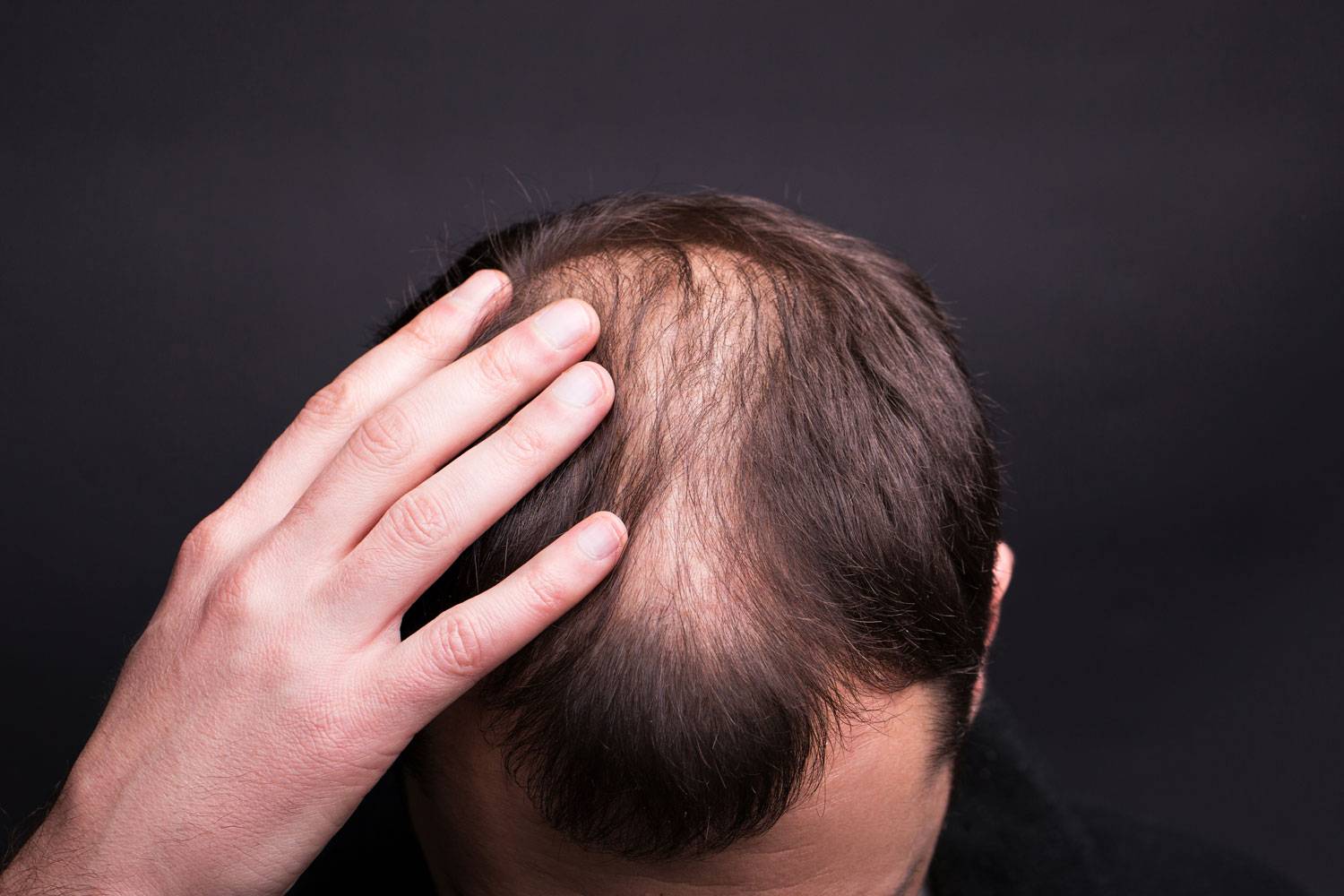
There is a particular week in a hair transplant that nobody warns you about. It usually lands somewhere around month eight. The hairline has come in. Friends have stopped mentioning the surgery. And then you tilt your head under the bathroom light, hold your phone up behind you, and the crown looks almost the same as it did in month five. Thin. Patchy. Scalp still reading through.
Almost every crown patient we see at Hairpol goes through some version of that moment, and most of them reach the same private conclusion: something went wrong. The grafts did not take. The surgeon undercounted. The money is gone. In the overwhelming majority of those cases nothing has gone wrong at all — the crown is simply running on a schedule that nobody explained clearly enough before the procedure.
The short answer: Crown hair transplant results are slow because the crown needs far more grown hair than the hairline before it reads as covered. Expect roughly 30–40% of final visible density at month 6, 50–65% at month 8, and 80–90% at month 12, with true maturity closer to months 15–18. A crown that still looks thin at month 8 but is pushing out new dark hairs is on schedule, not failing.
Is It Normal That My Crown Still Looks Thin at 8 Months?
Yes. And the honest version of that answer needs numbers attached, because “be patient” is a sentiment, not a clinical statement.
At month eight a transplanted crown typically has most of its follicles awake and producing hair. But those hairs are short, fine and lighter in colour than they will eventually be. A hair that has been growing for three months might be three centimetres long with a shaft caliber well under its mature thickness. It exists. It counts as a surviving graft. It does almost nothing for coverage, because coverage is an optical effect rather than a headcount.
This is why the gap between what your surgeon sees and what you see is so wide at this point. Under a dermatoscope, month eight looks like a success: dense, evenly distributed, healthy follicular units doing exactly what they were placed to do. In your bathroom mirror, month eight looks like a marginally improved version of the problem you paid to fix.
Both observations are accurate. They are measuring different things.
Why the Crown Runs on a Different Clock Than the Hairline
If you had both zones treated in a single session, you have probably noticed that the front started declaring itself around month four while the crown stayed quiet. That difference is real, it is predictable, and it has nothing to do with how carefully the grafts were placed.
The frontal zone sits over relatively thin, mobile tissue with a generous and fairly superficial blood supply, and grafts there are set at a shallow angle into a well-perfused bed. They tend to wake up early. The crown sits at the top-back curve of the skull where scalp tension is higher, the tissue plane behaves differently, and the vascular network takes longer to fully re-establish itself around each new graft. Add the fact that crown grafts usually go into an area still carrying miniaturised native hair, and the early months look considerably less dramatic than the front did.
Two to eight weeks. That is the lag we typically observe between frontal growth onset and crown growth onset in the same patient, same session, same surgeon. It is not an enormous biological gap. It just happens to land at the exact point where patience runs out.
The Whorl Pattern Is Working Against You
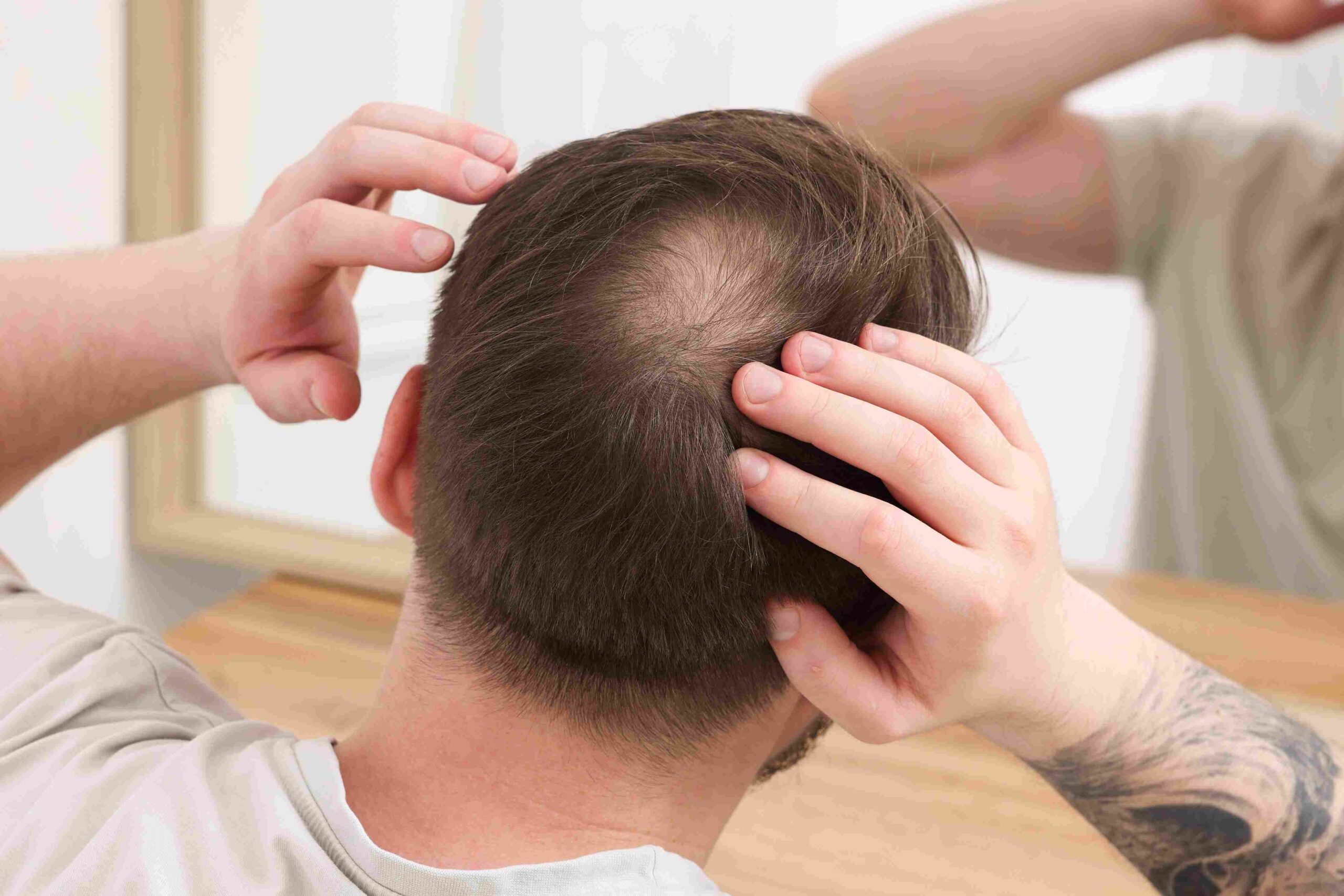
The crown is not a flat field of hair. It is a spiral. Every scalp has a whorl — a point from which hairs radiate outward in a rotating pattern, usually clockwise, sometimes counter-clockwise, occasionally doubled.
That geometry is what makes the crown so unforgiving. Along the hairline, hairs lie in roughly one direction and overlap each other like roof tiles, so every hair shades the scalp beneath its neighbour. In a whorl, hairs point away from a central axis in every direction at once. Instead of overlapping, they separate. At the exact centre of the spiral, hairs stand more upright and expose the skin underneath almost by definition.
A surgeon can rebuild that whorl faithfully, matching angle, direction and rotation graft by graft — the kind of placement control that DHI hair transplantation with an implanter pen is chosen for — and the treated area will still read as thinner than the same graft density placed on the front. It is the same quantity of hair doing less optical work.
It is also why short crown hair looks worse than long crown hair, and why patients who buzz their heads at month nine walk away convinced the surgery failed.
The Visual Closure Threshold: Why Coverage Arrives All at Once
Coverage in the crown does not build in a straight line. It accumulates slowly and then closes suddenly.
Consider what it actually takes for a scalp to stop showing through. Light has to be blocked, and blocking happens when hair shafts are long enough to bend over, thick enough to be opaque and numerous enough for their shadows to overlap. Below a certain combination of length, caliber and count you get individual visible hairs on a visible scalp. Above it, you get hair. There is very little middle ground, and the crossover often happens inside a six to eight week window.
Patients describe this as their result switching on, usually somewhere between month nine and month twelve, and frequently right after they let the crown grow a centimetre longer than they normally would. Nothing new grew that week. The existing hair simply crossed the threshold. We take the same optical effect apart in our piece on why transplant density looks thin in the first months.
Which means the honest thing to tell a month-eight patient is not “you will gradually improve.” It is: you are accumulating, and the payoff is back-loaded.
What Blood Supply Has to Do With a Slow Crown
Every transplanted follicle spends its first days as a graft rather than a hair — a piece of living tissue relying on plasma and diffusion until new capillaries reach it. In a well-vascularised recipient area that handshake happens quickly. In an area with tighter tissue, scarring from a previous procedure, or long-standing thinning that has quietly reduced local microcirculation, it takes longer.
Slower vascularisation does not usually mean graft loss. What it means is longer dormancy: the follicle survives but sits in a resting phase for weeks longer before it enters active growth. Multiply that across a few thousand grafts, each with its own individual delay, and you get a crown whose growth curve is flatter and stretched further to the right than a hairline’s ever is.
Smoking, uncontrolled blood pressure, poorly managed diabetes and significant anaemia all extend that timeline. So does very high density packed into an area with compromised circulation, which is one reason experienced surgeons plan crowns more conservatively than patients usually expect them to. Channel design plays into it as well: with sapphire FUE channel opening, incision width and spacing are matched to graft size, and that matters more in a curved crown than it does at the front.
How Long Does Crown Growth Actually Take? Month by Month
Here is the rough arc, based on what we photograph at Hairpol and what the broader clinical picture supports. Individual results vary, sometimes by several months, and none of this is a guarantee for any specific scalp.
- Months 1–3: Shedding, then silence. Nothing visible. The crown frequently looks worse than it did before surgery, particularly if miniaturised native hair shed alongside the grafts.
- Months 4–6: The first fine, pale hairs push through. Roughly 30–40% of final visible density by month six. Frustrating to look at, but on track.
- Months 7–9: Shafts thicken and darken. Around 50–65% at month eight. This is the anxiety window, and it is where most people start searching for reassurance.
- Months 10–12: The closure effect. Most patients reach 80–90% of their visible result by month twelve.
- Months 13–18: Caliber keeps increasing, hair lies down better, the whorl finally starts behaving like a whorl. This is where a crown result should genuinely be judged.
We map the full recovery arc stage by stage in our month-by-month crown recovery timeline, and if you want to see what these stages look like in real photographs rather than percentages, our breakdown of crown before and after results at 6, 8 and 12 months covers exactly that comparison.
If you are sitting at month eight and genuinely cannot tell whether you are looking at slow growth or a poor result, a side-by-side reading of standardised photographs settles the question faster than another month of guessing. Send your month-one and current photos through our appointment form — even if you had your procedure somewhere else, a second read on whether your density curve is behaving normally usually takes a day rather than a trip.
Signs Your Crown Is On Track Even When You Cannot See It
There are markers that tell you growth is happening while the mirror is still being uncooperative.
The most useful one is colour progression. Run your fingers against the grain in the crown and look closely at the base of the hair: if you can see short, dark, wiry shafts among the longer ones — hairs that clearly did not exist two months ago — the follicles are cycling. New dark hairs appearing in sequence is the single most reliable sign of an active crown.
Texture is the second marker. Transplanted hair often comes in curly, wiry or oddly kinked during the first year, and patients hate it. It is a good sign. It means the follicle is regenerating a shaft under a slightly altered growth angle, and it almost always settles by the second year.
Third, look at the edges rather than the centre. Crowns tend to fill from the periphery inward. If the outer border of the treated zone is visibly denser than it was three months ago, the centre is following behind it.
When Slow Is Not Normal
Not every slow crown is a patient crown. Some patterns deserve a proper examination rather than more waiting.
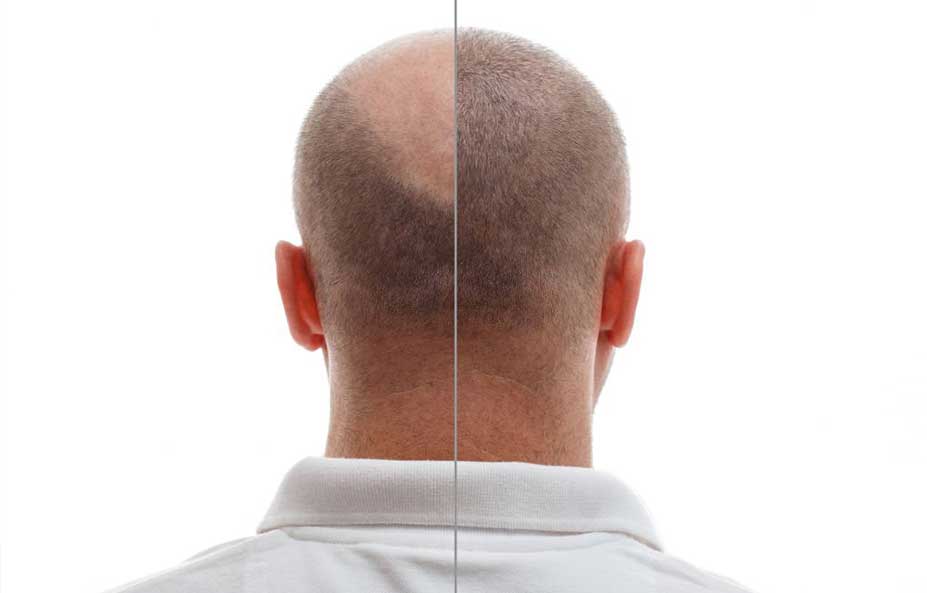
A complete absence of new growth by month seven — no fine hairs, no texture change, no colour progression whatsoever — is not typical and should be looked at. So should growth that appeared and then reversed: a crown that was clearly filling at month six and is thinner at month nine points towards ongoing native loss, an untreated inflammatory scalp condition, or a systemic issue such as thyroid dysfunction or iron deficiency.
Persistent redness, tenderness, pustules or crusting beyond the first couple of months is not part of a slow crown either. Neither is a sharply demarcated bald patch inside an otherwise growing field, which can indicate a localised circulation problem or a technical issue with placement in that specific zone.
Surface quality matters too. A crown that has stayed smooth and glossy with no visible follicular openings at month nine is a different picture from one that is dull, textured and dotted with short hairs. The first needs an examination. The second needs a calendar.
Why Your Photos Are Lying to You
Crown photography is genuinely difficult, and most patients are unknowingly running an experiment with no controls in it.
Overhead bathroom lighting is close to the worst possible setup for judging a crown. It comes from directly above, strikes the scalp at the angle that maximises reflection off bare skin, and throws each hair’s shadow straight down where it does nothing useful. Move the same head into diffuse daylight near a window and the crown can look noticeably fuller. Neither image is dishonest. Neither is decisive.
Wet hair, styling product, hair length, whether you have just towel-dried and flattened everything, the angle of the phone, whether you are holding it yourself or someone else is — all of these swing the apparent result more than a full month of real growth does.
If you are tracking progress, standardise it: same room, same time of day, same distance, dry unstyled hair, once a month. Anything less and you are comparing noise to noise. If you want a reference for what controlled crown photography looks like, every case in our before and after gallery is shot under the same light and the same angles.
What Makes Some Crowns Slower Than Others
Hair characteristics matter enormously here. Coarse hair blocks more light per shaft than fine hair, so a coarse-haired patient reaches visual closure earlier and with fewer grafts. Contrast matters just as much: dark hair on pale skin is the most demanding combination in the crown, because every millimetre of exposed scalp announces itself. Light brown hair on olive skin can look covered at a density that would read as sparse on somebody else.
Age and native hair status shift the picture too. A thirty-year-old with active miniaturisation in the crown may be losing native hair at nearly the rate the transplant is adding it. The surgery worked; the net visual gain is muted until the underlying loss is medically stabilised. That is a treatment problem, not a surgical one.
Graft numbers are the obvious factor and the one patients fixate on most. A crown that needed 3,000 grafts and received 1,800 will look under-covered at twelve months no matter how beautifully those 1,800 grew. This is worth checking before you conclude that growth failed, because an under-planned crown and a slow crown look identical from the outside.
Where Medication and Support Treatments Actually Fit
Anything that reduces ongoing native loss protects the visual result of a crown transplant, because the crown is where miniaturisation tends to be most active in the first place. Finasteride and topical minoxidil are the two agents with the most evidence behind them, but both are prescription-level decisions with genuine side-effect profiles, and neither should be started, stopped or dose-adjusted on the strength of an article. Talk to your doctor, and take that conversation seriously if you are under thirty-five with a family history of crown loss.
Support treatments such as PRP and mesotherapy are sometimes used alongside the growth phase to support the local scalp environment. The honest framing is that they may help the hair you already have; they do not add follicles and they do not rescue grafts that did not survive. At Hairpol we discuss these as adjuncts inside our hair treatments programme rather than as a remedy for a crown that is simply taking its time.
When Is a Crown Revision Actually Justified?
Almost never before month twelve, and rarely before month fifteen.
Operating on a crown that is still maturing risks two separate losses: transecting follicles that were about to produce hair, and spending donor grafts on an area that was going to fill anyway. Donor supply is finite and it does not regenerate. Grafts burned on an impatient revision are grafts you will not have at forty-five, when the pattern has moved further out and the crown needs a genuine top-up.
A revision conversation becomes reasonable when four things line up at twelve to fifteen months: the crown has clearly stopped changing, the density gap is visible in controlled photographs rather than only in bad lighting, native loss is medically stabilised, and the donor area can support additional grafts without compromising the rest of the scalp. Meeting three out of four is usually a signal to wait another six months.
When those conditions are met, a second crown session is a routine and well-tolerated procedure, and it typically needs far fewer grafts than the first — it is filling gaps rather than building a field from nothing.
What to Do If Month Twelve Still Looks Thin
Start by proving it. Take a controlled photograph set, compare it against your month-six images side by side rather than against your memory, and get a straight second opinion from the clinic that operated on you. Bring your graft count, your operative note and the map of where grafts were placed if you have them.
Then separate the two possible problems, because they have completely different answers. If the transplanted hair grew but the crown still looks thin, the issue is coverage planning — density, treated area, or ongoing native loss — and the answer is a plan, possibly including a second session further down the line. If the transplanted hair genuinely did not grow, that is a survival question, and it needs a different conversation about technique, graft handling times and post-operative factors.
Most patients who arrive convinced of the second are dealing with the first.
At Hairpol we would rather tell you honestly that your crown needs another eight months than sell you a session you do not need. If you are somewhere in months eight to twelve and the uncertainty is wearing you down, a proper assessment of your hair transplant result — timeline, density, donor capacity and what a realistic endpoint looks like for your pattern — will tell you far more than another month of bathroom-mirror inspection.
Find this helpful? Add Hairpol as a preferred source on Google.
Get a Free Consultation
Answer a few questions and the medical team will review your situation.
