
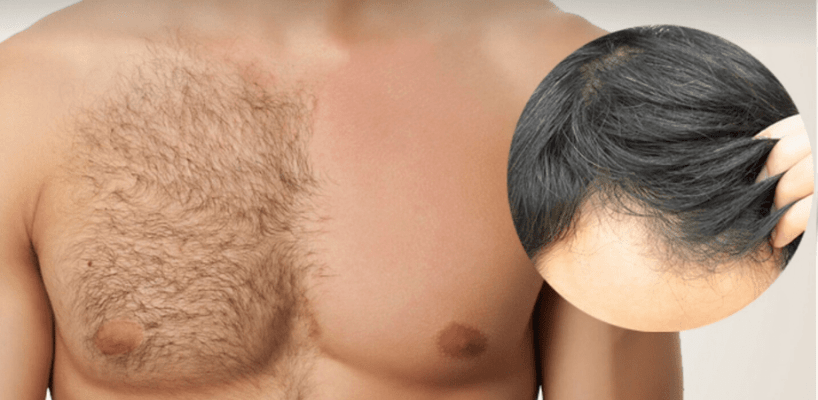
Every hair transplant relies on a single, finite resource: the donor area at the back and sides of your head, where follicles are genetically resistant to balding. For most people, that reserve is enough. But for some, it simply is not. Years of progressive loss, a very large bald area, or a previous procedure that already drew heavily on the scalp can leave a person wanting more coverage than their head can supply. That is the moment people start asking about the body.
A body hair transplant, often shortened to BHT, uses hair from outside the scalp, most commonly the beard and chest, as additional donor grafts. It is not a first-choice technique and it is not a magic donor reset. But for the right candidate, in the right hands, it can extend what is possible when the scalp alone has run out. At Hairpol, we treat BHT as a precise tool for specific problems, not a headline feature, and understanding when it fits is the whole point of this guide.
Why the Scalp Donor Area Has a Ceiling
The reason BHT exists at all comes down to scalp donor limits. The safe donor zone holds a fixed number of grafts, and harvesting beyond that thins the donor area visibly and permanently. A responsible surgeon will not over-harvest the scalp to chase coverage, because a depleted, see-through donor area is its own disfigurement. Once that ceiling is reached, the only way to add more grafts is to look elsewhere on the body.
This is the core logic of BHT. It is not about preference; it is about arithmetic. When the recipient area needs more grafts than the scalp can safely give, body hair becomes a way to bridge the gap. Understanding your scalp donor capacity is the foundation of any honest plan, and it is the first thing assessed before BHT is ever raised as an option in the context of hair transplantation.
Where Body Hair Comes From
The beard is by far the most useful body donor. Beard follicles are typically thick, grow in single-hair or sometimes two-hair units, and have a strong caliber that adds visible density. The neck and jaw area beneath the chin can yield a substantial number of grafts without leaving an obvious gap, which is why beard grafts are the most commonly used body source.
The chest is the next most common source, offering finer hair that can be useful for softening or blending. Beyond that, areas like the abdomen, back, and even the legs can technically supply grafts, but they are used far less often because their yield and survival tend to be lower and the hair characteristics are harder to blend. Each region has its own growth pattern, caliber, and behavior, and a good plan matches the right body hair to the right job.
How Body Hair Differs From Scalp Hair
This is where realism matters. Body hair is not the same as scalp hair, and pretending otherwise leads to disappointment. Body follicles tend to have shorter growth cycles, which means the hair does not grow as long as scalp hair. Beard hair is thicker and curlier; chest hair is often finer. The texture, length, and growth rhythm all differ from what is on your head.
Because of these differences, body hair is rarely used to build a frontal hairline, where naturalness is most scrutinized. It is far better suited to adding bulk and density behind the hairline, filling the crown, or thickening areas where a slightly different texture blends in unnoticed. A skilled surgeon places body grafts where their characteristics help rather than betray the result, and that placement judgment is most of the art of BHT.
Who Is Actually a Candidate for BHT
BHT is for a specific subset of patients, not the general population. The typical candidate has extensive baldness, a limited or already-used scalp donor, and a strong supply of beard or body hair to draw from. People who have had multiple previous transplants and exhausted their scalp reserve are common candidates. So are those with very advanced loss whose coverage goals simply cannot be met from the head alone.
Equally important is who is not a good candidate. Someone with plenty of scalp donor left does not need BHT and should not have it, because scalp hair gives better, more natural results for most areas. Someone with sparse body hair has little to offer as a body donor. And anyone expecting body hair to behave exactly like scalp hair is setting themselves up for disappointment. Honest candidacy assessment is what separates a sensible BHT plan from an oversold one.
How a Body Hair Transplant Is Performed
BHT uses the same FUE extraction principle as scalp surgery, but adapted to different terrain. Follicles are removed one by one with a fine punch, then implanted into the recipient area. The challenge is that body hair grows at flatter angles and in different directions than scalp hair, so extraction is slower and more technically demanding. The curl of a beard follicle beneath the skin, for example, makes clean extraction harder than on the scalp.
Because of this, BHT sessions often yield fewer grafts per hour than scalp procedures, and they demand a surgeon experienced specifically in body donor work. The grafts are handled with the same survival-focused care as scalp grafts, kept in chilled solution, and placed at angles chosen to blend with existing hair. It is a slower, more deliberate procedure, and rushing it produces poor survival and unnatural direction.
What Results Are Realistic
Managed expectations are everything with BHT. Used well, body hair can meaningfully increase overall density and coverage in a scalp that had run out of options. It can take a thin, see-through result and give it body. What it generally cannot do is recreate the fine, perfectly natural softness of a frontal hairline built from scalp hair. The best BHT results are the ones where body grafts are doing the structural work behind the scenes while scalp grafts handle the most visible front.
Survival rates for body hair tend to run somewhat lower than for scalp hair, and that has to be factored into the plan. A realistic surgeon will tell you that body grafts are a valuable supplement, not a perfect substitute. When that framing is honored, patients are pleased; when it is oversold, they are not. At Hairpol, we would rather under-promise on BHT and let the result speak than inflate expectations we cannot meet.
Combining Body Hair With Scalp Grafts
In practice, BHT is rarely used alone. The strongest results usually come from combining whatever good scalp donor remains with body hair to extend the total graft pool. Scalp grafts go where naturalness matters most, the hairline and the most visible zones, and body grafts fill in density behind them. This division of labor plays to the strengths of each donor source and hides the weaknesses.
This combined approach is also why planning matters so much. The surgeon has to map out which grafts come from where and go where, balancing texture, caliber, and survival across the whole head. It is a more complex plan than a standard scalp transplant, and it rewards experience. A clinic that has done this work many times reads the variables instinctively; one that has not can produce patchy, mismatched results.
The Donor Sites After BHT
A common worry is what the beard or chest looks like after grafts are taken. When extraction is done correctly and conservatively, the donor sites heal with tiny, scattered marks that are generally not noticeable, much like the scalp donor area after FUE. Beard density is usually dense enough that removing a moderate number of grafts does not leave a visible gap, especially across the neck.
That said, over-harvesting any donor, body or scalp, can create thinning, so the same discipline that protects the scalp applies to body sites. A careful surgeon takes what can be spared without creating a new problem somewhere else. For patients who wear a full beard, this is rarely an issue; for those with sparse facial hair, the available yield is simply smaller and the plan adjusts accordingly.
BHT Versus Other Options When the Scalp Runs Low
BHT is not the only path when scalp donor is limited. For some, the better answer is to accept a more modest coverage goal that the scalp alone can achieve naturally. For others, medical treatments to preserve existing hair, or even a well-fitted approach to styling, may serve better than chasing grafts. BHT earns its place only when the goal genuinely requires more grafts than the scalp can give and the body can supply them well.
This is why a thorough consultation comes before any talk of body donor. The question is never simply can we do BHT, but should we, and what does it realistically add. Sometimes the honest answer is that BHT is the right tool; sometimes it is that the patient’s goals can be met more simply. Both answers are legitimate, and a trustworthy clinic gives you the one that fits your situation rather than the one that sells the biggest procedure.
Why Experience Matters More for BHT Than Almost Anything
If there is one procedure where the choice of surgeon and clinic is decisive, it is BHT. The flatter angles, the harder extraction, the lower baseline survival, and the texture-matching judgment all demand a level of skill beyond standard scalp work. A clinic that does BHT occasionally is not the same as one that does it regularly and understands its quirks.
At Hairpol, body hair work is approached as a specialized extension of our broader expertise in hair transplantation, used when it genuinely helps and avoided when it does not. The most important thing a patient can do is choose a team that is honest about both the power and the limits of body hair, because BHT done well solves a real problem, and BHT done carelessly creates new ones that are far harder to fix.
The History and Rise of Body Hair Transplantation
BHT is a relatively modern development in hair restoration, made practical by the spread of FUE. Older strip-harvest methods could not realistically extract single follicles from the beard or chest, so body hair was largely off the table. Once FUE made it possible to remove individual follicular units from almost anywhere with a fine punch, surgeons began experimenting with body donor for the hardest cases, the patients whose scalp reserve had genuinely run dry.
Over time, technique and instrument design improved enough that beard grafts in particular became a reliable supplement rather than an experiment. Today, in experienced hands, body hair is a recognized part of the toolkit for advanced loss. It has not replaced scalp donor and never will, but it has changed what is possible for a specific group of patients who, a generation ago, would simply have been told there was nothing more to be done. That shift is why BHT is worth understanding even if you never end up needing it.
The Recovery After a Body Hair Transplant
Recovery from BHT has two parts that a standard scalp transplant does not, because you now have donor sites in two very different places. The recipient area on the scalp heals much like any FUE result, with scabbing that clears over the first week or two and shed grafts that regrow over the following months. The body donor sites, whether beard, chest, or elsewhere, heal on their own timeline and need their own care to avoid irritation, ingrown hairs, or folliculitis.
Beard donor areas in particular can feel tight or tender for a few days, and shaving is usually paused while the tiny extraction points close. None of this is dramatic, but it does mean aftercare instructions cover more ground than for a scalp-only procedure. Following them carefully protects survival in the recipient area and keeps the donor sites healing cleanly. As with any transplant, the first two weeks are when the newly placed grafts are most vulnerable, and patience during that window pays off in the final density.
Common Misconceptions About BHT
Several myths cloud how people think about body hair transplants. The first is that body hair can fully replace scalp hair, graft for graft, which is simply not true given the differences in texture, length, and survival. The second is the opposite extreme, that body hair never blends and always looks wrong, which is also false when grafts are placed skillfully in the right zones. The reality sits between these poles.
Another misconception is that BHT is a quick way to get unlimited grafts. Body donor is also finite, harvesting it is slower, and not everyone has a generous supply. People also sometimes assume body hair will keep the texture it had on the body forever, when in fact transplanted hair can adapt somewhat to its new environment over time, though never completely. Clearing up these misconceptions early is part of an honest consultation, because expectations built on myth lead to disappointment no matter how good the surgery is.
How to Decide If BHT Is Right for You
The decision comes down to a few honest questions asked in consultation. How much scalp donor do you genuinely have left? How much coverage are you actually trying to achieve? How much usable beard or body hair do you have to offer? And are your expectations aligned with what body hair can realistically deliver? Only when these answers point the same direction does BHT make sense.
A good clinic walks through all of this before recommending anything, and is willing to say no when BHT would not help. The worst outcomes come from patients who pushed for body hair to chase a coverage goal that was never realistic, or from clinics that sold it to close a sale. The best outcomes come from a calm, evidence-based match between a real donor supply and a realistic goal. At Hairpol, that conversation is where every BHT decision starts, and it is the part that protects you most.

For the right patient, body hair is a quiet, powerful resource that turns a scalp out of options into a head with real coverage again. It is not a shortcut and not a substitute for honest planning, but in the cases where the head alone cannot deliver, the beard and chest can carry the result the rest of the way. The key is knowing, honestly, when you are one of those cases, and a careful clinic will tell you the truth either way.
If you have been told your scalp donor is too limited for the coverage you want, BHT may be worth exploring, but only as part of a complete plan rather than a standalone promise. Bring your real questions, expect honest answers about both potential and limits, and judge a clinic by its willingness to say no as much as yes. Body hair done thoughtfully can be the difference between settling for less and finally reaching a result that felt out of reach, and that is exactly the kind of careful, individual decision a good consultation is built to make with you.
Find this helpful? Add Hairpol as a preferred source on Google.
Get a Free Consultation
Answer a few questions and the medical team will review your situation.
