

The before-and-after photographs that dominate hair transplant marketing show a consistent story: hair loss before, full coverage after, transformation complete. The implicit message is that the procedure works, and works well, and that the primary decision facing anyone with hair loss is simply whether to have it done.
The reality is more nuanced. Hair transplants work very well for a specific population of patients whose hair loss pattern, donor characteristics, health status, and expectations align with what the procedure can realistically deliver. For patients outside that profile — and there are more of them than the marketing suggests — the procedure ranges from suboptimal to genuinely contraindicated, and proceeding without understanding those boundaries produces outcomes that are disappointing at best and difficult to correct at worst.
This isn’t an argument against hair transplants. It’s an argument for understanding clearly who they work for, who they work less well for, and who they don’t work for at all — because that understanding is what allows people in each category to make genuinely informed decisions rather than decisions driven by hope and marketing.
The Foundation: What Makes Someone a Good Candidate
The ideal hair transplant candidate has androgenetic alopecia — the genetic pattern hair loss that accounts for the vast majority of cases in both men and women — with a loss pattern that has largely stabilized. They have a donor area with sufficient density, adequate hair caliber, and enough total follicles to address their current and likely future loss needs. Their overall health is good, with no conditions that compromise healing or graft survival. Their expectations align with what the procedure can deliver in terms of density, coverage, and timeline. And they understand that a transplant addresses current loss without preventing future loss in native hair, requiring a long-term management plan rather than a single permanent solution.
When all of these factors align, hair transplant results are consistently good. The procedure works because it’s moving genetically resistant follicles from a stable donor zone into areas of loss, and those follicles retain their resistance to androgenetic loss in their new location. This is the biological mechanism that makes the procedure genuinely effective for its intended purpose.
Every departure from this profile represents a variable that affects how well the procedure works — and in some cases, whether it should be performed at all.
When Hair Loss Pattern Is the Problem
The type of hair loss a patient has is the first and most fundamental variable in candidacy assessment, and it’s where the most significant exceptions to standard hair transplant eligibility arise.
Androgenetic alopecia is the pattern hair loss caused by genetic sensitivity of follicles to dihydrotestosterone. It follows predictable patterns — the Norwood scale in men, the Ludwig scale in women — and leaves the donor area at the back and sides of the scalp largely intact precisely because those follicles don’t carry the same genetic sensitivity. This predictability and the integrity of the donor zone are what make surgical restoration viable.
Alopecia areata is an autoimmune condition where the immune system attacks hair follicles, causing patchy hair loss that can range from small localized patches to total scalp hair loss. Hair transplants are generally contraindicated for alopecia areata, and the reason is fundamental: the autoimmune process that causes the loss doesn’t distinguish between native and transplanted follicles. A transplanted follicle placed into a scalp with active alopecia areata is subject to the same immune attack as the native follicles it’s replacing. The transplant may initially succeed, but the ongoing autoimmune activity can destroy transplanted grafts the same way it destroyed the original hair, making the procedure potentially futile and certainly high-risk without disease stabilization.
Scarring alopecia — conditions that cause permanent destruction of the hair follicle and replacement with scar tissue — presents a different challenge. Conditions like lichen planopilaris, frontal fibrosing alopecia, discoid lupus erythematosus, and central centrifugal cicatricial alopecia can all produce areas of scarring hair loss. Hair transplants into actively scarred areas generally don’t work because the scarred tissue has compromised blood supply and the inflammatory environment that caused the original follicle destruction may attack transplanted follicles similarly.
Traction alopecia — hair loss caused by chronic mechanical tension from tight hairstyles — creates a specific scenario where transplantation is sometimes possible but requires both treatment of the underlying cause and stabilization of the loss pattern. Transplanting into an area still experiencing traction stress is unlikely to produce lasting results.
Telogen effluvium — diffuse hair shedding triggered by systemic stress, illness, nutritional deficiency, hormonal changes, or significant life events — is not typically an indication for hair transplant because it is reversible. Transplanting during or shortly after a telogen effluvium event treats what may be a temporary condition with a permanent surgical intervention. Proper diagnosis to distinguish chronic androgenetic loss from reversible telogen effluvium is essential before any surgical planning.
The Donor Area: When There Isn’t Enough
The donor area limitation is one of the most straightforward exceptions to hair transplant eligibility, and it’s one that patients often don’t fully understand until a consultation makes it concrete.
Every hair transplant is constrained by the finite supply of viable donor follicles. The donor area at the back and sides of the scalp contains a fixed number of follicular units that can be extracted without compromising the donor area’s own density. For most patients, this total lifetime donor supply ranges from approximately 4,000 to 8,000 grafts depending on scalp laxity, follicle density, hair caliber, and the size of the safe donor zone.
When the extent of hair loss significantly exceeds what the donor supply can address at adequate density, the procedure cannot deliver what the patient needs. A patient with very advanced hair loss — Norwood Type 6 or 7 — may have a recipient area requiring 8,000 to 12,000 grafts for comprehensive coverage, while their donor supply can realistically provide only 5,000 to 6,000 grafts across their lifetime. This mismatch doesn’t mean transplantation is impossible, but it means comprehensive coverage is not achievable, and the planning conversation needs to be honest about what partial coverage looks like.
Donor area quality matters as much as quantity. Low donor density, fine hair caliber, or a safe donor zone that is narrower than typical all reduce the number of viable grafts available. Some patients have donor areas that are themselves affected by diffuse thinning — either from diffuse androgenetic loss that extends into the typically stable zone, or from other causes — which eliminates the assumption that the donor area is reliable and changes the risk profile of transplantation significantly.
Body hair transplantation — using follicles from the beard, chest, or other body areas — is sometimes discussed as a solution for patients with insufficient scalp donor supply. Body hair grafts can supplement scalp donor hair in some cases, but they come with meaningful limitations. Body hair grows differently from scalp hair — often shorter, with different texture and curl characteristics — and doesn’t always integrate seamlessly with existing scalp hair. Body hair transplantation is a specialist procedure with lower predictability than scalp-to-scalp transplantation and should be considered a supplementary option with realistic expectations rather than a straightforward extension of donor supply.
Age Considerations: Too Young and the Special Case of Very Advanced Age
Age is a candidacy variable that operates at both ends of the spectrum.
Young patients — broadly those under 25, and with particular caution for those under 22 — present elevated candidacy risk not because the procedure can’t technically be performed, but because the information needed to plan it well doesn’t yet exist. Hair loss in the early and mid-twenties is often still progressing, the final pattern is unknown, and the donor supply needed across a lifetime of potential sessions cannot be accurately estimated against a recipient area that may expand significantly.
The risk for young patients is not procedure failure in the technical sense. It’s that a procedure that looks successful at 25 creates problems at 35 when surrounding native hair has continued to thin while transplanted hair has remained in place, or when the donor supply used for an early procedure isn’t available for the additional coverage needed as loss progresses. These are planning failures rather than surgical failures, but their consequences for the patient are identical.
At the other end of the age spectrum, very advanced age is not typically a contraindication for hair transplant surgery in patients who are otherwise healthy. Older patients often have the advantage of stabilized hair loss, clear pattern definition, and a realistic sense of what they want from the procedure.
Health Conditions That Affect Candidacy
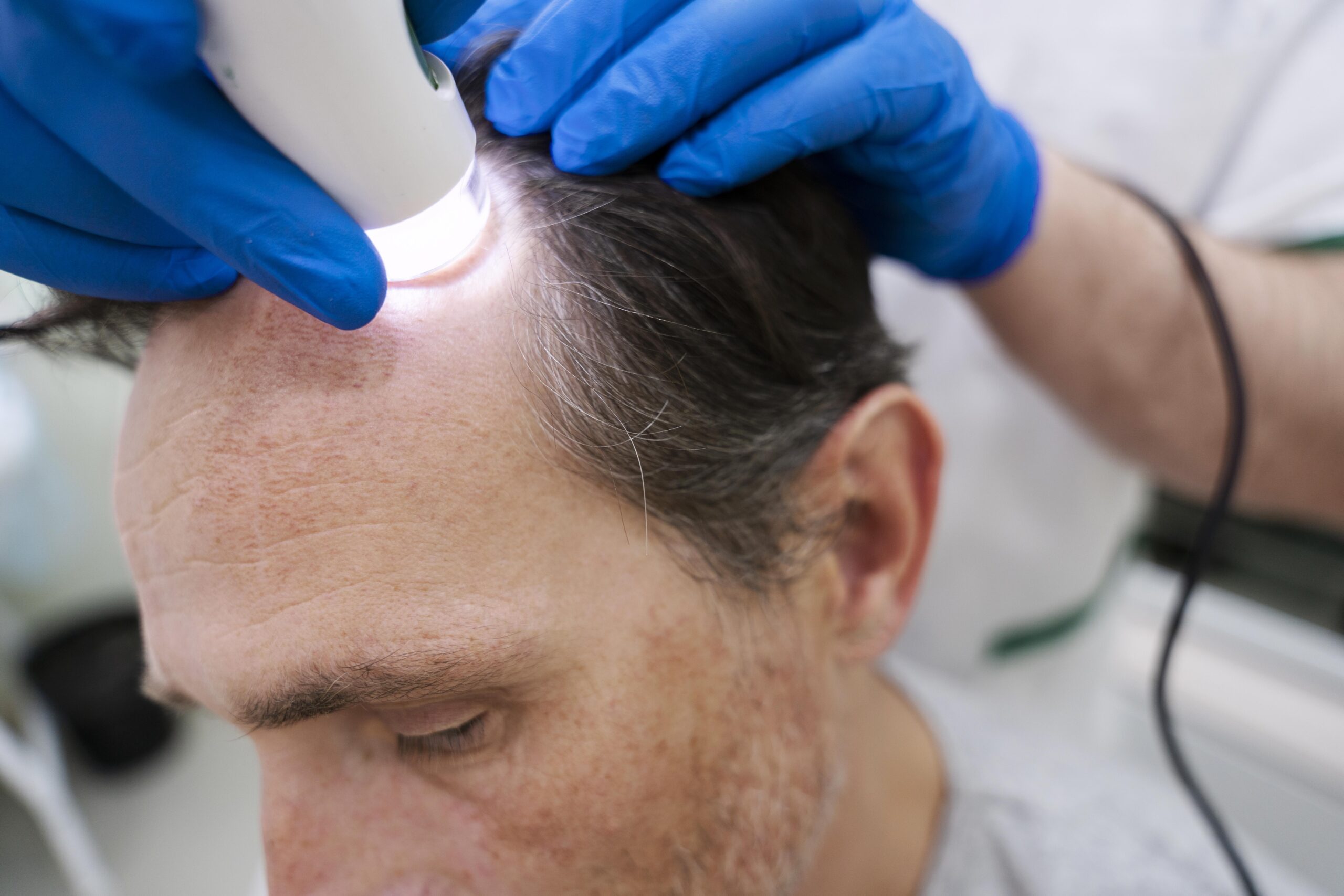
General health has a direct effect on how well hair transplant procedures work, both in terms of surgical safety and in terms of graft survival and healing quality.
Uncontrolled diabetes significantly impairs wound healing and immune function. Patients with poorly controlled blood glucose have slower healing at both the recipient and donor sites, higher infection risk, and potentially compromised graft survival due to the vascular changes that diabetes produces in the scalp’s blood supply. Well-controlled diabetes — with HbA1c within acceptable ranges and stable management — represents a different risk profile than poorly controlled disease.
Blood clotting disorders and anticoagulation therapy create challenges for hair transplant surgery because the procedure involves multiple small wounds across the scalp where controlled healing is important. Patients on anticoagulant medications need careful management around the procedure, including coordinated decisions with their prescribing physician about whether and how medication can be paused peri-procedurally.
Active scalp conditions — including seborrheic dermatitis, psoriasis, or fungal infections — should be treated and stabilized before any transplant procedure. Operating on a scalp with active inflammatory or infectious conditions compromises the healing environment and increases infection risk for transplanted grafts.
Keloid scarring tendency is a specific skin characteristic that affects candidacy. Patients who form keloid scars — raised, thickened scars that extend beyond the original wound boundaries — are at risk of keloid formation in both the donor area extraction sites and the recipient area around grafts. Patients with a documented history of keloid formation require very careful assessment before proceeding, and many experienced surgeons consider established keloid tendency a contraindication to the procedure.
Body dysmorphic disorder represents a different type of contraindication. Patients whose primary concern driving hair transplant consultation is body dysmorphic preoccupation — rather than objectively measurable hair loss — are unlikely to experience the satisfaction they’re seeking from the procedure, because the underlying condition affects perception rather than appearance. Addressing the psychiatric condition is the appropriate first step, not the surgical one.
Women and Hair Transplants: A Different Candidacy Landscape
Female hair loss is significantly underrepresented in hair transplant marketing and discussion, and the candidacy considerations for women differ from those for men in ways that affect how appropriate the procedure is across different female hair loss presentations.
Female androgenetic alopecia typically presents as diffuse thinning across the top of the scalp rather than the defined recession and bald zones that characterize male pattern loss. This diffuse presentation creates a specific candidacy challenge: the donor area in women with diffuse androgenetic loss is often itself affected by the thinning process, unlike in male pattern loss where the donor zone typically remains stable.
If the donor area is diffusely thinning rather than stable, the grafts extracted from it carry the same vulnerability to ongoing loss as the native hair they’re replacing. A follicle from a diffusely thinning donor zone may grow well initially in its transplanted location but then miniaturize and thin over time as the androgenetic process affects it. Careful donor area assessment, including miniaturization analysis, is essential before proceeding with female hair transplant candidates.
Hormonal factors in female hair loss require careful evaluation. Hair loss associated with thyroid disorders, polycystic ovary syndrome, iron deficiency anemia, or hormonal changes related to pregnancy or menopause may be reversible or significantly improvable through medical management of the underlying condition. Transplanting before these conditions are identified and treated risks addressing a reversible cause with an irreversible surgical intervention.
Expectations as a Candidacy Factor
Expectations are not a biological factor, but they function as a genuine candidacy variable because the gap between what a patient expects and what a procedure can deliver determines satisfaction as surely as any clinical outcome measure.
Patients who expect the procedure to recreate the hair density of their twenties from a scalp that has lost significant coverage are expecting something that transplantation cannot deliver. The donor supply available to any individual is insufficient to recreate native density across a significantly bald scalp — the grafts can create coverage and the appearance of density, but the actual follicle count per square centimeter will be lower than native density even in successful cases.
Patients who expect the procedure to stop their hair loss — rather than restoring what has already been lost — have a fundamental misunderstanding of what the intervention does. Transplanted follicles don’t affect the ongoing loss of native hair. A patient who doesn’t combine their procedure with medical management of ongoing loss will continue losing native hair after the transplant.
Patients who expect results to be visible within weeks or months rather than understanding the full hair transplant timeline will be distressed by a recovery process that is entirely normal but that contradicts their expectation of rapid transformation.
The Honest Framework for Evaluating Your Own Candidacy
What emerges from a complete picture of hair transplant candidacy is a framework that most patients don’t fully apply when evaluating whether to proceed.
The first question is whether the type of hair loss is appropriate for surgical treatment. Androgenetic alopecia with a stable or predictable pattern is the clearest indication. Autoimmune, scarring, or reversible causes require resolution or stabilization first.
The second question is whether the donor area can support the treatment needed. This requires honest assessment of current and likely future recipient area size against realistic donor supply, not just whether enough grafts exist for the current session.
The third question is whether health status supports the procedure and the healing process. Relevant conditions should be assessed and optimized before proceeding.
The fourth question is whether expectations align with what the procedure can deliver. This requires understanding the limitations of the intervention, not just its capabilities.
The fifth question is whether the timing is right — whether hair loss has stabilized enough for planning, whether medical management has been tried and assessed, and whether proceeding now rather than later genuinely serves the patient’s long-term interests.
A yes across all five questions describes a patient for whom hair transplant surgery is genuinely appropriate and likely to produce satisfying outcomes. The procedure works extremely well for the right patients. The definition of the right patient is specific enough that it excludes a meaningful proportion of those who present for consultation — and understanding which category you fall into is the foundation of a decision that serves you across the years and decades after the procedure rather than only in the optimistic weeks before it.
Find this helpful? Add Hairpol as a preferred source on Google.
Get a Free Consultation
Answer a few questions and the medical team will review your situation.
