
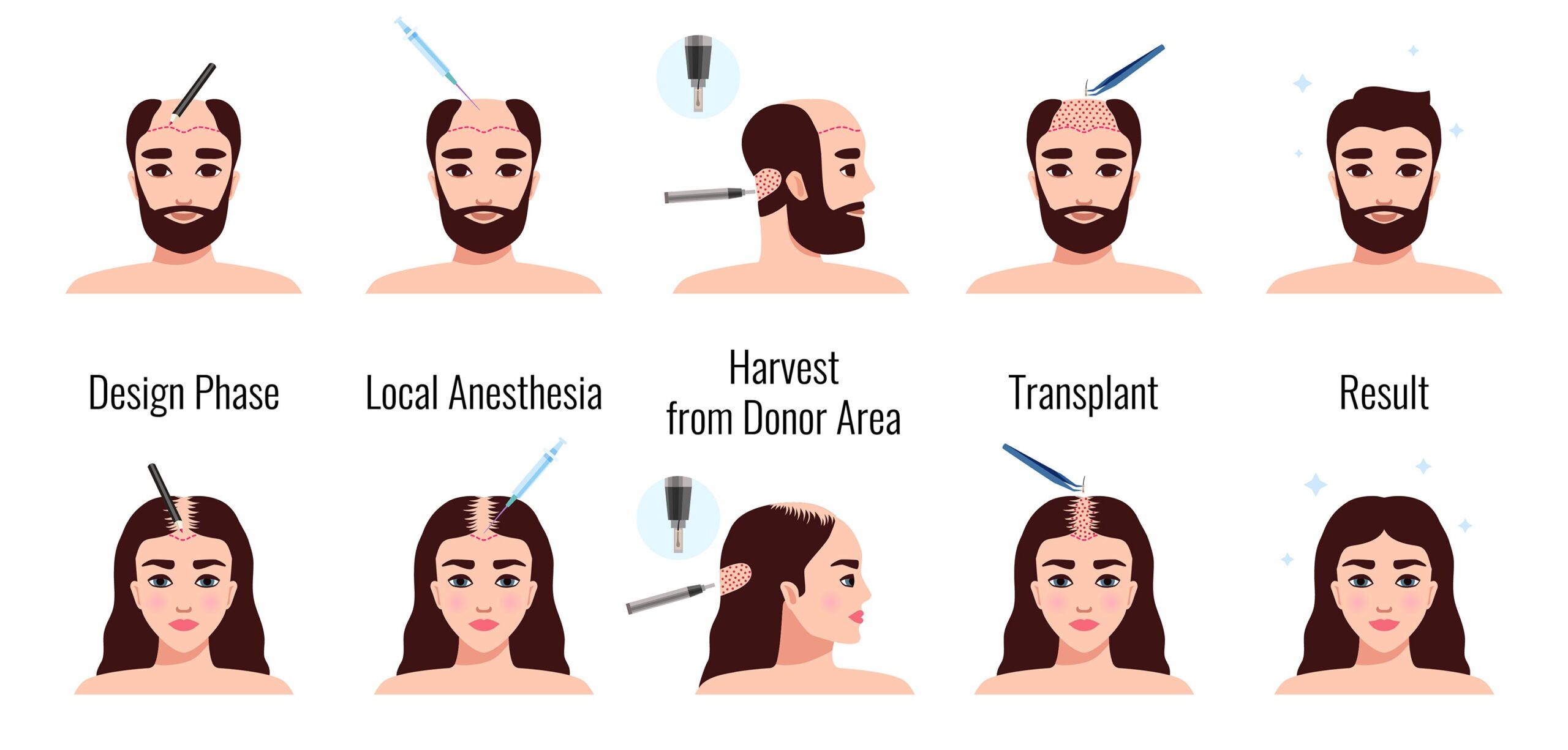
Undergoing a hair transplant is an exciting step toward regaining confidence and a fuller appearance. But while the procedure itself usually takes just one day, the recovery process is where the real transformation happens.
Understanding the hair transplant recovery timeline helps patients set realistic expectations, reduce anxiety, and achieve the best possible results. At Hairpol, every patient receives personalized aftercare guidance to ensure a smooth healing journey and natural-looking hair growth.
In this detailed guide, we will walk you through the hair transplant recovery process from Day 1 to 12 months, explaining what is normal, what to expect, and how to care for your scalp at every stage.
Day 1: The First 24 Hours After Hair Transplant
The first day after a hair transplant in Turkey is critical. Whether you’ve undergone Sapphire FUE or DHI hair transplant, your scalp is in the initial healing phase.
What You’ll Experience:
- Mild swelling around the forehead or eyes
- Redness in the transplanted and donor areas
- Tiny scabs forming around each graft
- Slight discomfort or tightness
These symptoms are completely normal and temporary.
Hairpol Aftercare Tips:
- Keep your head elevated while sleeping
- Avoid touching or scratching the grafts
- Do not wash your hair on Day 1
- Take prescribed medications exactly as directed
Keyword focus: hair transplant recovery day 1, hair transplant aftercare, hair transplant healing process
Days 2–3: Swelling and Sensitivity Phase
During the second and third days, swelling may peak—especially around the forehead. This can be surprising, but it’s a normal part of the post hair transplant recovery process.
What’s Normal:
- Forehead swelling that may move downward
- Increased sensitivity in the scalp
- Scabs becoming more visible
What to Avoid:
- Alcohol and smoking
- Intense facial expressions
- Sleeping face down
At Hairpol, patients are closely monitored during this phase to prevent complications and ensure graft survival.
Days 4–7: Scab Formation and Early Healing
This phase marks the beginning of visible healing. Scabs will fully form around transplanted grafts.
What Happens:
- Scabs darken and harden
- Redness begins to fade
- Itching may increase (do NOT scratch)
Hair Washing Begins
Patients can usually start gentle hair washing around Day 4 using special shampoo provided by Hairpol.
Important Rule:
Never remove scabs forcefully. Premature removal can damage hair follicles.
Keyword focus: hair transplant scabs, washing hair after hair transplant, hair transplant recovery week 1
Days 7–10: Scabs Start Falling Off
This is a reassuring phase for many patients.
What You’ll Notice:
- Scabs naturally fall off during washing
- Transplanted hairs become more visible
- Scalp looks cleaner and healthier
By the end of Day 10, most scabs should be gone. The grafts are now safely anchored beneath the skin.
Weeks 2–4: Shock Loss Phase (Shedding Stage)
This stage often causes unnecessary worry — but it’s completely normal.
What Is Shock Loss?
After a hair transplant, transplanted hairs may shed temporarily. This is known as shock loss after hair transplant.
Important to Know:
- The hair follicles remain alive
- Shedding does NOT mean failure
- New hair will regrow from the same follicles
This phase is part of the natural hair transplant healing timeline.
Keyword focus: shock loss hair transplant, hair shedding after transplant
Month 1: Healing Completed, Growth Still Invisible
At one month post-procedure:
- The scalp has healed externally
- Redness is minimal or gone
- Hair growth is not yet visible
Many patients feel impatient during this phase, but it’s essential to remember: hair growth happens beneath the surface first.
At Hairpol, patients receive reassurance and continued follow-up during this psychologically challenging phase.
Months 2–3: Early Hair Growth Begins
This is when the journey becomes exciting.
What to Expect:
- Fine, thin hairs start emerging
- Growth may be uneven
- Texture may feel soft or curly
These early hairs will gradually thicken and mature.
Keyword focus: hair transplant growth timeline, when does hair grow after transplant
Months 4–6: Visible Transformation Phase
This stage brings noticeable change.
What Happens:
- 40–60% of final results become visible
- Hair density improves
- Styling becomes possible
By Month 6, most patients can confidently say their hair transplant was worth it.
Pro Tip:
This is a great time to compare before-and-after photos.
Months 6–9: Density and Texture Improve
Hair continues to mature:
- Thicker strands
- Improved coverage
- More natural hair direction
Any remaining redness or sensitivity usually disappears completely.
Patients who underwent Sapphire FUE often notice especially natural density during this phase.
Months 9–12: Final Hair Transplant Results
This is the final stage of the hair transplant recovery timeline.
Final Results Include:
- Full hair density
- Natural hairline
- Permanent growth
By Month 12, over 90–100% of transplanted hair has grown.
This is when Hairpol patients truly see the life-changing impact of their procedure.
Keyword focus: hair transplant results after 12 months, final hair transplant results
How to Speed Up Hair Transplant Recovery
While healing follows its own biological timeline, you can optimize results by:
- Following Hairpol’s aftercare instructions
- Avoiding smoking and alcohol
- Eating protein-rich foods
- Staying hydrated
- Avoiding sun exposure
Optional treatments like PRP therapy after hair transplant can further support growth.
Why Hairpol Patients Heal Better
At Hairpol Hair Transplant Clinic in Istanbul, recovery success is not left to chance.
What Sets Hairpol Apart:
- Expert surgeons specialized in Sapphire FUE and DHI
- Personalized aftercare plans
- Ongoing patient follow-up
- International patient support
This holistic approach ensures not just hair growth — but confidence restoration.
Frequently Asked Questions About Hair Transplant Recovery
Is hair transplant recovery painful?
Most patients experience mild discomfort that resolves within days.
When can I return to work?
Usually within 3–5 days, depending on your job.
When can I exercise?
Light activity after 2 weeks, intense exercise after 1 month.
Final Thoughts: Trust the Process
A hair transplant is not an overnight miracle — it’s a carefully timed journey. Understanding the hair transplant recovery timeline from Day 1 to 12 months helps you stay patient and confident.
At Hairpol, every step is guided, monitored, and optimized to deliver natural, permanent results.
If you’re considering a hair transplant in Turkey, Hairpol offers the expertise, technology, and care you deserve.
