
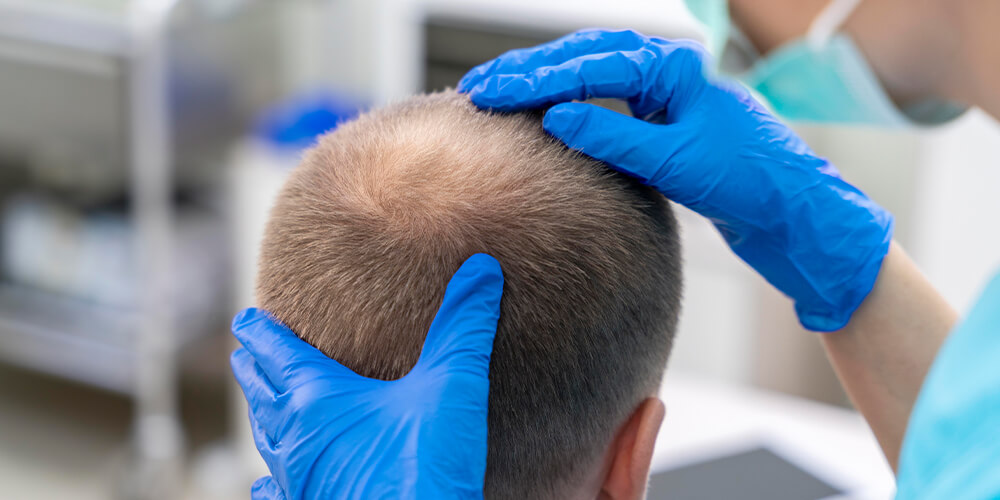
Revision surgery is one of the less-discussed realities of the hair transplant industry. Clinics don’t lead with it. Patients don’t typically find out about it until they’re either researching someone else’s cautionary experience or living through one themselves. But the demand for revision procedures is real, it’s significant, and the reasons behind it are specific enough that understanding them is genuinely useful for anyone who hasn’t yet had their first procedure.
This isn’t about frightening people away from hair transplantation. Done well, it produces results that genuinely improve lives. The point is that “done well” is a non-trivial standard, and the gap between procedures that meet it and those that don’t is wide enough that a meaningful number of patients end up needing corrective work. What creates that gap, and what can patients do before their first procedure to make sure they’re not in that position afterward — that’s what this guide is about.
What Revision Actually Means
Revision in the hair transplant context covers a range of corrective scenarios. At one end, it means adding density to an area where the original procedure underdelivered — where graft survival was lower than it should have been, or where the planned graft count simply wasn’t sufficient for the coverage the patient was promised. At the other end, it means addressing design problems: an unnatural hairline that was created in the wrong position, temple angles that don’t look right, a leading edge with the wrong texture, or a pattern of graft placement that looks planted rather than grown.
Density revisions and design revisions have different causes and different levels of corrective complexity, but they share a common origin: something went wrong in the original procedure that wouldn’t have gone wrong with better planning, better execution, or both. That’s the thread worth pulling.
Poor Graft Survival: When the Procedure Doesn’t Deliver What Was Planned
The most straightforward category of revision need is a result that simply looks thinner than it should — where the density achieved falls short of what the graft count should have produced. When this happens at scale, it’s almost always a quality-of-execution problem.
Graft survival is the proportion of transplanted follicles that successfully establish themselves in the recipient area and go on to produce permanent hair. In procedures performed with appropriate technique, survival rates are consistently in the 85 to 95 percent range. When that number drops significantly below this — when a patient with 2,500 grafts ends up with the density that 1,600 grafts would have produced — the shortfall has to come from somewhere. Usually it comes from one of a handful of execution failures.
The most common is inadequate graft handling. Follicles outside the body are vulnerable to dehydration, temperature fluctuation, and oxygen deprivation. From the moment of extraction until implantation, they need to be kept in appropriate storage solution at appropriate temperature, handled minimally, and implanted within a timeframe that keeps out-of-body time reasonable. Clinics running very high daily graft volumes on tight schedules sometimes fail on one or more of these dimensions — extracting more grafts than can be implanted promptly, storing them in suboptimal conditions, or rushing the implantation phase in ways that reduce placement precision.
Transection — damage to the follicle during extraction — is another significant factor. In FUE procedures, the punch tool needs to be oriented precisely with each follicle’s exit angle to extract it cleanly. Misalignment transects the follicle, either damaging it sufficiently to reduce its survival probability or severing it entirely. Experienced surgeons and technicians maintain low transection rates through consistent technique and the pattern recognition that comes from volume. Less experienced operators don’t, and the resulting graft attrition is one reason some patients end up with thinner results than they expected.
Implantation depth and angle matter too. Grafts placed too shallow can be dislodged during early healing; placed too deep, they may struggle to emerge normally. Placed at incorrect angles, they produce hair that grows in directions inconsistent with the surrounding native hair, creating a texture that looks wrong even when density is technically adequate. These are precision decisions that happen hundreds or thousands of times in a single procedure — and they’re where the difference between surgical experience and assembly-line throughput becomes most apparent in the result.
The Technician Problem
The most significant structural driver of revision-worthy results in the current market is the prevalence of procedures where the actual surgical work — extraction, channel creation, implantation — is performed primarily by unlicensed technicians rather than qualified surgeons. This is an open secret in the Istanbul hair transplant market: many high-volume clinics operating on aggressive pricing models have their surgeons present for brief check-ins while technicians handle the procedures from start to finish.
This matters because the precision required at every stage of a hair transplant procedure is genuine surgical precision. Reading follicle angles for accurate extraction, creating channels at consistent depth and appropriate angle, placing grafts at the right depth with the right orientation — these tasks are learnable, but they require time to develop competence, and the difference between competent and excellent execution shows up directly in graft survival rates and result quality. When these tasks are delegated to rotating technicians working through a day’s patient queue, the results are predictably variable.
A patient whose procedure was performed primarily by technicians in a clinic they chose based on price and before-and-after photos has no good way to know this before the procedure. They find out at twelve months when the density isn’t what it should be. By then, they’re a revision candidate — and the clinic that created the problem often markets revision services as well.
Unnatural Hairline Design: The Revision Problem That’s Hardest to Fix
Low density is at least correctable in principle, assuming sufficient donor supply remains. Unnatural hairline design is harder. A hairline that was placed in the wrong position, designed without appropriate attention to the transition zone, or executed with the wrong graft types at the leading edge can look obviously transplanted in ways that are difficult to fully reverse.
The most common design problems that lead to revision requests fall into a few recurring categories.
Hairlines placed too low. This is the design error patients most often contribute to themselves by pushing for lower placement than the surgeon initially proposed. A hairline that sits too low for the patient’s age and facial structure looks fine at twenty-eight and increasingly incongruous at thirty-eight, when the face has matured but the hairline hasn’t moved. The surgeon’s job is to hold the line on age-appropriate positioning even when the patient wants something more aggressive — and surgeons who simply agree to whatever the patient requests are setting those patients up for eventual dissatisfaction.
Straight or geometric hairlines. Natural hairlines have specific characteristics that vary subtly person to person but share a common quality: they look like they grew that way. They have slight irregularity at the leading edge, a gentle arc with natural micro-variation, temporal recession angles that match the patient’s age and facial structure. When a hairline is designed with a ruler — symmetrically straight across, perfectly curved, with temples that extend too far laterally — it announces itself as surgical regardless of graft survival. Correcting this kind of design problem requires either adding density in specific zones to shift the visual impression of the line, or in some cases accepted imperfection, because not all design errors are fully reversible.
Hard leading edges. The transition zone — where scalp becomes hair — needs to begin with isolated single-hair grafts at very low density before building progressively. Natural hairlines don’t start with full density. They start with wisps. When two and three-hair grafts are placed at the very leading edge, the result is a hard, abrupt line that looks transplanted at close range even when density behind it is perfectly adequate. Softening a hard edge requires going back in with single-hair grafts placed at the very front — possible, but it requires available donor supply and a team experienced enough to work in an established-graft area with precision.
Wrong temple angles. Temples are where design errors are most immediately apparent. Hairs in the temple zone grow at very acute angles — nearly parallel to the skin surface — in specific directions that vary across the zone. When temples are designed with incorrect angles, grafts grow visibly wrong regardless of how well they survived. This is difficult to correct because the grafts are physically there; what’s wrong is the angle they were placed at, and that can’t be changed after the fact.
The Donor Area: When It Gets Depleted or Damaged
A category of revision need that often doesn’t get discussed is donor area problems — situations where the first procedure harvested either too aggressively or poorly enough that the donor zone is visibly compromised or has insufficient supply for future needs.
Over-harvesting concentrates extractions in a limited zone to the point where the remaining follicle density in that area is too low for surrounding hair to camouflage the extraction sites. The result is visible thinning or patchiness in the donor area — permanent, because the extracted follicles are gone and the ones that remain can’t fill in the gaps. A patient in this position who needs additional coverage due to progressing hair loss may not have the donor supply to get it, and even if they do, the donor area has become a cosmetic concern in its own right.
Poor extraction technique also leaves marks. High transection rates mean damaged follicle remnants that can produce irregular healing at extraction sites. Wide punch sizes leave larger circular scars. These are less visible than over-harvesting thinning but still contribute to donor area appearance that the patient wasn’t expecting when they chose a short hairstyle because FUE was supposed to leave them that option.
Choosing the Wrong Clinic: The Root Cause Behind Most Revision Cases
Run through enough revision case histories and a pattern emerges: the root cause in the large majority of them is clinic selection. Not bad luck, not individual biological variation — clinic selection. A patient who chose a facility based on the lowest quote, or who was drawn in by a marketing campaign heavy on dramatic transformations and light on clinical detail, or who didn’t do the specific verification work that separates appropriately qualified clinics from those running on volume and price.
The Istanbul market has made genuinely excellent hair transplantation accessible at prices far below what comparable quality costs elsewhere. It has also created a large supply of high-volume, low-quality operations that have learned how to look legitimate online while cutting the corners that show up in outcomes at twelve months. The challenge for patients is that before a procedure, these two categories can look similar from the outside. The before-and-after galleries look comparable. The testimonials look comparable. The price difference is the most obvious signal, and the lower-priced option can be genuinely tempting.
The specific verification work that actually differentiates quality from its appearance includes: confirming Ministry of Health authorization for health tourism in Turkish clinics, verifying the actual credentials and direct procedural involvement of the named surgeon rather than just their presence on the website, checking ISHRS membership as an indicator of professional engagement, and looking specifically for long-term patient documentation at twelve months and beyond rather than curated six-month results. Asking specifically who will perform each stage of the procedure — extraction, channel creation, implantation — and what happens if the lead surgeon isn’t available that day is a question that reveals more about clinic standards than most of what appears in marketing materials.
What Revision Can and Can’t Fix
For patients already in a revision situation, honest expectations matter. Some revision outcomes are excellent. Where the problem is primarily density — graft survival that was lower than it should have been, with a donor supply that can support a second procedure — a well-executed revision by an experienced team can meaningfully improve the result. The existing transplanted hair may experience temporary shock loss from the second procedure’s tissue disruption, but it returns, and the added density from the revision grafts produces the fuller result the first procedure was supposed to deliver.
Design problems are more variable. Softening a hard leading edge with carefully placed single-hair grafts can improve naturalness significantly. Adjusting an over-aggressively placed low hairline is more limited — you can add single hairs in front of it to create a softer impression, but you can’t move established grafts. Temple angle errors can sometimes be camouflaged partially with strategic placement, but wrong angles can’t be fully corrected.
Donor supply is the hard limit for everything. A patient whose first procedure over-harvested the donor area may not have the supply for adequate revision even if everything else about their situation is favorable. This is the revision scenario with the fewest options and the most permanent consequences — which is exactly why donor management in the first procedure matters so much.
The Practical Summary
Revision need isn’t random. It has causes, and most of them are preventable. The patients who end up needing revision most often are those who chose their clinic without doing the specific verification work that quality selection requires, received procedures from teams where technicians rather than surgeons did the surgical work, got hairlines designed for immediate impact without consideration of age-appropriate positioning and long-term appearance, or had first procedures that used donor supply aggressively without planning for future needs.
None of this requires a patient to be naive or careless. The market is structured in ways that make quality harder to identify than it should be. But the verification framework exists, the questions to ask are knowable, and the difference between a clinic that will deliver a good result and one that will deliver a revision-worthy one is assessable before commitment — not obvious from marketing materials alone, but assessable from the right information.
At Hairpol, the consultation process covers the specific factors that most commonly drive revision need: hairline design rationale, graft count and donor supply management, who performs each stage of the procedure, and realistic expectations for the timeline and quality of results. Not because revision is inevitable or even likely with appropriate care, but because the decisions made before the first procedure are the ones that determine whether revision ever becomes a question.
Frequently Asked Questions (FAQ)
Why do some hair transplants need to be revised?
Hair transplant revision is needed when the original procedure produced results that fall short of what was planned — either in terms of density, naturalness, or both. The most common drivers are poor graft survival from inadequate surgical technique, including rough graft handling, high transection rates during extraction, and imprecise implantation that places grafts at incorrect depths or angles. Design failures are another significant category: hairlines placed too low for the patient's age, hard leading edges created by using multi-hair grafts where single-hair grafts should have been used, or temple angles that don't match natural adult male hairline patterns. In some cases revision is needed because the original procedure used donor supply in ways that addressed current loss without accounting for future progression, leaving the patient with insufficient remaining supply for the additional coverage their continuing hair loss eventually requires. The root cause in most revision cases is clinic selection — procedures performed in high-volume facilities where surgical precision was compromised by throughput pressures, or where technicians rather than qualified surgeons performed the surgical work. Understanding these causes before the first procedure is more useful than understanding them afterward.
What makes a hair transplant look unnatural?
Several specific design and execution failures produce results that look transplanted rather than natural, even when the grafts themselves survived adequately. The most common is a hard leading edge — created when two and three-hair grafts are placed at the very front of the hairline instead of the single-hair grafts that natural hairlines begin with. The result is an abrupt, dense edge that reads as surgical under close inspection. Geometric hairline design — straight lines, perfectly symmetric arcs, temples that extend too far laterally — produces a similar effect by lacking the subtle irregularity of grown hair. Wrong implantation angles, particularly in the temple zone where hairs grow nearly parallel to the skin surface, cause grafts to grow in directions that can't be corrected through styling regardless of how well the follicles survived. And hairlines placed too low for the patient's age look increasingly incongruous as the face matures around a hairline that was designed only for how the patient looked at the time of the procedure. Most of these problems originate in the design and execution of the procedure rather than in graft biology — which is why choosing a clinic where hairline design is treated as a serious clinical decision rather than a brief pre-procedure formality is one of the most consequential choices a hair transplant patient makes.
Can a bad hair transplant be fixed?
Most hair transplant problems can be improved through revision, though the degree of improvement depends on what specifically went wrong and how much donor supply remains after the original procedure. Density problems — where graft survival was lower than it should have been — are among the most correctable, provided the patient has sufficient remaining donor supply to support a second procedure. A well-executed revision adds permanent grafts that, combined with the existing result, produce the fuller coverage the first procedure should have delivered. Design problems are more variable: softening a hard leading edge with carefully placed single-hair grafts can meaningfully improve naturalness; correcting an overly low hairline is more limited because established grafts can't be repositioned. Temple angle errors are among the hardest to correct, since grafts placed at the wrong angle will grow incorrectly regardless of subsequent work in the area. Donor over-harvesting is the hardest revision scenario — visible thinning in the donor area from excessive extraction is permanent, and the reduced remaining supply constrains what revision can achieve regardless of other factors. The realistic outlook for any specific revision case depends on a detailed assessment of what went wrong, what remains in the donor zone, and what the patient's goals for correction are.
How do I avoid needing a hair transplant revision?
Avoiding revision comes down almost entirely to clinic selection and the specific verification work that distinguishes genuinely qualified clinics from those that look legitimate online but deliver substandard results. The specific steps that matter: confirm Ministry of Health health tourism authorization for Turkish clinics rather than assuming that online presence implies appropriate licensing. Verify the actual credentials of the surgeon who will perform the procedure — not just their name on the website — and specifically ask who performs extraction, channel creation, and implantation, and what the policy is if the lead surgeon isn't available on your procedure day. Check ISHRS membership as an indicator of professional standards engagement. Look for documented long-term patient outcomes at twelve months and beyond rather than curated before-and-after galleries that may reflect selective presentation of best results. Ask specifically how the hairline position and design will be determined, what the rationale is for the proposed placement, and how the design accounts for how it will look in ten years rather than only at twelve months. And ask explicitly how the proposed graft count relates to your estimated lifetime donor supply and what will remain for future needs. None of these questions are unreasonable — a clinic that can answer them specifically and clearly is providing the transparency that quality work can support. One that deflects or responds with generic reassurance is providing the opposite.
What causes low density after a hair transplant?
Low density after a hair transplant — a result that looks thinner than the graft count should have produced — is almost always a graft survival problem, and graft survival problems have identifiable causes. The most common is inadequate graft handling between extraction and implantation: follicles held outside the body too long, stored in suboptimal conditions, or handled with insufficient care lose viability before they're placed. High transection rates during FUE extraction — where the punch tool damages or severs follicles through imprecise alignment with their exit angles — reduce the number of functional grafts available regardless of the nominal count extracted. Implantation errors, including incorrect depth and improper angle, affect both survival rates and the functional contribution of surviving grafts to visible density. And in clinics running high daily volumes with compressed timelines, early-extracted grafts spend significantly more time outside the body waiting for implantation than is ideal — the difference between a three-hour and a seven-hour out-of-body window is clinically meaningful for graft viability. These execution variables are not equivalent across clinics, which is why graft survival rates and result quality vary as much as they do across the market. A graft count of 2,500 represents very different outcomes depending on how those grafts were handled from extraction to final placement.
Is hair transplant revision more difficult than the original procedure?
Yes — revision work in areas of established grafts is technically more demanding than a first procedure in several specific ways. In a first procedure, the recipient area is essentially a clean field where channels can be created without concern for damaging existing follicles. In revision work on an area containing established grafts, every new channel must be placed in the spaces between existing follicle locations, requiring accurate spatial awareness of where those existing follicles are and precise execution to avoid physically damaging them. The density management of revision work must account for the cumulative tissue disruption of creating new channels in tissue that already contains established follicles, balancing the goals of additional density against the risk of excessive shock loss in the existing grafts. Revision cases also frequently operate under constrained donor supply created by the first procedure, requiring explicit planning for what can be achieved within those constraints rather than what ideal correction would require without them. Design revision — correcting hairlines that are too low, too hard, or poorly angled — involves technical challenges specific to each type of error, and some design problems are only partially correctable regardless of how well the revision is executed. The implication for patients seeking revision is that the quality threshold for a revision provider is at least as high as it was for the original procedure, and in some ways higher.
How long should I wait before getting a revision hair transplant?
The standard recommendation is to wait at least twelve months after the original hair transplant before planning revision, with eighteen months often preferable particularly when crown work was involved. This timing reflects two considerations. First, the biological maturity of the first result: follicles from the original procedure aren't fully established until around twelve months, and those still in early integration phases are more vulnerable to the tissue disruption of a second procedure than fully mature follicles would be. Second, accurate assessment: a result evaluated at six months is an incomplete picture. Growth from the first procedure continues developing through the full twelve to eighteen months of the timeline, and proceeding to revision based on a six-month assessment risks addressing deficiencies that the continuing first-procedure development would have partially resolved. Planning revision based on a fully mature result means the revision is responding to the actual final outcome of the first procedure rather than to an intermediate stage of it. Waiting also gives donor supply planning its necessary context: understanding what the first procedure ultimately produced determines what the revision needs to achieve, and that determination is only possible from a fully mature baseline.
How much does hair transplant revision cost?
Revision hair transplant costs vary significantly depending on what the revision needs to accomplish, how many grafts are required, and where the procedure is performed. For density revision — adding grafts to an area where the first procedure underdelivered — the cost is broadly comparable to a first procedure of equivalent graft count, though some clinics price revision work differently given the additional technical complexity of working in established-graft areas. Design revision involving relatively small graft counts for transition zone refinement or hairline adjustment tends to cost less in absolute terms than comprehensive density revision, while representing higher per-graft cost given the precision demands. Donor supply constraints in revision cases sometimes limit the scope of what can be done in a single session, potentially distributing the corrective work and its cost across multiple procedures. The more important cost consideration for revision is often not the price of the revision itself but the total cost of having had a first procedure that required it — both financially and in terms of the donor supply consumed by work that needed to be done twice. This is the calculation that makes thorough clinic selection before the first procedure the most cost-effective decision available, even when the higher-quality option costs more upfront than the alternative that ultimately required corrective work.
Find this helpful? Add Hairpol as a preferred source on Google.
Get a Free Consultation
Answer a few questions and the medical team will review your situation.
