
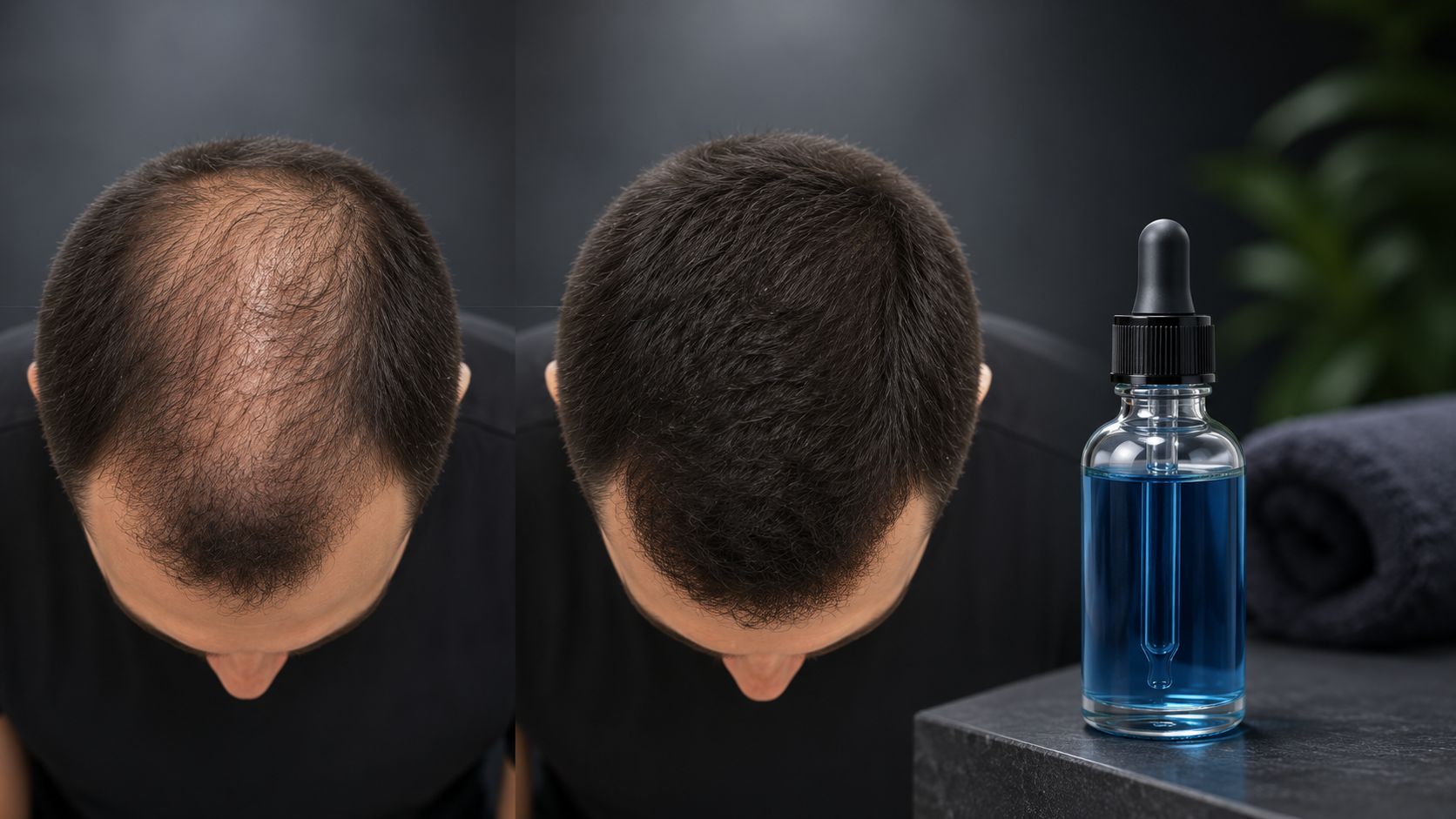
Minoxidil is one of the most discussed post-transplant medications, and also one of the most inconsistently recommended. Some clinics tell patients to start it immediately after the procedure. Others say to wait six weeks. Some specify foam over liquid. Some prescribe it for a defined period and then stop. The variation in guidance is broad enough that patients doing research before their procedure often encounter directly contradictory instructions, without sufficient explanation of the reasoning behind any of them to evaluate which approach actually makes sense for their situation.
This guide covers the minoxidil question specifically and completely: what it does, why it’s used after a hair transplant, when to start, what form to use, how long to continue, and what the realistic expectations are for its contribution to the result. The answers are more nuanced than most aftercare materials suggest — which is worth knowing before committing to a protocol you’ll be following for months or years.
What Minoxidil Actually Does
Understanding the minoxidil timing question requires first being clear about what minoxidil actually does biologically — because the mechanism determines when it’s useful and when it isn’t.
If you are weighing up treatment abroad, our guide to hair transplants in Turkey walks through the full process step by step.
Minoxidil was originally developed as an oral antihypertensive medication, and its hair effects were discovered as a side effect: patients taking oral minoxidil for blood pressure developed increased hair growth, leading to the development of topical formulations for hair loss. The mechanism by which it promotes hair growth isn’t fully understood, but the primary pathways are reasonably well characterized.
Minoxidil is a vasodilator — it relaxes smooth muscle in blood vessel walls, causing vasodilation and increased blood flow to the tissue where it’s applied. Applied to the scalp, it increases local blood flow and improves the delivery of oxygen and nutrients to hair follicles. It also appears to have direct effects on follicle cells: it prolongs the anagen phase of the hair growth cycle, allowing follicles to produce longer, thicker hair shafts before cycling into telogen. And it shortens the telogen phase, reducing the proportion of time follicles spend in the resting state and increasing the proportion of active follicles at any given time.
If you're weighing a second procedure, see how a second hair transplant compares before deciding.
What minoxidil does not do is alter the hormonal environment that drives androgenetic hair loss. It doesn’t reduce DHT. It doesn’t protect DHT-sensitive follicles from the miniaturization process that produces patterned hair loss. This is why it works differently from finasteride — the two medications address different aspects of the same problem, which is why they’re often used together.
For post-transplant use specifically, these mechanisms are relevant in two distinct contexts: supporting the recovery and early growth of transplanted follicles, and protecting the existing native hair that will continue to contribute to the overall coverage picture alongside the transplanted grafts.
The Timing Question: When to Start After a Hair Transplant
The most common question about minoxidil and hair transplant recovery is when to start — and the answer depends on which form of minoxidil is being used and what stage of recovery is being considered.
The reason timing matters is straightforward: in the first two weeks after a procedure, the scalp is healing. The donor extraction sites and recipient implantation channels are fresh wounds. The grafts themselves are in their most vulnerable phase — still anchored by fibrin seal in the first week, integrating progressively through the second. Applying any topical product to the scalp during this period carries risks that are specific to the healing context.
Minoxidil applied too early — in the first week — creates several problems. The rubbing motion required to work it into the scalp is a mechanical risk to grafts still in early integration. The solution or foam itself, applied directly to fresh implantation sites, could irritate healing tissue or introduce a foreign substance into wounds before full closure. And the vasodilatory effect of early minoxidil application on a scalp with fresh wounds may not be beneficial — increased local blood flow in the first days can actually work against the hemostatic process at fresh wound sites.
The standard recommendation is to begin minoxidil at two weeks post-procedure at the earliest, with some clinics preferring to wait until week four to allow more complete initial healing before introducing a topical agent. Both positions have clinical rationale. The two-week starting point reflects the point at which graft integration has progressed enough to substantially eliminate the dislodgement risk, and surface healing of the recipient area has advanced sufficiently that topical application is no longer in contact with open wounds. The four-week starting point reflects additional conservatism around scalp sensitivity and the ongoing healing of donor extraction sites.
For patients who were already using minoxidil before their procedure — which is common, particularly those who had been on a combined finasteride and minoxidil protocol — the question is how long to pause during the early recovery period rather than when to start fresh. The same two-to-four week post-procedure pause applies. Stopping minoxidil for this period doesn’t undo the benefits of pre-procedure use; the follicles supported by pre-procedure minoxidil don’t immediately shed upon cessation, and resuming at two to four weeks re-establishes the supportive effect without the early-healing risks of immediate application.
Liquid vs. Foam: Which Form to Use After a Transplant
Minoxidil is available in both liquid (solution) and foam formulations, and the distinction matters specifically in the post-transplant context even if it’s less significant in everyday use for non-transplant patients.
The liquid formulation — typically 2% or 5% minoxidil in a propylene glycol solution — is applied with a dropper and spread across the scalp. Propylene glycol, the carrier solvent, is known to cause scalp irritation in some patients: itching, flaking, and contact dermatitis are documented reactions that occur in a minority of users. In a non-transplant scalp, this irritation is an inconvenience. In a post-transplant scalp where the recipient area is still healing and the donor area extraction sites are in early recovery, scalp irritation from propylene glycol adds an inflammatory stimulus to tissue that is already managing a healing process. This is the primary reason foam is generally preferred over liquid in the post-transplant setting.
The foam formulation delivers the same active ingredient — minoxidil — without propylene glycol. It’s applied by dispensing foam into the hand and working it gently into the scalp, which also allows more controlled application pressure than liquid spreading. For post-transplant use, where the application technique itself matters — too much pressure over recipient sites in the early healing weeks is still a consideration — foam’s application mechanics are somewhat more controllable than liquid’s dropper-and-spread approach.
The 5% concentration is generally preferred over 2% for both men and post-transplant use, as the evidence for efficacy is stronger at the higher concentration. Women using minoxidil have traditionally been prescribed the 2% formulation, but the 5% foam is now considered appropriate for women as well in most clinical contexts, including post-transplant.
What Minoxidil Contributes in the Recovery Period
The specific ways minoxidil benefits post-transplant recovery are worth being precise about, because the benefits are real but different from what is sometimes claimed.
Earlier growth emergence. The most consistently cited benefit of post-transplant minoxidil is that it may accelerate the timeline of visible growth emergence — contributing to earlier-than-expected growth from transplanted follicles as they exit telogen and re-enter anagen. The vasodilatory effect increases blood flow and nutrient delivery to the follicle environment during the revascularization and anagen re-entry phases, potentially supporting an earlier transition from the telogen resting state. Clinical evidence for this specific effect is not definitive — the studies are limited in size and methodology — but the biological mechanism is plausible and the patient experience of earlier growth with minoxidil use is consistent enough to be clinically credible.
Reduced shock loss severity. Minoxidil’s effect on prolonging the anagen phase and reducing the proportion of time follicles spend in telogen may contribute to reducing the severity of shock loss — the universal temporary shedding of transplanted and native hair that follows the procedure. If existing native follicles in the recipient area are in a minoxidil-supported state — with prolonged anagen and shortened telogen — they may be somewhat less susceptible to the stress-induced telogen entry that produces shock loss. The evidence here is similarly limited and the effect is modest, but for patients anxious about shock loss, the biological rationale for minoxidil as a mitigating factor is legitimate.
Native hair protection. This is where minoxidil’s contribution is most clearly documented and most consequential for long-term results. The native thinning hair present in and around the recipient area at the time of the procedure continues to follow its androgenetic trajectory after the transplant. Minoxidil can’t stop this progression — it doesn’t address the hormonal mechanism driving it — but it can prolong the active growth phases of these follicles, potentially maintaining their contribution to coverage for longer than would occur without treatment. Over five and ten years, the difference in how much native hair remains around the transplanted area between minoxidil-treated and untreated patients can meaningfully affect the overall density picture.
How Long to Continue: The Indefinite Question
The most important and most honest thing to say about minoxidil duration is this: the benefits are sustained only as long as the medication is used. Stopping minoxidil reverses its effects within months.
When minoxidil is discontinued, the follicles it was supporting return to their baseline biological state. The anagen phases that minoxidil prolonged shorten back to their natural duration. The telogen phases that minoxidil compressed lengthen. The result, typically three to six months after cessation, is a shedding event as the follicles that had been held in extended anagen by minoxidil enter telogen and shed their hair shafts. For transplanted follicles, which are DHT-resistant and not subject to the progressive miniaturization that minoxidil can’t address, this post-cessation shed is temporary — they return to anagen and continue growing. For native DHT-sensitive follicles, discontinuation removes the anagen-prolonging effect and allows whatever degree of miniaturization their androgenetic state would have reached without treatment to manifest more quickly.
This is why “how long should I use minoxidil after a hair transplant?” doesn’t have a clean answer of six months or twelve months or any defined endpoint. The honest answer is: if the native hair that minoxidil is supporting is hair you want to keep, minoxidil needs to be continued indefinitely to maintain its contribution. If the only goal is supporting the transplanted hair through the recovery period, the recovery-specific benefit is largely complete by month six to twelve, and discontinuation after that period returns the transplanted hair (which is DHT-resistant) without permanent loss from transplanted follicles specifically. The post-cessation shedding event affects native hair more consequentially than transplanted hair.
For most patients with ongoing androgenetic hair loss, the more clinically rational approach is to treat minoxidil as part of an indefinite medical management protocol rather than a time-limited post-procedure support. This positions it alongside finasteride — the combination of which addresses the hormonal mechanism of loss (finasteride) and supports active growth of existing follicles (minoxidil) in a way that each medication alone does not fully achieve.
Minoxidil and Finasteride: Why Both Matter After a Transplant
The relationship between minoxidil and finasteride in the post-transplant context deserves specific treatment because they’re often discussed as alternatives when they’re actually complementary.
Finasteride reduces DHT by approximately 60 to 70 percent, slowing the miniaturization of DHT-sensitive follicles. It works on the hormonal mechanism. Minoxidil prolongs anagen and supports follicle function through vasodilation and direct follicle effects. It works on the growth cycle mechanism. A follicle receiving both treatments is both less subject to the miniaturizing signal (finasteride) and more actively supported in its growth phase (minoxidil) than a follicle receiving either treatment alone.
The clinical data on combination therapy — finasteride and minoxidil together — consistently shows better outcomes in terms of hair retention and density than either medication used independently. For post-transplant patients, this combination relevance is significant: the transplanted hair is DHT-resistant and doesn’t need finasteride’s protection, but the surrounding native hair that continues to contribute to the overall coverage picture does. Minoxidil supports both populations — transplanted and native — through its anagen-prolonging effect. Finasteride protects the native population from hormonal progression. Together, they preserve as much of the native hair as biology permits while supporting the recovery and established function of the transplanted grafts.
For patients who for any reason cannot or prefer not to use finasteride — documented side effects, personal decision about risk, female patients for whom finasteride isn’t appropriate — minoxidil takes on greater relative importance as the primary medical management tool. The anagen-prolonging effect and native hair support that minoxidil provides are more consequential as a sole medical intervention than as a complement to finasteride. The duration considerations are the same: ongoing use to maintain the benefits rather than a defined post-procedure course.
Oral Minoxidil: A Growing Alternative
Low-dose oral minoxidil has emerged as a clinically significant alternative to topical application for patients who find topical compliance difficult or who experience scalp irritation from topical formulations. At doses of 0.625 mg to 2.5 mg daily — far below the antihypertensive doses originally used — oral minoxidil produces hair growth effects similar to topical application with a different side effect profile and without the application compliance challenge of twice-daily topical use.
The primary side effect concern with oral minoxidil at low doses is systemic vasodilation — facial flushing, mild fluid retention, and in some patients unwanted hair growth on the body and face (hypertrichosis). At the low doses used for hair loss management, these effects are typically mild but are worth discussing with a prescribing physician, particularly for patients with cardiovascular considerations.
In the post-transplant context, the timing consideration for oral minoxidil is the same as topical — beginning at two to four weeks post-procedure — without the scalp-application mechanics that inform the foam-over-liquid preference for topical use. For patients who have previously struggled with topical application compliance or scalp irritation, the post-transplant period represents a reasonable opportunity to reassess whether oral minoxidil might be a better fit for their long-term protocol.
Practical Protocol: What the Post-Transplant Minoxidil Routine Looks Like
For most patients, the practical minoxidil protocol after a hair transplant looks like this:
Days one through fourteen: no minoxidil. If you were using it before the procedure, pause. The scalp is healing and topical application creates more risk than benefit during this window.
Weeks two through four: minoxidil can begin, with foam preferred over liquid for the reasons described. Apply once daily to start — the twice-daily protocol standard for non-transplant use can be introduced once the scalp has settled further. Apply gently without rubbing aggressively over recipient sites that are still in earlier healing phases.
Month one onward: twice-daily topical application of 5% minoxidil foam, or the prescribed dose of oral minoxidil if that route has been chosen. The application should cover the recipient area and the surrounding native hair that benefits from anagen support, not only the transplanted zone.
Duration: indefinitely, as part of a long-term medical management protocol that ideally includes finasteride for male patients without contraindications. The six-month or twelve-month milestone that some aftercare protocols designate as an endpoint for post-transplant minoxidil use should be understood as a period after which the recovery-specific rationale has been fulfilled, not as a point at which medical management of ongoing hair loss should stop.
At Hairpol, the post-procedure protocol includes specific guidance on minoxidil — when to start, which form, and why continued use through the full recovery period and beyond supports the best long-term result. A hair transplant addresses the loss that has already occurred. Minoxidil and finasteride together manage the loss that would otherwise continue around and behind it. Both halves of the picture matter for what the result looks like at five years, not just at twelve months.
The Bottom Line
Minoxidil after a hair transplant works — specifically, it supports earlier growth emergence, may reduce shock loss severity modestly, and most importantly protects the native hair that contributes to the overall coverage picture alongside the transplanted grafts. Start it at two to four weeks post-procedure, use foam over liquid in the healing period, and treat it as an indefinite commitment rather than a defined post-procedure course if native hair protection is a goal. Combined with finasteride where appropriate, it forms the medical management half of a complete hair restoration protocol — one that preserves and supports what the surgery established rather than leaving it to stand alone against an ongoing process that doesn’t stop because a procedure happened.
Frequently Asked Questions (FAQ)
When should I start minoxidil after a hair transplant?
Most clinics ask patients to wait until the scalp has fully healed — commonly around 2 to 4 weeks after surgery — before starting minoxidil, whether topical or oral. Starting too early on broken or scabbed skin can increase irritation risk. The exact timing should be confirmed by your surgeon based on how your scalp is healing, not a fixed calendar date.
Can I use minoxidil after a hair transplant?
Yes — minoxidil is commonly recommended after a hair transplant, but not immediately. Most surgeons wait until the transplanted grafts and donor area have closed and stopped scabbing before minoxidil (topical or oral) touches the scalp. The real question is timing, not whether it's allowed at all.
How long should I use minoxidil after a hair transplant?
Minoxidil doesn't have a fixed "finish date" after a transplant. It's typically continued long-term to help protect the native, non-transplanted hair around the grafts — hair that keeps thinning on its own — rather than the grafts themselves. Whether to continue it indefinitely, or pause it at some point, is a decision your physician makes based on your hair loss pattern.
How is minoxidil applied after a hair transplant?
Topical minoxidil is generally applied to dry, intact skin with clean hands or a dropper, avoiding the recipient area until crusts have fully cleared. It's often reintroduced at a reduced frequency before returning to a normal schedule. Application timing and technique should follow your clinic's specific aftercare instructions rather than generic package directions.
When can I start oral minoxidil after a hair transplant?
Oral minoxidil is usually introduced later than the topical form, sometimes alongside finasteride, once the surgeon has reviewed how the scalp and donor area are recovering. Because oral minoxidil is absorbed systemically, a physician typically confirms there's no medical contraindication before it's added to a post-surgery routine.
What happens if I stop minoxidil after a hair transplant?
Stopping minoxidil doesn't affect the transplanted grafts themselves, which are permanent. It can, however, allow the surrounding native hair — the hair that wasn't transplanted — to resume thinning at its earlier pace. This mainly matters for patients who still have thinning native hair near the transplanted area, and it's worth discussing the trade-offs with your physician rather than deciding after a single result.
Find this helpful? Add Hairpol as a preferred source on Google.
Get a Free Consultation
Answer a few questions and the medical team will review your situation.
