
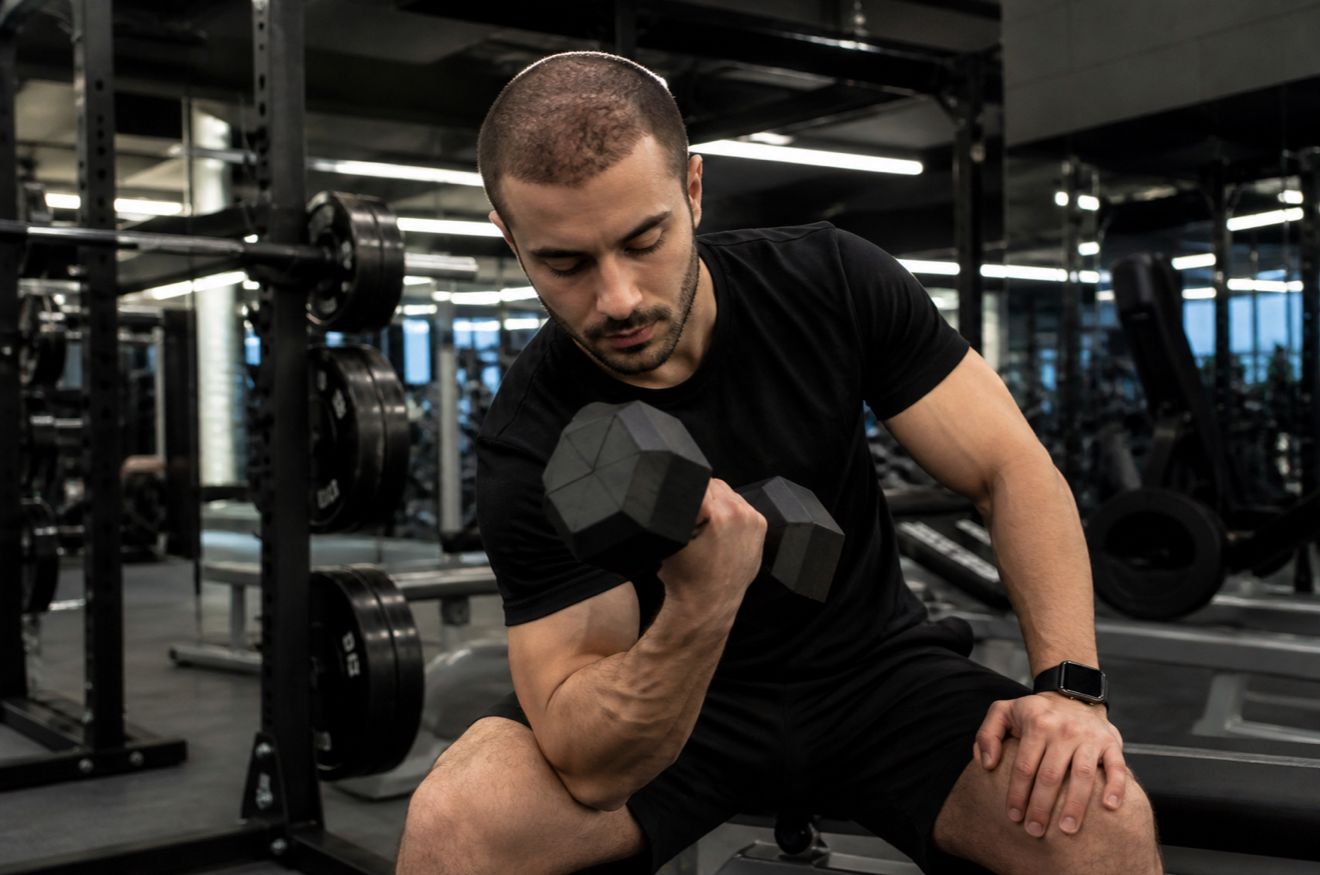
For patients who train regularly, the question of when they can return to the gym after a hair transplant is one of the most practically relevant aspects of the recovery timeline. It’s also one of the most commonly underestimated. The activity restriction is frequently framed as a minor inconvenience — “just take it easy for a couple of weeks” — without the specific biological reasoning that explains why the restriction exists and why the graduated return timeline matters.
Understanding exactly what exercise does to the biological processes that determine graft survival and healing quality — and how those effects change across the recovery timeline — allows patients to make genuinely informed decisions about their return to training rather than defaulting to either excessive caution or premature resumption.
This guide covers the complete picture: why exercise is restricted in the first weeks, what specific risks each type of activity creates at each stage of recovery, how the restriction timeline is graduated from complete rest to full intensity, what signs indicate a patient is ready to progress, and how to manage the practical challenge of maintaining fitness during the recovery period without compromising the result being grown.
Why Exercise and Early Hair Transplant Recovery Don’t Mix
The restriction on exercise after a hair transplant isn’t generic medical conservatism. It reflects specific mechanisms through which the physiological responses to exercise directly interact with the biological processes that determine whether grafts survive and heal well.
Increased blood pressure and heart rate. Exercise — particularly cardiovascular exercise and resistance training — increases both heart rate and systemic blood pressure as the cardiovascular system responds to the demands of muscular work. This increased blood pressure translates into increased blood flow throughout the body, including to the scalp. In the first days after a hair transplant, when the donor extraction sites and recipient implantation channels are fresh wounds that haven’t yet completed their initial hemostasis, increased scalp blood flow raises the risk of bleeding from these sites. Bleeding at recipient implantation sites can dislodge grafts that are still anchored only by the initial fibrin seal rather than by established tissue integration — a graft displaced in this way is permanently lost.
Sweating across healing wound sites. Exercise produces sweating, and sweating across the scalp exposes the healing donor extraction sites and recipient implantation channels to a warm, moist, salt-containing environment that promotes bacterial growth. In the first two weeks, when these wound sites are healing and the scalp’s normal barrier function is not yet fully restored, sweat exposure increases infection risk at healing sites in ways that clean and dry healing conditions do not. Post-exercise sweating also tends to be profuse and difficult to control in terms of where it flows across the scalp, making it qualitatively different from the controlled washing of the specific sites that the aftercare protocol permits.
Cortisol elevation. Intense exercise — particularly heavy resistance training — activates the hypothalamic-pituitary-adrenal axis, producing cortisol as part of the physiological response to physical challenge. In the context of early hair transplant recovery, cortisol elevation from intense exercise creates a stress hormone environment that is less favorable for graft integration and healing than the lower-cortisol state that rest produces. The mechanism is the same as the cortisol-related effects of psychological stress on recovery: elevated cortisol promotes follicle entry into telogen, impairs immune function, and creates a hormonal environment less supportive of the biological processes that determine recovery quality.
Increased intracranial pressure from heavy lifting. Heavy compound resistance exercises — deadlifts, squats, heavy overhead pressing — produce significant increases in intracranial pressure through the Valsalva maneuver and the abdominal and thoracic pressure changes of heavy exertion. This intracranial pressure increase elevates blood pressure in the scalp vasculature, adding to the baseline blood flow increase of cardiovascular exercise. The combination creates particular risk in the first week for the type of scalp bleeding that can compromise fresh graft sites.
Physical contact and compression risks. Certain types of exercise involve contact, compression, or impact that creates direct mechanical risks to healing graft sites. Wrestling, grappling, contact sports, and anything involving head contact creates obvious direct risk to both donor and recipient areas in the early healing period. More subtly, any exercise requiring helmets, headbands, or tight headgear creates compression pressure directly on healing graft sites that can impair blood flow to healing tissue and risk dislodging grafts in the first week.
The First Week: Complete Rest From Exercise
During the first week after a hair transplant, exercise of any meaningful intensity should be avoided entirely. This includes cardiovascular exercise, resistance training, yoga or pilates involving effort and heat, sports of any kind, and any activity that meaningfully elevates heart rate, blood pressure, or body temperature beyond normal walking.
The biological rationale for complete first-week rest is the coincidence of maximum vulnerability with maximum risk. Grafts in the first five to seven days are held only by fibrin seal — the body’s initial clotting response — without yet having established tissue integration. The fresh extraction wounds in the donor area and implantation channels in the recipient area are in their most acute healing phase. Revascularization of transplanted grafts is in its earliest, most dependent stages. Every mechanism through which exercise creates risk — increased blood flow, sweating, cortisol, intracranial pressure — operates at maximum intensity during intense exercise, and the graft’s vulnerability to these mechanisms is similarly at maximum during this first week.
The practical standard for this period is light daily activity — walking at a normal pace, normal household activity — that doesn’t elevate heart rate meaningfully above resting. The threshold is roughly whether an activity produces noticeable cardiovascular demand. Walking to the kitchen, light household activity, sitting at a desk — acceptable. Walking briskly for twenty minutes, anything that produces a perceptible increase in breathing rate or heart rate — not appropriate in the first week.
Week Two: The Transition Begins
The second week marks the beginning of a graduated transition rather than a continuing complete restriction. By the end of week one, the fibrin seal anchoring grafts has begun to be supplemented by early tissue integration. By days ten to fourteen, grafts have integrated sufficiently that the acute dislodgement risk from blood flow increase is substantially eliminated. The donor extraction sites are closing and healing. The most acute biological vulnerabilities of the procedure are passing.
However, “substantially reduced acute risk” is not the same as “cleared for full training.” The wound healing processes in both donor and recipient areas are ongoing through week two. The recipient area implantation sites are still healing. Sweating remains a relevant infection risk. And the grafts, while past the peak dislodgement vulnerability, are still in early integration phases where additional stressors are not without consequence.
The appropriate exercise in week two is light cardiovascular activity — walking, including brisk walking, light cycling at low resistance, leisurely swimming in clean pools or the sea — at intensities that elevate heart rate modestly without producing the blood pressure elevations of intense cardiovascular effort or resistance training. Walking thirty to forty-five minutes at a brisk but comfortable pace is qualitatively different from jogging, which is qualitatively different from interval training. The progression from week one’s complete rest to week two’s light activity is meaningful, but it is not a transition to normal training.
Weeks Three and Four: Building Back
Weeks three and four represent a more meaningful return toward normal training capacity. By week three, donor area wounds have largely closed and healed. The recipient area surface healing is substantially complete. The risk of sweating-related infection at fresh wound sites is considerably reduced compared to the first two weeks. And graft integration has progressed to the point where the blood flow and cortisol increases of moderate exercise are not the acute graft survival risks they were in the first week.
Light to moderate cardiovascular exercise — jogging at an easy pace, cycling at moderate resistance, swimming at normal intensity — becomes appropriate in weeks three to four for most patients. The standard is exercise that elevates heart rate into a moderate aerobic zone without producing the maximum cardiovascular demand of intense interval training or competitive effort.
Resistance training can begin to reintroduce in weeks three to four, with important caveats about intensity and exercise selection. Light to moderate weight training — at weights and intensities that don’t involve maximal effort, heavy compound movements, or the Valsalva-pressure-producing exertion of truly heavy resistance work — is appropriate in this window. Machines and isolation exercises at moderate loads are safer than heavy barbells and compound movements at this stage, both because of the lower blood pressure and intracranial pressure they produce and because of the reduced injury risk from training below full capacity.
The specific activities to continue avoiding through weeks three and four regardless of general fitness level include: heavy barbell compound movements (heavy squats, deadlifts, heavy overhead press), high-intensity interval training, contact sports, and any activity requiring tight headgear that compresses the recipient area. The recipient area skin, while surface-healed, is still in a more sensitive state than fully established scalp and continues to benefit from not being compressed against exercise equipment or headgear.
Weeks Four Through Six: The Transition to Normal Training
The four-to-six week window is when most patients can genuinely begin returning toward their pre-procedure training intensity. The wound healing in both donor and recipient areas is largely complete. The recipient area surface is not producing the sweat-infection vulnerability of the early healing weeks. Graft integration has reached the stage where the mechanisms of exercise-related risk are no longer acutely consequential to graft survival.
Cardiovascular training can return to normal intensity — running, cycling, rowing, swimming, group fitness classes — without the specific blood pressure and scalp blood flow concerns of the first weeks applying at the same level of significance. The cardiovascular response of normal aerobic training is appropriate at this stage.
Resistance training can progressively return to heavier loads and compound movements, with the pace of progression calibrated by how the scalp feels rather than by arbitrary weight limits. If heavy compound movements produce noticeable scalp discomfort, tightness, or tenderness, the appropriate response is to reduce load and progress more gradually. If they don’t — if training at higher intensities produces no scalp-specific symptoms — the progression can continue toward pre-procedure intensity.
The specific activities that require additional consideration beyond the four-to-six week mark are those involving tight headgear, head contact, or significant scalp compression. Helmets for cycling, motorcycling, or contact sports create sustained pressure on the recipient area that, while less risky in terms of graft survival at this stage, still warrants attention to comfort and any pressure-related discomfort. The scalp’s sensitivity to compression gradually normalizes through months two and three as the healing and maturation of the tissue in the recipient area continues.
Full Intensity Training: The Realistic Timeline
For most patients, return to genuinely full training intensity — including heavy compound resistance work, high-intensity interval training, contact sports at competitive level, and all forms of high-intensity cardiovascular exercise — is appropriate somewhere between four and eight weeks, with the specific timing depending on the extent of the procedure, individual healing rate, and the specific demands of the training activity in question.
The qualification “four to eight weeks” reflects genuine individual variation rather than vague clinical caution. A patient who had a small frontal hairline procedure of 1,500 grafts with no crown involvement, who heals well and whose donor area showed minimal tenderness by day ten, can likely return to full intensity somewhat earlier in this range. A patient who had a comprehensive procedure of 3,500 grafts addressing both the frontal zone and the crown, whose donor area showed more noticeable extraction site tenderness through the second week, should be more conservative in this progression.
The most reliable guide to timing the return to full intensity is not an arbitrary calendar date but the combination of objective assessment — is the recipient area surface fully healed, is the donor area no longer tender to palpation, does the scalp tolerate increased blood flow without discomfort? — and subjective response to progressively increasing training load. Patients who feel no scalp-specific symptoms at moderate training intensity and who progress through moderate to near-normal training without issues are receiving biological feedback that the return to full intensity is appropriate. Patients who notice persistent scalp discomfort, tightness, or tenderness with increasing training load should interpret this as a signal to progress more gradually.
Specific Sports and Activities: A Practical Guide
Different training modalities have different risk profiles at different recovery stages, and specific guidance by activity type is more useful than general intensity characterizations for patients trying to navigate a return to their specific training activities.
Running and jogging: Light jogging can begin around week two to three. Normal running intensity from week four. High-intensity running including tempo runs and interval training from week four to six for most patients.
Cycling (outdoor): Easy cycling from week two to three. Normal cycling intensity from week four. Competitive or high-intensity cycling including steep climbs from week four to six. The helmet consideration applies — a well-fitting helmet worn over a healed recipient area from week four to six is generally appropriate, but if the helmet creates discomfort over healing sites, a temporary modification to the fit or a brief further delay is warranted.
Swimming: Light swimming in clean, well-maintained pools can begin around week two to three, with attention to avoiding direct sun on the healing scalp. Normal swimming intensity from week four. Open water swimming, ocean swimming, and less controlled water environments are best avoided until after week four due to the infection risk from less controlled water quality in the early healing period.
Resistance training: Light machines and isolation work from week two to three. Moderate compound work from week three to four. Heavy compound movements and maximum effort sets from week four to six. The return to heavy compound movements should be graduated — increasing loads progressively over weeks rather than returning immediately to pre-procedure maxima — to allow the scalp’s response to the blood pressure and intracranial pressure changes of heavy lifting to guide the pace.
Yoga and pilates: Gentle yoga and pilates from week one to two (if non-strenuous). Standard yoga including flow practices from week three. Hot yoga, Bikram yoga, and other heated practices from week four to six — the combination of heat, elevated heart rate, and profuse sweating in hot yoga environments makes it more similar to high-intensity cardiovascular exercise than to standard yoga from a recovery perspective.
Martial arts, boxing, wrestling: Non-contact drilling and technique work from week four to six, depending on whether it involves any scalp impact or significant blood pressure elevation. Sparring, rolling, and contact practice from week six to eight minimum, and only once the recipient area has no tenderness or sensitivity to contact. Competitive participation from week eight to twelve depending on the intensity level and contact involved.
Team sports (football, basketball, etc.): Non-contact practice from week three to four. Contact participation from week six to eight. Full competitive play from week six to twelve depending on the sport’s contact level.
The Shock Loss Relationship: Why Seeing Hair Fall During Exercise Is Normal
One of the most commonly alarming experiences for patients who resume exercise in weeks two through four is noticing hair shedding during or after workouts — seeing hairs on their hands when they towel off after a shower, or noticing hairs on exercise equipment. This is almost universally interpreted as evidence that exercise has damaged the grafts or caused them to fall out.
In most cases, this shedding is shock loss rather than graft loss — the normal biological process of transplanted follicles shedding their existing hair shafts as they enter telogen following the stress of the procedure. Shock loss occurs on a biological timeline determined by the procedure’s stress on the follicles, not by what the patient does during recovery. The hair shafts that shed during exercise in weeks two through four were entering telogen from procedural stress regardless of the exercise — the exercise didn’t cause the shedding, it simply occurred at a time when shedding was already happening.
The distinction between shock loss shedding (normal, temporary, the follicle rests and then returns to anagen) and graft loss from exercise-related disruption (a permanently lost follicle) is important for interpreting what patients see during the recovery period. Clean hair shafts releasing from the scalp during this phase are shock loss. Any bleeding, increased redness, or pain associated with hair loss during exercise would warrant clinical assessment. For the clean-shaft shedding of normal shock loss, reassurance and continuing the graduated return to activity is the appropriate response.
Managing Fitness During Recovery: Practical Strategies
For patients who train regularly, the activity restrictions of the first weeks represent a genuine disruption to their routine — one that has both physical and psychological dimensions. Managing this disruption intelligently is part of what makes recovery more or less difficult for different patients.
The most effective approach is planning the procedure timing to minimize disruption to high-priority training commitments. A competitive athlete planning a procedure in the middle of their competition season is creating avoidable conflict between recovery requirements and performance goals. Planning the procedure during an off-season, a planned deload period, or a time when training volume was already reduced eliminates this conflict.
Maintaining lower-body training through the restricted period — when upper-body exercises produce more significant blood pressure elevation in the scalp vasculature than lower-body work — can help preserve some training stimulus during the weeks when scalp blood flow is a consideration. Light lower-body work that doesn’t involve heavy loading or significant cardiovascular demand contributes to maintaining some physical conditioning without the blood pressure and scalp blood flow consequences of upper-body or full-body intense exercise.
Using the restricted period constructively — mobility work, recovery practices, lower-intensity activities that would otherwise be underemphasized in a typical training program — can reframe the restriction period as an opportunity for work that normally gets deprioritized rather than as simple lost training time.
Adequate hydration is specifically relevant for patients who resume training during recovery. The dehydration from exercise compounds the reduced scalp blood flow that alcohol, heat, and inadequate fluid intake also produce, and maintaining good hydration around training sessions during recovery supports the scalp blood flow quality that revascularization depends on.
At Hairpol, the post-procedure consultation specifically covers the exercise return timeline in terms specific to the patient’s training activities — not just a generic “avoid strenuous activity” instruction but a practical graduated plan that the patient can apply to their specific sports and training modalities. Because the goal is a recovery protocol that protects the graft survival and healing quality the procedure depends on while giving the patient the clearest possible picture of when and how they can get back to the training that matters to them.
The Bottom Line: A Practical Timeline
The return to full training intensity after a hair transplant is a graduated process over four to six weeks, not a binary switch from complete rest to full activity. The specific timeline:
Week one: No meaningful exercise. Light daily movement — walking, normal household activity — only.
Week two: Light cardiovascular activity — brisk walking, light cycling — that doesn’t produce significant cardiovascular demand. No resistance training.
Weeks three to four: Light to moderate cardiovascular exercise. Light resistance training — machines, isolation work, moderate loads — without maximum effort, heavy compound movements, or activities producing significant intracranial pressure.
Weeks four to six: Progressing toward normal training intensity for most modalities. Heavier resistance work returning gradually. Full cardiovascular intensity for most activities. Contact sports and headgear-dependent activities with attention to scalp comfort.
Six weeks and beyond: Full training intensity for most patients, with any remaining restriction based on individual healing response rather than a general protocol.
The patient’s own scalp — its tenderness, its comfort during and after increasing training load, its response to the blood pressure changes of heavy exercise — is the most reliable guide to timing the final return to full intensity. Biological feedback from the healing tissue is more informative than any calendar-based guideline for the specific individual navigating their specific recovery.
Frequently Asked Questions (FAQ)
When can I go to the gym after a hair transplant?
Return to the gym after a hair transplant is graduated rather than immediate, with the timeline reflecting specific biological recovery milestones. Light cardiovascular activity — brisk walking, easy cycling — can begin in week two as graft integration progresses. Light resistance training using machines at moderate loads becomes appropriate in weeks three to four. More substantial training — heavier compound work, moderate-to-high intensity cardiovascular exercise — can progressively return from weeks four to six. Full training intensity including heavy compound resistance exercises, high-intensity interval training, and contact sports is appropriate for most patients between weeks four and eight, with the specific timing depending on the extent of the procedure, individual healing rate, and the particular demands of the training activity. The scalp's own response — any tenderness, discomfort, or post-exercise symptoms — is the most reliable guide to timing the final return to full intensity rather than an arbitrary calendar date.
Why can't I exercise right after a hair transplant?
Exercise is restricted in the first weeks after a hair transplant because its physiological responses directly interfere with the biological processes that determine graft survival. Increased blood pressure and heart rate from exercise elevate scalp blood flow in ways that raise the risk of bleeding from fresh donor extraction and recipient implantation sites — bleeding that can dislodge grafts still anchored only by the initial fibrin seal in the first five to seven days. Exercise produces sweating across healing wound sites, creating a warm, moist environment that elevates infection risk at healing graft sites. Intense exercise — particularly heavy resistance training — elevates cortisol, creating a stress hormone environment less favorable for graft integration and healing quality. Heavy compound exercises produce significant intracranial pressure increases through Valsalva mechanics that further elevate scalp blood pressure. And certain activities involve headgear or head contact that creates direct compression risk to healing graft sites. All of these mechanisms are most consequential in the first week when grafts are most vulnerable — which is why the first week requires complete rest from meaningful exercise.
Can I do light exercise after a hair transplant?
Yes — light exercise can begin in week two after a hair transplant as graft integration progresses beyond the peak vulnerability of the first week. Appropriate light activity in week two includes brisk walking for thirty to forty-five minutes, easy cycling at low resistance, and leisurely swimming in clean pools. The standard is exercise that produces a modest elevation in heart rate without creating the significant blood pressure elevations of intense cardiovascular effort or resistance training. During the first week, even light exercise should be limited to genuinely easy movement — walking at a normal pace, light household activity — that doesn't produce noticeable cardiovascular demand. The distinction between light activity in week two and the complete rest of week one reflects the biological progress of graft integration: by days ten to fourteen, the acute dislodgement risk from increased scalp blood flow is substantially reduced, making the modest cardiovascular demand of light exercise meaningfully less risky than it was in the first week.
When can I lift weights after a hair transplant?
Light resistance training — machines and isolation exercises at moderate loads, without maximal effort or heavy compound movements — can begin in weeks three to four after a hair transplant. The specific caution around heavy compound resistance exercises — deadlifts, squats, heavy overhead pressing — extends further into recovery than general resistance training because these movements produce significant increases in intracranial pressure through Valsalva mechanics that elevate scalp blood pressure beyond the baseline cardiovascular response of lighter training. Heavy compound work can progressively return from weeks four to six, with loads increasing gradually over several weeks rather than immediately returning to pre-procedure maxima. The scalp's own response to progressively increasing load is the most reliable guide: if heavy compound movements produce noticeable scalp discomfort or tightness, reduce load and progress more gradually. If training at higher intensities produces no scalp-specific symptoms, the progression toward full pre-procedure training intensity can continue.
Can sweating damage hair transplant grafts?
Sweating during exercise creates a specific risk to hair transplant recovery that is distinct from the blood pressure and graft dislodgement risks of exercise intensity. Sweat flowing across the scalp exposes healing donor extraction sites and recipient implantation channels to a warm, moist, salt-containing environment that promotes bacterial growth. In the first two weeks when these wound sites are in active healing phases and the scalp's normal barrier function is not yet fully restored, sweat exposure elevates infection risk at healing graft sites in ways that clean, dry healing conditions do not. Exercise that produces significant sweating — most moderate to intense cardiovascular exercise — is therefore best avoided during the first two weeks for this reason in addition to the blood pressure considerations. By weeks three and four, as surface healing of both donor and recipient areas progresses substantially, the infection risk from sweat exposure is considerably reduced. Showering and washing the scalp with the aftercare protocol after returning to exercise provides additional protection against post-exercise bacterial accumulation at healing sites in the early weeks of return to training.
Is it normal to see hair falling out when exercising after a hair transplant?
Yes — seeing hair shed during or after exercise in weeks two through four after a hair transplant is typically normal and reflects shock loss rather than exercise-induced graft damage. Shock loss is the universal biological process by which transplanted follicles shed their existing hair shafts as they enter telogen in response to the procedural stress of extraction and implantation. This shedding occurs on a biological timeline determined by the procedure's stress on the follicles — it would occur regardless of what the patient does during recovery. When shedding happens to coincide with exercise sessions in weeks two through four, it is the timing of normal shock loss with the resumption of exercise rather than exercise causing graft loss. Clean hair shafts releasing from the scalp during washing, toweling, or exercise in this phase are characteristic shock loss shedding. The follicles themselves remain in the scalp and will return to anagen and produce new permanent hair as shock loss resolves. Any bleeding, significant pain, or increased redness associated with hair loss during exercise would warrant contact with the clinic, as these would be distinguishing features of something other than normal shock loss.
When can I play contact sports after a hair transplant?
Contact sports require one of the longer return timelines after a hair transplant due to the direct head contact, impact, and compression risks involved. Non-contact practice and drilling — technique work that doesn't involve contact with other participants or equipment — can begin around weeks three to four for most contact sports, provided it doesn't involve significant cardiovascular intensity or headgear compression. Sparring, rolling, grappling contact, and physical collision with other players requires waiting until weeks six to eight minimum, and only once the recipient area shows no tenderness or sensitivity to contact. Full competitive participation at normal intensity is generally appropriate from weeks eight to twelve depending on the sport's contact level and the individual's healing trajectory. Martial arts, boxing, wrestling, and rugby represent the highest contact risk and warrant the more conservative end of this range. Basketball, football, and moderate-contact team sports can generally be approached at the less conservative end. The recurring consideration for all contact sports involving headgear — helmets, headguards — is that the headgear should not create discomfort or sustained compression at the recipient area before it is resumed, regardless of the general timeline.
Does exercise affect hair transplant results long-term?
Consistent intense exercise during the critical first two to four weeks after a hair transplant can affect long-term results through reduced graft survival — grafts dislodged by exercise-induced blood pressure increases in the first week are permanently lost and cannot be recovered. The permanent density reduction from graft loss during this window is the most significant way exercise affects long-term results. Beyond the first month, as graft integration reaches maturity and the acute safety concerns resolve, exercise's long-term effects on hair transplant results become minimal. Regular moderate-to-vigorous exercise after the recovery period is completely compatible with — and likely beneficial for — hair transplant results through its effects on cardiovascular health, scalp blood flow quality, and general physiological optimization. The concern about exercise and long-term results is concentrated in the first two to four weeks of acute recovery when the mechanisms of risk are most active and most consequential, not in the months and years of the post-recovery period when normal training is fully appropriate.
