The washing protocol after a hair transplant is one of the most important — and most anxiety-inducing — parts of the early recovery process. Patients who understand exactly what to do, why each step matters, and what to expect at each stage navigate this phase with significantly less stress than those who are following instructions without understanding the reasoning behind them.
This guide covers the complete washing timeline from day one through month three, explains the biological basis for each stage of the protocol, and addresses the specific concerns that come up most frequently during the process. The goal is not just to tell you what to do, but to give you the understanding that allows you to manage the process confidently in real situations where the instructions don’t perfectly anticipate what you’re experiencing.
Why Washing After a Hair Transplant Is Different From Normal Hair Washing
Normal hair washing involves friction, pressure, and direct manipulation of the scalp — running fingers through hair, massaging shampoo in, scrubbing to remove product buildup. All of these are entirely appropriate for intact, healthy scalp. In the context of a fresh hair transplant, they represent genuine risks to the result.
In the first days after the procedure, transplanted grafts are anchored by a thin fibrin seal — the body’s initial clotting response — rather than by established tissue integration. This fibrin seal is strong enough to hold grafts in place under gentle conditions, but not strong enough to withstand the mechanical forces of normal shampooing. A graft that is physically dislodged in the first week is gone permanently — it cannot be re-implanted, and the follicle is lost.
By day ten to fourteen, grafts have integrated sufficiently into surrounding tissue that the risk of physical dislodgement is essentially eliminated. The washing protocol transitions accordingly — from the extremely gentle approach of the first two weeks to progressively more normal washing in the weeks that follow.
Understanding this timeline — that the extreme gentleness of the early protocol is driven by a specific biological window that closes around day fourteen — helps patients contextualize why the rules change when they do and feel more confident about the transition.
The First 24 to 48 Hours: No Washing
In the first 24 to 48 hours after a hair transplant, the scalp should not be washed at all. This window allows the initial fibrin seal to form and begin stabilizing around each implanted graft. Any moisture or friction at this stage risks disrupting the early anchoring of grafts before the seal has had sufficient time to establish.
During this phase the scalp will feel tight, slightly tender, and may show early signs of swelling or redness — all normal parts of the acute post-procedure response. The donor area may feel sore from the extraction process. None of these sensations require any intervention beyond following the clinic’s aftercare instructions for sleeping position, head elevation, and activity restriction.
Some clinics perform the first wash in the clinic on day two or three, ensuring the initial protocol is done correctly under supervision. If your clinic offers this, it’s worth taking advantage of — the first wash is the one with the highest learning curve, and having it guided removes the anxiety of doing it for the first time alone.
Days 2 to 3: The First Wash — The Most Important One
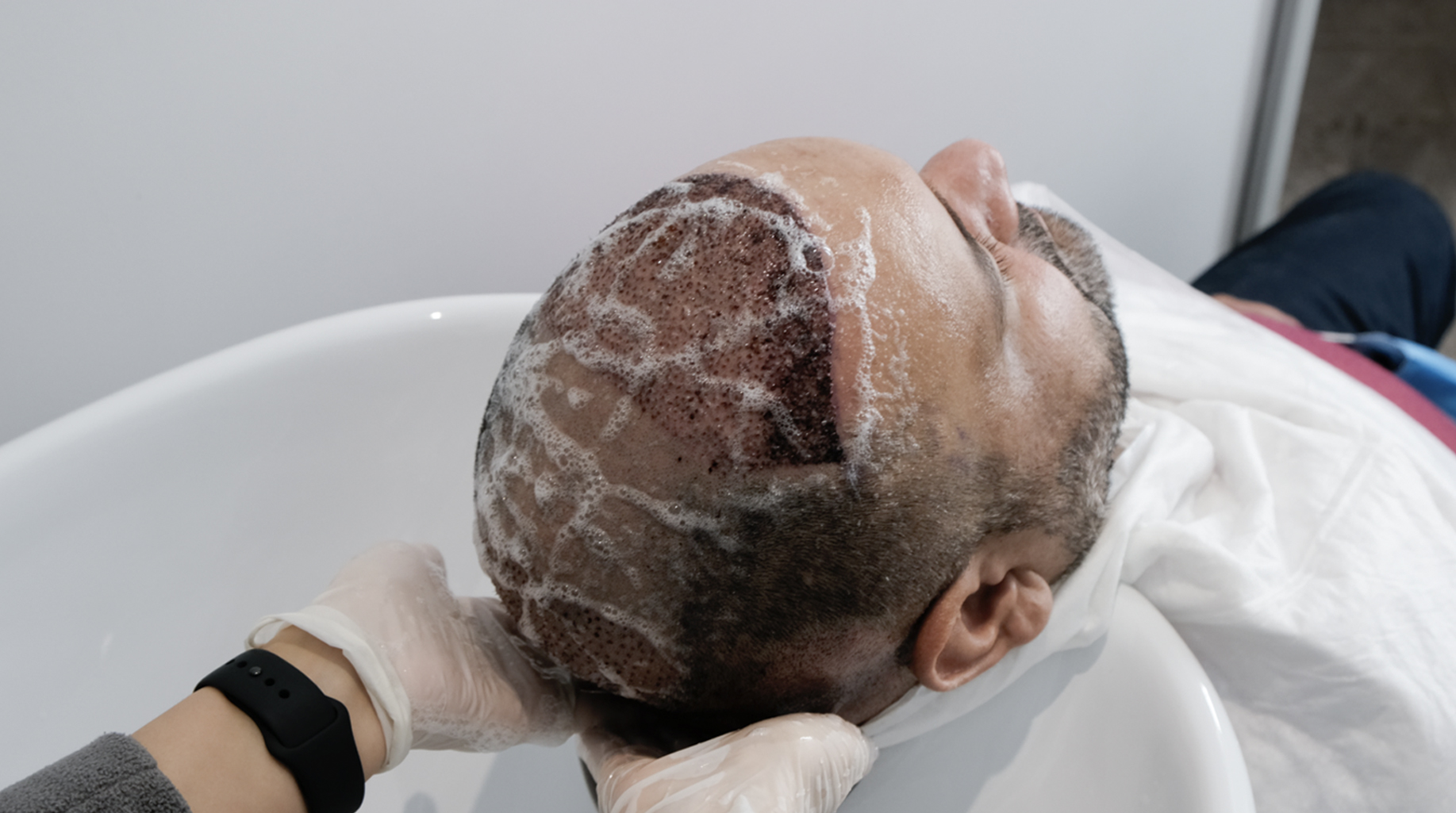
The first wash after a hair transplant is the most technically careful wash of the entire recovery process. The goal is to begin softening and loosening any dried blood, plasma, or early crust formation around the graft sites without applying any mechanical force to the recipient area.
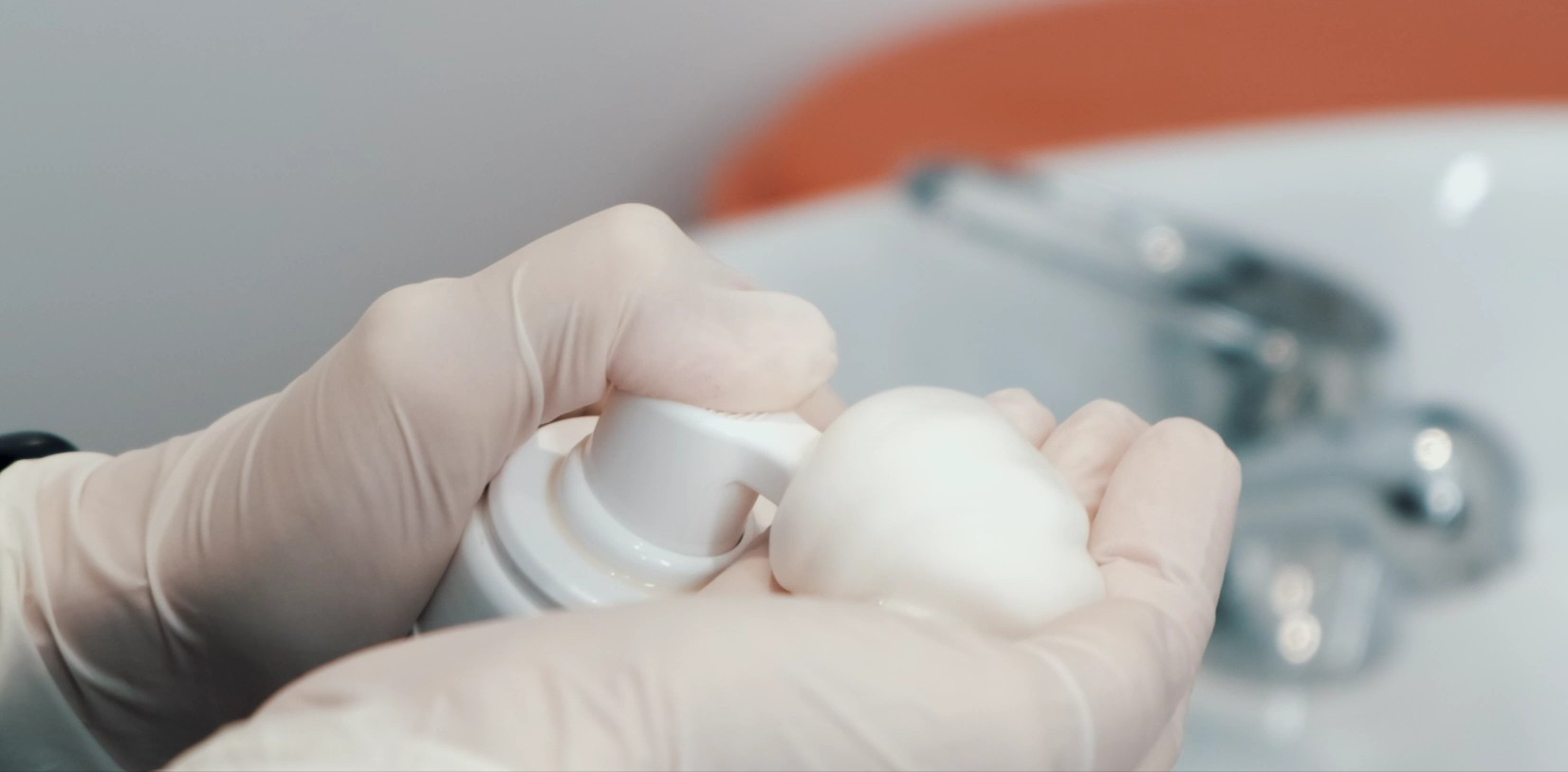
The standard protocol for the first wash involves two products used in sequence: a lotion or foam applied to the recipient area to soften the scalp surface, followed by a gentle shampoo applied to both the recipient and donor areas. Most clinics provide both products as part of the aftercare kit.
The lotion application is done by pouring a small amount into the palm and then very gently dabbing — not rubbing — it onto the recipient area. The lotion should be allowed to sit for approximately fifteen to twenty minutes to soften any crusting before rinsing. This softening step is what makes the subsequent rinse effective without requiring any friction.
The rinse should use lukewarm water — not hot. Hot water increases scalp blood flow and can increase swelling; lukewarm water is gentle and effective. Water should be applied as a gentle stream or pour rather than direct pressure from a showerhead. Many patients find it easier to do the first few washes over a sink using a cup or jug to control the water flow rather than standing in a shower.
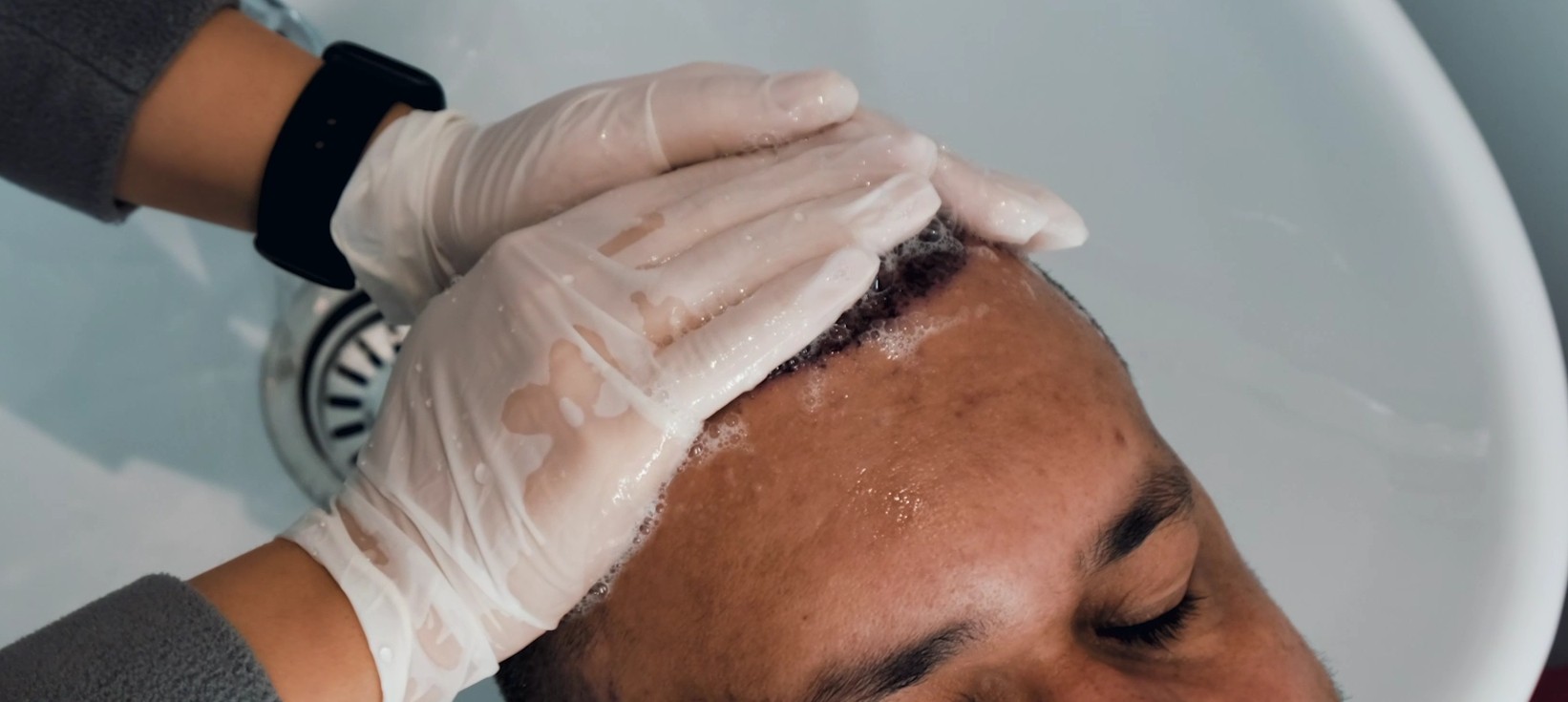
The shampoo is applied the same way as the lotion — dabbed gently with fingertip pads, not massaged or rubbed. The shampoo is then rinsed with the same gentle lukewarm stream. No rubbing, no scrubbing, no pressure to the scalp surface. The entire process is essentially applying products by contact and removing them with water flow rather than mechanical action.
After washing, the recipient area should be dried by very gentle patting with a clean soft towel or allowed to air dry. Rubbing with a towel is off limits. Some patients find that gently applying a soft tissue to absorb moisture without friction works better than a towel in the early days.
Days 3 to 10: Daily Gentle Washing
From day three onward, the washing protocol continues daily using the same gentle approach — lotion to soften, gentle shampoo application by dabbing, lukewarm rinse with controlled water flow. The frequency of daily washing during this period is not just permitted but actively beneficial. Keeping the scalp clean reduces bacterial accumulation around healing graft sites and supports the healthy progression of the scab shedding process.
Through this phase the scabs around each graft will gradually progress through their normal lifecycle. They typically become most prominent between days four and seven — looking like small crusts or dark dots clustered around the implanted hairs. This is normal and not a sign of anything going wrong. The scabs are part of the body’s wound-healing response and protect the underlying tissue as it heals.
The daily washing progressively loosens these scabs over time, allowing them to shed naturally. This natural shedding over the course of seven to fourteen days is the correct process. Attempting to accelerate it by picking, scratching, or applying direct friction is one of the most common mistakes in early recovery and one of the most consequential. A scab that is forcibly removed before it is ready takes graft-anchoring tissue with it. The graft may survive, but it is placed under unnecessary stress during the critical integration window.
By day seven, most patients notice that the daily washing is loosening some scabs naturally and the scalp surface is gradually clearing. By day ten, significant progress in scab resolution is typically visible, with the recipient area beginning to look cleaner and more settled.
During this same period, the donor area can be washed more freely than the recipient area — the extraction sites heal faster than the recipient implantation sites, and gentle massaging is acceptable in the donor area from around day five to seven. The distinction between how to treat the two areas during this phase is worth being conscious of.
Days 10 to 14: Transition Phase
Around days ten to fourteen, the washing protocol begins its first significant transition. By this point, the grafts have integrated into the surrounding tissue sufficiently that the acute dislodgement risk of the first week has passed. The scabs in the recipient area should be mostly or fully shed by day fourteen with proper daily washing, and the scalp surface should be largely healed.
During this transition phase, slightly more water pressure and slightly more direct product application is acceptable — moving from pure dabbing to very light fingertip circular motions in the recipient area. The key word is still “light” — the transition is gradual rather than a sudden shift to normal washing. The scalp is healed from a surface wound perspective, but the underlying healing processes are still ongoing and the tissue in the recipient area is still in a more sensitive state than fully intact scalp.
Patients who completed the first ten days without incident often feel significant relief at this transition point — the most anxious phase of the washing protocol is behind them, and the path toward normal washing is increasingly clear.
Weeks 2 to 4: Progressive Return to Normal
Through weeks two to four, washing returns progressively to a more normal pattern. The lotion softening step can typically be discontinued around day fourteen as the scabs have cleared. Standard gentle shampoo can be used. Water temperature can move toward the normal range, though very hot water remains worth avoiding as it increases scalp blood flow and can contribute to ongoing redness.
By week three, most patients are washing close to normally — regular shampoo, normal water temperature, light fingertip massage rather than the completely non-friction approach of the first two weeks. The recipient area should feel close to normal to the touch, with the transplanted hairs either still in place or beginning the natural shedding that constitutes shock loss.
The shock loss phase — when the transplanted hairs shed their initial shafts before the follicles enter their resting phase and eventually restart growth — typically begins around weeks two to four. This shedding is a normal biological process and is not caused by the washing protocol. Hairs that shed during washing in this period are following their expected biological course, not being damaged or removed by the washing itself. The distinction is important — patients who observe shedding during washing sometimes conclude they are doing something wrong, when in fact the shedding would be occurring regardless of the washing approach.
Month 1 to 3: Normal Washing With Ongoing Precautions
By month one, washing for most patients has returned to essentially normal — regular shampoo, normal temperature, normal technique. The transplanted follicles are in telogen (the resting phase following shock loss) and the scalp surface is fully healed. From a wound-healing perspective, there is no longer any need for the special protocols of the early recovery phase.
The ongoing precaution through this period relates primarily to sun protection rather than the washing technique itself. The recipient area scalp skin is more susceptible to UV damage during the healing period than fully established skin. During the first three months, any time spent outdoors should involve head covering — a loose hat that doesn’t compress the recipient area — to protect the healing scalp from sun exposure that can prolong redness and increase the risk of hyperpigmentation.
Hair products — conditioners, styling products, sprays — can typically be reintroduced from around week three to four, starting with gentle formulations and building back to normal products through month one. Products with strong chemicals, alcohol-based formulations, or those designed for aggressive clarifying should be introduced gradually rather than all at once.
Choosing the Right Shampoo During Recovery
The shampoo used during the early recovery period matters more than patients sometimes assume. The scalp is in a healing state, and the products applied to it should support rather than compromise that process.
The key qualities to look for in a recovery-phase shampoo are gentle, sulfate-free formulation without fragrance, alcohol, or harsh clarifying agents. Most clinics provide or recommend a specific post-transplant shampoo for the first two to four weeks. These products are formulated specifically for the healing scalp — gentle enough not to irritate, effective enough to keep the scalp clean, and free of the active ingredients that could cause irritation or allergic response on recently operated skin.
If a clinic-recommended shampoo isn’t available, the closest commercially available equivalent is a gentle, fragrance-free baby shampoo or a sensitive scalp formulation. The ingredient to specifically avoid in early recovery is sodium lauryl sulfate — a surfactant found in many standard shampoos that can irritate sensitive or healing skin.
From month two onward, patients can typically transition back to their normal shampoo without specific restriction, assuming their scalp is healing normally and no irritation has been observed.
Common Mistakes to Avoid
The washing phase of hair transplant recovery produces a predictable set of mistakes that, while understandable, can compromise outcomes. Understanding them in advance is the most effective way to avoid them.
Skipping washes out of anxiety is one of the most common. Patients who are worried about disturbing grafts sometimes avoid washing altogether for longer than instructed, believing that less contact with the scalp is always safer. In practice, keeping the scalp unwashed allows bacterial accumulation around healing graft sites and prevents the natural scab-shedding process from progressing. The daily washing protocol from day three onward is there for a reason, and following it is part of supporting healthy healing rather than risking it.
Using too much water pressure — particularly standing directly under a shower with the showerhead pointed at the recipient area during the first week — creates mechanical force that the fibrin seal anchoring grafts isn’t designed to withstand. A controlled, gentle water flow applied from the side rather than directly overhead is the correct approach in the first ten days.
Using hot water increases scalp blood flow and swelling unnecessarily during the early healing phase. Lukewarm is the appropriate temperature throughout the first two weeks.
Picking scabs — the most consequential mistake of the early recovery period — risks graft loss and irregular healing at graft sites. Scabs that have been forcibly removed before they are ready leave open wounds that can heal with more visible scarring than naturally shed scabs. The patience required to let the process complete over ten to fourteen days produces a better outcome than any attempt to accelerate it.
Returning to vigorous scalp massage too early — before the two-week mark — applies mechanical force to a recipient area that is still in an early healing phase. The transition to normal washing technique should be gradual through weeks two to four rather than immediate.
What Normal Healing Looks and Feels Like During Washing
Understanding what to expect during the washing process reduces the anxiety that comes from encountering normal healing signs and interpreting them as problems.
In the first three days, the scalp will feel tight and tender. The recipient area may look red and show small crust formations around the graft sites. This is entirely normal. Gentle washing at this stage is working correctly if it moisturizes the surface and begins the softening process without causing pain or increased redness beyond what was already present.
Through days four to ten, scabs are developing and beginning to shed. Seeing small crusts in the water or on the towel during or after washing is normal — this is the shedding process working as intended. The scabs that shed in this way are being released at an appropriate time; forced premature shedding looks different, involving tissue removal and potential bleeding that indicates you’ve applied too much force.
Through weeks two to four, the recipient area surface gradually normalizes. Residual redness is the primary remaining visible sign of the procedure, and it fades progressively. Any hairs that shed during washing during this period are undergoing shock loss — a biological process independent of washing technique.
By month two, washing feels entirely normal, the scalp feels healed, and the focus shifts to waiting for the new growth that begins appearing around months three to five on the hair transplant timeline.
When to Contact Your Clinic
Most of what patients experience during the washing phase falls within the range of normal healing. But certain signs during or after washing warrant contacting the clinic rather than waiting to see how things develop.
Bleeding from the recipient area during or after washing — particularly after the first three days — suggests that too much mechanical force was applied. Stopping the session, applying gentle pressure, and contacting the clinic for guidance is appropriate.
Significant increase in redness, warmth, or swelling in the recipient or donor area following washing, particularly if accompanied by discharge or unusual odor, may indicate infection and requires prompt clinical assessment.
Unusual pain during washing that was not present before — distinct from the normal tenderness of the first few days — is worth raising with the clinic, as is any substantial change in the appearance of the recipient area that doesn’t fit the normal healing progression described above.
The team at Hairpol provides comprehensive aftercare support throughout the recovery period. Any concern about the healing process — including questions about washing technique — is worth raising directly rather than managing through uncertainty alone. The recovery phase is where the investment in the procedure is protected, and having clear guidance throughout it is part of what a well-supported hair transplant experience looks like.
Frequently Asked Questions (FAQ)
When can I wash my hair after a hair transplant?
The first wash after a hair transplant typically takes place on day two or three, following a 24 to 48-hour no-wash window that allows the initial fibrin seal anchoring each graft to form and begin stabilizing. Washing before this window closes risks disrupting the early anchoring process. From day three onward, daily washing is not just permitted but actively beneficial — keeping the scalp clean reduces bacterial accumulation around healing graft sites and supports healthy progression of the scab shedding process. The washing technique changes significantly across the recovery period: extremely gentle in the first ten days, progressively more normal through weeks two to four, and fully normal by month one for most patients.
How do I wash my hair without dislodging grafts after a hair transplant?
Protecting grafts during washing in the first ten days requires eliminating the mechanical forces of normal hair washing — friction, pressure, and direct manipulation. The correct technique involves applying a softening lotion to the recipient area by gentle dabbing rather than rubbing, allowing it to sit for fifteen to twenty minutes to soften any crusting, then rinsing with a gentle stream of lukewarm water controlled from the side rather than directly overhead. Shampoo is applied the same way — dabbed with fingertip pads, never massaged or scrubbed — and rinsed with the same controlled flow. After washing, the recipient area is patted dry with a soft towel or allowed to air dry. This approach cleans the scalp effectively through product contact and water flow rather than mechanical action, maintaining the fibrin seal anchoring grafts through the critical integration window.
What shampoo should I use after a hair transplant?
During the first two to four weeks after a hair transplant, the shampoo used should be a gentle, sulfate-free formulation without fragrance, alcohol, or harsh clarifying agents. Most clinics provide or recommend a specific post-transplant shampoo formulated for the healing scalp. If a clinic-recommended product isn't available, a gentle fragrance-free baby shampoo or sensitive scalp formulation is the closest commercial equivalent. The ingredient specifically worth avoiding in early recovery is sodium lauryl sulfate, a surfactant found in many standard shampoos that can irritate healing skin. From around month two onward, patients can typically transition back to their normal shampoo without specific restriction, assuming healing is progressing normally and no scalp irritation has been observed.
Is it normal to see hairs falling out during washing after a hair transplant?
Yes — seeing transplanted hairs shed during washing in the second through fourth weeks after a hair transplant is a normal part of the biological process called shock loss. Transplanted follicles shed their initial hair shafts as they enter telogen — the resting phase — following the stress of extraction and implantation. This shedding occurs as part of the hair growth cycle reset and is not caused by the washing process. The follicles themselves remain alive in the scalp and will restart their growth cycle, producing new hair that begins emerging around months three to five. The important distinction is between shock loss shedding — which involves clean hair shafts releasing naturally — and graft dislodgement from excessive washing force, which would involve the entire follicle and some surrounding tissue being disrupted.
What happens if I accidentally rub or scratch the recipient area during washing?
In the first ten days after a hair transplant, accidentally rubbing or scratching the recipient area carries risk of dislodging grafts that are still anchored by the initial fibrin seal rather than by established tissue integration. A single brief contact is unlikely to cause significant harm, but sustained friction or deliberate scratching of scabs during this window can physically remove grafts or disrupt the healing tissue around them. If you accidentally applied more force than intended during washing and notice any bleeding, unusual redness, or visible disruption of graft sites, contact your clinic for assessment. After the two-week mark, graft integration is established and accidental friction no longer carries the same risk — the transition to more normal washing technique from this point onward reflects the reduced vulnerability of integrated grafts.
How do I wash the donor area after a hair transplant?
The donor area at the back and sides of the scalp heals faster than the recipient area and can be treated with slightly less restriction from early in the recovery period. The extraction sites in the donor area are small circular wounds rather than the implantation sites of the recipient zone, and they do not carry the same graft dislodgement risk. Gentle fingertip massage is acceptable in the donor area from around day five to seven — significantly earlier than the recipient area where friction should be avoided through the first two weeks. The donor area can be washed as part of the same daily washing session as the recipient area, using the same gentle shampoo. However, the same general principles apply — lukewarm rather than hot water, no vigorous scrubbing, and soft towel patting rather than rubbing for drying during the first two weeks.
When can I go back to washing my hair normally after a hair transplant?
The return to fully normal washing after a hair transplant is progressive rather than happening at a single transition point. By week two, the risk of graft dislodgement from normal water pressure and light friction is essentially eliminated, and washing can begin incorporating light fingertip circular motion in the recipient area. Through weeks two to four, technique normalizes progressively — regular shampoo, normal water temperature, light massage. By month one, most patients are washing entirely normally. The specific elements that change at each stage reflect the biology of healing: the extreme gentleness of days one to fourteen protects grafts during the fibrin-seal anchoring window; the gradual increase through weeks two to four reflects the progressive maturation of graft integration; and the full normalization by month one reflects complete surface healing of the recipient area.
Why are scabs forming around my grafts and should I remove them?
Small scabs forming around each implanted graft in the first seven to ten days are a completely normal part of the healing process after a hair transplant. They form as the body's standard wound-healing response to the tiny implantation sites created during the procedure and are most prominent around days four to seven. Scabs should not be manually removed — picking or scratching them before they are ready to shed naturally risks dislodging grafts still in the process of integrating into surrounding tissue and can produce irregular healing at graft sites. The correct approach is allowing the daily gentle washing protocol to progressively loosen and naturally release the scabs over the course of ten to fourteen days. By day ten, most patients find the majority of scabs have cleared through this natural process. The patience required to allow this natural shedding timeline rather than accelerating it is one of the most impactful elements of early aftercare.
Find this helpful? Add Hairpol as a preferred source on Google.