

One of the first questions people ask when researching a hair transplant is whether the result is permanent. The short answer is yes — but the complete answer requires understanding what “permanent” actually means in the context of hair restoration, because it applies to some aspects of the result and not others. Getting that distinction right before the procedure is what separates patients who are genuinely satisfied with their long-term outcome from those who feel misled by results that changed in ways they didn’t expect.
The biology behind hair transplant longevity is specific and well-established. Understanding it gives you a far more accurate picture of what to expect at year one, year five, and year twenty than the simplified “it’s permanent” answer that most marketing materials provide.
Why Transplanted Hair Is Permanent
The permanence of a hair transplant is rooted in a biological property called donor dominance. This principle, established through decades of research and clinical observation, states that hair follicles retain the genetic characteristics of the donor site regardless of where they’re transplanted to.
In practical terms, this means the following. The back and sides of the scalp — the donor area — contain follicles that are genetically resistant to dihydrotestosterone, the hormone responsible for androgenetic hair loss. These follicles don’t miniaturize and fall out the way hair on the top of the scalp does in male or female pattern baldness. When these DHT-resistant follicles are extracted and implanted into areas of loss on the top of the scalp, they bring their genetic resistance with them. They continue to behave as donor area hair would — growing indefinitely, maintaining their caliber, and not responding to the hormonal signals that caused the original hair loss.
This is why a well-performed hair transplant using follicles from the stable donor zone produces results that genuinely last decades. The transplanted follicles are not the same as the original hair that was lost — they are fundamentally different in their genetic programming, and that difference is what makes them permanent in their new location.
By the time a hair transplant result has fully matured — typically around twelve to eighteen months after the procedure — the transplanted hair has established itself in the recipient area and will continue growing through normal hair growth cycles for the rest of the patient’s life under normal circumstances.
What “Permanent” Doesn’t Cover
The permanent nature of transplanted hair is real and meaningful. But it applies specifically to the transplanted follicles — and only those follicles. It does not apply to the native hair that remains in the recipient area at the time of the procedure.
This distinction matters enormously for understanding how a hair transplant result changes over time.
When a procedure is performed, the recipient area typically contains some remaining native hair — hair that hasn’t yet been lost to androgenetic progression. These native follicles are not made permanent by the transplant procedure. They continue to follow their natural genetic trajectory, which means they will continue to thin and eventually be lost over time, just as they would have without any surgical intervention.
The practical consequence is this: a patient who has a hair transplant at age 35 with moderate frontal loss will have transplanted hair that remains permanently in place — and native hair in surrounding areas that continues to thin over the following decade or two. At year one, the result looks excellent because transplanted and remaining native hair combine to create good density. At year ten, the picture may look different as native hair has continued its natural progression.
This is not a failure of the procedure. It is the predictable consequence of treating an ongoing progressive condition at a single point in time. The transplanted hair didn’t disappear — it’s still there, permanent as designed. The change in overall appearance reflects the continued loss of native hair around it.
Understanding this is critical for anyone considering a hair transplant, because it reframes the question from “will the result last?” to “how will my overall hair loss picture evolve after the procedure, and how does that affect long-term planning?”
The Role of the Donor Area in Long-Term Results
Not all donor hair is equally permanent, and this is a nuance that deserves specific attention.
The truly permanent zone within the donor area — the region where follicles are most reliably DHT-resistant — is concentrated in the mid-portion of the back of the scalp. Follicles extracted from this safe zone have the strongest track record for long-term retention after transplantation.
Follicles taken from the periphery of the donor zone — from areas that are closer to the boundaries where the permanent zone transitions to less stable hair — may carry less robust DHT resistance. In patients with progressive hair loss, the donor zone itself can narrow over time, meaning follicles that were at the outer edge of what appeared to be stable donor hair at the time of extraction may eventually be subject to some degree of thinning.
Experienced surgeons account for this by harvesting primarily from the central, most stable portion of the donor area and by assessing each patient’s donor zone characteristics carefully before planning the procedure. When donor area harvesting is done conservatively and from the appropriate zones, the transplanted follicles are reliably permanent. When procedures harvest aggressively from peripheral zones without adequate assessment, some degree of long-term thinning in transplanted areas is possible.
This is one of the clinical reasons why the choice of clinic and surgeon matters significantly for long-term results — not just for the immediate outcome, but for how the result holds up over decades.
How Results Change Over Time: A Realistic Timeline
Understanding the typical long-term hair transplant timeline helps set accurate expectations for what the result looks like at different points after the procedure.
In the first year, the result goes through several stages. The transplanted hair sheds in the first few weeks — this is shock loss, a normal part of the process. New growth begins emerging around months three to five. By months nine to twelve, the result is substantially established, though some patients continue to see improvement through month eighteen. The result at twelve months represents a combination of successfully transplanted hair and whatever native hair remains in the area.
Through years one to five, the transplanted hair continues to perform as designed — growing, cycling normally, and maintaining the density achieved in the procedure. For patients whose native hair loss has been well-managed with medical treatment, the overall appearance may remain close to the year-one result. For patients with progressive native hair loss and no medical management, some change in the surrounding areas becomes increasingly apparent as native hair continues to thin.
At five to ten years, the long-term picture becomes clearer. Transplanted hair from a well-executed procedure is typically still performing well, maintaining its presence in the recipient area. The primary changes in overall appearance over this period relate to ongoing native hair loss rather than any degradation in the transplanted follicles themselves. Patients who were in their twenties or early thirties at the time of the procedure are particularly likely to see meaningful change in native hair over this window.
At ten years and beyond, transplanted hair from permanent donor zone follicles continues to grow. Many patients who had procedures a decade or more ago with technically sound execution report that their transplanted hair remains as robust as it was at the one-year mark. The aging of the overall result reflects normal hair and facial aging — the transplanted hair grows and behaves like any other hair, affected by the same aging processes that affect all hair, but not by the androgenetic loss that was the original problem.
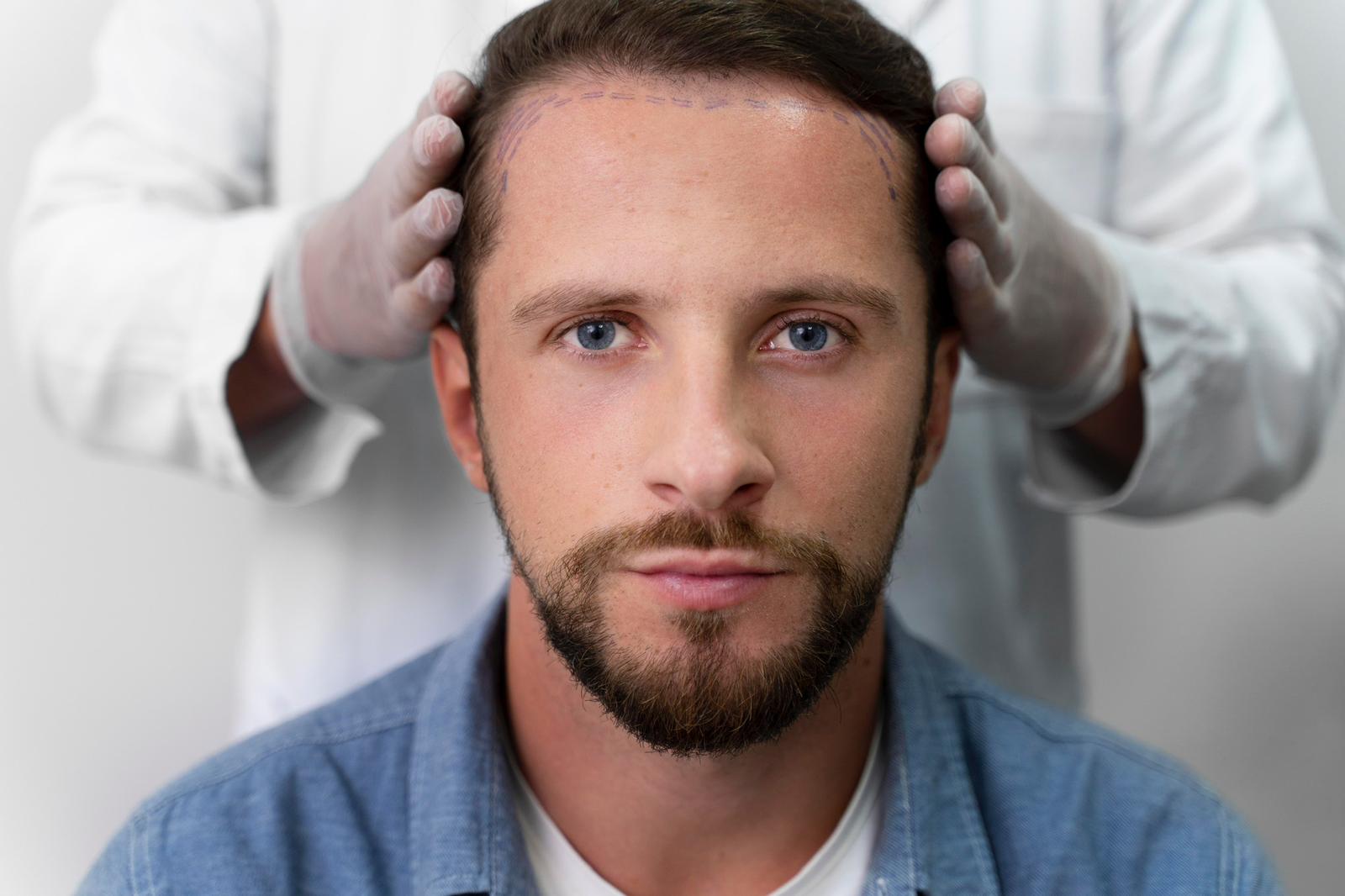
The Impact of Age at the Time of the Procedure
Age at the time of a hair transplant significantly influences how the long-term result evolves, and it’s one of the primary reasons that patient age is such an important factor in surgical planning.
Younger patients — particularly those under 30 — often have hair loss patterns that are still actively progressing. A procedure performed at 24 will produce transplanted hair that is permanent, but the native hair surrounding it may continue to thin substantially over the next decade and beyond. The result that looks comprehensive at 25 may look increasingly isolated as the pattern of native loss develops around the stable transplanted zone.
This is not an argument against treating younger patients — in some cases early intervention with appropriate conservative planning produces excellent long-term outcomes. But it does mean that procedures performed earlier in the hair loss progression require more careful planning around lifetime donor supply management, hairline design that accounts for natural aging, and realistic discussion of what additional procedures may be needed as loss continues.
Older patients whose hair loss has largely stabilized are in a different position. When the pattern of loss is established and not rapidly progressing, the gap between transplanted hair and ongoing native loss is more predictable, making planning more straightforward and the long-term result more stable.
Medical Management and Its Role in Long-Term Results
One of the most effective strategies for maintaining a good long-term hair transplant result is medical management of ongoing native hair loss — and it is also one of the most underutilized.
Finasteride and minoxidil are the two most established medical treatments for androgenetic hair loss. Finasteride works by blocking the conversion of testosterone to dihydrotestosterone, reducing the hormonal signal that drives follicle miniaturization. Minoxidil supports hair retention through mechanisms that are still not fully characterized but include improved scalp blood flow and direct stimulation of follicle activity.
Neither medication is permanent — both require ongoing use to maintain their effects. But for patients who respond well to these treatments, starting and continuing them around the time of a hair transplant can meaningfully slow the progression of native hair loss in the years after the procedure. This preserves more of the native hair that was present at the time of the transplant, maintaining the combined density of transplanted and native hair for longer than would occur without treatment.
The contrast between a patient who manages their native hair loss medically after a transplant and one who doesn’t can be significant by the five to ten year mark. The transplanted hair in both cases is equally permanent — but the surrounding native hair landscape looks dramatically different depending on whether ongoing loss was addressed.
Does the Technique Affect How Long Results Last?
Patients frequently ask whether Sapphire FUE or DHI produces more permanent results than the other — and the honest answer is that the longevity of the result is not primarily determined by which technique is used.
Both Sapphire FUE and DHI transplant follicles from the same donor zone. The permanence of those follicles in their new location depends on whether they were taken from the stable donor zone, how they were handled during extraction and implantation, and the quality of the surgical execution — not on which implantation method was used.
What technique choice does affect is the precision of implantation, the degree of tissue trauma during the procedure, and certain aspects of the recovery experience. These are meaningful clinical considerations. But a patient choosing between Sapphire FUE and DHI on the basis of which produces more permanent results is comparing two things that are equivalent in that specific dimension.
The factors that genuinely determine long-term result durability are the surgeon’s experience and judgment, the quality of donor zone assessment and harvesting, the conservation of donor supply across the patient’s lifetime needs, and the appropriateness of the hairline design for how the patient’s face and hair will age over time.
What Genuinely Threatens Long-Term Results
While transplanted hair from a permanent donor zone is reliably durable, certain factors can genuinely compromise long-term outcomes and are worth understanding.
Over-harvesting the donor area is one of the most significant. When too high a percentage of available follicles are extracted from a given zone, the donor area itself develops visible thinning. More importantly, aggressive harvesting from peripheral zones that aren’t truly permanent can result in transplanted follicles that eventually thin or are lost. Conservative donor harvesting that respects the boundaries of the permanent zone protects both the donor area appearance and the long-term durability of the transplanted hair.
Poor graft handling during extraction and implantation affects survival rates and therefore long-term density. Grafts that are damaged by excessive time outside the body, inadequate preservation conditions, or rough handling may have lower survival rates — meaning fewer follicles establish themselves successfully, reducing the long-term density that the procedure was designed to create.
Hairline design that doesn’t account for aging creates a different kind of long-term problem. A hairline placed too low for a young patient, designed without consideration of how it will look in relation to natural aging of the face and ongoing native hair loss, doesn’t fail in the sense of the transplanted hair disappearing — but it can produce a result that looks increasingly incongruous over time. The transplanted hairline remains static while everything around it changes, which creates the appearance of an obviously transplanted result even when the individual grafts are performing perfectly.
The Honest Summary: How Long Does a Hair Transplant Last?
Transplanted hair from the permanent donor zone, extracted and implanted with sound technique and good surgical judgment, lasts for life. The follicles maintain their DHT resistance in their new location, continue growing through normal hair cycles, and do not respond to the hormonal signals that caused the original hair loss. Patients with procedures performed a decade or more ago routinely report that their transplanted hair continues to perform as it did at the one-year mark.
What changes over time is not the transplanted hair but the surrounding native hair, which continues its natural genetic progression regardless of any procedure. The overall appearance of a hair transplant result evolves with ongoing native loss, with how well that native loss is managed medically, and with the normal aging of hair and face.
A well-planned procedure accounts for this evolution. It uses conservative hairline design that looks appropriate as the patient ages. It manages donor supply with an eye toward lifetime needs rather than only the current session. It includes honest discussion of medical management for native hair and realistic expectation-setting about how the result will look at five and ten years rather than only at twelve months.
At Hairpol, every procedure is planned with the patient’s long-term result in mind — not just the immediate transformation. Because a hair transplant that looks excellent today and continues to look natural in twenty years is what genuine success actually looks like.
Find this helpful? Add Hairpol as a preferred source on Google.
Get a Free Consultation
Answer a few questions and the medical team will review your situation.
