
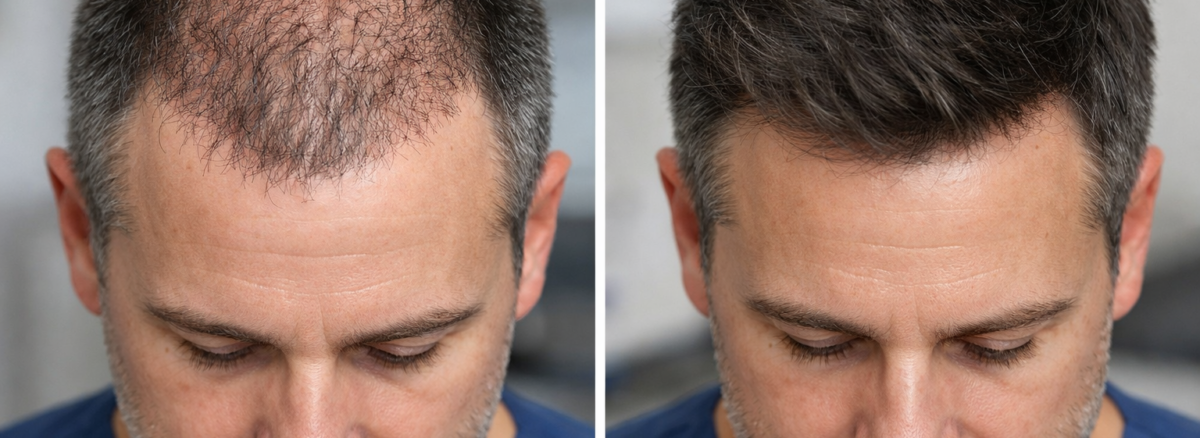
A lot of people feel confused after a hair transplant because their result seems to “change” over time, not only as hair grows in, but as it grows longer. One month it looks thin. Another month it looks fuller. Then it looks different again after a haircut, or after the hair passes a certain length.
This doesn’t automatically mean something is wrong. In fact, changing appearance is expected. Hair length changes how light hits the scalp, how hairs overlap, how density is perceived, and how well transplanted hair blends with native hair.
If you understand why results shift with length, you’ll judge your progress more accurately and stress less during the hair transplant timeline.
Hair Length Changes Visual Density More Than People Realize
The most obvious reason results change with longer hair is simple: longer hair provides more coverage.
Short hair stands like separate strands. It leaves gaps. Longer hair overlaps and layers, covering more of the scalp even with the same number of hairs.
That means a person can have identical density but look:
- thinner with very short hair
- fuller once hair reaches a medium length
- much fuller when hair can be styled with overlap
This is why many patients feel like their transplant “suddenly got better” after the hair reaches a certain length. Nothing magical happened. The hair simply began to cover the scalp more effectively.
Longer Hair Blocks Light and Reduces Scalp Reflection
Lighting is one of the biggest reasons a transplant looks inconsistent. Under overhead lights or direct sunlight, the scalp reflects light and becomes more visible. That makes density look weaker.
Longer hair helps because:
- it casts more shadow
- it blocks more light from hitting the scalp
- it reduces the shiny “scalp glow” effect under harsh light
- it makes gaps less obvious
This is especially important in the early and middle phases of the hair transplant timeline, when new hair may still be thin and not fully mature.
Hair Thickness and Maturation Makes Length More Powerful
Early transplanted hair often grows in finer and softer. It can look wispy. Even as it grows longer, it may not look dense until the shafts thicken and mature.
As months pass, hair often:
- becomes thicker in diameter
- darkens slightly (depending on hair type)
- becomes less wiry or irregular
- gains weight and lies flatter
When hair thickens, longer length creates a much stronger visual density boost. That’s why some people feel like their results change dramatically between months 6 and 12. It’s not only more hairs. It’s stronger hairs.
Longer Hair Lays Differently, Which Changes the Look
Hair direction and angle affect density perception. When hair is short, it may stick up or point in directions that expose the scalp. As hair gets longer, gravity and weight pull it down and help it lay flatter.
This matters because flatter hair:
- overlaps more naturally
- blends better with native hair direction
- creates a smoother transition from transplanted zones
- hides minor unevenness in early hair growth
Many patients notice that their hairline looks more natural once the hair has enough length to soften the edge. The same hairline can look sharp when hair is short and softer when it’s longer.
Styling Options Increase as Length Increases
Short hair gives you limited options. You can’t hide uneven hair growth or control direction as easily.
When hair grows longer, you can:
- adjust the parting
- add texture
- style forward for more coverage
- style slightly to the side to reduce scalp show
- blend transplanted zones with native hair better
This doesn’t change graft survival. It changes perception.
Because perception is what most people care about day to day, longer hair often makes patients feel like their hair transplant finally “clicked.”
Haircuts Can Temporarily Make You Think You Lost Progress
A common emotional moment happens when someone gets a haircut after regrowth has started. They cut the hair shorter, and suddenly the scalp looks more visible again.
It can feel like you lost density, but what you lost is layering and overlap. Short hair reveals more scalp. It’s not necessarily a setback in your actual outcome.
This is why it’s smart to judge progress with consistent hair length and consistent lighting when tracking your hair transplant timeline.
Native Hair Blending Improves With Length
A natural-looking hair transplant is partly about how transplanted hair blends with existing hair. When hair is very short, differences in texture can be more obvious. The hairline can look “new” compared to the rest.
As hair gets longer, blending becomes easier because:
- texture differences are less noticeable
- hair movement looks more unified
- the transition from hairline to mid-scalp looks smoother
- minor density variation becomes less visible
This is especially relevant for patients who had thin native hair around the transplanted zone. As both native and transplanted hair grow, the entire zone starts looking more consistent.
Longer Hair Can Reveal Direction Issues Too
Not every change with length is positive. Sometimes longer hair can reveal problems that were hidden with short hair.
For example:
- if the implantation direction is inconsistent, longer hair may cross awkwardly
- if angles are too upright, hair may not fall naturally even when longer
- if temple direction is off, longer growth may look less harmonious
- if the crown swirl pattern wasn’t respected, longer hair can show unnatural flow
These issues are less common in well-planned cases, but they’re part of why “length changes everything.” Hair is not only density. It’s direction and movement.
A clinic focused on a successful hair transplant pays attention to these details during implantation so longer hair behaves naturally later.
The Crown Changes Dramatically With Length
The crown is one of the hardest areas to judge because hair grows in a swirl pattern and lighting hits it directly from above. Even people with naturally good density can look thin in the crown under strong light.
Longer hair often improves the crown appearance because:
- swirl coverage becomes more effective
- hair overlaps in multiple directions
- light reflection decreases
But crown improvement can still feel slow because crown growth is usually more gradual and the area is more “light-sensitive.” This is another reason understanding the hair transplant timeline is important. Crown results often mature later than the frontal zone.
Longer Hair Makes “Patchy Growth” Look Less Patchy
Early hair growth after a hair transplant is often uneven. One side grows faster. One area looks fuller. Another looks sparse.
As hair grows longer, unevenness can appear less dramatic because:
- longer strands bridge small gaps
- styling can redirect coverage
- shadowing becomes more consistent
This is why some patients feel stressed at month 4 but much calmer at month 7, even if the number of hairs isn’t drastically different yet. Length and maturation change the visual story.
When You’ll Notice the Biggest Shifts
While everyone varies, the biggest “length-related” improvements often happen when:
- hair has grown enough to start overlapping (medium length)
- new hairs thicken and gain weight
- scalp redness and healing effects settle
- styling becomes easier
These shifts tend to become more obvious as you move through the middle and later phases of the hair transplant timeline, when growth and maturation start working together.
How to Track Progress Without Misleading Yourself
If you want accurate tracking, avoid comparing:
- short hair photos to longer hair photos
- different lighting conditions
- different styling directions
- wet hair photos to dry hair photos
A better method:
- take monthly photos
- same lighting
- same angles
- similar hair length and styling
- compare trend, not daily changes
That way you can see real progress rather than “length illusion.”
The Most Honest Explanation
Hair transplant results change as hair grows longer because longer hair alters coverage, shadow, styling, and blending. It also interacts with the reality that early transplanted hair often starts thin and matures over time.
So if your hair looks different at different lengths, that’s not automatically a warning sign. It’s often part of normal progression through the hair transplant timeline.
When length and maturation align, results can look dramatically better even without any sudden change in graft survival. It’s not magic. It’s how hair works.
Frequently Asked Questions (FAQ)
Why do hair transplant results look different at different hair lengths?
Because hair length directly affects how much of the scalp is covered. Short hair stands as separate strands and leaves gaps visible, while longer hair overlaps and layers across the scalp. This creates the illusion of greater density even with the same number of grafts. As transplanted hair grows longer and matures, coverage improves significantly — which is a normal and expected part of the hair transplant timeline.
Is it normal to feel like my hair transplant result got worse after a haircut?
Yes, this is completely normal. When you cut your hair shorter, you lose the layering and overlap that longer hair provides. This exposes more of the scalp and can make density appear lower than before the cut. It does not mean you lost grafts or regressed in your recovery. Progress should always be tracked at a consistent hair length to avoid misleading comparisons during your hair transplant timeline.
When does transplanted hair start to look noticeably fuller?
Most patients notice the biggest visual improvements between months 6 and 12. This is when early transplanted hair, which often grows in fine and soft, begins to thicken and gain more weight. As the shafts mature, longer length creates a stronger coverage effect. The combination of hair growth and maturation during this phase is what makes results look dramatically better — not a sudden increase in graft survival.
Why does the crown area look thin even after a hair transplant?
The crown is one of the most light-sensitive areas of the scalp. Overhead lighting hits it directly, increasing reflection and making gaps more visible. Additionally, crown growth tends to mature more slowly than the frontal zone. As hair grows longer in this area, the swirl pattern creates natural overlap in multiple directions, which significantly reduces the appearance of thinning under strong light. Patience is especially important when evaluating crown results on the hair transplant timeline.
Can longer hair reveal problems with a hair transplant?
In some cases, yes. Longer hair can expose issues such as inconsistent implantation direction, angles that are too upright, or a crown swirl pattern that wasn't followed during surgery. These problems may not be visible with short hair but become apparent as hair grows and movement becomes more natural. This is why a clinic focused on a successful hair transplant pays close attention to direction and angle during implantation, not just density.
Why does transplanted hair look patchy in early months but improve later?
Early hair growth after a hair transplant is naturally uneven. Different grafts enter the growth cycle at different times, causing some areas to appear fuller while others still look sparse. As hair grows longer, strands begin to bridge small gaps and overlap across thinner areas. Styling also becomes more effective with length. This is why patients who feel stressed at month 4 often feel much more at ease by month 7, even if the total number of active hairs hasn't changed dramatically.
How does lighting affect the appearance of a hair transplant result?
Lighting has a significant impact on how density is perceived. Overhead or direct sunlight causes the scalp to reflect light, making gaps between hair shafts more visible. Longer hair reduces this effect by casting shadows, blocking light from reaching the scalp, and eliminating the "scalp glow" that appears under harsh lighting. During the early phases of the hair transplant timeline, when new hair is still thin and fine, lighting differences can feel especially dramatic. Evaluating results under consistent and neutral lighting gives a more accurate picture of actual progress.
How should I properly track my hair transplant progress over time?
The most reliable method is to take monthly photos under the same lighting, from the same angles, with similar hair length and styling. Avoid comparing wet hair photos to dry ones, or short hair to longer hair, as these variables change the visual result significantly. Focus on the overall trend across months rather than day-to-day differences. Because hair growth after a hair transplant is gradual and affected by maturation, length, and lighting, consistent documentation is the only way to judge real progress accurately through the hair transplant timeline.
